
For the 2026 Illinois license year, most licensed anglers pay $6.50 for an annual Inland Trout Stamp in addition to the fishing license that fits their residency and trip length. Illinois residents age 75 or older pay $0.50 for the stamp. The stamp applies when taking or attempting to take trout from Illinois waters other than Lake Michigan.
Quick Answer
The 2026 Illinois Inland Trout Stamp costs $6.50 for most resident and nonresident licensed anglers. Illinois residents age 75 or older pay $0.50. You also need a valid sport fishing license unless exempt. The 2026 annual stamp expires March 31, 2027; Lake Michigan requires the separate Salmon Stamp.
Key Takeaways
- The standard 2026 Inland Trout Stamp is $6.50; qualifying Illinois residents age 75 or older pay $0.50.
- A resident annual license plus the stamp costs $21.50, while a nonresident annual license plus the stamp costs $38 before any optional transaction fee.
- Anglers under 16 and other people who are legally exempt from an Illinois fishing license do not need the trout stamp.
- The stamp is required when taking or attempting to take inland trout, including during an authorized early catch-and-release season.
- The statewide Catchable Trout Program limit is five trout per angler per day, but site-specific rules may be stricter.
- For trout or salmon in Lake Michigan, buy the Lake Michigan Salmon Stamp instead of the Inland Trout Stamp.
2026 Costs at a Glance
| Standard Inland Trout Stamp | $6.50 |
| Resident Age 75+ Stamp | $0.50 |
| Resident Annual Total | $15 license + $6.50 stamp = $21.50 |
| Nonresident Annual Total | $31.50 license + $6.50 stamp = $38 |
| 2026 Annual Validity | March 1, 2026, through March 31, 2027 |
What the Inland Trout Stamp Covers
The Inland Trout Stamp authorizes a licensed angler to take or attempt to take trout from Illinois waters other than Lake Michigan. It is an annual add-on to the fishing license rather than a replacement for the license.
According to the Illinois Department of Natural Resources fish-stocking program, Inland Trout Stamp sales help fund the Illinois Catchable Trout Program. IDNR stocks more than 80,000 rainbow trout for the spring season and another 80,000 for the fall season.
The Inland Trout Stamp supports Illinois’ Catchable Trout Program and is required in addition to a fishing license for most anglers age 16 or older who pursue trout outside Lake Michigan.
The stamp does not authorize fishing during a closed season, raise a site’s harvest limit, or replace any permit required for a special event. All statewide and site-specific regulations still apply.
Products Worth Considering
Approximate Size: 3/4" x 2"
1" x 2.5" Stamp Block

Fishing Silicone Stamps: Our fishing silicone stamps are designed with 16 patterns, including 6 different species of fishes, a fishing rod, several different fishing equipment and 3 greeting words and phrases. These patterns are perfect for making cards to record your fishing memories or adding to your stamps collection.
Who Needs the Inland Trout Stamp?
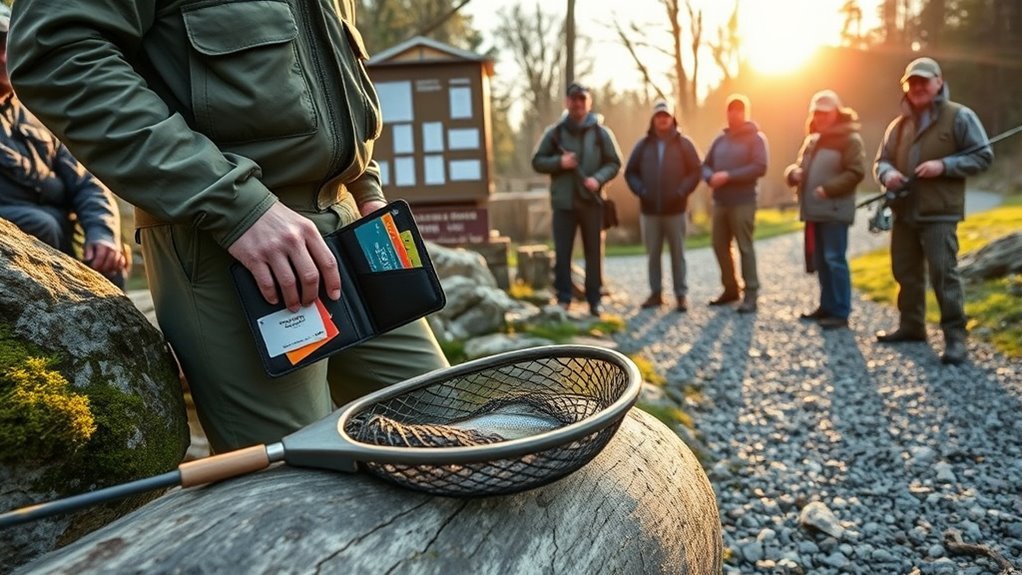
You generally need an Inland Trout Stamp when all three of the following are true:
- You are age 16 or older.
- You are required to hold an Illinois sport fishing license.
- You are taking or attempting to take trout from Illinois waters other than Lake Michigan.
The requirement applies to residents and nonresidents. It also applies when you intend to release every trout you catch. The official 2026 Catchable Trout Program guidance states that anglers participating in the early catch-and-release season must have both a fishing license and an Inland Trout Stamp unless they qualify for an exemption.
Warning: A fishing license by itself does not cover inland trout fishing. You must add the annual Inland Trout Stamp unless you are legally exempt from the license requirement.
Anglers younger than 16 do not need an Illinois fishing license or trout stamp. Other license-exempt anglers, including qualifying blind or disabled people and certain Illinois active-duty residents fishing while on leave, are also exempt from the stamp.
2026 Cost Breakdown for Residents and Nonresidents
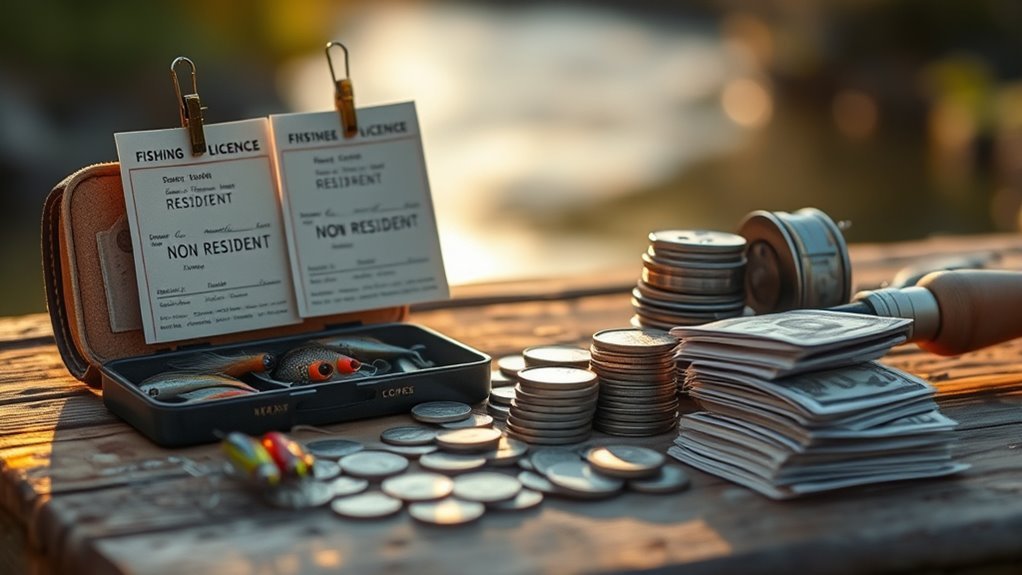
The stamp price is only one part of your total. Most anglers must combine it with a sport fishing license. The following totals use the fees in the 2026 Illinois Fishing Information guide.
| Resident Annual | $15 license + $6.50 stamp = $21.50 |
| Resident Age 65–74 | $7.75 license + $6.50 stamp = $14.25 |
| Resident Age 75+ | $1.50 license + $0.50 stamp = $2 |
| Resident 24-Hour | $5.50 license + $6.50 stamp = $12 |
| Nonresident Annual | $31.50 license + $6.50 stamp = $38 |
| Nonresident Three-Day | $15.50 license + $6.50 stamp = $22 |
| Nonresident 24-Hour | $10.50 license + $6.50 stamp = $17 |
These totals are before any additional online transaction charge that may apply. The Inland Trout Stamp is annual, so an angler using a one-day or three-day fishing license still pays the full annual stamp price.
Products Worth Considering

1.25" x 3.25" Stamp Block

Product Material: Our license plate frame is made of premium quality aluminum, which ensures that the plate frame will never wear out. Corrosion resistant, Personalized Car Frame Can Perfect to Put on Your Front of Car,Decorate your car to make it look more beautiful and unique.

Where and How to Purchase the Stamp

You can buy an Illinois fishing license and Inland Trout Stamp in the same transaction. You do not have to purchase the license first and return later for the stamp.
- Choose your license: Select an annual, three-year, 24-hour, three-day, senior, or other eligible license.
- Add the Inland Trout Stamp: Choose the stamp if you plan to fish for trout outside Lake Michigan.
- Complete the purchase: Buy online through ExploreMoreIL or use a participating vendor listed through the IDNR licensing portal.
- Keep proof available: Save the electronic credential or carry a printed copy so it can be shown during an enforcement check.
Pro Tip: Check the license year before paying. A purchase completed before March 1 may belong to the ending license year rather than the new one.
Licenses bought online can generally be reprinted without charge through the purchaser’s account. A vendor may charge a replacement fee for a replacement transaction.
Products Worth Considering

IMPRESSION SIZE: 7/8" x 2-3/8" - 15% Bigger than the competition!

Illinois Notary State Self-Inking Rubber Stamp
Stamp Validity and Expiration Dates
The 2026 Illinois license year began March 1, 2026. An annual fishing license and stamp purchased for that license year expire March 31, 2027.
IDNR gives anglers a one-month overlap in which the previous license year remains valid while the new license year is available. This makes the selected year important: a license purchased before March 1, 2026, was a 2025 credential that expired March 31, 2026.
Note: A three-year fishing license does not create a three-year trout stamp. The Inland Trout Stamp remains an annual credential and must be renewed for each license year in which you pursue inland trout.
IDNR’s current license page warns that it will not issue a refund simply because an angler bought a credential for the ending license year. Review the effective and expiration dates before completing the transaction.
Inland Trout Stamp vs. Lake Michigan Salmon Stamp
Illinois uses two separate fishing stamps. Which one you need depends on where you are fishing:
- Inland Trout Stamp: Required for most licensed anglers taking or attempting to take trout from Illinois waters other than Lake Michigan.
- Lake Michigan Salmon Stamp: Required for most licensed anglers taking or attempting to take salmon or trout from the Illinois portion of Lake Michigan.
For 2026, both stamps are listed at $6.50 for most licensed resident and nonresident anglers. A qualifying Illinois resident age 75 or older pays $0.50 for either stamp.
Does a Combination License Include the Stamps?
No. Illinois offers Sportsmen’s Combination Hunting/Fishing Licenses, but these combine the underlying hunting and fishing licenses—not the Inland Trout Stamp and Lake Michigan Salmon Stamp.
You must still add the correct stamp when your fishing plans require one. An angler who fishes for inland trout and also pursues salmon or trout in Lake Michigan may need both separate annual stamps.
Which Stamp Should You Buy?
- Buy the Inland Trout Stamp for stocked ponds, lakes, streams, and other Illinois trout waters outside Lake Michigan.
- Buy the Lake Michigan Salmon Stamp for salmon or trout fishing in the Illinois portion of Lake Michigan.
- Buy both if you plan to fish in both settings during the same license year.
Warning: Do not buy an Inland Trout Stamp as a substitute for the Lake Michigan Salmon Stamp. The two credentials apply to different waters.
Exemptions and Reduced-Fee Eligibility
People who are not required to obtain an Illinois sport fishing license are also not required to obtain an Inland Trout Stamp. Some exemptions require proof, and reduced license prices do not always reduce the stamp price.
Children Under 16
Resident and nonresident anglers younger than 16 may fish without an Illinois fishing license or trout stamp.
An adult may supervise without a license only when the adult does not participate in fishing. IDNR considers activities such as casting, baiting or setting the hook, and helping reel in the fish to be participation. An adult who performs those tasks needs the required license and stamp unless separately exempt.
Senior Reduced Rates
Illinois residents age 65–74 pay $7.75 for an annual sport fishing license. They still pay the standard $6.50 Inland Trout Stamp, making the normal annual inland-trout total $14.25.
Residents age 75 or older qualify for the super-senior prices shown in the 2026 guide: $1.50 for an annual fishing license and $0.50 for an Inland Trout Stamp, for a $2 total before any optional transaction fee.
Disability, Blindness, and Disabled-Veteran Exemptions
Qualifying Illinois residents who are legally blind or disabled may fish without a license when they can show accepted proof, such as an eligible Illinois disability identification card. Qualifying resident or nonresident disabled veterans may also be exempt when they have documentation of a service-connected disability.
The IDNR Disabled Outdoor Opportunities policy explains the accepted cards and veterans’ documentation. A person relying on an exemption should carry the proof while fishing.
Active-Duty Military on Leave
A person who entered the Armed Forces from Illinois, remains an Illinois resident, and is fishing while on leave may fish without an Illinois license. Because that person is license-exempt, an Inland Trout Stamp is not required.
This exemption should not be described as a blanket waiver for every active-duty service member in every situation. Carry military identification and proof of leave.
Private Property and Daily-Fee Areas
An owner or tenant who resides on the land may fish without a license in waters wholly contained on the property or flowing over the property within its boundaries. The exemption does not extend to club lakes, organizational lakes, or lake developments.
Resident and nonresident anglers also do not need a fishing license or Inland Trout Stamp at a daily-fee fishing area that is licensed by IDNR. Confirm that the business is an officially licensed daily-fee fishing area before relying on this exemption.
Trout Seasons, Harvest Limits, and Site Rules
A valid license and stamp do not allow trout fishing during a closed season. Catchable Trout Program waters have spring and fall closed periods so stocked fish can acclimate before opening day.
Spring and Fall Catchable Trout Seasons
For 2026, the regular spring trout season opened at 5 a.m. Saturday, April 4. An early catch-and-release season opened at selected sites March 21. No trout could be harvested from stocked sites between March 14 and the regular opener.
Under the statewide schedule, the fall Catchable Trout Program season opens at 5 a.m. on the third Saturday in October. In 2026, that date is October 17. The general fall closed period begins October 1 and lasts until the opener.
The statewide daily harvest limit is five trout per angler. A listed water may have additional restrictions, different access hours, or no participation in the early catch-and-release season.
Catch-and-Release Still Requires the Stamp
During an authorized early catch-and-release trout season, licensed anglers still need the Inland Trout Stamp even though every trout must be released immediately and unharmed.
Outside an authorized season, releasing the fish after catching it does not make prohibited fishing legal. “Attempting to take” trout is part of the stamp requirement.
Pro Tip: Check the individual waterbody listing before every trip. Not every stocked site opens at the same hour, allows early catch-and-release fishing, or permits ice fishing.
Using Public Lakes and Private Ponds
Public Lake and Stream Rules
At a public lake, pond, river, or stream, an angler age 16 or older generally needs a valid fishing license. If the angler is taking or attempting to take trout outside Lake Michigan, the Inland Trout Stamp is also required unless an exemption applies.
Check both statewide regulations and the individual waterbody listing. A public site can impose special fishing hours, closed seasons, gear restrictions, catch-and-release rules, or harvest limits that are stricter than the statewide rules.
Private Pond Exemptions
An owner or resident tenant may fish without a license on qualifying waters wholly contained on the property. A guest does not receive the owner’s exemption and generally needs the normal license and stamp unless the guest qualifies for another exemption.
The owner-and-tenant exemption does not apply to subdivision lakes, club lakes, organizational waters, or lake developments merely because access is restricted to members or residents.
Illinois’ statewide daily harvest and length limits do not apply to a person fishing in waters wholly within that person’s private property. The owner may set private harvest rules, but other laws involving protected species, fish movement, stocking, pollution, and access can still apply.
Penalties for Fishing Without the Stamp
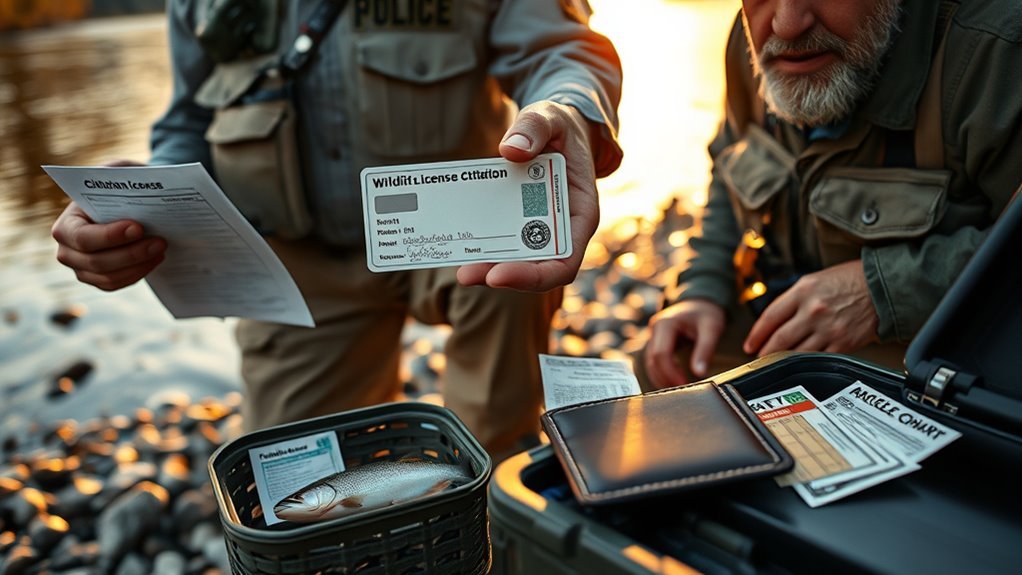
Under 515 ILCS 5/20-51, a person who is required to have an Inland Trout Stamp and fails to have one commits a petty offense.
Illinois law also requires anglers to keep their license, permit, or stamp available for immediate inspection by an authorized IDNR employee or other authorized officer. Carry the electronic credential on an accessible device or keep a printed copy with you.
The final financial consequence can depend on the citation, court costs, local procedures, and whether other violations—such as illegal harvest during a closed season—also occurred. Illegal possession or harvest can create consequences beyond the missing-stamp charge.
Warning: Do not rely on an estimated fine from an unofficial website. The controlling statute classifies the missing-stamp violation as a petty offense, while the final amount and any additional charges depend on the case.
Frequently Asked Questions
Can I transfer an Illinois trout stamp to another angler?
No. A fishing license and its associated stamps are issued to the named purchaser. Another angler must obtain the credentials required for that person’s own age, residency, and fishing plans.
Are refunds available if I cancel my fishing plans midseason?
Do not expect a prorated refund simply because you stop fishing during the season. IDNR also warns that it will not refund a credential bought for the ending license year merely because the purchaser intended to buy the new year. Contact IDNR promptly if a transaction was duplicated or processed incorrectly.
Does the stamp cover winter ice fishing for trout?
Yes, the Inland Trout Stamp can cover legal trout fishing through the ice when the water is open to trout fishing and ice fishing is allowed. Illinois does not list a separate statewide ice-fishing permit in its 2026 fishing guide, but individual sites may prohibit ice fishing or impose special safety and access rules.
Is a trout stamp required for a fishing tournament?
An individual who fishes for inland trout generally needs the normal license and stamp unless exempt. A separate Fishing Tournament Permit is required for many public-water tournaments with 20 or more participants or when the organizer requests an exemption from a statewide or site-specific rule.
Do children need a trout stamp on supervised outings?
No. Resident and nonresident children under 16 do not need an Illinois fishing license or trout stamp. A supervising adult who casts, baits the hook, sets the hook, or helps reel in a fish is participating and needs the appropriate credentials unless separately exempt.
Do I need the stamp during an early catch-and-release season?
Yes. Licensed anglers participating in an authorized early catch-and-release trout season must have an Inland Trout Stamp even though every trout must be released. Anglers who are exempt from the fishing-license requirement are also exempt from the stamp.
Which stamp do I need for trout in Lake Michigan?
Use the Lake Michigan Salmon Stamp for trout or salmon in the Illinois portion of Lake Michigan. The Inland Trout Stamp applies to trout fishing in Illinois waters other than Lake Michigan.
Conclusion
The 2026 Illinois Inland Trout Stamp costs $6.50 for most licensed resident and nonresident anglers. Residents age 75 or older pay $0.50. Add the stamp to the fishing license that matches your trip unless you qualify for a license exemption, and use the Lake Michigan Salmon Stamp instead when pursuing trout or salmon in Lake Michigan.
Before fishing, confirm the license year, the waterbody’s open season, the five-trout statewide limit, and any stricter site rules. Carry proof of your license and stamp so you can present them during an inspection.
Sources
- 2026 Illinois Fishing Information — official license fees, exemptions, validity rules, trout limits, tournament rules, and private-water guidance.
- Illinois Department of Natural Resources Fishing Licenses — current license-year purchase and expiration information.
- Illinois Catchable Trout Program — 2026 spring dates, early catch-and-release rules, stocked locations, and stamp requirements.
- iFish Illinois Fishing FAQ — child, senior, license, stamp, and disability questions.
- IDNR Disabled Outdoor Opportunities Policies — disability-card and disabled-veteran fishing exemptions.
- 515 ILCS 5/20-51: Inland Trout Stamp — statutory stamp requirement, expiration, and offense classification.
