
California does not sell a standard three-day sport fishing license. Instead, anglers can combine a one-day license with a two-day license or compare that total with the longer options available to residents and nonresidents. The right choice depends on your trip length, residency, fishing location, target species, and whether you need a report card or validation.
Quick Answer
California does not sell a standard three-day sport fishing license. For three consecutive days in 2026, buy one one-day license for $21.09 and one two-day license for $32.40, for a total of $53.49. Anglers age 16 or older generally need a license, plus any required validation or species-specific report card.
Key Takeaways
- California has one-day and two-day licenses for residents and nonresidents, but no regular three-day license.
- A one-day plus a two-day license costs $53.49 at the 2026 published rates.
- The $64.54 ten-day license is available only to nonresidents.
- Only one-day and two-day licenses are exempt from the Ocean Enhancement Validation.
- Report cards may still be required for steelhead, sturgeon, spiny lobster, and salmon in specified North Coast river systems.
Short-Term Fishing Pass Types and Eligibility
The California Department of Fish and Wildlife sport fishing fee schedule lists three short-term products for 2026:
- One-day sport fishing license: $21.09 for one specified calendar day. Residents and nonresidents may buy it.
- Two-day sport fishing license: $32.40 for two consecutive calendar days. Residents and nonresidents may buy it.
- Ten-day nonresident sport fishing license: $64.54 for ten consecutive calendar days. It is available only to nonresidents.
California generally requires a sport fishing license for anyone age 16 or older who takes or attempts to take fish, mollusks, crustaceans, invertebrates, amphibians, or reptiles in inland or ocean waters. A child under 16 normally does not need the license itself, but may still need a species-specific report card.
For an exact three-day trip, select a one-day license for one date and a two-day license for the other two consecutive dates. At the 2026 rates, the combined cost is:
One-day license at $21.09 + two-day license at $32.40 = $53.49 for three days.
Note: A license is not required when recreationally fishing from a qualifying public pier in California ocean or bay waters. All other rules still apply, including seasons, size limits, bag limits, gear restrictions, and required report cards.
Products Worth Considering

【MATERIAL】: oFloral License plate frame is made from premium quality aluminum, which can provide long-lasting protection from corroding, rusting and aging, durability for long lasting usage.Personalized Car Frame Can Perfect to Put on Your Front of Car or for Decorative Purposes Around the House Like in Your Bedroom, Garage, Basement, Ect.

FISHING LICENSE HOLDER W/ZIP CLOSURE

Omni-Shade UPF 30 sun protection
Who May Fish Without a Regular License?
Common license exemptions include:
- Children younger than 16.
- People fishing from a qualifying public pier in ocean or bay waters.
- Anglers fishing on a designated California Free Fishing Day.
- People covered by certain narrowly defined statutory or organizational exemptions.
These exemptions do not cancel species regulations or report-card requirements. For example, an unlicensed child or public-pier angler targeting white sturgeon or spiny lobster may still need the appropriate physical report card.
Current Short-Term Fee Schedule and Residency Rules
The best license depends on the number of fishing days and whether you qualify for a resident license. The table below compares the most relevant 2026 choices.
| Trip or License | 2026 Cost | Eligibility | Best Use |
|---|---|---|---|
| One-day | $21.09 | Resident or nonresident | One specified day |
| Two-day | $32.40 | Resident or nonresident | Two consecutive days |
| Three-day combination | $53.49 | Resident or nonresident | One one-day plus one two-day license |
| Ten-day nonresident | $64.54 | Nonresidents only | Four to ten consecutive days |
| 365-day resident license | $64.54 | Qualifying California residents | Residents expecting to fish four or more days |
| 365-day nonresident license | $174.14 | Nonresidents | Repeated trips extending beyond ten consecutive days |
For a nonresident, two separate two-day licenses would cost $64.80. That is slightly more than the $64.54 ten-day license, so the ten-day product can be the better value for a four-day trip even when all ten days are not used.
For a qualifying California resident, the 365-day resident license also costs $64.54. A resident planning four or more fishing days should therefore compare the annual license with multiple short-term purchases.
Pro Tip: Confirm the fishing dates before completing the purchase. A one-day license applies to the selected date, while the two-day and ten-day licenses cover consecutive dates.
Validations and Report Cards Required for Short-Term Licenses
A short-term license does not automatically cover every species, location, or fishing method. Before fishing, review the current California sport fishing regulations and determine whether you need a validation or report card.
| Item | When It Is Required | Short-Term License Rule |
|---|---|---|
| Ocean Enhancement Validation | Generally required when a license holder fishes in ocean waters south of Point Arguello in Santa Barbara County. | Not required with a one-day or two-day license. A ten-day license does not receive this exemption. |
| Steelhead Report Card | Required when fishing for steelhead in applicable California inland waters. | Required regardless of short-term license length. |
| Sturgeon Fishing Report Card | Required when fishing for white sturgeon. | Required regardless of license length or a general license exemption. |
| North Coast Salmon Report Card | Required when fishing for salmon in the Smith River System or Klamath-Trinity River System. | Required regardless of short-term license length. |
| Spiny Lobster Report Card | Required for anyone taking California spiny lobster. | Required even when a sport fishing license is not required. |
| Recreational Crab Trap Validation | Generally required when taking crab with qualifying crab traps. | Not normally required for hoop nets or crab loop traps. Check current vessel and gear exceptions. |
| Second-Rod Validation | Allows two rods or lines in eligible inland waters. | It does not override water-specific artificial-lure, barbless-hook, or single-rod restrictions. |
Warning: The Ocean Enhancement exemption applies only to one-day and two-day licenses. A nonresident using a ten-day license may still need the validation when fishing south of Point Arguello.
Report-card requirements apply to the target species, not merely to the type of fishing license. A child under 16, a person fishing from a public pier, or an angler participating on a Free Fishing Day may still need the appropriate report card.
Eligible sport fishing licenses can be displayed through the CDFW License App. However, electronic proof that a report card was purchased does not replace the physical report card. Keep the physical card in your immediate possession and complete entries as required.
Note: White sturgeon regulations and report-card periods changed in 2025. Under current rules, white sturgeon fishing is catch-and-release only. Review the current CDFW sturgeon page before targeting the species.
Where and How to Purchase a Short-Term Fishing Pass
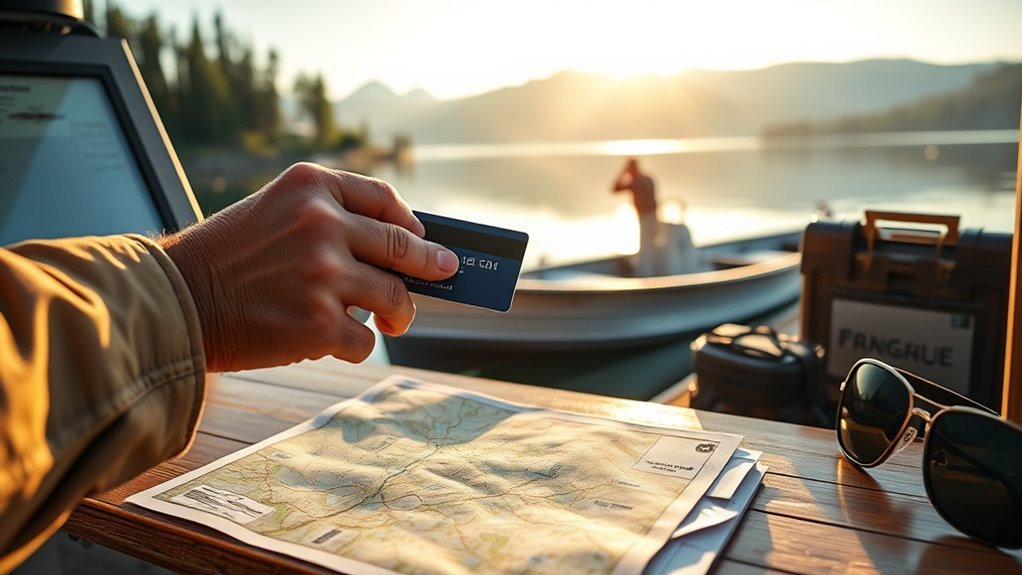
You can purchase California short-term sport fishing licenses through the CDFW online licensing system, an authorized license agent, a CDFW license sales office, or the telephone sales service.
- Choose the correct dates. Decide whether you need a one-day, two-day, three-day combination, or ten-day nonresident license.
- Confirm the angler’s information. The license must be issued using the correct customer and identification details.
- Add required items. Check the fishing location, species, and gear to determine whether you need a validation or report card.
- Complete the purchase. Save the transaction confirmation and verify that the license dates are correct.
- Carry valid proof while fishing. Display an eligible electronic license through the CDFW License App or carry the issued paper license. Carry physical report cards when required.
CDFW license counters accept checks, money orders, and qualifying Visa or Mastercard debit or credit cards, but CDFW offices do not accept cash. Independent license agents may have their own accepted payment methods.
Pro Tip: Buy and verify the license before traveling to a remote fishing area. Mobile service may be limited, and a purchase receipt alone may not satisfy every physical report-card requirement.
Products Worth Considering
CALIFORNIA STATE FLAG DESIGN: Features a textured, raised California flag design for an authentic, high-end look and feel.

Bone fish license plate featuring a fish skeleton in silver accents across the center.

【MATERIAL】: oFloral License plate frame is made from premium quality aluminum, which can provide long-lasting protection from corroding, rusting and aging, durability for long lasting usage.Personalized Car Frame Can Perfect to Put on Your Front of Car or for Decorative Purposes Around the House Like in Your Bedroom, Garage, Basement, Ect.
Reduced-Fee and Free Alternatives to Short-Term Licenses
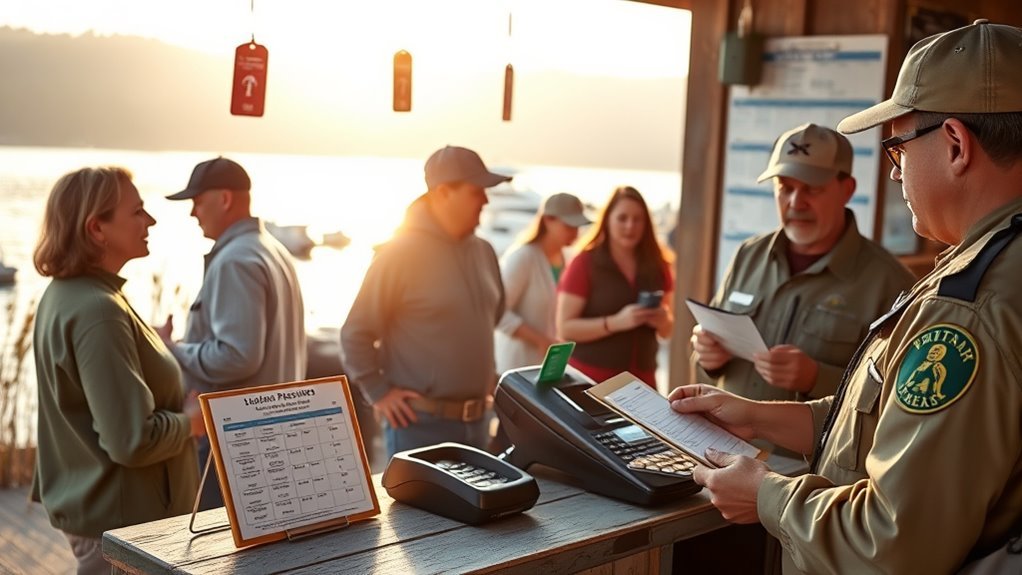
California does not generally discount the one-day or two-day licenses based on age, disability, military status, or income. Instead, qualifying anglers may be eligible for a reduced-fee or free 365-day sport fishing license.
These alternatives may cost less than a short-term license, but applicants must meet the exact eligibility rules and may need to obtain approval before purchasing.
| Category | 2026 Fee | Basic Eligibility |
|---|---|---|
| Disabled veteran | $10.04 at CDFW offices or $10.54 from license agents | Honorably discharged veteran with a service-connected disability rating of at least 50%, subject to prequalification. |
| Recovering service member | $10.04 at CDFW offices or $10.54 from license agents | Qualifying recovering member of the United States military, subject to documentation and approval. |
| Low-income senior | $10.04 | California resident age 65 or older who receives qualifying SSI or CAPI benefits. |
| Free disability license | No fee | Applicants who meet CDFW’s qualifying blindness, mobility-impairment, or developmental-disability criteria. |
| Low-income Native American license | No fee | Qualifying Native American residents who are financially unable to pay the regular resident-license fee. |
The first license in certain reduced-fee or free categories must be obtained through a designated CDFW process. Later renewals may be available through additional sales channels after the customer record has been approved.
Reduced-fee and free licenses do not automatically include every validation or report card. Species- and area-specific items may still need to be purchased at their regular price.
Products Worth Considering

Durable Material: Car license plate is crafted from high-quality ETP (electrolytic tinplate) with 2 layers of clear epoxy lacquer coating making the car tag water-proof, rust-proof, and weather-resistant
ALUMINUM FRAME: This License Plate Frame is crafted from high-quality aluminum that is resistant to corrosion, rust, and harsh weather conditions. Its rugged reliability design ensures a long lifespan, making it capable of withstanding car washes and extreme weather, providing you with a reliable and stylish solution for your vehicle.

【Material】Our License Plate Frame Is Made Of Stainless Steel, Strong And Durable.
Frequently Asked Questions
Can I transfer a short-term fishing license to someone else?
No. Each angler must fish under a valid license issued using that angler’s information. You may purchase a license for a friend when you have the required customer details, but the license must be issued to the friend rather than transferred after purchase.
Are refunds available if I cancel my fishing trip?
Generally, no. California sport fishing licenses, validations, and report cards are considered valid from purchase and are nonrefundable. Confirm the selected license and fishing dates before submitting payment.
Does a short-term license cover fishing from a charter boat?
A valid short-term license can authorize the passenger to fish from a charter boat during the license period. Each passenger age 16 or older generally needs an individual sport fishing license and any required validation or report card. The vessel operator must separately meet commercial passenger fishing vessel requirements.
Is night fishing allowed with a short-term license?
The license period does not determine fishing hours. Night fishing may be legal in some waters and prohibited or restricted in others. Check the regulations for the specific water, species, season, closure, and fishing method before starting.
Do I need a separate shellfish stamp?
California does not use a general recreational shellfish stamp. Depending on the species and gear, you may need a Spiny Lobster Report Card, Recreational Crab Trap Validation, or another specific entitlement. Seasons, size limits, bag limits, and gear rules still apply.
Does a child under 16 need a California fishing license?
A child under 16 generally does not need a regular sport fishing license. However, the child must follow all fishing regulations and may need a physical report card when targeting a report-card species such as white sturgeon, steelhead, or spiny lobster.
Do I need a license when fishing from a public pier?
A sport fishing license is not required when recreationally fishing from a structure that meets California’s definition of a public pier in ocean or bay waters. The exemption does not apply to every dock, jetty, breakwater, seawall, or shoreline location. All other regulations and report-card requirements remain in effect.
Do I need the Ocean Enhancement Validation with a ten-day license?
You may need it. The one-day and two-day licenses are specifically exempt, but the ten-day nonresident license is not. A ten-day license holder fishing in ocean waters south of Point Arguello should obtain the validation unless another exemption applies.
Can I keep my short-term license on my phone?
Eligible one-day, two-day, and ten-day sport fishing licenses can be displayed through the CDFW License App. Report cards are different: electronic proof of purchase does not normally replace the physical report card that must be carried and completed in the field.
Conclusion
California does not offer a standard three-day sport fishing license. At the 2026 rates, the simplest three-day option is one one-day license plus one two-day license, costing $53.49. Nonresidents fishing for four to ten consecutive days should compare that combination with the $64.54 ten-day license, while residents planning several trips should compare short-term costs with the $64.54 resident 365-day license.
Before fishing, confirm the dates printed on the license, the rules for the water you plan to visit, and any report card or validation required for your species, location, and gear. Fees and regulations can change, so the current CDFW licensing and regulations pages should control your final decision.
Sources
- CDFW Sport Fishing Licenses and Report Cards — 2026 license fees, eligibility, validations, report cards, and reduced-fee licenses.
- CDFW Online License Sales and Services — online purchasing and other official sales methods.
- CDFW License App — electronic license display and physical report-card limitations.
- CDFW California Beach Fishing — public-pier definitions, exemptions, and pier-fishing rules.
- CDFW Fishing Regulations — current freshwater and ocean regulations, closures, and area-specific rules.
- CDFW Sturgeon Report Card — current sturgeon season, report-card, reporting, and catch-and-release information.
