
A California lifetime fishing license is a one-time, age-based purchase for a qualifying California resident. In 2026, the basic lifetime fee is $709.00 for ages 0–9 or 62+, $1,160.25 for ages 10–39, and $1,045.00 for ages 40–61. The privilege lasts for life, but the usable sport-fishing license is issued in 365-day periods, and separate validations or report cards may still be required.
Last updated: August 10, 2026. Fees and application rules were checked against the current CDFW lifetime-license page and the 2026 application.
Quick Answer
A California lifetime fishing license costs $709.00 for ages 0–9 or 62+, $1,160.25 for ages 10–39, and $1,045.00 for ages 40–61 in 2026. It is available to qualifying California residents at purchase. The initial lifetime license is obtained through CDFW sales-office or application channels; after purchase, you claim a no-cost 365-day license each year and still obtain any required validations or report cards.
Key Takeaways
- California lifetime fishing licenses are available only to qualifying California residents at the time of purchase.
- The 2026 price ranges from $709.00 to $1,160.25, depending on the applicant’s age.
- The lifetime privilege removes future basic-license fees, but you still claim a 365-day license each year at no basic-license cost.
- Species- and area-specific validations or report cards may still be required.
- The optional $478.75 Lifetime Fishing Privilege Package includes four recurring fishing privileges, but it does not cover every possible add-on.
At a Glance
| Application Processing | CDFW says to allow 15 business days for processing; add mailing or delivery time when applicable |
| Difficulty | Easy, provided the application, identification, signature, and payment are complete |
| Application Items | 2026 application, proof of age, residency method, required signature, and an accepted payment method |
| Cost | $709.00–$1,160.25 for the basic lifetime license; optional Lifetime Fishing Privilege Package is $478.75 |
What a California Lifetime Fishing License Covers
A lifetime fishing license gives the named licensee California’s basic sport-fishing license privileges for life. It can be used for fishing in California inland and ocean waters when a basic sport-fishing license is required, provided the angler follows all current seasons, closures, bag limits, size limits, gear restrictions, and local rules.
The purchase does not create an exemption from changing regulations. Before each trip, check the current California fishing regulations, emergency closures, marine protected areas, and species-specific rules.
Note: “Lifetime” refers to the fishing privilege, not one physical card that remains active forever. CDFW issues the usable license document in 365-day periods. A lifetime license holder obtains the next document each year at no basic-license charge.
The annual document can be obtained through the CDFW Online License Service, a participating license agent, or a CDFW license sales office. Keep your GO ID, date of birth, and customer-record information available when requesting it online.
CDFW states that lifetime-license revenue supports the protection and conservation of fish and wildlife populations. The purchase also protects the owner from future increases in the price of the basic fishing license.
A lifetime license removes future basic-license fees, but it does not remove annual document issuance, report-card duties, or changing fishing regulations.
Products Worth Considering

PREMIUM QUALITY: Crafted from high-grade materials, our License Plate is built to withstand the elements and maintain its vibrant appearance over time. It is resistant to fading, cracking, and peeling, ensuring long-lasting performance.
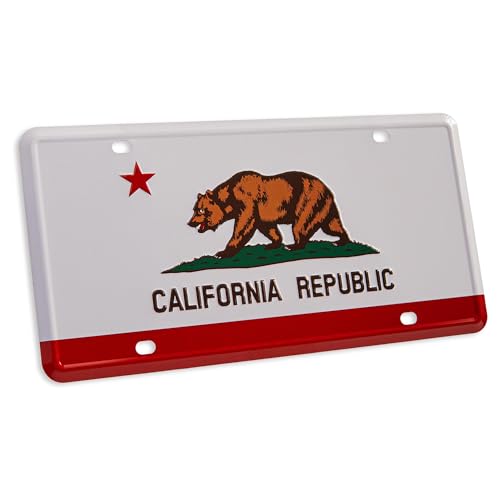
CALIFORNIA STATE FLAG DESIGN: Features a textured, raised California flag design for an authentic, high-end look and feel.

FISHING LICENSE HOLDER W/ZIP CLOSURE
2026 California Lifetime Fishing License Prices by Age
The following prices come from CDFW’s 2026 lifetime-license fee schedule. Your age on the purchase date determines your price.
| Age at Purchase | 2026 Fee | Important Detail |
| 0–9 | $709.00 | Children generally do not need a basic license until age 16, but buying early locks in this age tier. |
| 10–39 | $1,160.25 | Highest age-tier price, but potentially the longest period of adult use. |
| 40–61 | $1,045.00 | Lower than the 10–39 tier. |
| 62 or older | $709.00 | The lower lifetime age tier is based on age, not income. |
The official 2026 application states that each listed lifetime-package fee includes a $7.50 nonrefundable application fee. Use the amount printed on the current application rather than calculating your own percentage-based surcharge.
CDFW sales offices do not accept cash. The application accepts a check or money order payable to the California Department of Fish and Wildlife, or a debit or credit card carrying the Visa or Mastercard logo.
Warning: To receive the listed 2026 price, the 2026 application says the submission must be postmarked on or before December 31, 2026. Fees may change in a later license year.
Products Worth Considering

【Material】Our License Plate Frame Is Made Of Stainless Steel, Strong And Durable.

【MATERIAL】: oFloral License plate frame is made from premium quality aluminum, which can provide long-lasting protection from corroding, rusting and aging, durability for long lasting usage.Personalized Car Frame Can Perfect to Put on Your Front of Car or for Decorative Purposes Around the House Like in Your Bedroom, Garage, Basement, Ect.

【MATERIAL】: oFloral License plate frame is made from premium quality aluminum, which can provide long-lasting protection from corroding, rusting and aging, durability for long lasting usage.Personalized Car Frame Can Perfect to Put on Your Front of Car or for Decorative Purposes Around the House Like in Your Bedroom, Garage, Basement, Ect.
Is a California Lifetime Fishing License Worth It?
The answer depends on your age, how many years you expect to buy an annual license, and whether you qualify for a reduced-fee or free program. A 2026 resident 365-day sport-fishing license costs $64.54. For a broader comparison of annual and short-term options, see our 2026 California fishing license cost guide.
Using that fee alone, and ignoring future price increases and the time value of money, the simple break-even points are approximately:
| Lifetime Fee | Simple Break-Even |
| $709.00 | About 11 annual licenses |
| $1,045.00 | About 16.2 annual licenses |
| $1,160.25 | About 18 annual licenses |
Actual break-even may occur sooner if annual license prices rise. It may take longer if you skip fishing years. For a child in the 0–9 tier, the simple 11-license calculation does not mean 11 years from the purchase date because a basic sport-fishing license is generally not required until age 16.
Break-even rule: Compare the lifetime fee with the annual license costs you would actually pay. Do not count the $478.75 privilege package as savings unless you regularly buy the included Second-Rod, Ocean Enhancement, North Coast Salmon, and Steelhead privileges.
| Buyer Profile | What to Compare Before Buying |
| Child age 0–9 | Long time horizon, but paid-license savings normally do not begin until age 16. |
| Frequent adult angler | Number of years you expect to buy the resident annual license, plus only the add-ons you routinely use. |
| Age 62+ | Compare the $709 lifetime tier with any reduced-fee annual program you qualify for. |
| Occasional angler | Annual or short-term licenses may cost less if you will skip many fishing years. |
Before buying, compare the lifetime price with any annual reduced-fee license for which you qualify. In 2026, CDFW lists a $10.04 reduced-fee license at CDFW offices for qualifying disabled veterans and recovering service members. Qualifying California residents age 65 or older who receive SSI or CAPI can also receive the $10.04 low-income senior license. Free annual licenses are available to some other qualifying anglers with specified disabilities or low-income Native American status.
How to Apply for a California Lifetime Fishing License
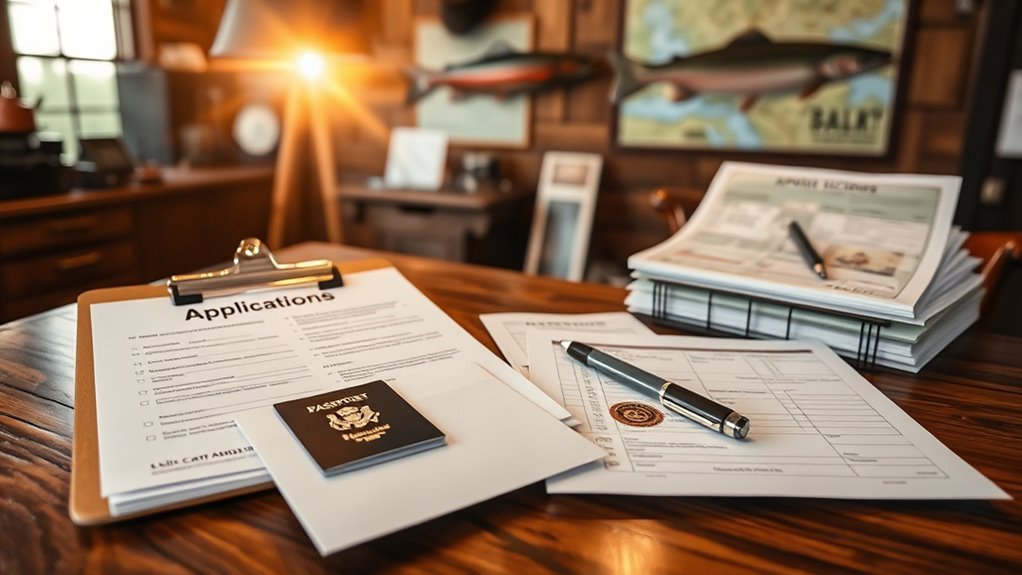
A California lifetime fishing license is available only to a qualifying California resident at the time of purchase. CDFW generally treats a person as a resident when that person has lived continuously in California for at least six months immediately before applying. Certain active-duty military personnel and Job Corps enrollees may also qualify.
Use the current 2026 Lifetime License Application. The initial lifetime purchase is handled through a CDFW license sales office or by submitting the application by mail or fax; CDFW’s online service is used for annual lifetime-license claims after the lifetime privilege has been established.
Follow these steps:
- Confirm eligibility. Check that the applicant qualifies as a California resident and identify the correct age tier.
- Select the package. Check the box for the lifetime sport-fishing license and, when desired, the Additional Fishing Privileges package.
- Complete the applicant section. Enter the applicant’s name, mailing address, date of birth, physical description, contact information, GO ID when known, and residency method.
- Attach proof of age. Include the identification requested on the form, such as a copy of a driver’s license or DMV identification card. For an applicant under 18, the form allows a birth certificate.
- Sign the certification. The applicant must sign and date the application where required.
- Add payment. Include a check, money order, or completed Visa or Mastercard authorization for the correct total.
- Submit the application. Buy through a CDFW license sales office or submit the completed application by mail or fax to a listed CDFW office.
- Allow processing time. CDFW instructs applicants to allow 15 business days for processing, plus mailing or delivery time when applicable.
The central mailing address is:
California Department of Fish and Wildlife
License and Revenue Branch
P.O. Box 944209
Sacramento, CA 94244-2090
The License and Revenue Branch fax number shown by CDFW is (916) 419-7585. Applicants may also use another CDFW sales office listed on the application.
Pro Tip: Keep a copy of the completed application, identification attachment, payment record, and GO ID. The GO ID helps you retrieve your customer record and obtain future annual license documents.
Products Worth Considering

Enough to Use: you will receive 6 pieces of fishing license holders, and 6 pieces of safety pins, abundant in quantity, enough for you to choose and replace, can meet your different needs; You can also share them with your friends

【Durable materials】Our license plate frame is made of high-quality aluminum, wear-resistant, rust-resistant, anti-aging, long-lasting use; Even if it gets dirty in the rainy season, it is easy to clean, can be used for a long time, can withstand all kinds of bad weather, and is not easy to fade.

The size of the license plate frame is: 12.3" x 6.3" , it fits all standard size US and Canada vehicle license plates.the stylish design frame fits ly on your car license plate.
Buying a Lifetime License as a Gift
A lifetime fishing license may be purchased as a gift. Complete the gift section on the application and provide the recipient’s required information and proof of age. The fee is based on the recipient’s age, not the purchaser’s age, and the recipient must qualify for California residency at the time of purchase.
Validations, Report Cards, and the Fishing Privilege Package

The basic lifetime license does not include every validation or report card. The exact extras you need depend on where, how, and for which species you fish.
What the Lifetime Fishing Privilege Package Includes
The optional 2026 Lifetime Fishing Privilege Package costs $478.75. It provides these four privileges each year for life:
- Second-Rod Validation
- Ocean Enhancement Validation
- North Coast Salmon Report Card
- Steelhead Report Card
The Second-Rod and Ocean Enhancement validations are issued in 365-day periods. The report cards remain subject to their applicable seasons, completion instructions, and reporting deadlines.
Carry the actual report card: CDFW’s License App can show proof that a report card was purchased, but that display does not replace the physical report card. When a report card is required, keep the physical card in your immediate possession unless a specific regulation provides an exception.
Selected 2026 Individual Fees
| Item | 2026 Fee | When It Is Needed |
| Ocean Enhancement Validation | $7.30 | Generally required when fishing in ocean waters south of Point Arguello where a fishing license is required. |
| Second-Rod Validation | $20.26 | Allows two rods or lines in eligible inland waters; restrictions still apply. |
| Recreational Crab Trap Validation | $2.98 | Required for covered recreational crab-trap use; not included in the lifetime privilege package. |
| Sturgeon Fishing Report Card | $8.13 | Required for anglers fishing for sturgeon. CDFW says the 2026–2027 card becomes available August 15, 2026; when the White Sturgeon season is open, fishing is catch-and-release only. |
| North Coast Salmon Report Card | $9.21 | Required when fishing for salmon in the Smith, Klamath, and Trinity river systems. |
| Steelhead Report Card | $10.29 | Required for every person fishing for steelhead in inland waters. |
| Spiny Lobster Report Card | $12.70 | Required for every person taking spiny lobster; not included in the lifetime privilege package. |
What the Privilege Package Does Not Cover
The package covers only the privileges named when it is purchased. It does not automatically include:
- Spiny Lobster Report Card
- Sturgeon Fishing Report Card
- Recreational Crab Trap Validation
- Access fees, boat fees, fishing equipment, bait, or tackle
- Any new validation, tag, or report card created after the package was purchased
CDFW allows a lifetime license holder to add the privilege package later, although the price may be higher by that time.
Warning: Report cards are required for certain species even when a person does not need a basic fishing license, including some anglers under 16 and people fishing from a qualifying public ocean pier. Obtain the card before fishing and submit the required report by its deadline.
North Coast Salmon and Steelhead report cards are due by January 31 following their reporting year, while the Spiny Lobster Report Card is due by April 30 following the season. Sturgeon now follows a season-based schedule: CDFW required 2025–2026 Sturgeon Report Cards to be reported by July 31, 2026, says the 2026–2027 card becomes available August 15, 2026, and currently lists the next White Sturgeon season opening for October 1. Check the current CDFW Sturgeon Report Card page and the sport-fishing reporting table before fishing because seasons and reporting instructions can change.
Annual Issuance, Replacements, Moving, and Long-Term Benefits
Getting the License Each Year
The lifetime privilege continues for life, but the printed or digital license credential is issued for a 365-day period. Obtain the next license at no basic-license charge through CDFW’s online service, a license agent, or a CDFW sales office.
Lifetime validations and report cards included in a privilege package must also be issued for the applicable period. A report card still must be completed and reported according to its instructions.
CDFW also lists lifetime sport-fishing licenses as eligible for Auto-Renewal. If you enroll, review the renewal notices and make sure the new 365-day license and any needed privileges are active before fishing.
Lost or Damaged License
A duplicate sport-fishing license costs $14.30 in 2026. It can be purchased through CDFW’s online license service, a license agent, or a CDFW license sales office. Duplicate validations may have separate replacement fees, and duplicate report cards may need to be handled through a CDFW office.
Moving Out of California
You must qualify as a California resident when buying the lifetime license. After the purchase, the license and purchased lifetime privileges remain valid for fishing in California even if you later move to another state.
The California license does not replace a license required by another state. Obtain the appropriate nonresident or temporary license before fishing outside California, except where a specific boundary-water agreement says otherwise. If you are visiting California without a lifetime privilege, our California nonresident fishing license guide compares the 2026 visitor options.
Transfers and Resale
A California lifetime sport-fishing license is not transferable. California Fish and Game Code Section 7149.2 ties the privilege to the person to whom it was issued. A gift purchase therefore creates a new lifetime license for the named recipient; it does not transfer an existing license from one person to another.
Long-Term Benefits
The strongest benefits are predictable basic-license costs, protection from future price increases, less repeated payment paperwork, and continued eligibility after moving away from California. The purchase is most likely to make financial sense for someone who expects to fish regularly for many years and does not qualify for a less expensive annual program.
Frequently Asked Questions
Where can I buy a California lifetime fishing license?
Buy through a CDFW license sales office or submit the official lifetime-license application by mail or fax to a CDFW sales office. The normal online service is used to claim annual lifetime licenses after the lifetime privilege has been established.
What documents do I need for a California lifetime fishing license?
Use the current CDFW lifetime application and provide the proof of age requested on the form. The 2026 form lists a driver’s license or DMV ID and allows a birth certificate for an applicant under 18. Complete the residency method, signature, and payment sections as required.
Is a California lifetime fishing license worth it?
It can be worth it for a resident who expects to buy a California annual license for many years. Using the 2026 resident fee of $64.54, the simple base-license break-even is about 11 annual licenses for the $709 tier, 16.2 for the $1,045 tier, and 18 for the $1,160.25 tier. Compare reduced-fee programs and your real fishing frequency before buying.
Do I have to renew a lifetime fishing license every year?
You do not repay the basic license fee, but you must obtain the current 365-day license each year. CDFW allows annual lifetime-license claims through its online service, license agents, or license sales offices, and lifetime sport-fishing licenses are also listed as eligible for Auto-Renewal.
Can a nonresident buy a California lifetime fishing license?
Generally, no. The applicant must qualify as a California resident at the time of purchase. A valid lifetime license remains usable for fishing in California if the owner later moves out of state.
Does a child under 16 need a California fishing license?
A child under 16 generally does not need the basic sport-fishing license. However, required species report cards can still apply, including for steelhead, sturgeon, North Coast salmon, or spiny lobster.
Can I buy a lifetime fishing license as a gift?
Yes. Complete the gift section of the lifetime application and provide the recipient’s required information and proof of age. The price is based on the recipient’s age, and the recipient must meet the residency requirement at purchase.
Are there discounts for veterans or seniors?
The lifetime schedule has a lower $709.00 tier for buyers age 62 or older, but CDFW does not list a separate veteran discount for the lifetime package. Qualifying disabled veterans, recovering service members, and low-income seniors may instead qualify for reduced-fee annual licenses.
Can the Fishing Privilege Package be added later?
Yes. CDFW allows a lifetime license holder to add the package later. The price in effect at the later purchase date applies and may be higher.
What happens if fishing regulations change after purchase?
The lifetime privilege remains, but the owner must follow all new seasons, closures, limits, gear rules, and reporting duties. A validation or report card created after you bought a privilege package may need to be purchased separately.
Conclusion
A California lifetime fishing license can be a useful long-term purchase for a resident who expects to fish regularly for many years. In 2026, the basic lifetime fee ranges from $709.00 to $1,160.25 based on age. The privilege lasts for life, even after a later move out of California, but the owner must obtain the current license document each year and continue following all fishing rules.
Before applying, compare the lifetime price with the $64.54 annual resident license and any reduced-fee program for which you qualify. Then confirm your age tier and residency on the current CDFW application, decide whether the $478.75 Lifetime Fishing Privilege Package matches the privileges you actually use, and verify any current report-card rules for the species you plan to fish.
Sources
- California Department of Fish and Wildlife — Lifetime Licenses — 2026 lifetime fees, annual issuance, gifts, moving out of state, and privilege-package rules.
- CDFW 2026 Lifetime License Application — application fields, accepted identification, payment methods, submission instructions, fees, and processing time.
- CDFW Sport Fishing Licenses and Report Cards — annual-license fees, validations, report cards, duplicate fees, and reporting deadlines.
- CDFW Online License Sales and Services — annual lifetime-license issuance, duplicates, and online harvest reporting.
- CDFW Regulations — current fishing rules, closures, seasons, and regulatory resources.
- CDFW Sturgeon Report Card — current season-based sturgeon card dates, reporting instructions, and catch-and-release rules.
- CDFW License App — electronic license items and the requirement to carry physical report cards when applicable.
- California Fish and Game Code, Section 7149.2 — lifetime sport-fishing license scope and nontransferability.
