The Washington youth fishing license cost is $0: as of October 25, 2026, residents and nonresidents younger than 16 generally do not need a base fishing license. Some species, waters, and fishing methods still require a catch record card or endorsement, so check the exact trip before heading out.
Quick Answer
As of October 25, 2026, Washington anglers younger than 16 do not need a base fishing license, whether resident or nonresident. They may still need a free catch record card for salmon, steelhead, sturgeon, halibut, or Puget Sound Dungeness crab. Fifteen-year-olds also need a $7.10 Columbia River salmon and steelhead endorsement where required.
Key Takeaways
- Base-license cost: $0 for Washington anglers under 16.
- No general adult-accompaniment condition: The exemption is based on the angler’s age, although close adult supervision is strongly recommended.
- Catch cards still apply: All ages need the proper record card when fishing for salmon, steelhead, sturgeon, halibut, or Puget Sound Dungeness crab.
- Age-15 exception: A 15-year-old needs the $7.10 Columbia River Salmon and Steelhead Endorsement when fishing for those species in covered waters.
- Check the water before every trip: Seasons, emergency closures, limits, legal gear, and endorsement rules vary by location and species.
At a Glance
| Time Required | About 5–15 minutes to check the water’s rules and obtain any required card or endorsement |
| Difficulty | Easy, provided you know the species and exact fishing location |
| Tools Needed | WDFW account or license dealer, current regulations, and a paper or electronic catch record card when required |
| Cost | $0 for the under-16 base license; certain endorsements or replacement documents may have fees |
Warning: A youth’s base-license exemption does not override closed seasons, emergency closures, selective-gear rules, catch limits, marine-area rules, or catch-record-card requirements. Review the current WDFW fishing regulations and emergency rules before every trip.
Washington Youth Fishing License: Who Qualifies?
Under Washington law, a personal-use freshwater, saltwater, combination, or temporary fishing license is generally required beginning at age 16. An angler who is still younger than 16 therefore pays $0 for the base license.
The exemption applies to both Washington residents and visitors. A child does not have to buy a nonresident youth license, and the law does not generally require the child to fish beside a licensed adult to qualify for the exemption.
That does not mean every youth fishing activity is document-free. Depending on the species, location, and fishing method, an under-16 angler may still need:
- A catch record card
- A Puget Sound crab endorsement
- A Columbia River Salmon and Steelhead Endorsement at age 15
- Another permit required for a particular water, event, or access area
What Happens When a Youth Turns 16?
Once an angler reaches age 16, the regular license requirement applies. The angler should obtain the correct freshwater, saltwater, shellfish, combination, or short-term product before the next fishing trip.
Do not assume that an under-16 exemption continues until the end of the license year. Eligibility is based on the angler’s current age and the product rules that apply on the day of fishing.
For most Washington fishing, the youth base-license price is simple: anglers under 16 pay $0. The important question is whether the planned species or water requires an additional card or endorsement.
Washington Youth Fishing License Cost Breakdown
The current WDFW fishing-license fee table lists no base freshwater, saltwater, combination, or short-term license charge for youth under 16. However, a child may need one or more species-specific documents.
| Youth product or document | 2026 cost | When it is needed |
|---|---|---|
| Base fishing license | $0 under age 16 | No base license is generally required until age 16. |
| Standard catch record card | First card is free | Required when fishing for salmon, steelhead, sturgeon, halibut, or Puget Sound Dungeness crab. |
| Columbia River Salmon and Steelhead Endorsement | $7.10 for an angler age 15 | Required at age 15 or older when fishing for salmon or steelhead in the Columbia River and covered tributaries. |
| Puget Sound crab endorsement | No youth-under-16 fee listed | Required for all ages fishing for Dungeness crab in the Puget Sound crab management area; a crab catch record card is also required. |
| Two-pole endorsement | No youth-under-16 fee listed | The current fee table does not list a youth product. Anglers age 16 and older need the endorsement before using two poles where that method is allowed. |
Note: A catch record card is not the same as a base fishing license. A child can be exempt from the base-license fee and still be required to carry and complete a catch record card.
License Prices After Age 16
For comparison, the following resident prices apply during the April 1, 2026–March 31, 2027 license year. These are not under-16 youth prices.
| Resident product, age 16+ | 2026–27 price |
|---|---|
| Annual freshwater license | $39.95 |
| Annual saltwater license | $40.71 |
| Annual combination license | $74.37 |
| One-day combination license | $14.90 |
| Two-day combination license | $20.98 |
| Three-day combination license | $25.53 |
Residency Rules and Documentation
Residency normally does not change the under-16 base-license answer. A resident child and a visiting nonresident child are both generally exempt from buying a base fishing license until age 16.
Residency becomes important when an angler needs a resident-priced product, reaches age 16, or applies for another benefit tied to Washington residency.
Residency-Qualifying Documents
Under Washington’s residency rules, an applicant claiming resident rates generally must have a permanent home in Washington and provide acceptable identification. Common documents include a Washington driver’s license or Washington identification card.
Military members may qualify under separate rules when Washington is their permanent duty station. WDFW may request additional evidence if the usual documents do not establish eligibility.
90-Day Domicile Rule
A person generally must maintain a permanent place of abode in Washington for at least 90 consecutive days before purchasing a resident recreational license. The applicant also cannot claim resident hunting or fishing privileges in another state at the same time.
Under RCW 77.08.075, a child age 18 or younger may qualify as a Washington resident through a qualifying resident parent or legal guardian. This can matter when the child reaches age 16 and begins buying resident-priced fishing products.
Free Fishing Days and Youth Discounts
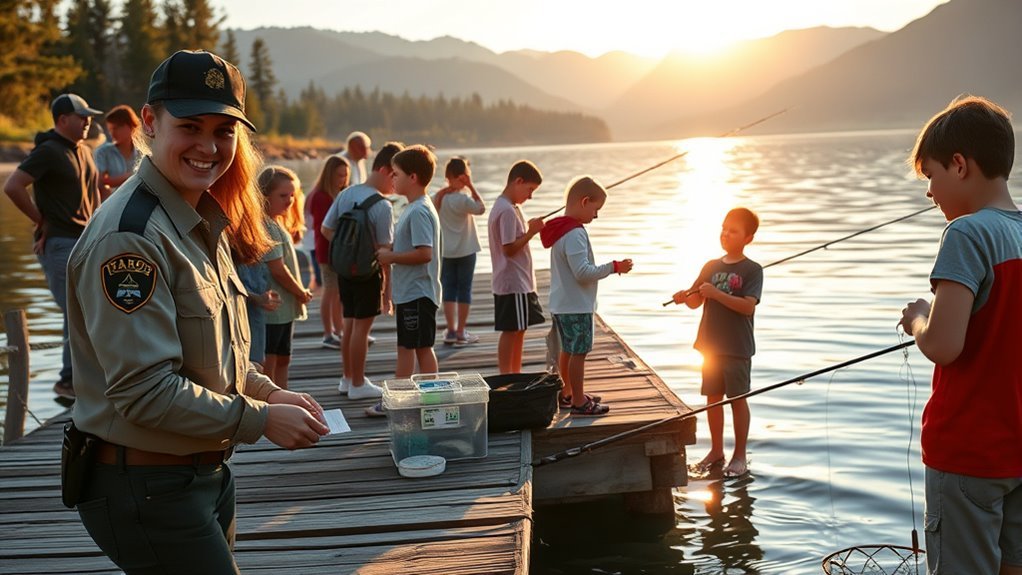
Washington’s annual Free Fishing Weekend is held on the Saturday and Sunday after the first Monday in June. The 2026 event took place June 6–7. The next event is scheduled for June 12–13, 2027.
The weekend is most valuable to anglers age 16 and older who would normally need a base license. Under-16 anglers already receive the ordinary base-license exemption throughout the year.
| Option | Who it covers | Important limits |
|---|---|---|
| Under-16 base-license exemption | Residents and nonresidents younger than 16 | Catch cards, endorsements, seasons, limits, and closures may still apply. |
| Free Fishing Weekend | All ages and residency classes | Does not waive all shellfish or catch-record-card requirements. |
| Two-pole weekend waiver | Free Fishing Weekend participants | Two poles may be used only in waters where two-pole fishing is otherwise legal. |
All daily limits, possession limits, legal-size rules, gear restrictions, area closures, and species seasons remain in effect during Free Fishing Weekend. A free weekend is not an open-season waiver.
Short-Term and Seasonal Youth Licenses
Washington does not list a one-, two-, or three-day base fishing-license charge for anglers under 16 because those anglers generally do not need a base license in the first place.
After an angler turns 16, short-term combination licenses can make sense for an occasional visit:
- One day, resident: $14.90
- Two consecutive days, resident: $20.98
- Three consecutive days, resident: $25.53
- One day, nonresident: $27.05
- Two consecutive days, nonresident: $39.19
- Three consecutive days, nonresident: $48.30
Temporary licenses have species and endorsement limitations. Before buying one, compare its coverage with the target species, water, and season rather than choosing solely by price.
Pro Tip: For an under-16 angler, start with the species and water—not a license package. A child fishing for ordinary trout in an open lake may need no document, while a child fishing for salmon may need a catch record card.
Where to Get Youth Fishing Documents

An under-16 angler usually does not need to buy a base license, but a WDFW customer account may still be needed to obtain a catch record card or endorsement.
Available channels include:
- Online: Use the official purchasing option linked from the WDFW fishing-license page.
- Phone: Contact WDFW Licensing at 360-902-2464.
- License dealer: Visit an authorized sporting-goods store, tackle shop, or other WDFW dealer.
- Electronic documents: Eligible anglers may use WDFW-supported mobile license and electronic catch-record-card options.
A dealer is useful when the youth needs a paper catch record card immediately. When ordering physical documents remotely, allow time for delivery before the trip.
Pro Tip: Store paper documents in a waterproof pouch and carry a pencil that writes when damp. Before leaving home, confirm that the angler’s name and required species are shown correctly.
Required Catch Record Cards and Endorsements
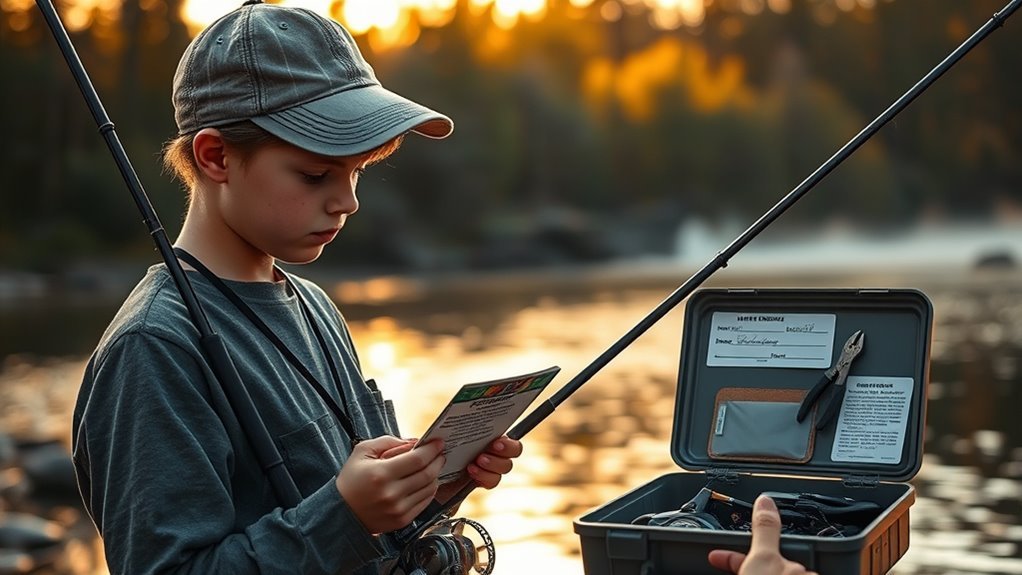
The biggest mistake families make is treating “no base license” as “no paperwork.” Washington uses catch record cards and endorsements to track specific fisheries, and those requirements can apply to children.
Catch Record Card Species
Under the WDFW catch record card rules, an angler must have the proper paper or electronic card while fishing for:
- Salmon
- Steelhead
- Sturgeon
- Halibut
- Puget Sound Dungeness crab
Record retained fish or crab as required before continuing to fish or crab. Reporting requirements can apply even when no catch was kept, particularly for Puget Sound crab cards. Follow the deadline and method printed on the card or displayed in the electronic system.
Puget Sound Dungeness Crab Endorsement
Every recreational crabber, regardless of age, needs a Puget Sound crab endorsement and a Puget Sound Dungeness crab catch record card when crabbing inside the Puget Sound crab management area. The requirement does not apply in exactly the same way to coastal crabbing, so verify the marine area before the trip.
The 2026–27 fee table does not list a charge for the youth-under-16 crab endorsement. Adult annual and temporary endorsement prices differ.
Columbia River Salmon and Steelhead Endorsement
Beginning January 1, 2026, anglers age 15 and older must obtain the Columbia River Salmon and Steelhead Endorsement before fishing recreationally for salmon or steelhead in the Columbia River and covered tributaries.
The current fee is $7.10 for a 15-year-old and $8.75 for anglers age 16 and older. This is the most important paid exception for a youth who otherwise does not need a base license.
Two-Pole Rules
Two-pole fishing is allowed only on waters specifically open to that method. The current fee table does not list a two-pole endorsement charge for youth under 16. Anglers age 16 and older must obtain the endorsement before using a second line, except during a qualifying Free Fishing Weekend waiver.
Never assume a two-pole endorsement makes two lines legal everywhere. Many rivers, marine areas, and specially regulated waters remain excluded.
Rules for Youth Fishing and Supervision
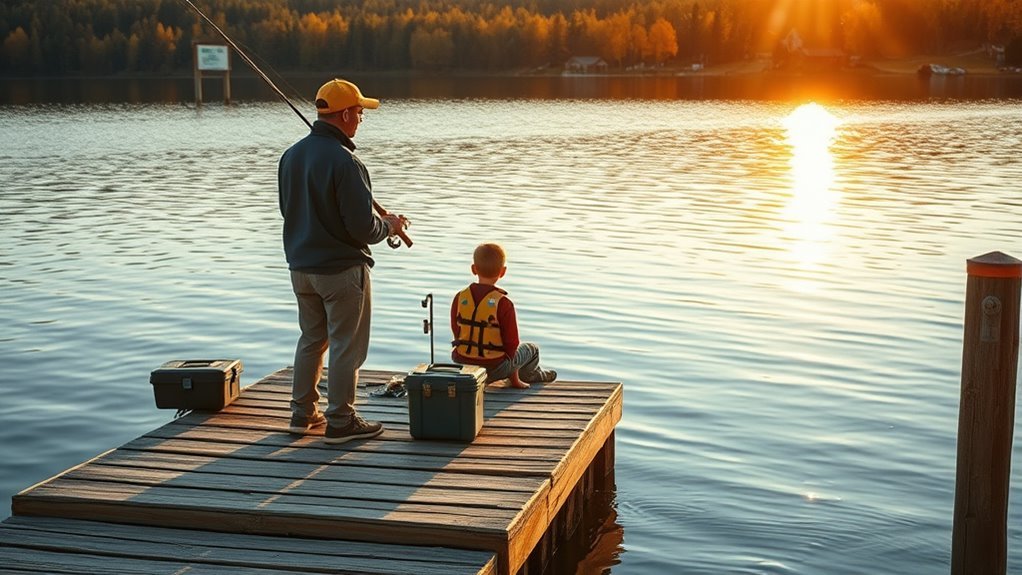
Washington’s under-16 base-license exemption is not generally conditioned on the child standing beside a licensed adult. However, close adult supervision is strongly recommended whenever a young person is near deep water, current, slippery banks, hooks, knives, boats, or moving fishing gear.
Youth anglers must still follow the same fishing rules that apply to the water and species, including:
- Opening and closing dates
- Daily and possession limits
- Minimum and maximum size rules
- Wild-versus-hatchery retention rules
- Barbless-hook or selective-gear requirements
- Legal bait and fishing methods
- Marine-area and river-specific rules
- Immediate catch-record-card entries when required
An adult should help the child identify the species correctly before keeping it. If identification is uncertain, release the fish carefully unless regulations require a different action.
Warning: Never rely only on a printed annual pamphlet. Washington may issue emergency closures or rule changes after publication, especially for salmon, steelhead, sturgeon, shellfish, and marine fisheries.
Before You Go: Five-Step Checklist
- Name the exact water. Identify the lake, river section, beach, marine area, or park boundary.
- Confirm the target species. The document requirements for trout can differ from salmon, halibut, sturgeon, or Puget Sound crab.
- Check the angler’s age. Under 16 generally means no base license; age 15 triggers the Columbia River endorsement in covered salmon and steelhead fisheries.
- Obtain every required card or endorsement. Carry the paper document or confirm that the electronic version is active before fishing.
- Review current rules on the day of the trip. Check the season, limits, legal gear, emergency changes, and access requirements.
Renewals, Replacements, and Important Dates
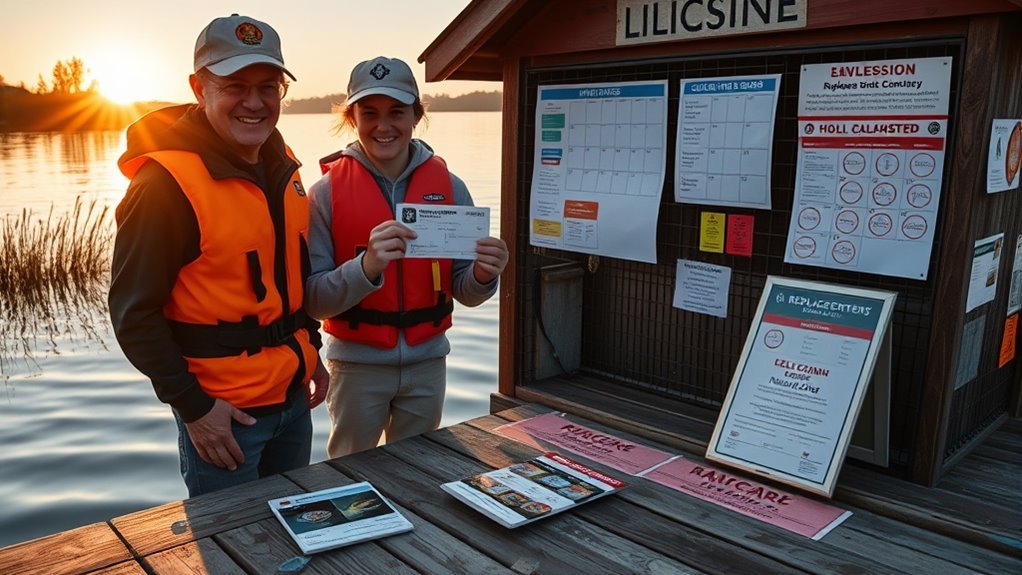
Washington’s annual fishing-license year runs from April 1 through March 31. For example, 2026–27 annual products are valid from April 1, 2026, through March 31, 2027.
Most children under 16 do not have a base license to renew. The dates still matter when the youth holds a seasonal catch record card or endorsement, or when the youth turns 16 and begins needing a regular license.
- Before age 16: Review whether catch cards or endorsements are still valid for the planned season.
- At age 16: Obtain the appropriate base license before the next trip that requires it.
- Lost license document: Sign in to the purchasing account or contact WDFW Licensing about reprinting.
- Lost catch record card: Follow WDFW’s replacement process; do not create or print an unauthorized duplicate.
- Crab reporting: Submit the required report by the printed deadline, including a no-catch report when required.
Do not rely on an old flat replacement fee. The cost and procedure depend on the document, how it was issued, and whether an administrative reporting penalty applies.
Frequently Asked Questions
Can a child under 16 fish without an adult in Washington?
Washington’s general base-license exemption is based on age and does not normally require the child to be accompanied by a licensed adult. An adult should still supervise young or inexperienced anglers for water, hook, boat, and wildlife safety.
Does a 15-year-old need a fishing license in Washington?
A 15-year-old generally does not need a base fishing license. However, the angler may need a catch record card and must buy the $7.10 Columbia River Salmon and Steelhead Endorsement when fishing for salmon or steelhead in covered Columbia River waters.
Do youth licenses cover ice-fishing competitions?
An under-16 angler’s base-license exemption normally continues during an ice-fishing event, but the water’s season, limits, gear rules, and catch-card requirements still apply. The event organizer may also need a fishing-contest permit or impose separate registration and safety rules.
Can a junior angler fish in a private lake?
Only with the owner’s permission. A privately owned lake is not automatically exempt from Washington fishing rules. Licensing and season requirements can depend on whether the water is connected to public waters or operates under an approved private-fish-stocking arrangement.
Are there discounts for multiple children in one family?
A general family discount is usually unnecessary because each child under 16 is already exempt from the base fishing-license charge. Separate costs may still arise for age-15 Columbia River endorsements, access passes, event fees, or replacement documents.
Do Washington youth rules apply inside national parks?
Park rules vary. Olympic National Park and Mount Rainier National Park have park-specific license rules, while the North Cascades National Park Service Complex generally follows Washington licensing requirements. Catch cards and special species rules may still apply, so check the page for the exact park and water.
Can a nonresident guardian obtain fishing documents for a visiting child?
Yes. A visiting child under 16 generally has the same base-license exemption as a resident child. A parent or guardian can help create the child’s WDFW account and obtain required catch cards or endorsements. The account information must accurately identify the child who will fish.
Does a youth need a catch record card for catch-and-release fishing?
When Washington requires a catch record card for the species being targeted, the angler must carry the card even if planning to release every fish. Only retained catch is entered, unless the instructions for that fishery or electronic system state otherwise.
Conclusion
For most Washington anglers under 16, the base fishing-license cost is $0. The key is checking what the planned activity requires beyond that exemption. Salmon, steelhead, sturgeon, halibut, and Puget Sound Dungeness crab can require catch record cards, and a 15-year-old needs the Columbia River Salmon and Steelhead Endorsement in covered waters.
Before each trip, confirm the exact water, species, season, emergency rules, and required documents. That brief check protects the resource, prevents avoidable violations, and keeps the day focused on fishing.
Related Washington fishing guides
Sources
- Washington Department of Fish and Wildlife: Fishing licenses — age requirements, purchasing channels, and general license guidance
- WDFW: Fishing license types and fees — current license, endorsement, and catch-card prices
- WDFW: Catch record cards — covered species, paper and electronic cards, and reporting rules
- WDFW: Fishing license endorsements — Columbia River, two-pole, and Puget Sound crab requirements
- Washington State Legislature: RCW 77.32.470 — statutory fishing-license age threshold
- WDFW: Current fishing regulations — statewide rules, water-specific regulations, and emergency updates