
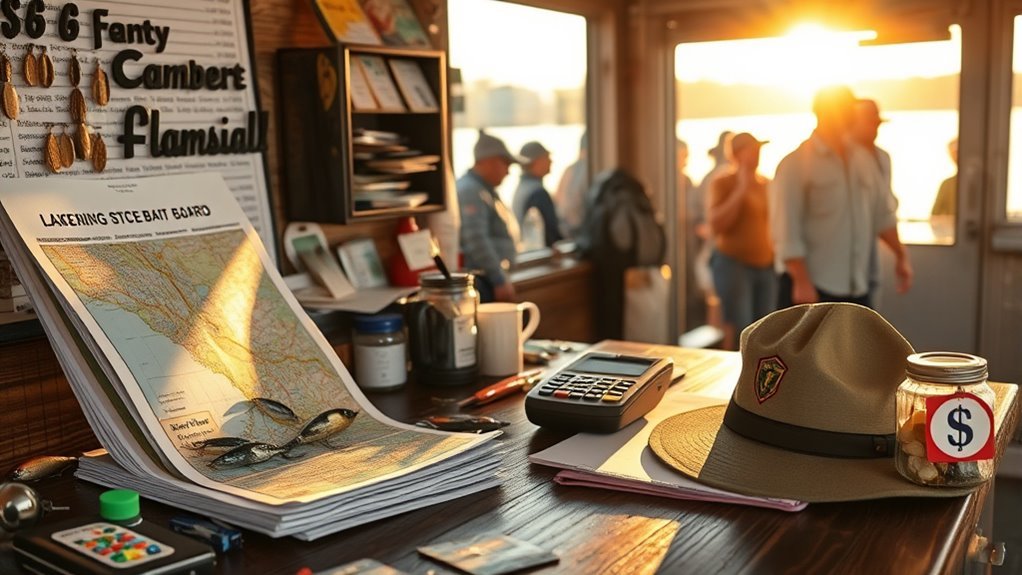
California visitors age 16 or older generally need a sport fishing license before fishing in the state’s inland or ocean waters. For 2026, a nonresident 365-day license costs $174.14. Short-term choices include a one-day license for $21.09, a two-day license for $32.40, and a 10-day nonresident license for $64.54. Validations or physical report cards may also be required for certain waters, gear, and species.
Last verified: July 28, 2026
Quick Answer
A 2026 California nonresident fishing license costs $174.14 for 365 days, $21.09 for one specified day, $32.40 for two consecutive days, or $64.54 for 10 consecutive days. Anglers under 16 do not need a general license, but species report cards and all fishing regulations may still apply.
Key Takeaways
- The 2026 nonresident 365-day sport fishing license costs $174.14 and is valid for 365 days from purchase.
- One-day and two-day licenses are available to residents and nonresidents and do not require an Ocean Enhancement Validation.
- The 10-day license is for nonresidents only and may require an Ocean Enhancement Validation when fishing south of Point Arguello.
- People under 16 and anglers on qualifying public ocean piers may fish without a general license, but report cards and other rules still apply.
- Fishing licenses, validations, and report cards are nonrefundable.
2026 Fees at a Glance
| Nonresident 365-Day License | $174.14; valid for 365 days from purchase |
| One-Day License | $21.09; valid for one specified day |
| Two-Day License | $32.40; valid for two consecutive days |
| 10-Day Nonresident License | $64.54; valid for 10 consecutive days |
| Ocean Enhancement Validation | $7.30 when required; not required with a one-day or two-day license |
| Second Rod Validation | $20.26 for two rods or lines in eligible inland waters |
| Recreational Crab Trap Validation | $2.98 when using qualifying recreational crab traps |
These are the fees listed by the California Department of Fish and Wildlife for 2026. CDFW notes that most listed fees include a 5% license-agent handling fee and a 3% nonrefundable application fee.
Who Needs a Sport Fishing License in California?
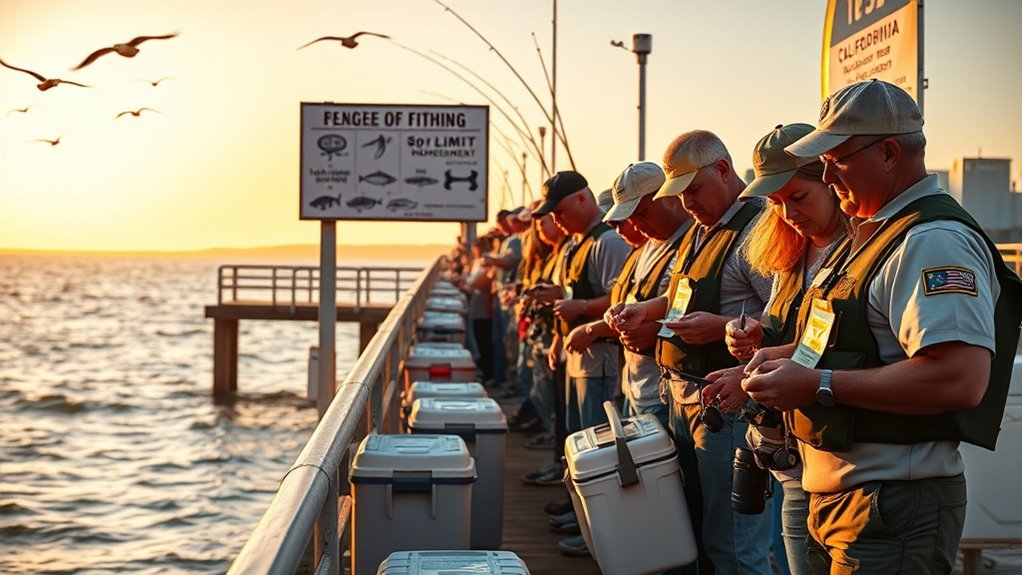
Anyone age 16 or older generally needs a valid California sport fishing license when attempting to take fish, shellfish, reptiles, amphibians, mollusks, crustaceans, or other covered aquatic species in California’s inland or ocean waters.
The rule applies to residents and nonresidents. It also applies whether you fish from shore, a private boat, a kayak, or another vessel unless a specific exemption covers the activity.
Most California visitors age 16 or older need a license before they cast a line—not only after they catch a fish.
Main License Exemptions
- Children age 15 or younger: No general sport fishing license is required.
- Qualifying public ocean piers: A license is not required when fishing from a structure that meets California’s legal definition of a public pier in ocean or bay waters.
- Free Fishing Days: Anyone may fish without a license on the two dates selected by CDFW each year. The 2026 dates are July 4 and September 5.
A public pier must be publicly owned, connected to shore, open to the public without an access charge, and built or used mainly for fishing. Not every dock, jetty, seawall, marina, or breakwater qualifies. Check CDFW’s public fishing pier map and definition before relying on this exemption.
Warning: A license exemption does not cancel seasons, size limits, bag limits, gear rules, area closures, or report-card requirements. A public-pier angler or child may still need a physical species report card.
Free Fishing Days also waive only the general license requirement. Anglers must still follow all other rules, including report-card requirements for steelhead, sturgeon, and salmon in the Smith and Klamath-Trinity river systems. See the official California Free Fishing Days page for current dates and conditions.
Annual Nonresident Sport Fishing License Fee
The 2026 California nonresident sport fishing license costs $174.14. It is a 365-day license, so its validity begins on the purchase date rather than ending on December 31.
For example, a license purchased on July 28, 2026, remains valid through July 27, 2027. Species report cards do not automatically follow the same 365-day period because each card has its own season and reporting schedule.
The annual license covers general recreational fishing in California, but it does not provide unrestricted access. You must still check:
- Open seasons and in-season closures
- Daily bag and possession limits
- Minimum and maximum sizes
- Legal fishing methods and hook restrictions
- Marine protected areas and special management zones
- Private-property access requirements
- Required validations and report cards
Use CDFW’s current freshwater and ocean sport fishing regulations immediately before your trip. Ocean seasons and depth limits can change during the year.
Pro Tip: Two 10-day licenses cost $129.08, while three cost $193.62. The 365-day license becomes less expensive than buying three separate 10-day licenses, although your actual best choice depends on whether your fishing dates are consecutive.
Products Worth Considering

CUSTOMIZE NOW – Add your personalized text. (Not embossed or stamped). Printed with a subtle shadow effect to create a dimensional look.

PREMIUM QUALITY: Crafted from high-grade materials, our License Plate is built to withstand the elements and maintain its vibrant appearance over time. It is resistant to fading, cracking, and peeling, ensuring long-lasting performance.
CALIFORNIA STATE FLAG DESIGN: Features a textured, raised California flag design for an authentic, high-end look and feel.
Short-Term California Fishing License Options
California offers three short-term choices for visitors. The one-day and two-day licenses are available to residents and nonresidents. The 10-day license is available only to nonresidents.
Products Worth Considering

Enough to Use: you will receive 6 pieces of fishing license holders, and 6 pieces of safety pins, abundant in quantity, enough for you to choose and replace, can meet your different needs; You can also share them with your friends


FISHING LICENSE HOLDER W/ZIP CLOSURE
One-Day License: $21.09
The one-day sport fishing license is valid for one specified calendar day. It is useful for a charter trip, a single day at a lake, or a brief stop during a larger vacation.
A one-day license is exempt from the Ocean Enhancement Validation requirement. Species report cards and other validations may still apply.
Two-Day License: $32.40
The two-day sport fishing license covers two consecutive calendar days. It costs less than buying two one-day licenses, which would total $42.18.
Like the one-day license, the two-day license is exempt from the Ocean Enhancement Validation. It does not waive report-card, season, gear, or location rules.
10-Day Nonresident License: $64.54
The 10-day nonresident license covers 10 consecutive days. Unlike the one-day and two-day licenses, it is not automatically exempt from the Ocean Enhancement Validation.
If you use a 10-day license to fish in ocean waters south of Point Arguello where a license is required, add the $7.30 Ocean Enhancement Validation.
Which Short-Term License Is Cheapest?
- One fishing day: Buy the one-day license for $21.09.
- Two consecutive days: Buy the two-day license for $32.40.
- Three consecutive days: A one-day plus a two-day license costs $53.49.
- Four to 10 consecutive days: The 10-day license at $64.54 costs slightly less than two two-day licenses and covers additional days.
- More than 20 fishing days: Compare the annual license with multiple 10-day licenses.
Note: Short-term licenses cover consecutive calendar days, not a set number of separate fishing days that can be used at any time.
Validations and Required Report Cards for Visitors
A sport fishing license may not be the only item you need. California uses validations for certain locations or fishing methods and report cards for selected species.
| Ocean Enhancement Validation | $7.30; generally required in ocean waters south of Point Arguello when fishing under a license other than a one-day or two-day license |
| Second Rod Validation | $20.26; permits two rods or lines in eligible inland waters |
| Recreational Crab Trap Validation | $2.98; required when using qualifying recreational crab traps, with listed exceptions |
| North Coast Salmon Report Card | $9.21; required for salmon in the Smith and Klamath-Trinity river systems |
| Steelhead Report Card | $10.29; required when fishing for steelhead in inland waters |
| Spiny Lobster Report Card | $12.70; required for every person fishing for or taking spiny lobster |
| Sturgeon Fishing Report Card | $8.13 for the 2026–27 season; required when fishing for sturgeon |
Ocean Enhancement Validation
The $7.30 Ocean Enhancement Validation is generally required when fishing in ocean waters south of Point Arguello in Santa Barbara County if a sport fishing license is required.
You do not need this validation when:
- Fishing under a one-day sport fishing license
- Fishing under a two-day sport fishing license
- Fishing without a license from a qualifying public ocean pier
A 10-day or 365-day license does not receive the short-term exemption. Add the validation when fishing in the covered area.
Second Rod and Crab Trap Validations
The Second Rod Validation allows an angler to use two rods or lines in many inland waters. It does not allow two rods where regulations require artificial lures or barbless hooks only, and it does not override water-specific gear limits.
The Recreational Crab Trap Validation is required for anglers using traps that meet California’s regulatory definition. It is not required when using hoop nets or crab loop traps. Beginning January 1, 2026, anglers using crab traps from a commercial passenger fishing vessel are also exempt from this validation.
Species Report Card Requirements
Report cards apply to every person fishing for the covered species, including children under 16, people fishing on Free Fishing Days, and anglers using the public-pier license exemption.
- North Coast salmon: The card applies in the Smith River System and Klamath-Trinity River System, including covered tributaries. It is not a general ocean-salmon report card.
- Steelhead: A Steelhead Report Card is required in inland waters.
- Spiny lobster: Every person fishing for or helping take spiny lobster needs a card. Cards must be reported by April 30 after the season, even when no lobster was caught.
- Sturgeon: A card is required when fishing for sturgeon. White sturgeon is catch-and-release only, and green sturgeon may not be taken.
Warning: The CDFW License App can show proof that you purchased a report card, but that digital record does not replace the physical report card. Carry and complete the physical card as required.
Current Sturgeon Report Card Status
California changed the sturgeon report-card schedule for the 2025–26 season. That season ran from October 1, 2025, through June 30, 2026, and used a transitional no-fee report card. Reports for those cards are due by July 31, 2026.
The 2026–27 Sturgeon Fishing Report Card costs $8.13 and is scheduled to become available August 15, 2026. The fishing season is scheduled to reopen October 1. Check the CDFW Sturgeon Report Card page before fishing because closures and season rules can change.
Common Report-Card Deadlines
- North Coast Salmon Report Card: Report by January 31 after the card year.
- Steelhead Report Card: Report by January 31 after the card year.
- Spiny Lobster Report Card: Report by April 30 after the season.
- Sturgeon Fishing Report Card: Under the new seasonal system, report by July 31 after the season ends June 30.
Spiny lobster card holders who miss the April 30 deadline face a $21.60 non-return fee when buying a card for the following season. Reporting is required even if the card holder did not fish or did not catch a lobster.
Where and How to Purchase or Replace a License
You can purchase California sport fishing licenses, validations, and most report cards through:
- CDFW Online License Sales and Services
- CDFW’s authorized telephone sales agent
- Authorized license agents, including many sporting-goods and bait-and-tackle stores
- Select CDFW license sales offices
Online buyers can print a temporary 365-day license that is valid immediately while waiting for the physical document. Short-term licenses are issued for the dates selected during the transaction.
Products Worth Considering

【Material】Our License Plate Frame Is Made Of Stainless Steel, Strong And Durable.

【MATERIAL】: oFloral License plate frame is made from premium quality aluminum, which can provide long-lasting protection from corroding, rusting and aging, durability for long lasting usage.Personalized Car Frame Can Perfect to Put on Your Front of Car or for Decorative Purposes Around the House Like in Your Bedroom, Garage, Basement, Ect.

【MATERIAL】: oFloral License plate frame is made from premium quality aluminum, which can provide long-lasting protection from corroding, rusting and aging, durability for long lasting usage.Personalized Car Frame Can Perfect to Put on Your Front of Car or for Decorative Purposes Around the House Like in Your Bedroom, Garage, Basement, Ect.
Using the CDFW License App
The official CDFW License App can display supported sport fishing licenses and validations on a mobile device instead of a physical license.
Your phone must be working and able to display the active license when requested. A dead battery, broken screen, or unavailable license display can leave you without valid proof in the field. Carrying a paper backup or portable charger is a practical precaution.
Physical species report cards remain separate. The app does not replace a report card that regulations require you to carry and complete by hand.
Replacing a Lost License
A duplicate sport fishing license costs $14.30 in 2026. You can normally buy a duplicate online, from a license agent, or at a CDFW license sales office.
A replacement Second Rod or Ocean Enhancement Validation costs $3.81. A replacement Recreational Crab Trap Validation costs $2.98. Lost sturgeon report cards require a separate affidavit and replacement through a CDFW license sales office.
CDFW’s License and Revenue Branch and regional license counters do not accept cash. Accepted methods include checks, money orders, and debit or credit cards bearing a Visa or Mastercard logo. Office availability varies, so review the CDFW office list before visiting.
Note: California sport fishing licenses, validations, and report cards are nonrefundable from the time of purchase. Confirm your dates, customer information, and license type before completing payment.
Reduced-Fee Licenses and Exemptions
Some visitors may qualify for a reduced-fee license, but the eligibility rules differ by category. Applicants must provide documentation and may need CDFW approval before purchase.
| Disabled Veteran | Available to qualifying residents and nonresidents with an honorable discharge and a service-connected disability rating of at least 50%; $10.04 at CDFW offices or $10.54 from license agents |
| Recovering Service Member | Available to qualifying recovering U.S. military service members; $10.04 at CDFW offices or $10.54 from license agents |
| Low-Income Senior | $10.04; limited to California residents age 65 or older who receive SSI or CAPI benefits |
| Certain Disability Categories | A free license may be available for qualifying blind, developmentally disabled, or mobility-impaired applicants; documentation and residency rules depend on the category |
| Children Under 16 | No general sport fishing license; species report cards may still be required |
| Public Ocean-Pier Anglers | No general license on a qualifying public pier in ocean or bay waters; other regulations and report cards remain in effect |
| Free Fishing Days | No general license on July 4 or September 5, 2026; all other rules remain in effect |
Disabled veterans and recovering service members must prequalify by submitting the required military or medical documentation. Low-income senior licenses are not a general visitor discount because that program is limited to qualifying California residents.
Free licenses based on blindness, developmental disability, mobility impairment, or low-income Native American status have separate definitions and application procedures. Review the current eligibility details on the CDFW fishing license page before applying.
Frequently Asked Questions
Do nonresident youth need a separate fishing license?
No. A nonresident who is younger than 16 does not need a general California sport fishing license. The child must still follow seasons, size limits, bag limits, and gear rules. A physical report card is required when fishing for covered species such as steelhead, sturgeon, spiny lobster, or salmon in the designated North Coast river systems.
Are any fishing locations excluded from a visitor license?
A California license does not guarantee access to every body of water. Private property, posted closures, marine protected areas, wildlife areas, tribal waters, and federally managed locations may have separate access rules or restrictions. Check the current regulation booklet, local signs, and landowner requirements before fishing.
Can visitors fish from private boats without a license?
No. Fishing from a privately owned boat is not a general license exemption. Visitors age 16 or older normally need a valid sport fishing license and any required validation or report card. The public-pier exemption applies only while fishing from a structure that meets California’s legal definition of a public ocean pier.
Do fishing license fees support conservation projects?
License and related fee revenue supports California sport-fishing programs, including fish management, hatcheries, research, access, and enforcement. The exact allocation varies by program and budget year, so an individual license payment is not assigned to one specific local project.
Is there a refund if travel plans change?
No. CDFW considers sport fishing licenses, validations, and report cards valid and in use from the time of purchase. These purchases are nonrefundable, even when the buyer does not fish or changes travel plans.
Can I show my California fishing license on my phone?
Yes. Supported sport fishing licenses and validations can be displayed through the official CDFW License App. Your device must be working and able to show the active license. Physical species report cards must still be carried because the app’s purchase record does not replace them.
Do one-day and two-day licenses need an Ocean Enhancement Validation?
No. California’s one-day and two-day sport fishing licenses are exempt from the Ocean Enhancement Validation. A 10-day or 365-day license holder generally needs the $7.30 validation when fishing in covered ocean waters south of Point Arguello.
Conclusion
Most California visitors age 16 or older need a sport fishing license. In 2026, the main choices are $21.09 for one day, $32.40 for two consecutive days, $64.54 for 10 consecutive days, or $174.14 for a 365-day nonresident license.
Choose the license that matches your actual fishing dates, then check whether you need an Ocean Enhancement, Second Rod, or Recreational Crab Trap Validation. Carry the correct physical report card when fishing for steelhead, sturgeon, spiny lobster, or salmon in the Smith and Klamath-Trinity river systems.
Before leaving, check current CDFW regulations for seasons, closures, bag limits, gear rules, and location restrictions. License purchases are nonrefundable, and buying a license does not guarantee that a particular species, water, or access point is open.
Sources
- California Department of Fish and Wildlife — Sport Fishing Licenses and Report Cards — 2026 license, validation, report-card, reduced-fee, and duplicate fees.
- California Department of Fish and Wildlife — Free Fishing Days — 2026 dates and rules that remain in force.
- California Department of Fish and Wildlife — California Beach Fishing — public-pier definition, pier map, and license exemption.
- California Department of Fish and Wildlife — CDFW License App — digital license display and physical report-card limitations.
- California Department of Fish and Wildlife — Online License Sales FAQ — online purchase, temporary documents, and payment information.
- California Department of Fish and Wildlife — Sturgeon Report Card — current season, reporting deadline, and catch-and-release rules.
