
If you are a nonresident planning a short fishing trip in Illinois, the state’s 3-day sport fishing license may be the most practical option. The current posted fee is $15.50, and the license is available to nonresidents age 16 or older. You must also follow statewide and water-specific fishing rules, and you may need a separate trout or salmon stamp.
Quick Answer
Illinois charges $15.50 for a nonresident 3-day fishing license. It authorizes no more than three consecutive fishing days. Nonresidents under 16 do not need a license. A separate $6.50 stamp is required when targeting inland trout or salmon and trout covered by Lake Michigan stamp rules.
Key Takeaways
- The current Illinois nonresident 3-day fishing license costs $15.50.
- It is for nonresidents age 16 or older who are not covered by another exemption.
- Illinois residents do not have a 3-day option; a resident 24-hour license costs $5.50.
- An Inland Trout Stamp or Lake Michigan Salmon Stamp may be required in addition to the license.
- Keep the license available for inspection and follow the effective dates printed on it.
At a Glance
| Time Required | Usually 5–10 minutes online |
| Difficulty | Easy |
| Tools Needed | Identification or customer details, payment method, and a phone or computer for online purchases |
| Cost | $15.50, plus $6.50 for each required trout or salmon stamp |
Who Needs a 3-Day Fishing License
You generally need an Illinois nonresident fishing license if you are 16 or older, do not qualify as an Illinois resident, and plan to take or attempt to take fish or other aquatic life protected by state law.
The 3-day license is designed for visitors who want to fish for no more than three consecutive days. It provides the same basic recreational fishing privileges as a standard sport fishing license during its valid period, but it does not override seasons, size limits, harvest limits, legal-method rules, or site-specific restrictions.
Illinois law requires license holders to keep their license available for immediate inspection by an authorized officer. Save the official electronic copy to your phone or carry a printed copy while fishing.
Nonresidents age 16 or older can buy an Illinois 3-day fishing license for $15.50, but the license does not replace any required trout or salmon stamp.
Nonresidents under 16 do not need a fishing license. Illinois law does not make that age exemption dependent on fishing with a licensed adult. However, young anglers must still follow all applicable seasons, limits, methods, and waterbody rules.
Warning: A short-term fishing license does not include an Inland Trout Stamp or Lake Michigan Salmon Stamp. Purchase the applicable stamp before targeting a species covered by that requirement, including when you plan to release the fish.
Eligibility and Residency Rules
Your correct license type depends on your age, permanent residence, military status, disability status, and where you plan to fish. Do not claim Illinois residency simply because you are staying in the state temporarily.
Products Worth Considering

Decorative Item Only: This product is a vintage-style decorative license plate, crafted as a replica/artifact. It is NOT a real license plate and cannot be used as such. Please comply with all applicable laws—it must NOT be mounted on any vehicle to replace, cover, or imitate an official license plate. Use only for indoor or outdoor decoration where legally permitted.

Team colored license plate measures 6-inches by 11.5-inches

Showcase your passion for fishing with intricately etched designs
Residency Duration Requirement
Illinois defines a resident as someone who has maintained a permanent abode in the state for at least 30 consecutive days immediately before applying and who does not claim residency in another state for a similar license.
A permanent abode is a fixed home rather than a hotel, vacation property, temporary work location, or other short-term address. Evidence of residency may include the location where you vote, pay state income tax, or hold a driver’s license.
If you do not meet that definition, purchase a nonresident license unless a specific exemption applies. Be prepared to provide accurate identification and residency information when buying a license.
- Confirm whether Illinois is your permanent home.
- Check whether you have maintained that home for at least 30 consecutive days.
- Select a resident or nonresident product based on your actual status.
Military and Veteran Exceptions
Illinois has several separate military and veteran provisions. They should not be treated as one blanket exemption:
- Active-duty residency: A person on active duty in the Armed Forces is generally treated as an Illinois resident during military duty, except when applying for a lifetime license.
- Illinois residents on leave: A person who was an Illinois resident when entering the Armed Forces and is on ordinary or emergency leave may qualify to fish without buying a license.
- Returning Illinois service members: Certain Illinois residents returning from service abroad or presidential mobilization may qualify for fee waivers through the state’s military program after providing verification.
- Resident veterans: Qualifying Illinois resident veterans may receive reduced-price fishing licenses after prior certification.
- Service-disabled veterans: Veterans certified by the U.S. Department of Veterans Affairs as having at least a 10% service-connected disability, or receiving a total disability pension, may qualify to fish without a sport fishing license.
Nonresident veterans do not receive a reduced fishing-license fee merely because they are veterans. A nonresident may still qualify under the separate service-connected-disability exemption when all statutory conditions are met.
Carry the documentation that supports your exemption or reduced-fee status.
Property-Owner Privileges
Illinois provides a limited exemption for owners or bona fide tenants who actually reside on the land. They may fish without a license in waters lying upon or flowing over that land.
The exemption can also apply to their children, parents, brothers, and sisters when those family members permanently reside with them on the property.
It does not apply merely because you own a vacation lot, rent nearby property, or have access to a lake. It also does not apply to club lakes, organizational lakes, or lake developments.
- Confirm that you actually reside on the land.
- Confirm that the water lies on or flows over the property.
- Keep proof of ownership, tenancy, or residence available.
- Continue following all legal seasons and fishing rules.
Note: Other verified exemptions include anglers under 16, qualifying blind or disabled Illinois residents, anglers at IDNR-licensed fee-fishing areas, and people fishing during officially designated Illinois Free Fishing Days.
3-Day License Costs for Residents and Nonresidents
The Illinois Department of Natural Resources fishing-license fee list shows the following current short-term and nonresident options:
| License | Current Fee | Best For |
|---|---|---|
| Nonresident 24-hour license | $10.50 | One day or a single 24-hour fishing period |
| Nonresident 3-day license | $15.50 | A weekend or trip of up to three consecutive fishing days |
| Nonresident annual license | $31.50 | Longer trips or several visits during the license year |
| Resident 24-hour license | $5.50 | A short resident fishing trip |
| Electronic Inland Trout Stamp | $6.50 | Targeting trout in Illinois waters other than Lake Michigan |
| Electronic Lake Michigan Salmon Stamp | $6.50 | Targeting salmon or trout covered by Lake Michigan stamp rules |
Illinois does not list a resident 3-day sport fishing license. Residents who need a short-term option can use the 24-hour license or compare it with an annual resident license.
Pro Tip: Two nonresident 3-day licenses would cost $31, while the current nonresident annual license costs $31.50. An annual license may be more convenient if you expect to make more than one three-day trip.
Products Worth Considering

Gulp! Alive! Saltwater Shrimp Molting 3in | 8cm

Officially Licensed – Bold, officially licensed Swedish Fish Candy artwork covers a fun crew sock in eye-catching color that fans spot instantly.

How to Purchase a 3-Day Fishing Permit
You can purchase an Illinois 3-day nonresident fishing license online, from an authorized license vendor, or by telephone through the state licensing system.
Where to Buy
The main purchase options are:
- Online: Use the official ExploreMoreIL licensing system.
- Authorized vendor: Use the vendor directory linked from the IDNR License Sales and Information page.
- Telephone: Call the licensing customer-service number listed by IDNR at 866-716-6550.
Authorized sellers may include sporting-goods stores, bait shops, municipal offices, and other approved agents. Do not assume that every Walmart, tackle shop, or outdoor retailer sells licenses. Check the official vendor directory before traveling.
IDNR states that a valid Social Security number is required for license purchases through its system. The application must also contain accurate identity and residence information. Contact IDNR before purchasing if you cannot satisfy a required identification field.
Step-By-Step Process
| Step | Action |
|---|---|
| 1 | Open ExploreMoreIL or visit an authorized seller. |
| 2 | Enter or provide your legal name, date of birth, address, and required customer or identification details. |
| 3 | Select “Non-Resident Fishing License (3 day).” |
| 4 | Review the effective dates and add any required trout or salmon stamp. |
| 5 | Pay the displayed amount and save the final license document. |
| 6 | Check the printed effective and expiration details before fishing. |
Save the PDF to your phone or computer rather than relying only on an email link. A downloaded copy is easier to retrieve where mobile service is poor.
What Species and Waters Are Covered by Short-Term Licenses
An Illinois sport fishing license provides recreational fishing privileges in waters under Illinois jurisdiction during the license’s valid period. This includes common species such as bass, bluegill, crappie, catfish, walleye, and other legal aquatic life, subject to current regulations.
The license does not guarantee that every species, fishing method, season, or location is open. State parks, forest preserves, federal properties, municipal lakes, private waters, and managed fishing sites may impose additional access rules, permits, hours, limits, or closures.
Trout and Salmon Stamp Requirements
A licensed angler who takes or attempts to take trout in Illinois waters other than Lake Michigan must obtain an Inland Trout Stamp. Anglers targeting salmon or trout covered by Lake Michigan rules should obtain the Lake Michigan Salmon Stamp.
The relevant stamp is required in addition to the 3-day license. Anglers who are legally exempt from the fishing-license requirement, including children under 16, are also exempt from the trout or salmon stamp requirement.
Warning: Catch-and-release does not automatically remove a stamp requirement. Illinois law applies the stamp rule to taking or attempting to take the regulated species. If you are deliberately fishing for trout or salmon, obtain the applicable stamp before casting.
Waterbody and Method Restrictions
Before fishing, check:
- Daily harvest and possession limits
- Minimum, maximum, or protected-slot length limits
- Open and closed seasons
- Number-of-pole and hook restrictions
- Catch-and-release-only areas
- Site-specific bait, boating, access, and fishing-hour rules
A fishing license also does not replace the owner’s permission to enter private property.
Pier and charter anglers generally need their own fishing license unless they personally qualify for an exemption. A charter operator’s passenger-boat or charter permit regulates the business and vessel; it does not replace the passengers’ individual sport-fishing licenses or stamps.
Validity, Renewal Windows, and Expiration Dates
The 3-day nonresident license is a short-term product and should not be treated like an annual license. It authorizes no more than three consecutive fishing days.
Illinois law also states that the license expires at midnight on the tenth day after it is issued, not counting the issue date. This is an outer issuance window, not permission to fish for ten days.
Your actual authority to fish is controlled by the effective dates and other details printed on the license. Confirm those dates before completing the purchase and again before fishing.
Note: The March 1 through March 31 license-year cycle applies to annual licenses. It does not extend a 3-day license until the following March 31.
A 3-day license is not renewed through an annual renewal window. When the short-term privilege ends, you must buy another valid short-term or annual license before fishing again.
The 24-hour product follows a different rule and expires 24 hours after the effective date and time printed on the license.
Reduced, Free, and Veteran License Options
Illinois has several free or reduced-license categories, but there is no general exemption simply because an applicant has a low income.
Verified categories include:
- Individuals under 16: No sport fishing license is required.
- Qualifying blind or disabled Illinois residents: Residents with the required Class 2 disability documentation may fish without a license.
- Qualifying service-disabled veterans: Veterans certified as having at least a 10% service-connected disability, or receiving a total disability pension, may qualify for a license exemption.
- Resident veterans: Some Illinois resident veterans can obtain reduced-price licenses after prior certification.
- Returning service members: Eligible Illinois residents may qualify for temporary fee waivers based on verified service abroad or mobilization.
- Resident landowners and tenants: The narrow property exemption applies only when all residence, family, water-location, and lake-type conditions are satisfied.
- Licensed fee-fishing areas: A state fishing license is not required at fee-fishing areas licensed by IDNR.
- Free Fishing Days: Illinois designates a limited number of license-free fishing days each year. Check the current regulations because the dates change annually.
Having an honorable discharge alone does not automatically make every resident or nonresident veteran eligible to fish for free. Use the exact program that matches your military service, residency, or certified disability status.
Carry any disability card, military verification, leave paperwork, property documentation, or other proof needed to support your exemption.
Products Worth Considering

FISHING LICENSE HOLDER W/ZIP CLOSURE

Material :High-Quality Metal Aluminum With High Gloss Stamped Metal License Plate.Lightweight, Waterproof,Anti-Rust And Very Durable.
Durability & Weather Resistance: Crafted from aluminum, our UEQIKI vanity plates for front of car are lightweight and colorful, ensuring long-lasting durability in any weather conditions. The sturdy construction and durable materials provide reliable protection while maintaining a sleek appearance, making this front license plate designs a practical choice for daily use
What to Do If Your Short-Term License Is Lost or Misused
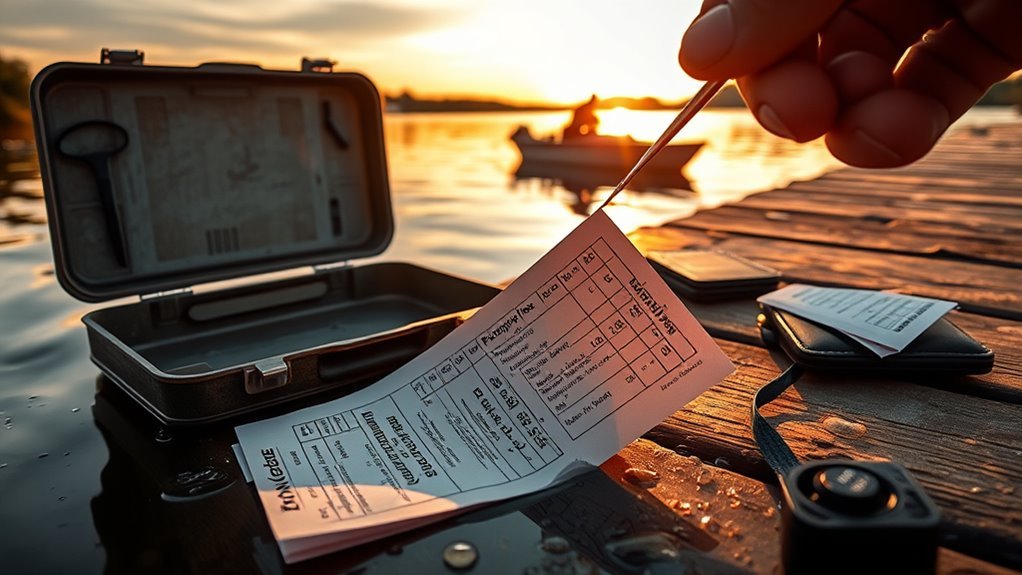
If you purchased the license online, IDNR allows you to reprint it without charge. Return to the licensing system, choose the purchase or reprint option, verify your customer information, and open the completed transaction.
IDNR recommends saving the license PDF to your own device. This lets you print or display another copy without depending on the sales site at the water.
If you purchased the license over the counter from a vendor, the current IDNR reprint page says you must return to an authorized vendor for a replacement and pay a $5 reprint fee.
| Situation | What to Do |
|---|---|
| Online license lost or deleted | Reprint it free through the online licensing system. |
| Vendor-issued license lost | Request a reprint from an authorized vendor; the current posted reprint fee is $5. |
| Unable to access your account | Contact IDNR licensing support at 217-782-2965. |
| Suspected account or license misuse | Contact IDNR promptly and preserve purchase receipts, emails, and account records. |
Do not continue fishing if you cannot produce the license for inspection. Restore access to the official license document first.
Frequently Asked Questions
Can I combine a 3-day license with an annual trout or salmon stamp?
Yes. The Inland Trout Stamp and Lake Michigan Salmon Stamp are separate annual privileges that can be used with a valid 3-day fishing license. Purchase the applicable stamp before targeting a covered species.
Are minors required to carry their own short-term license?
Anglers under 16 do not need an Illinois sport fishing license. Once an angler is 16, the normal resident or nonresident licensing rules apply unless another statutory exemption covers that person.
Is catch-and-release allowed without a trout or salmon stamp?
Not when you are deliberately targeting a species covered by the stamp. Illinois law applies the requirement to taking or attempting to take the fish, so planning to release the catch does not remove the stamp requirement.
Do pier or charter-boat anglers need their own licenses?
Yes, in most cases. Fishing from a public pier or paying for a charter does not by itself create an exemption. Each angler age 16 or older normally needs the proper license and any required stamp unless a specific statutory exemption applies.
Are refunds available if bad weather prevents me from fishing?
Do not assume that a short-term license will be refunded or extended because of weather. Review all dates before purchase and contact IDNR immediately if a transaction error occurs. The license remains subject to the effective dates printed on it.
Conclusion
The Illinois 3-day fishing license gives nonresident anglers an affordable way to fish for up to three consecutive days. The current posted price is $15.50. Buy it through the official licensing system or an authorized vendor, check the effective dates, and keep the license available while fishing.
Before your trip, confirm whether you also need an Inland Trout Stamp or Lake Michigan Salmon Stamp. Review current statewide and site-specific regulations, especially when fishing managed lakes, trout waters, Lake Michigan, private property, or a charter trip.
Sources
- Illinois Department of Natural Resources Fishing Licenses — current license and stamp fees.
- IDNR License Sales, Vendors and Information — online sales, vendor directory, and purchase requirements.
- 515 ILCS 5/20-55 — nonresident license fees and short-term expiration rules.
- 515 ILCS 5/20-5 — general license requirement and statutory exemptions.
- 515 ILCS 5/1-75 — Illinois residency definition.
- IDNR Reprint an Online License — current online and vendor replacement instructions.
