
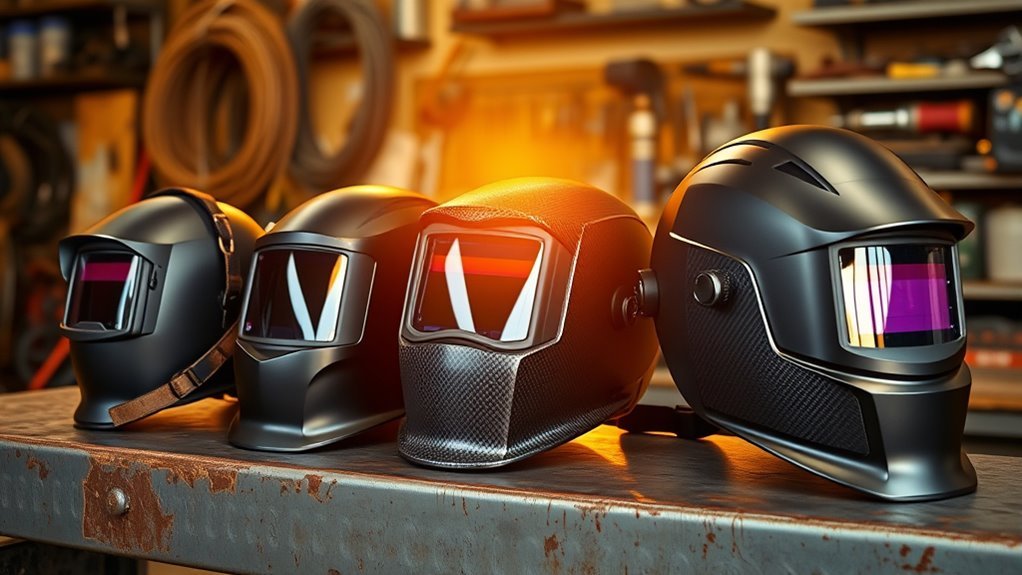
A welding helmet can cost less than a pair of work boots or more than a professional welder. Basic fixed-shade helmets start around $30, while dependable auto-darkening helmets usually cost $70–$250. Premium professional models often reach $250–$700 or more. Integrated PAPR and laser-specific systems can cost $1,500–$3,500+, so the right budget depends on your welding process, working conditions, comfort needs, and required protection.
Quick Answer
Expect to pay about $30–$70 for a fixed-shade welding helmet, $40–$100 for a basic auto-darkening model, $100–$250 for a solid mid-range helmet, and $250–$700+ for professional optics. Welding helmets with PAPR respiratory systems or certified laser protection often cost $1,500–$3,500 or more.
Key Takeaways
- A low price does not automatically mean poor protection. Certification, condition, shade suitability, and fit matter more than branding.
- Budget auto-darkening helmets can cost less than $100, while professional models charge more for clearer optics, larger viewing areas, better headgear, and stronger warranties.
- The correct shade depends on the welding process, electrode size, and arc current—not simply the darkest setting available.
- Cover lenses, batteries, headgear, sweatbands, filters, and replacement visors add to long-term ownership costs.
- A standard welding helmet is not automatically safe for laser welding or respiratory hazards.
Welding Helmet Prices at a Glance
| Fixed-shade helmet | About $30–$70 |
| Budget auto-darkening helmet | About $40–$100 |
| Mid-range auto-darkening helmet | About $100–$250 |
| Professional or panoramic ADF | About $250–$700+ |
| PAPR or laser-specific system | About $1,500–$3,500+ |
These are broad U.S. street-price ranges, not guaranteed quotes. Sales, graphics, lens packages, regional availability, replacement-part bundles, and employer purchasing contracts can move the final price considerably.
Typical Price Ranges for Welding Helmets
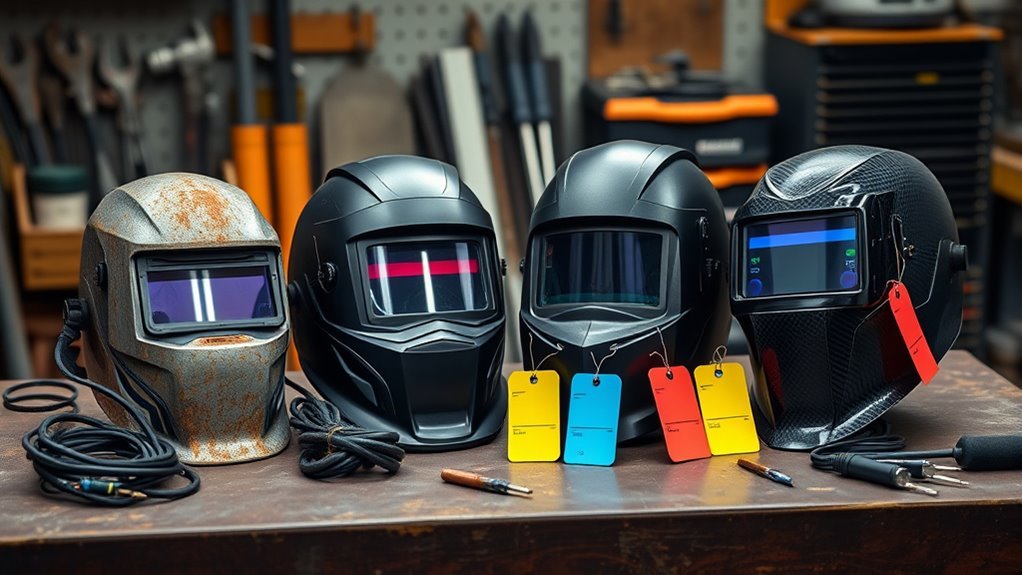
A welding helmet’s price usually reflects the filter technology, viewing area, headgear, shell design, controls, included accessories, and warranty. It does not create a simple ladder in which every expensive helmet is safer than every affordable one.
A certified fixed-shade helmet may be suitable for a consistent welding process. A costly auto-darkening helmet may still be the wrong choice if its shade range, low-amperage response, fit, or replacement parts do not match your work.
Most buyers can find a capable auto-darkening welding helmet between $100 and $250, but certification and process suitability should come before comfort extras or graphics.
Fixed-Shade Helmets: About $30–$70
Fixed-shade, or passive, helmets use a permanently dark filter. Shade 10 is common, although the correct shade must match the welding operation. These helmets are simple, light, and inexpensive because they do not need arc sensors, delay controls, liquid-crystal filters, or electronic settings.
A passive helmet can make sense for occasional welding or work that uses one consistent process. The main drawback is visibility between welds. You normally need to lift the helmet or use a flip-front design to inspect and reposition the work.
Budget Auto-Darkening Helmets: About $40–$100
Budget ADF helmets darken when their sensors detect an arc. They commonly provide a light state around shade 3 or 4, dark shades around 9–13, two sensors, basic sensitivity or delay controls, and battery-assisted solar power.
They can be a good choice for hobby MIG, stick, and general repair work. Check low-amperage TIG capability carefully because a basic filter may not respond as consistently to a weak or partially blocked arc.
Mid-Range ADF Helmets: About $100–$250
Mid-range helmets often add a larger viewing area, more sensors, clearer color transmission, better headgear, external controls, additional shade ranges, and replaceable batteries. They are a practical fit for regular shop use and welders who switch between MIG, TIG, stick, cutting, and grinding tasks.
Professional ADF Helmets: About $250–$700+
Professional helmets charge more for refined optics, balanced headgear, larger filters, low-amperage sensitivity, memory settings, task modes, integrated lights, flip-up grinding visors, or compatibility with respiratory systems.
Premium pricing may also include a longer warranty and better availability of replacement headgear, cover lenses, batteries, knobs, seals, and sweatbands.
PAPR and Laser-Specific Systems: About $1,500–$3,500+
A PAPR welding system includes a helmet, blower, battery, breathing tube, filters, belt or harness, charger, and airflow-check equipment. Laser-rated systems use protection selected for specific wavelengths and optical densities. These systems cost much more because they address hazards that a standard welding helmet cannot manage by itself.
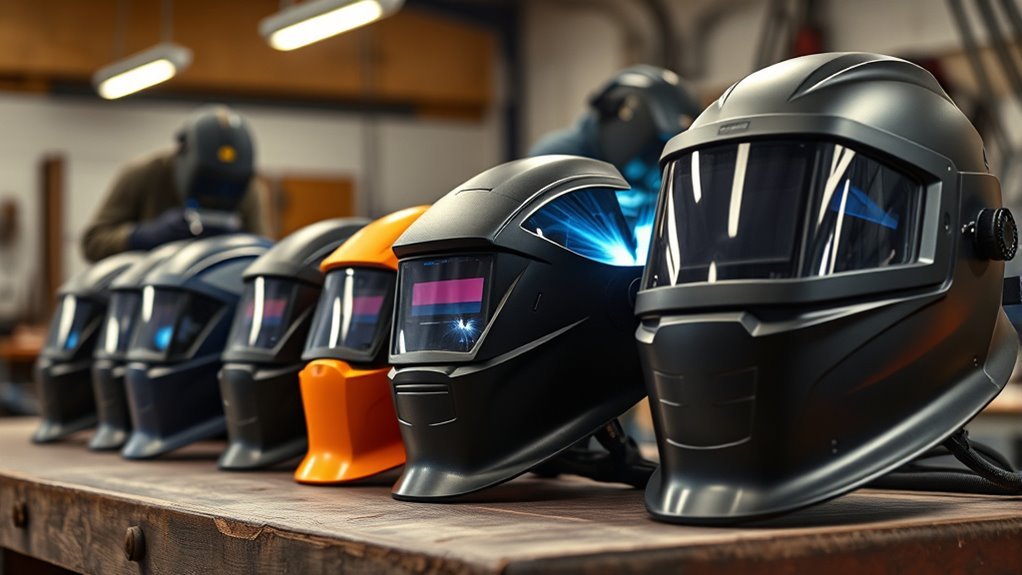
What Drives Welding Helmet Prices and Features?
Products Worth Considering

Wide Application Range: Shade 3.5/9-13 supports TIG, MIG, MMA/ARC and Grind, and the helmet accommodates magnifying lenses for close-up and detailed work.

【FASTER AUTO-DARKENING】Features high-end auto-darkening lenses with 4 premium arc sensors, switching from light to dark in 1/25000 sec. Easily adjust the shade and sensitivity of the lenses for different working environments, perfect for TIG/MIG/ARC welding. Dark state level: 4/9-13.
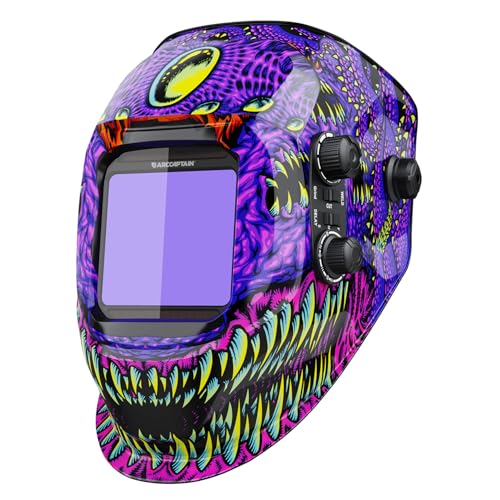
AUTO DARKENING FILTER - This welding helmet comes with high-end auto-darkening lens and 4 premium arc sensors which let you adapt to different working environments by adjusting the lens's shade and sensitivity while you are operating ARC/MIG/TIG Welding. DIN4 on light state, DIN5-9/9-13 on dark state.
Safety Markings and Shade Range
For U.S. workplace use, look for appropriate eye-and-face protection markings and follow employer requirements. OSHA also publishes a welding filter shade guide based on the process and operating conditions.
A wider selectable shade range can be useful when you switch between welding, cutting, and low-current work. However, a range such as 3–14 is not automatically safer or necessary for every buyer. The selected dark shade must be suitable for the actual process.
Warning: Grind mode is not a welding shade. Before striking an arc, confirm that the helmet is in weld mode and set to an appropriate shade. A forgotten grind-mode setting can expose your eyes to dangerous arc radiation.
Auto-Darkening Sensors, Sensitivity, and Delay
ADF helmets use sensors to detect the welding arc. Higher-priced models may use more sensors or position them to reduce the chance that a torch, pipe, fixture, or out-of-position joint blocks the arc signal.
Sensor count is not the only measure of performance. Also compare:
- Low-amperage rating: Important for TIG work with a weak arc.
- Sensitivity control: Helps the filter detect the intended arc without reacting constantly to nearby light.
- Delay control: Determines how quickly the lens returns to its light state after the arc stops.
- Switching specification: Indicates how quickly the lens changes from light to dark.
- Control placement: External controls are convenient, while internal controls are less likely to be bumped accidentally.
Lens Clarity and Color
Premium filters often provide a more natural-looking view of the workpiece and weld pool. Clearer color transmission can make joint edges, markings, fit-up, and surrounding objects easier to distinguish.
Terms such as “true color,” “natural color,” and similar phrases are often brand-specific marketing names. Compare the actual lens specifications, shade range, certifications, and user manual rather than relying on a feature name alone.
Weight, Balance, and Headgear Comfort
A helmet’s listed weight does not tell the whole comfort story. Balance, pivot position, headgear pressure points, shell clearance, and how far the filter sits from your face can matter just as much.
Professional welders who keep a helmet down for hours may benefit from:
- Multi-point headgear adjustments
- A broad rear support pad
- Replaceable sweatbands
- Low-friction pivot controls
- A shell that stays securely raised when needed
- Enough clearance for safety glasses or a respirator
Comparing Auto-Darkening and Passive Helmet Costs
Products Worth Considering
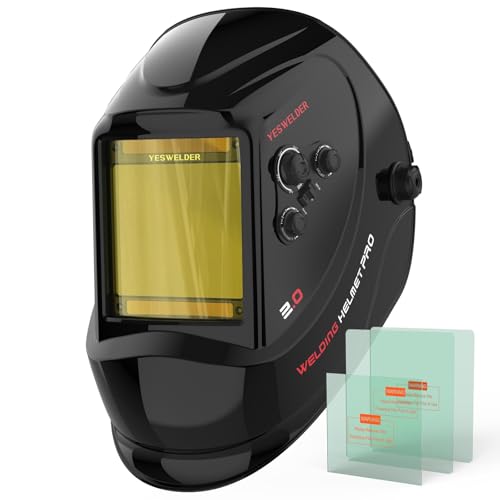
LARGE VIEW WITH TRUE COLOR CLARITY: See more of the weld puddle, joint edges, and work position through a wide 3.93" x 3.66" viewing area. The 1/1/1/1 true-color optical clarity provides a clearer, more natural view than traditional green-tinted lenses, helping support better visibility for detailed welding, fabrication, and garage projects.

WITH LED WELDING LIGHT: This welding helmet comes equipped with a USB-powered LED light on top, offering two brightness levels. You can weld easily, even in dark environments, without worrying about not being able to see the details of the weld. It is ideal for assisting with welding in various scenarios. NOTE: Welding light comes uninstalled; easy to attach.
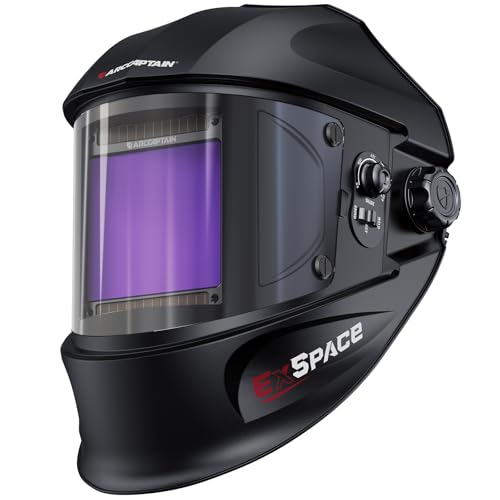
FASTER AUTO DARKENING - Equipped with high-end auto-darkening lenses and four premium arc sensors, the switching time from light to dark is 1/25000 seconds. The lens brightness and sensitivity can be easily adjusted for different working environments, making it ideal for TIG/MIG/ARC welding and grinding. DIN4 on light state, DIN5-9/9-13 on dark state.
Upfront Price Differences
A fixed-shade helmet normally has the lowest purchase price. It uses a passive filter, so there are no arc sensors, electronics, sensitivity controls, or batteries to maintain.
Auto-darkening helmets are available across a much wider range. A basic model may cost about $40–$100, while a professional ADF helmet can cost several hundred dollars. You are paying for convenience, visibility, controls, optical quality, headgear, and serviceability—not merely for the ability to darken.
- Choose fixed shade when the work is infrequent, the process is consistent, and minimum cost is the priority.
- Choose a budget ADF for hobby welding and general repair when its specifications match the process.
- Choose a mid-range ADF for regular multi-process use or better headgear and controls.
- Choose a professional ADF when optical clarity, long shifts, low-amperage performance, replacement support, or specialized features justify the cost.
Long-Term Value
An ADF can reduce repeated hood lifting and make positioning easier before the arc starts. This may improve workflow and reduce the neck motion associated with nodding a passive helmet down. Those benefits are most valuable for frequent tack welding, fabrication, training, and production work.
However, an auto-darkening helmet also introduces batteries, electronics, sensors, controls, and a more expensive replacement filter. Both passive and ADF helmets may need new cover lenses, headgear, sweatbands, or shells.
Example of Total Ownership Cost
Suppose one helmet costs $90 and another costs $220. Over five years, the $90 helmet may need $50 in cover lenses, $30 in batteries, and $40 in headgear, bringing its total to about $210. The $220 model may need $70 in similar parts, bringing its total to about $290.
The premium helmet still costs more, but an $80 five-year difference may be reasonable when it provides significantly better comfort, visibility, replacement support, or low-amperage performance. The value depends on how often you weld and which features you actually use.
Pro Tip: Before buying, price one package of outside cover lenses, inside cover lenses, replacement batteries, and complete headgear. A helmet with inexpensive, widely available consumables may cost less to own than a discounted model with proprietary parts.
Price Differences by Brand and Warranty
Products Worth Considering

WITH LED WELDING LIGHT: This welding helmet comes equipped with a USB-powered LED light on top, offering two brightness levels. You can weld easily, even in dark environments, without worrying about not being able to see the details of the weld. It is ideal for assisting with welding in various scenarios. NOTE: Welding light comes uninstalled; easy to attach.
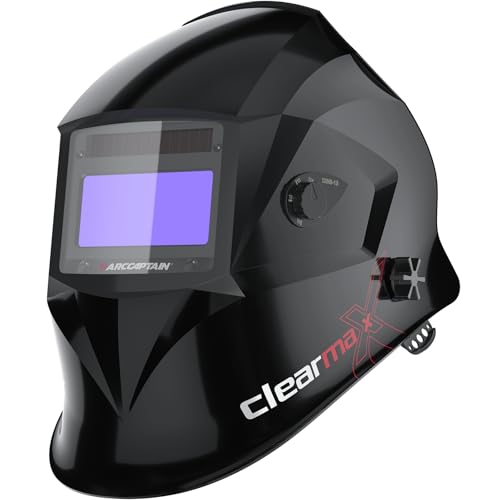
【FASTER AUTO-DARKENING】Features high-end auto-darkening lenses with 4 premium arc sensors, switching from light to dark in 1/25000 sec. Easily adjust the shade and sensitivity of the lenses for different working environments, perfect for TIG/MIG/ARC welding. Dark state level: 4/9-13.

【FASTER AUTO-DARKENING】Features high-end auto-darkening lenses with 4 premium arc sensors, switching from light to dark in 1/25000 sec. Easily adjust the shade and sensitivity of the lenses for different working environments, perfect for TIG/MIG/ARC welding. Dark state level: 4/9-13.
Brand Premium vs. Basic Models
Established welding and PPE brands often charge more because they maintain product lines, publish manuals, supply replacement components, support warranty claims, and sell through industrial distributors. That support can matter when a helmet is used for work rather than occasional home projects.
A lesser-known helmet is not automatically unsafe, and a famous logo does not guarantee that a model suits your process. Compare the individual product’s markings, shade specifications, warranty, replacement-part availability, fit, and seller authorization.
Premium models from Lincoln Electric, Miller, 3M, ESAB, Optrel, Jackson Safety, and other manufacturers may offer different combinations of optics, headgear, sensor systems, viewing area, task modes, and respiratory compatibility. Compare models directly instead of treating every product from one brand as equal.
Warranty Length and Coverage
A longer warranty can reduce the financial risk of an ADF failure, but only when the damaged component and type of failure are covered. Lincoln Electric, for example, announced five-year standard warranty coverage for qualifying VIKING auto-darkening helmet series. Buyers should still confirm the current terms for the exact model and country.
Before paying more for a warranty, check:
- Whether coverage applies to the complete helmet or only the ADF
- Whether batteries, cover lenses, headgear, and normal wear are excluded
- Whether proof of purchase and product registration are required
- Who pays shipping
- Whether the provider repairs, replaces, or refunds the product
- Whether purchases from unauthorized sellers are covered
Note: There is no universal warranty turnaround time. Contact the seller or manufacturer before shipping the helmet and ask whether a temporary replacement, advance exchange, or local service option is available.
Viewing Area, Lens Quality, and Their Impact on Cost
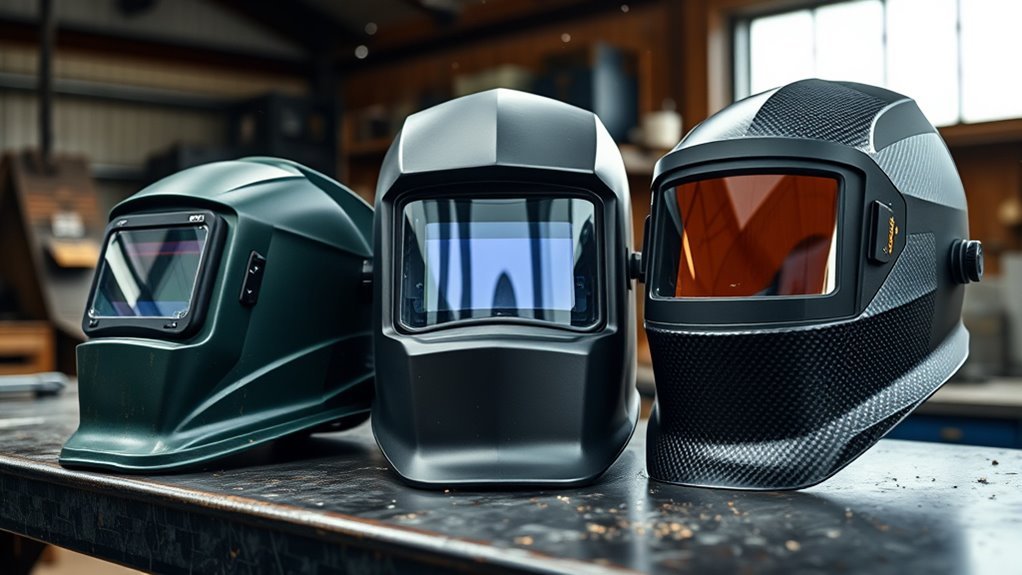
A larger viewing area can improve awareness of the joint and nearby workspace, especially during out-of-position welding. It can also make the ADF cartridge larger, heavier, and more expensive.
Viewing area should be considered together with:
- Optical distortion: Whether straight lines and joint edges appear natural.
- Shade consistency: Whether the shade looks even across the filter when viewed at an angle.
- Color transmission: How easily you can distinguish the weld pool, base metal, and markings.
- Light-state shade: How well you can see the workspace before striking the arc.
- Sensor coverage: Whether fixtures or tight positions are likely to block arc detection.
- Replacement-cover cost: Larger or curved lenses may use more expensive proprietary covers.
Some manufacturers publish optical-class ratings under standards used in international markets. A top numerical rating can be useful, but it should not replace a hands-on fit and visibility test. Lens geometry, head position, prescription eyewear, and the type of welding all affect what you see.
Helmet Types: Entry-Level, Mid-Range, and Premium Options
Entry-Level Helmets
Entry-level helmets prioritize affordability. They may use a fixed shade or a basic ADF with a smaller viewing area, fewer controls, simpler headgear, and limited replacement options.
They work best for occasional projects when the helmet is correctly rated, undamaged, comfortable enough to stay in position, and suitable for the welding process.
Mid-Range Helmets
Mid-range models balance price and everyday usability. Common upgrades include variable shades, grind mode, sensitivity and delay controls, clearer optics, more comfortable headgear, and readily available replacement lenses.
This range is usually the best value for students, serious hobbyists, maintenance workers, and welders who use more than one process.
Premium and High-Tech Helmets
Premium helmets focus on long-shift comfort, larger or panoramic views, low-amperage response, integrated grinding shields, digital controls, memory modes, task lights, hard-hat compatibility, or respiratory integration.
Buy these features when they solve a real problem. A digital screen, graphic shell, or unusually large lens does not by itself improve protection or weld quality.
How to Choose a Helmet for Your Welding Process
MIG and Flux-Cored Welding
MIG and flux-cored welding often produce a bright, steady arc and substantial spatter. Look for a suitable dark-shade range, durable outside cover lenses, good neck coverage, and controls that can be adjusted while wearing gloves.
TIG Welding
For TIG, especially at low amperage, verify the manufacturer’s minimum TIG rating and sensitivity performance. The filter must continue detecting the arc when your hands, torch, fixture, or workpiece partly block a sensor.
Stick Welding
Stick welding can create heavy sparks and spatter. A durable shell, inexpensive outside covers, dependable headgear, and a shade range suitable for the electrode and current are often more valuable than delicate cosmetic finishes.
Plasma Cutting and Grinding
Some helmets include lighter cutting shades and a clear grind mode. Confirm that the selected mode matches the task. Grind mode protects against impact only to the extent specified by the helmet and does not convert the helmet into suitable protection for every grinding hazard.
Always wear required safety glasses underneath and follow the grinder manufacturer’s face-protection instructions.
Accessories, Replacement Parts, and Long-Term Expenses
The purchase price is only part of the welding helmet cost. Depending on the design and work environment, you may eventually replace:
- Outside and inside cover lenses
- Passive filter plates or the complete ADF cartridge
- Coin-cell or rechargeable batteries
- Headgear, adjustment knobs, and pivot hardware
- Sweatbands, seals, neck covers, and protective bibs
- Magnifying, or “cheater,” lenses
- PAPR filters, prefilters, spark arrestors, batteries, and breathing tubes
Common cover-lens packs may cost about $10–$40, while proprietary curved covers or grinding visors can cost considerably more. Replacement headgear often falls around $20–$60. A complete premium ADF cartridge can approach the price of a new mid-range helmet.
Helmet Maintenance
- Inspect before each use. Check the shell, filter, cover plates, sensors, headgear, knobs, and electrical contacts.
- Test the ADF. Follow the manufacturer’s test procedure and verify the battery indicator before welding.
- Keep sensors clear. Dust, stickers, spatter, or tools can block arc detection.
- Clean correctly. Use the method listed in the manual. Harsh solvents can damage plastic lenses, coatings, seals, and shells.
- Replace damaged parts. Do not continue using a cracked, deeply scratched, pitted, warped, or unreliable lens.
- Store it safely. Protect the helmet from impact, moisture, grinding dust, extreme heat, and direct sunlight when not in use.
Warning: Do not attempt to repair a cracked ADF, bypass a battery warning, paint over safety markings, or substitute an unapproved filter. Replace damaged protective components with parts approved for the helmet.
Specialized Helmets: PAPR, Laser, and Panoramic Models
PAPR Systems Explained
A powered air-purifying respirator uses a battery-powered blower to pull workplace air through approved filters and deliver filtered air to the helmet or hood. Welding PAPR packages commonly cost about $1,500–$3,500+, with ongoing expenses for filters, prefilters, batteries, chargers, breathing tubes, seals, and airflow testing.
A PAPR must be selected for the actual airborne hazard. A particulate filter does not automatically protect against every gas or vapor, and no air-purifying respirator is suitable for an oxygen-deficient or immediately dangerous atmosphere.
When respiratory protection is required at work, the employer must follow the applicable OSHA respiratory-protection requirements. These can include a written program, medical evaluation, hazard-based filter selection, training, inspection, cleaning, maintenance, and cartridge-change procedures.
Note: A loose-fitting PAPR hood generally does not require fit testing, but required workplace respirator use still requires medical evaluation and the other elements of the employer’s respiratory-protection program.
Laser-Specific Protection
Laser welding is a separate hazard from conventional arc welding. Protective equipment must be selected for the laser’s wavelength, power, exposure conditions, and required optical density. A standard welding helmet—even an expensive auto-darkening model—is not automatically suitable.
Warning: Never choose laser PPE from shade number or price alone. Follow the laser manufacturer’s hazard assessment and use wavelength- and optical-density-rated protection selected under the facility’s laser-safety program. OSHA states that laser eyewear must protect against the specific wavelength and provide adequate optical density for the energy involved.
Laser operations may also require beam enclosures, interlocks, controlled access, warning signs, plume extraction, skin protection, training, and supervision by a qualified laser safety officer. A helmet is only one part of that system.
Panoramic-View Benefits
Panoramic helmets increase peripheral or downward visibility by using wider filters, side windows, curved optics, or filters positioned closer to the eyes. This can reduce the need to move your head while checking joint fit-up and nearby obstacles.
Possible tradeoffs include higher price, more expensive cover lenses, extra weight, glare through side windows, and model-specific replacement parts. Test the helmet in your normal welding positions before assuming that the largest stated viewing area will be the most comfortable.
How to Balance Budget With Safety and Performance
Use this order when comparing welding helmets:
- Confirm the hazard. Identify the welding, cutting, grinding, respiratory, impact, and laser hazards involved.
- Check compliance. Verify the required markings and your employer’s PPE rules.
- Match the shade range. Use the process, electrode, and current guidance rather than selecting a helmet because it has the darkest maximum shade.
- Check ADF suitability. Review minimum TIG amperage, sensitivity, delay, switching specifications, sensor placement, and battery design.
- Test the fit. Wear the helmet with your safety glasses, welding cap, respirator, hearing protection, or hard hat.
- Price the consumables. Confirm that cover lenses, batteries, headgear, and other parts are available.
- Read the warranty. Check the covered components, exclusions, seller requirements, and shipping terms.
The Miller helmet-selection guide notes that passive and auto-darkening helmets serve different needs and that variable ADF shades are commonly used for different welding processes.
A $100 helmet may be a better buy than a $400 model when it fits comfortably, responds reliably to your process, carries suitable markings, and uses affordable replacement parts. A premium helmet becomes worthwhile when its improvements reduce a real limitation in your work.
Where to Find Deals, Rebates, and Trade-In Savings
Helmet promotions change frequently. Check current offers directly with manufacturers and authorized distributors instead of relying on an old rebate amount or expiration date.
Ways to reduce the purchase cost include:
- Seasonal manufacturer rebates
- Authorized-distributor package pricing
- Student or trade-school discounts
- Employer PPE allowances
- Bundles that include extra cover lenses or replacement headgear
- Open-box products that retain the full warranty
- Previous-generation models with readily available parts
Compare the final cost after shipping, tax, consumables, warranty coverage, and required accessories. A discounted helmet is not a bargain when replacement lenses are unavailable or the seller is not authorized to support the warranty.
Should You Buy a Used Welding Helmet?
A used passive shell may be serviceable after a careful inspection and installation of the correct new filter and cover plates. A used ADF is riskier because impact damage, moisture exposure, aging electronics, battery leakage, and intermittent sensor problems may not be visible.
Avoid any helmet with:
- Cracks, warping, burns, deep gouges, or missing markings
- A scratched, cloudy, delaminated, or unreliable ADF
- Unapproved replacement filters
- Paint or stickers covering sensors or safety markings
- Missing headgear hardware or improvised repairs
- No way to identify the model or obtain its manual
Sources
- OSHA 29 CFR 1910.252—Welding, Cutting, and Brazing — welding eye protection and filter-shade guidance
- Miller—Selecting the Right Welding Helmet — passive and auto-darkening helmet features
- OSHA 29 CFR 1910.134—Respiratory Protection — workplace respirator programs and PAPR requirements
- OSHA Technical Manual—Laser Hazards — wavelength- and optical-density-specific laser protection
- Lincoln Electric—VIKING Five-Year Warranty — warranty coverage for qualifying VIKING helmet series
- IRS—2026 Instructions for Forms W-2 and W-3 — current federal treatment of unreimbursed employee business expenses
Frequently Asked Questions
Do welding helmets require periodic calibration or software updates?
Most standard passive and auto-darkening helmets do not require scheduled calibration or firmware updates. They do require regular inspection, an ADF function test, cleaning, battery replacement when applicable, and replacement of damaged cover lenses or filters. Follow the manual when a specific digital model has a manufacturer update or test procedure.
Can welding helmets interfere with prescription glasses or contacts?
A tight or shallow helmet may press against eyeglass frames or reduce clearance. Test the helmet while wearing your normal prescription safety glasses. Some helmets accept magnifying cheater lenses. Contact lenses do not replace impact-rated safety glasses and should only be worn under the eye protection required for the job.
Are there tax deductions for purchasing welding safety equipment?
Federal treatment depends on work status and current law. Most W-2 employees cannot deduct unreimbursed employee business expenses on their federal return. A self-employed welder may be able to deduct ordinary and necessary business PPE expenses. State rules can differ, so keep receipts and consult a qualified tax professional.
How long does warranty processing take for helmet repairs?
There is no standard processing time. It depends on the seller, manufacturer, shipping distance, inspection, parts availability, and whether the provider repairs or replaces the helmet. Ask for the expected process and shipping responsibility before sending the product.
Can a helmet affect workers’ compensation or liability coverage?
Using damaged, unsuitable, or noncompliant PPE can create a workplace-safety violation and may become relevant during an incident investigation. It does not automatically void workers’ compensation or liability coverage. Coverage depends on state law, the facts, employer conduct, and policy terms. Obtain jurisdiction-specific legal advice for a real claim.
How long should a welding helmet last?
There is no fixed service life for every helmet. A well-maintained shell can last for years, while cover lenses, batteries, headgear, seals, and sweatbands need replacement sooner. Retire the helmet when the shell or filter is cracked, deeply damaged, unreliable, unsupported by replacement parts, or no longer meets workplace requirements.
Do I need safety glasses under a welding helmet?
Yes, safety glasses with appropriate impact protection are commonly required under a welding helmet. The helmet protects the face and filters arc radiation, but sparks, slag, grinding particles, and debris can still reach the eyes when the helmet is raised or through gaps around the shell.
Is a more expensive welding helmet always safer?
No. Expensive helmets often improve comfort, visibility, controls, viewing area, warranties, or respiratory integration. Safety still depends on correct markings, an appropriate shade, good condition, proper fit, and suitability for the process. A correctly selected certified helmet can provide appropriate protection without being the most expensive model.
Conclusion
Welding helmet prices range from about $30 for a simple fixed-shade model to more than $3,000 for advanced PAPR or laser-specific systems. For most hobbyists, students, and shop welders, the best value falls between $100 and $250.
Start with the hazard and welding process, then compare shade suitability, markings, ADF performance, viewing area, fit, consumable prices, and warranty coverage. Do not pay for features you will not use, but never reduce cost by accepting a damaged filter, uncertain certification, unsuitable laser protection, or respiratory equipment that does not match the hazard.
