
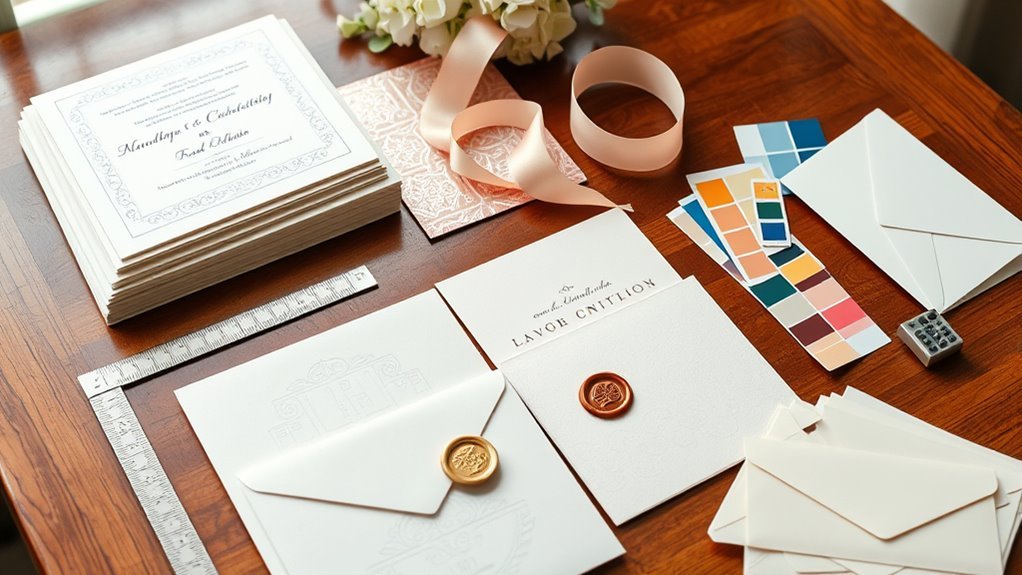
Wedding card printing usually costs about $0.78 to $12 per invite, with most couples spending $195 to $243 on invitations and about $518 for a full stationery suite. Your price depends on guest count, paper stock, trim, foil, and print method. Digital printing is the most budget-friendly, while letterpress and foil stamping cost more. Semi-custom suites average around $2,500, and quantity discounts can lower per-card costs as your order grows.
How Much Do Wedding Cards Cost?
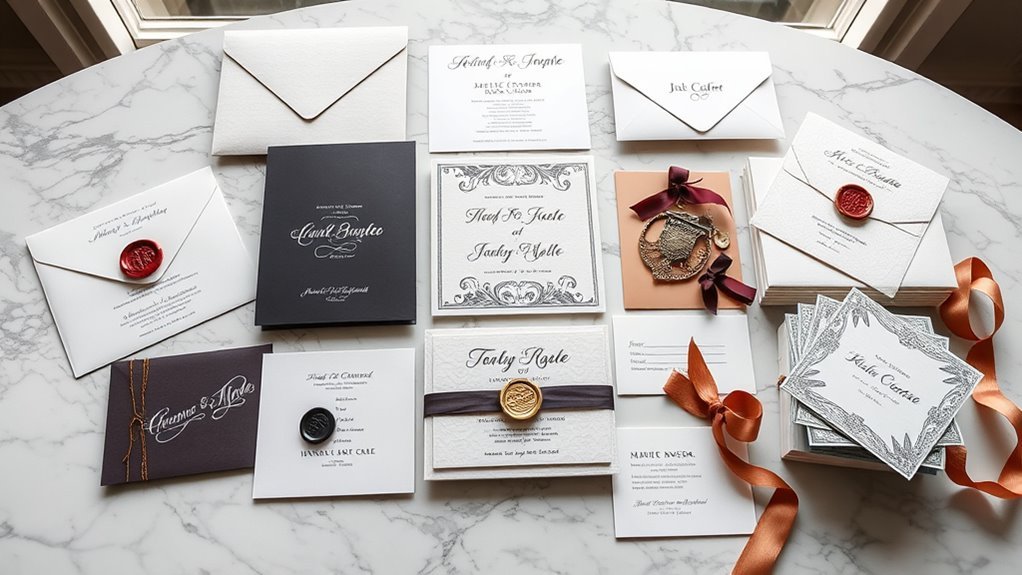
Wedding card costs can vary widely, but most couples spend between $195 and $243 on invitations alone, with a full stationery suite averaging about $518.
Your average spend for wedding invitations usually lands between $0.78 and $1.71 per piece, so your invitation cost depends on how many guests you invite and how many extras you include.
Your average wedding invitation spend usually falls between $0.78 and $1.71 per piece.
If you want custom wedding invitations, expect a much wider range: semi-custom suites often sit around $2,500, while fully custom sets can climb from $4,000 to more than $8,000.
Digital printing gives you the most affordable path, often at $1 to $3 per invite, while premium paper and letterpress push the price higher, sometimes to $6 to $12 each.
You should also budget for RSVP cards, details cards, and postage, which can add 20% to 30% overall. This gives you room to choose what feels right, not what tradition demands.
What Drives Wedding Card Printing Prices?
Several factors shape wedding card printing prices, and your guest count is one of the biggest. As your list grows, wedding invitations scale from about $299 to $623 for a full suite, so you can budget with precision instead of guesswork.
Your printing method also matters: digital printing stays the most affordable at roughly $1-$3 per invite, while letterpress can reach $6-$12 for a premium finish.
- Guest count drives total volume and base spend.
- Custom design can add $300-$2,000, depending on complexity and designer experience.
- Paper stocks like linen or pearl cost more than standard matte.
- Additional components such as RSVP cards and detail inserts can raise your budget by 20%-30%.
When you compare these variables, you gain control over your wedding invitations and can choose a look that fits your style, your values, and your freedom to spend wisely.
Wedding Card Printing Cost by Print Type
Print type can shift your wedding card budget just as much as guest count or design complexity.
When you compare wedding invitations, your chosen printing method sets the baseline. Digital printing is the most affordable path, usually $1 to $3 per invite, and it’s ideal when you want speed and control without overspending.
If you want more shine, flat foil printing runs about $3 to $6 per invite and adds metallic impact without a custom die.
Foil stamping costs roughly $5 to $10 per invite because it uses a custom die for a debossed impression, giving you a more elevated finish.
Letterpress printing sits at the premium end, typically $6 to $12 per invite, and delivers a tactile, refined feel.
Your best move is to match the method to your priorities, then budget with precision.
Compare Paper Stocks, Trim, and Foil
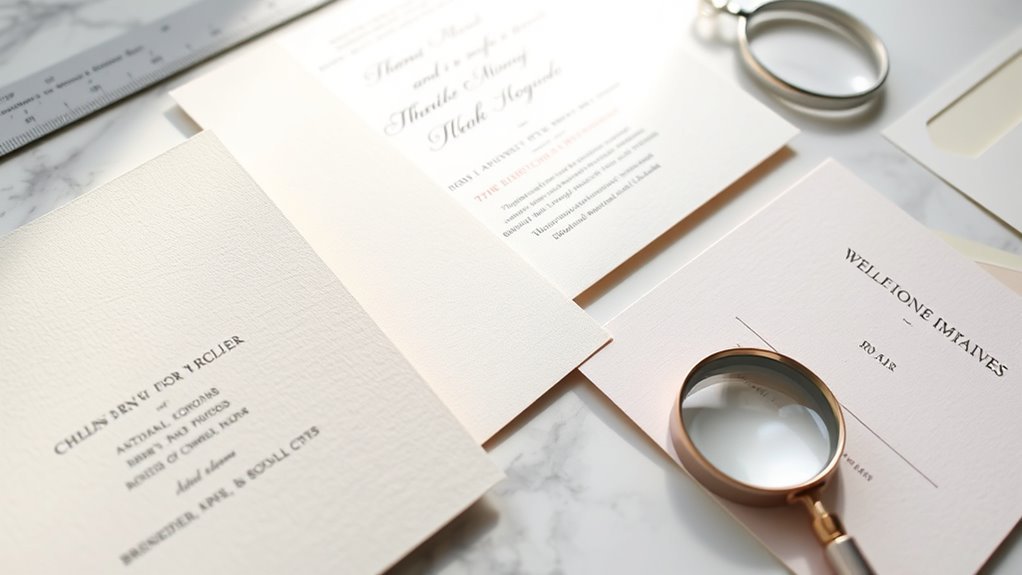
You’ll see the biggest cost shifts when you compare paper stocks: Standard Matte 14pt, Linen 13pt, and Premium Matte or Glossy 16pt to 17.5pt each change weight, texture, and price.
Trim style also matters, since square corners cost less than Rounded, Wavy, Ticket, or Custom cuts.
Foil accents in Gold, Silver, Glitter, or Red add visual impact and usually raise the final quote, so you’ll want to weigh finish against budget.
Paper Stock Choices
When you compare paper stock choices for wedding cards, the material, trim, and foil finish can shift both the look and the price of the final piece.
You can choose paper stock that matches your vision and your budget, from crisp 14pt matte cardstock to 17.5pt upgraded premium matte, linen, pearl, or premium glossy. Heavier cardstock usually raises the cost of wedding printing, especially when you add premium finishes.
- Standard matte: clean, affordable, versatile
- Premium matte: thicker feel, foil-ready
- Linen: woven texture, refined detail
- Pearl or glossy: sheen and color impact
Use design templates to keep your wedding stationery suite cohesive while controlling customization. Strong material choices let you express style freely without losing pricing discipline.
Trim Style Options
Trim style is the next pricing lever to review after paper stock, because edge treatment can change both the invitation’s character and its production cost.
You’ll usually see trim options start with standard square corners, then move to rounded, wavy, or ticket cuts, with custom shapes at the top end. Each step adds setup time and can raise pricing, especially when you pair unique trims with heavier paper stock like premium matte, linen, or pearl.
For wedding invitations, that means you can choose a clean, low-cost look or a more expressive format that signals your style.
Add foil accents only after you’ve locked the trim, so you can judge the full cost impact and keep control of the final design.
Foil Finish Colors
Foil finishes add a premium layer to wedding invitations, and the color you choose affects both the look and the cost. You can select Gold, Silver, Glitter, or Red for a luxurious touch that fits your style.
Pair foil finishes with Premium Matte 17.5pt or Pearl 16pt paper stock for the strongest effect; Standard Matte 14pt works, but feels less elevated. Rounded or Wavy trim can sharpen the design without crowding it.
- Gold: classic, high-impact
- Silver: modern, clean
- Glitter: bold, expressive
- Red: vivid, romantic
These pricing options matter: foil stamping typically adds $5 to $10 to each cost per invitation, so you can budget with confidence and keep your wedding invitations distinctly your own.
How Wedding Invitation Suites Affect Cost
A complete wedding invitation suite typically pushes your stationery budget higher than a single invitation card, with average spending around $518 and most couples landing between $299 and $623 depending on guest count.
You’re paying for more than one piece: the main card, outer envelopes, RSVP cards, and details inserts all shape the final total.
When you choose wedding invitation designs with a custom design fee, expect an added $300 to $2,000; template options usually keep that cost in check.
Printing methods also matter. Letterpress or foil stamping can add $1 to $12 per invite, so your creative freedom comes with measurable tradeoffs.
Plan on reserving 20% to 30% extra in your budget for supplementary items in a wedding stationery suite. That margin helps you include RSVP cards and information inserts without surprise overruns, while still keeping the experience polished, intentional, and fully yours.
Products Worth Considering

Premium Acrylic: 1mm clear plexiglass with a crisp, modern finish that resists bending and keeps your design looking elegant.
Premium Acrylic: 1mm clear plexiglass with a crisp, modern finish that resists bending and keeps your design looking elegant.
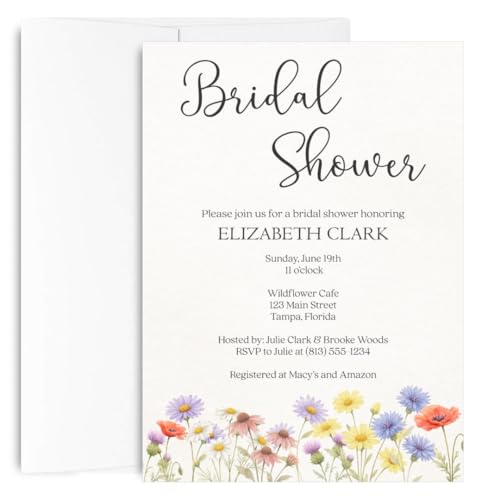
Includes 12 personalized invitations and envelopes.
How Quantity Changes Wedding Card Prices
You’ll usually see wedding card prices drop as your guest count rises because bulk orders spread setup and production costs across more invites.
For example, average invitation spending can sit around $195 to $243 overall, while semi-custom sets for 100 guests can stay under $2,000 when you order efficiently.
Ordering multiple card types together can also access bulk discounts, cutting your per-invite cost from digital printing’s $1–$3 range to even lower effective rates on larger runs.
Products Worth Considering
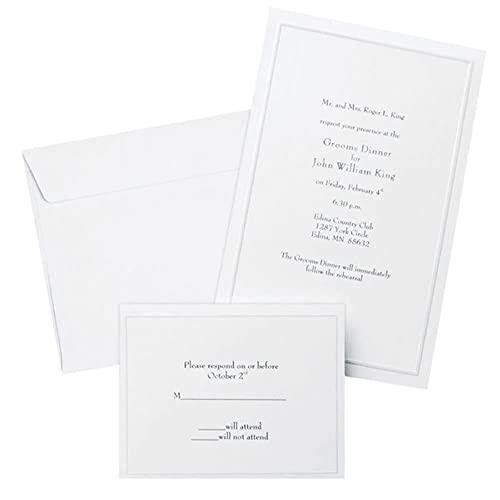
Give your special day the significance it deserves with the classic and pristine design of our convenient print at home invitations and response cards
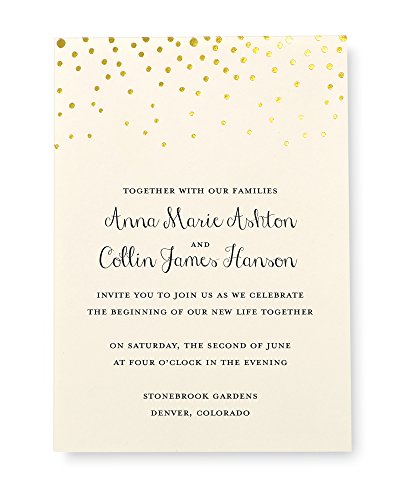
Give your special day the significance it deserves with the dazzling design of our convenient print at home invitations, perfect for weddings, anniversaries and other memorable moments

DOUBLE SIDE SHIMMER: Both Sides Shiny &Glossy As Pearl on the Beach. Elite and Graceful Look. Made of 300 gsm Heavy Weight Premium Material. Thick & Sturdy to Use. Each Sheet Measures 5 by 7 Inch, Set of 100
Bulk Order Savings
Ordering wedding invitations in bulk can lower your per-card cost considerably, especially when you purchase three or more card types together and access discounts of up to 15% on the total.
With bulk order savings, your average cost drops as quantity increases; many cards fall between $0.78 and $1.71 each. You’ll usually spend about $195 to $243 overall, depending on design details and printing methods.
- Compare discounts before you commit.
- Choose digital printing for leaner pricing.
- Simplify design details to trim waste.
- Review sample proofs to protect quality.
When you order 100 invitations or more, you’ll see the sharpest decline in unit price.
That gives you room to choose freedom-friendly style without overspending, while keeping your budget in control.
Guest Count Pricing
Guest count plays a major role in wedding card pricing because every additional invitation set raises your total paper, printing, and assembly costs.
For wedding invitations, your guest list directly shapes the average cost: about $123 for 50 guests, but roughly $276 at 101+ guests. Most couples land between $195 and $243 overall, while full custom invitation suites can reach $4,000 to $8,000+, depending on quantity and design.
Your wedding stationery budget also climbs with extra inserts, envelopes, and RSVP cards, averaging around $518.
To keep pricing under control, choose only what you need and compare bulk purchases, since many vendors discount orders of three or more card types. That flexibility helps you spend with intention, not pressure.
How to Save on Wedding Card Printing
Saving on wedding card printing starts with making a few strategic choices that reduce both production and finishing costs. If you want to save on wedding without losing style, focus on wedding invitations that balance impact and efficiency.
- Choose digital save-the-dates to eliminate printing entirely.
- Request order samples before you commit, so you catch quality issues early.
- Pick semi-custom designs; they often land near $2,500, far below fully custom pricing.
- Combine card types to access bundle discounts of 15% on three or more pieces.
You can also cut envelope labor with Address Manager tools, which remove hand-addressing costs that can run $1 to $5 per envelope. That’s real leverage.
Products Worth Considering
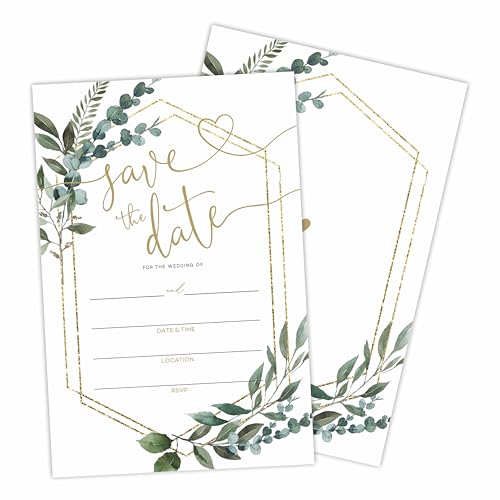
Dimension: the invites measures 4 x 6 inch & the envelopes match it.


HILARIOUS CARTOON - Delight your guests with an amusing illustration of a determined bride playfully dragging her semi-reluctant groom, perfect for adding a touch of wedding humor to your save the date announcements.
When to Order Wedding Cards for Delivery
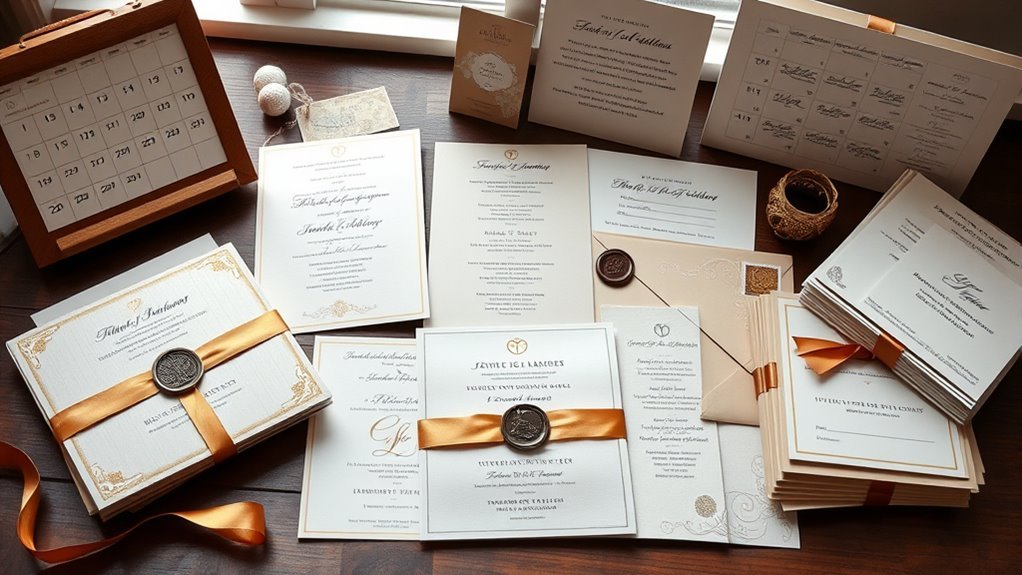
To make sure your wedding cards arrive on time, order them a few weeks before the eight-week mailing deadline, so you have room for production, shipping, and any last-minute fixes. That timeline gives you enough buffer for delivery delays and lets you review proofs without rushing.
Order wedding cards a few weeks early so you have time for production, shipping, and last-minute fixes.
If you’re deciding when to order wedding cards, work backward from your date: you should send out wedding invitations at least eight weeks before the event. That advance notice for invitations helps guests plan, address envelopes, and respond on schedule.
For a destination wedding, extend that window to 10–12 weeks, since travel and lodging need extra lead time. When you order wedding materials early, you protect your schedule and reduce stress.
Planning ahead keeps your wedding coordination clear, efficient, and on your terms, while ensuring every detail arrives exactly when you need it.
Frequently Asked Questions
How Much to Print 100 Wedding Invitations?
You’ll usually pay $123–$276 to print 100 wedding invitations, depending on Invitation Design, Paper Quality, Printing Techniques, Envelope Choices, Customization Options, and Delivery Methods; digital runs cheaper, while premium finishes cost more.
How Much Do 300 Wedding Invitations Cost?
300 wedding invitations usually cost $234-$513, though elegance loves receipts. Your invitation design, printing techniques, paper quality, envelope options, custom illustrations, and bulk discounts can push totals to $300-$5,000+, depending on finishes and add-ons.
How Much Does It Cost for 200 Wedding Invitations?
You’ll typically pay $156–$342 for 200 invitations, and custom suites can jump far higher. Your Invitation Design, Printing Techniques, Paper Quality, Envelope Choices, Customization Options, and Budget Tips shape final costs.
How Much Does It Cost to Send 150 Wedding Invitations?
You’ll likely spend $117–$256 for 150 invitations, but Invitation Design, Printing Techniques, Paper Quality, Shipping Expenses, DIY Options, and Envelope Choices can push you beyond $1,000 if you choose premium finishes and postage.
Conclusion
You’ve seen how wedding card printing costs shift with print type, paper stock, trim, foil, suite size, and quantity. The data point to one clear truth: your biggest savings usually come from simplifying finishes and ordering more cards at once. If you want a polished result without overspending, compare materials carefully, choose only the details that matter, and order early enough to avoid rush fees. Smart planning keeps your budget and your vision aligned.
