

If you’re planning to fish in the Chesapeake Bay, you’ll need a Chesapeake Bay & Coastal Sport Fishing License. It costs $15 for residents and $22.50 for non-residents, valid for 365 days. There are also 7-day options available. Note that if you’re under 16, in active military service, or fishing on designated free days, you don’t need a license. Keep exploring to discover more useful fishing regulations and licensing details!
License Term
When you purchase a Chesapeake Bay & Coastal Sport Fishing License, it’s valid for 365 days from the date of purchase, guaranteeing you have ample time to enjoy fishing in the region’s tidal waters.
A Chesapeake Bay & Coastal Sport Fishing License is valid for 365 days, ensuring plenty of time for fishing adventures.
This license validity allows for flexible fishing plans, whether you opt for an annual resident license at $15 or a non-resident version for $22.50. For those who prefer shorter trips, a 7-day license is available, costing $6 for residents and $12 for non-residents.
It’s essential to adhere to fishing regulations during your licensed period, as they govern species, size limits, and seasonal restrictions.
The license not only covers your recreational activities in tidal waters but also permits passengers on your registered boat to fish without needing individual licenses.
Understanding these terms enhances your fishing experience and guarantees compliance with local laws, making your time on the water more enjoyable and worry-free.
Who May Fish Without a License
Fishing regulations in Maryland provide several exemptions that allow certain individuals to enjoy the sport without needing a fishing license.
If you’re under 16 years old, you can fish recreationally without a license. Additionally, family members of waterfront property owners can engage in waterfront fishing on their property without any licensing requirements.
If you’re crabbing, you won’t need a license if you’re using handlines or dip nets and your catch doesn’t exceed two dozen crabs.
Maryland also designates specific free fishing areas where you can fish without a license, particularly on designated free fishing days.
Finally, if you’re a registered angler fishing from a boat with a valid tidal or saltwater license, you’re exempt from needing an individual license.
These fishing exemptions make it easier for many to enjoy the sport, promoting access and participation in Maryland’s vibrant fishing communities.
Chesapeake Bay & Coastal Sport Fish License Description
To enjoy recreational fishing in the tidal waters of the Chesapeake Bay and coastal areas, you’ll need the Chesapeake Bay & Coastal Sport Fish License. This license is essential for utilizing various fishing techniques while targeting species popular in these rich ecosystems.
For residents, the annual license costs $15, while non-residents pay $22.50. If you’re looking for a shorter commitment, a 7-day license is available at $6 for residents and $12 for non-residents. The license is valid for 365 days from the purchase date, providing ample opportunities for year-round fishing adventures.
Keep in mind that if you’re a passenger on a licensed vessel, you don’t need an individual license, but registration under the Maryland Saltwater Angler Registration may be required. This license not only supports conservation efforts but also enhances your fishing experience in the vibrant tidal waters of the Chesapeake Bay.
Maryland Saltwater Angler Registration
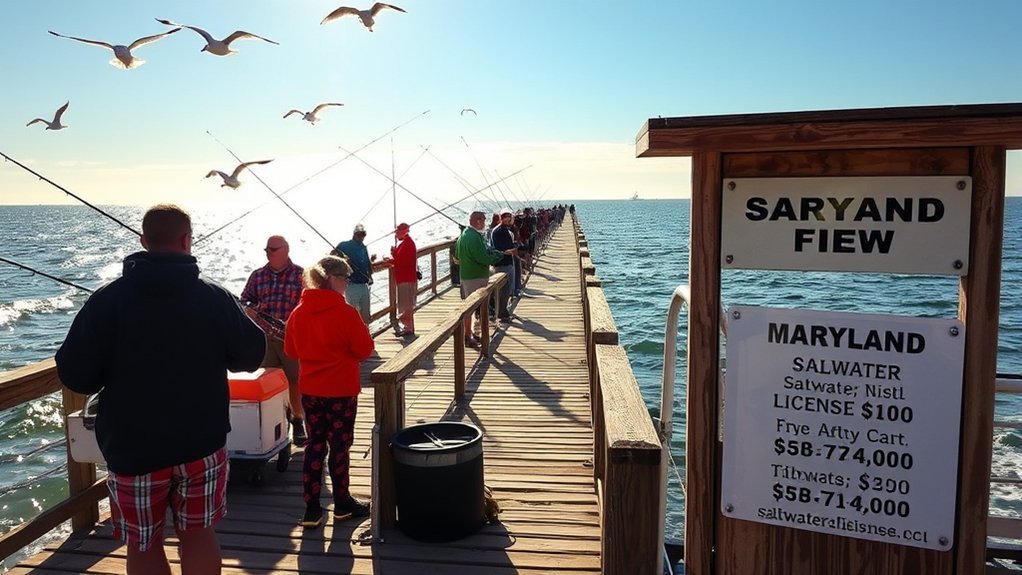
Maryland Saltwater Angler Registration is an essential requirement for those looking to fish in the state’s tidal waters, particularly for passengers on vessels holding Chesapeake Bay and Coastal Sport Boat Licenses. This free registration applies to waterfront property owners and their families fishing on private property, ensuring compliance with Maryland regulations.
| Eligibility | Registration Benefits |
|---|---|
| Passengers on licensed vessels | Fish in Chesapeake Bay and tidal Potomac River |
| Waterfront property owners | No need to register with NOAA |
| Virginia license holders | Year-round fishing from January 1 to December 31 |
License Fees for Residents and Non-residents
When considering saltwater fishing licenses, it’s crucial to understand the costs for both residents and non-residents.
For instance, a resident’s annual Chesapeake Bay & Coastal Sport Fishing License is $15, while non-residents pay $22.50.
Additionally, there are options like a 7-day license and special fees for activities such as trout fishing that further differentiate pricing.
Resident License Costs
Fishing enthusiasts should be aware that the costs for saltwater fishing licenses vary considerably between residents and non-residents.
Understanding this cost comparison is essential to maximize your fishing benefits. Here’s a breakdown of resident license costs:
- Annual Resident License: $15, valid for one year.
- 7-Day Resident License: Just $6, perfect for short trips.
- Senior Consolidated License: Only $5 for residents aged 65 and older, covering both freshwater and saltwater fishing.
These options provide affordable access to Chesapeake Bay and coastal waters.
Keep in mind that fees may change in 2025, so always check for the latest information.
Choosing the right license guarantees you enjoy your fishing experience without overspending.
Non-resident License Fees
For non-residents keen to explore the waters of Chesapeake Bay, understanding the licensing fees is essential.
The Chesapeake Bay & Coastal Sport Fishing License costs $22.50 annually, providing excellent non-resident benefits for year-round fishing accessibility. If you’re planning a shorter trip, the 7-day license at $12 allows you a week of fishing in these vibrant waters.
Additionally, non-residents must register for the Maryland Saltwater Angler Registration to fish in designated areas without a full license. For crabbing enthusiasts, the Recreational Crabbing Boat License is available for $15, allowing crabbing from licensed vessels.
Other non-resident licenses, like the Non-Tidal/Freshwater License, start at $30.50, depending on your home state’s fees.
How to Obtain a Saltwater Fishing License
To obtain a saltwater fishing license, you’ll need to navigate the application process, which can be completed online or in person.
You’ll find various license types available, including annual and short-term options, each with its respective fees for residents and non-residents.
Make sure you have your identification ready, as this documentation is essential for a successful application.
Application Process Overview
While obtaining a saltwater fishing license may seem intimidating, the process is straightforward and can be completed online or in person.
Here are some application methods and licensing tips to help you along the way:
- Online Purchase: Visit the Maryland Department of Natural Resources COMPASS portal to buy your license easily.
- In-Person Purchase: Find over 250 licensed agents across Maryland where you can obtain your license directly.
- Short-Term Options: Consider the 7-day license if you’re planning a brief fishing trip, making it budget-friendly.
License Types and Fees
Understanding the different license types and associated fees is essential for anyone looking to fish in Maryland’s saltwater areas.
You can choose the Chesapeake Bay & Coastal Sport Fishing License, which costs $15 for residents and $22.50 for non-residents, valid for one year. If you need a short fishing trip, consider the 7-day license for $6 (residents) or $12 (non-residents).
For seniors aged 65 and older, a Resident Senior Consolidated License is available for just $5, covering both freshwater and saltwater fishing. Additionally, certain anglers may need the free Maryland Saltwater Angler Registration instead of a license.
You can purchase these licenses online, through over 250 license agents, or via mail applications, ensuring you comply with local fishing regulations.
Exemptions From License Requirements
Many individuals may not realize that several exemptions exist for fishing license requirements in Maryland’s tidal waters. Understanding these exemptions can enhance your recreational fishing experience while ensuring compliance with fishing regulations.
Explore the fishing license exemptions in Maryland’s tidal waters to maximize your recreational fishing experience and stay compliant with regulations.
Here are three key exemptions:
- Age: Individuals under 16 years old don’t need a fishing license for recreational fishing.
- Active Duty Military: Active-duty military members on leave are exempt from needing a license, except when fishing for trout in designated waters.
- Family and Friends: Passengers on boats with a valid Chesapeake Bay & Coastal Sport Fishing License can fish without a license, provided they register for the free Maryland Saltwater Angler Registration.
Additionally, fishing on designated free fishing days—typically the first two Saturdays in June and July 4—also allows for fishing without a license.
Familiarizing yourself with these exemptions can save you money and enhance your fishing enjoyment.
Crabbing Licenses and Costs
When you’re looking to enjoy recreational crabbing in Maryland, it’s essential to know the licensing requirements and associated costs.
A Recreational Individual Crabbing License costs $5.00 for residents and $10.00 for non-residents, allowing you to use various crabbing techniques, including trotlines, collapsible traps, and net rings.
If you’re crabbing from a boat, you’ll need a Recreational Crabbing Boat License, which costs $15.00 for everyone.
If you’re a private waterfront property owner, you can register up to two crab pots for free, valid for 365 days.
Notably, you don’t need a license if you’re using handlines or dip nets, up to a limit of two dozen male hard crabs or one dozen soft crabs.
Reciprocity Agreements
If you’re planning to explore saltwater fishing beyond Maryland’s shores, you’ll benefit from the reciprocity agreements in place between Maryland and Virginia.
These agreements allow you to fish in each other’s tidal waters, provided you adhere to specific fishing regulations. Here’s what you need to know:
- Maryland residents can fish in Virginia tidal saltwater with a Chesapeake Bay and Coastal Sport Fishing License after registering.
- Virginia residents can fish in Maryland waters with valid licenses, ensuring access to more fishing opportunities.
- Other states, like West Virginia and Pennsylvania, have similar agreements, but they only extend to specific waters, excluding tributaries and shore fishing.
Understanding these reciprocal fishing privileges can enhance your fishing experience while ensuring compliance with local fishing regulations.
Always check the latest guidelines before heading out to fish!
Additional Resources and Information
To navigate the saltwater fishing landscape effectively, you’ll need to understand the license application process and registration requirements.
It’s also essential to familiarize yourself with crabbing regulations, as these can impact your fishing experience.
For thorough information, the Maryland Department of Natural Resources is an invaluable resource.
License Application Process
Applying for a Chesapeake Bay & Coastal Sport Fishing License involves several straightforward steps that confirm you meet the necessary requirements.
To streamline your application process, consider these tips:
- Choose the Right License: Decide between annual or 7-day licenses based on your residency status and fishing plans.
- Gather Documentation: Ascertain you have proof of residency or any eligibility for discounts ready to submit with your application.
- Explore Application Methods: You can apply online via the COMPASS portal, in-person at over 250 agents, or by mailing a printed application.
Registration Requirements Explained
Understanding the registration requirements is essential for anyone looking to fish in the Chesapeake Bay and coastal waters legally.
To fish, you must obtain a Chesapeake Bay & Coastal Sport Fishing License, costing $15 for residents and $22.50 for non-residents.
If you’re a passenger on a boat with a valid fishing license, you need to register for the free Maryland Saltwater Angler Registration if you don’t have your own license.
This registration is vital for waterfront property owners and their families fishing from private property and is valid for the entire calendar year.
Even in designated License Free Fishing Areas, completing the registration process is necessary to access the registration benefits and fish legally.
Crabbing Regulations Overview
While crabbing can be an enjoyable and rewarding experience, it’s crucial to be aware of the regulations that govern this popular activity.
Understanding these rules will help you use effective crabbing techniques while staying compliant. Here’s what you need to know:
- The crabbing season runs from April 1 to December 15, allowing recreational crabbing during this time.
- You can use handlines or dip nets without a license, catching up to 2 dozen male hard crabs and 1 dozen soft crabs or male peelers.
- A Recreational Individual Crabbing License is required for trotlines and traps, costing $5 for residents.
Frequently Asked Questions
Can I Fish From a Boat Without a License?
You can’t fish from a boat without a license, unless you’re under certain license exemptions. Always check local regulations to make sure you’re compliant, as rules can vary greatly based on your location and fishing activity.
Are There Age Restrictions for Obtaining a Fishing License?
When you cast your line into the water, you’ll find age eligibility varies by state. Most require you to be at least 16, so check local fishing regulations to verify compliance before you fish.
What Species Require a Special Permit to Fish?
Certain species, like striped bass and blue crabs, require special permits under specific fishing regulations. Make sure you check local guidelines to verify you’re compliant and avoid any penalties while fishing in those areas.
How Can I Check My License Status Online?
Wondering if your fishing license is up to date? You can check your license status online through your state’s wildlife agency website. Make certain you’re compliant with fishing regulations and initiate license renewal if needed.
What Should I Do if I Lose My Fishing License?
If you lose your fishing license, contact your local wildlife agency for guidance on replacing it. Familiarize yourself with fishing regulations to guarantee compliance while you wait for your new license to arrive.
Conclusion
In summary, understanding the costs and requirements of saltwater fishing licenses in the Chesapeake Bay reveals the state’s commitment to sustainable fishing practices. While the fees may seem burdensome, they contribute to conservation efforts that guarantee the health of marine ecosystems for future generations. By knowing the regulations and exemptions, you can enjoy fishing while supporting the balance between recreation and preservation. Ultimately, this investment in your fishing experience benefits not just you but the entire community.
