
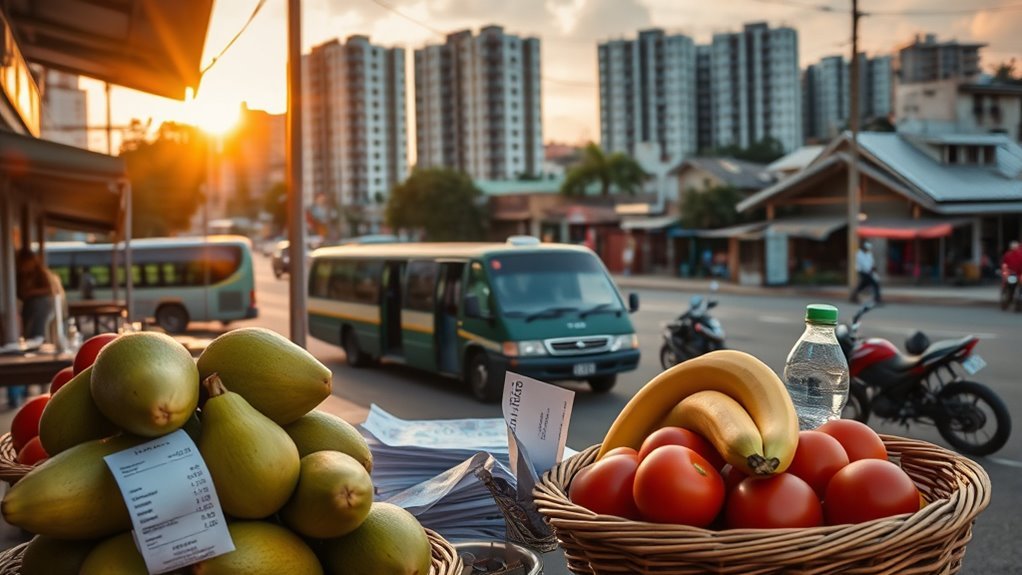
Rwanda isn’t especially expensive to live in, but your costs depend a lot on where you stay. In Kigali, you can expect about $699 a month overall, with a one-bedroom apartment costing around $450 in the city center or $255 outside it. Food and transport stay fairly low, with lunch near $2.73 and local tickets at $0.32. If you keep going, you’ll see where your budget stretches best.
How Much Does It Cost to Live in Rwanda?

Rwanda is generally affordable to live in, with the average monthly cost of living coming in at about $699, or roughly 1.63 times below the global average.
You can keep your budget workable if you choose your housing options carefully: a one-bedroom apartment in the city center runs about $450, while a place outside the center can drop to roughly $255.
Daily life also stays manageable. Lunch often costs around $2.73, and dinner for two averages $27, so you don’t need much to eat well.
Transportation won’t strain you either, since a local ticket is about $0.32 and a monthly pass is $27.8.
Basic utilities average $31.7 per month, which helps keep recurring bills under control.
When you add in healthcare expenses, Rwanda can still remain accessible if you plan wisely and spend with intention.
Cost of Living in Kigali
In Kigali, you’ll find that the cost of living stays relatively low by global standards, with average monthly expenses of about $699—roughly 1.63 times less than the world average.
If you’re planning a life here, your biggest variable is housing. A one-bedroom apartment in the city center averages about $450, while more affordable housing options outside the center drop to roughly $255, giving you room to choose based on your priorities.
Your lifestyle expenses can stay manageable, too. Eating out doesn’t strain your budget, with lunch menus around $2.73 and dinner for two near $27.
Local transport is inexpensive, so you can move around the city without feeling trapped by high fares. Even utility bills for one person average only about $31.7, and high-speed internet costs about $19.7 monthly.
Food Prices, Transport Costs, and Utilities
Beyond housing, everyday expenses in Kigali remain fairly manageable, especially when it comes to food, transport, and basic services. When you do your grocery shopping, basic staples stay inexpensive: milk costs about $0.64 per liter, and half a kilogram of bread is around $1.05. Dining options also stay accessible; a typical lunch menu averages $2.73, and dinner for two runs about $27.
| Category | Typical Cost | Note |
|---|---|---|
| Lunch menu | $2.73 | Affordable daily meal |
| Local transport ticket | $0.32 | Low per-trip fare |
| Utility bills | $31.70 | Average monthly cost |
If you move around the city often, local transport tickets at $0.32 and monthly passes near $27.80 keep commuting light. Your utility bills also stay predictable at about $31.70 a month, while internet plans with 50 Mbps or more cost roughly $19.70. Taken together, these prices let you cover essentials without feeling squeezed.
Can Salaries Cover Living Costs in Rwanda?

Can salaries in Rwanda cover everyday living costs? Not often. You face a stark gap when the average after-tax salary is about $216, while monthly living costs average $699. That means your income covers only about 0.3 months of expenses, so the math already shows real strain.
Salary disparities sharpen this pressure, because many workers earn less than the average, making rent, food, and utilities harder to sustain.
- Average salary: about $216
- Average living cost: about $699
- Coverage from average pay: roughly 0.3 months
- One-bedroom rent in the city center: about $450
- Basic utilities for one person: about $31.7
These figures reveal serious economic challenges. If you rely on a typical wage, you’ll likely struggle to meet essentials without extra income or support.
For financial liberation, you need to recognize this gap clearly and plan around it, not around false assumptions about affordability.
Cheapest Cities in Rwanda
If you’re looking for the cheapest places to live in Rwanda, Gisenyi and Musanze stand out as the most affordable options. You’ll usually pay less for rent, food, and day-to-day transport than in Kigali, where costs climb faster.
In cheaper cities, a one-bedroom apartment can cost about $255 a month, compared with roughly $450 in Kigali’s city center. That gap gives you more freedom to save, invest, or build a life on your own terms.
Local transport is also easy on your budget, with a single ticket around $0.32. Grocery prices stay low too: milk averages $0.64 per liter, and bread costs about $1.05 for 0.5 kg.
Local transport is budget-friendly, and everyday groceries like milk and bread remain affordable for most households.
Gisenyi advantages include lower housing pressure and access to basic services. The Musanze lifestyle offers similar affordability with a calmer pace.
With Rwanda’s average living expense near $699 monthly, these cities let you live efficiently without sacrificing dignity.
Frequently Asked Questions
How Much Money Do You Need to Live in Rwanda?
You’d need about $699 monthly for living expenses in Rwanda; budget $450 for city-center rent, less outside it. Use budgeting tips: choose local meals, public transport, and track spending to stretch your income.
How Long Can a US Citizen Stay in Rwanda?
You can stay 30 days visa-free, then extend 30 more; with a tourist visa, you’ll spend about $30. Check visa requirements early, and use travel tips to avoid overstay stress and keep your plans flexible.
What Are the Disadvantages of Living in Rwanda?
You’ll face cultural adjustments, infrastructure challenges, healthcare access limits, and language barriers. You may struggle with rising living costs, limited salaries, and expensive housing, which can tighten your options and slow your independence.
How Much Does a Meal Cost in Rwanda?
A meal in Rwanda can cost about $2.73 for lunch, while dining options for two average around $27. You’ll also find fast food near $6.91, and local cuisine stays budget-friendly.
Conclusion
So, is Rwanda expensive to live in? It depends on your lifestyle and where you settle. In Kigali, higher rent can take a big bite out of your budget, while food, transport, and utilities often stay manageable. If your salary matches local prices, you can live comfortably; if not, you may need to tighten your belt. For lower costs, smaller cities can help you keep expenses in check and make everyday life easier.
