
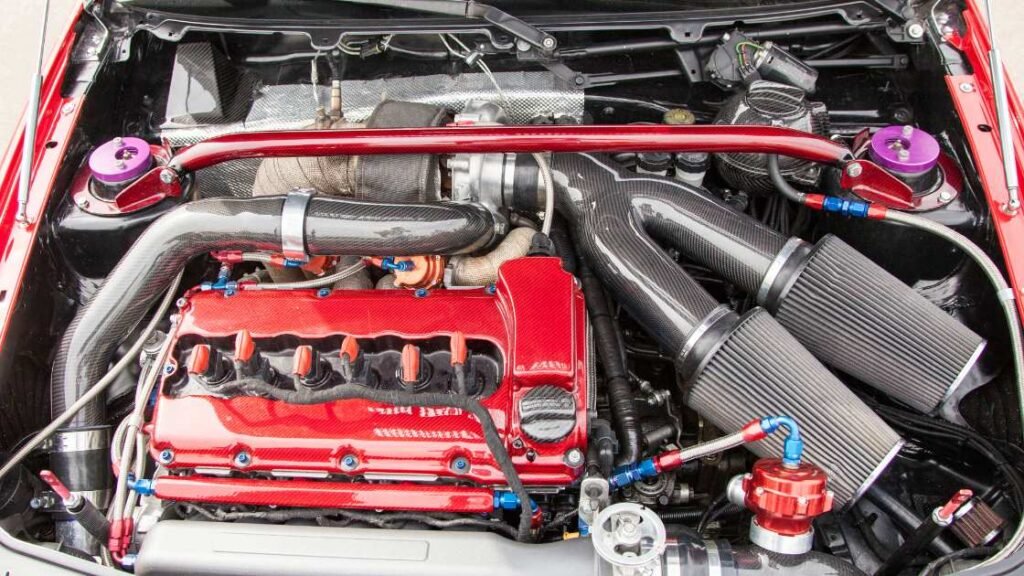
A professionally installed engine supercharger typically costs about $7,500 to $15,000 or more in the United States. Current vehicle-specific kit listings run from roughly $5,100 into the $10,400+ range before labor. Manufacturer estimates for common bolt-on installations range from about 8 to 20 hours, while calibration, fuel and cooling upgrades, taxes, shipping, and drivetrain work can raise the final bill.
Last updated: August 10, 2026
Quick Answer
Budget about $7,500 to $15,000+ for many professionally installed street supercharger projects. Current published vehicle-specific kit listings span roughly $5,100 to $10,400+. Labor can add about $1,000 to $4,000+ before tuning, fluids, fuel-system work, cooling upgrades, tax, shipping, or unexpected fitment work.
Key Takeaways
- Current vehicle-specific kit listings run from roughly $5,100 to $10,400+, depending on vehicle, kit contents, and power level.
- Manufacturer installation estimates vary widely: ProCharger says most of its systems take 8–10 hours, while current and recent ROUSH Mustang kits list about 10–20 hours.
- Calibration, fuel delivery, charge-air cooling, spark plugs, fluids, and drivetrain parts may be separate from the advertised kit price.
- For a street-driven vehicle, verify federal emissions compliance and any state-specific requirement, including a valid CARB Executive Order where applicable.
- Engine supercharger hardware does not qualify for the federal Alternative Fuel Vehicle Refueling Property Credit; §30C ended for property placed in service after June 30, 2026.
At a Glance
| Time Required | About 8–20 billed hours for many vehicle-specific bolt-on systems; custom fabrication can take longer |
| Difficulty | Advanced; professional installation is the safer choice for most owners |
| Tools Needed | Full mechanic’s tool set, torque wrenches, safe lifting equipment, cooling-system tools, scan tool, and approved calibration equipment |
| Cost | Usually $7,500–$15,000+ installed; high-boost or custom builds can exceed this range |
Pricing method: Updated August 10, 2026. Kit figures were checked against current ProCharger, Edelbrock, and ROUSH listings. Labor planning uses manufacturer installation-time estimates plus AAA’s 2026 repair-shop labor-rate benchmark. These are planning figures, not quotes; taxes, freight, tuning, fluids, and supporting parts vary by application.

What Is an Engine Supercharger?
An engine-driven supercharger compresses intake air so the engine can burn more fuel and produce more power. Unlike a turbocharger, which is driven by exhaust flow, a traditional supercharger is mechanically driven by the engine, usually through a belt.
Note: This guide uses “supercharger” to mean an engine forced-induction system. Tesla also uses “Supercharger” for its EV DC fast-charging network, but that unrelated charging technology is not part of the installation-cost estimates below.

This daily devotional helps parents pray purposefully for their children through a full year of Scripture readings, reflections, and guided prayer prompts. Written to encourage faithful family discipleship, it offers practical, biblically grounded support for parents who want to shape their prayers around God's Word. A foreword by Sinclair B. Ferguson adds trusted theological insight and encouragement.

The ANCEL AD310 is a compact OBD II scanner designed to quickly diagnose check engine light issues by reading and clearing emission-related trouble codes. It also provides live data, freeze frame, I/M readiness, and vehicle information, making it a practical tool for drivers and home mechanics. With broad compatibility across many 1996 and newer OBD2 vehicles, it is a simple, fast, and portable way to check engine problems.

This DEWALT 20V MAX combo kit delivers reliable drilling and fastening power in a compact, jobsite-ready package. The lightweight drill/driver and impact driver are built to fit into tight spaces, while integrated LED work lights help improve visibility in dim areas. With two batteries, a charger, and a storage bag included, it is a convenient solution for professionals and DIY users alike.
What Types of Engine Superchargers Are Available?
Not all engine superchargers deliver power in the same way. The compressor design affects throttle response, under-hood packaging, heat management, installation time, and price.
How Do Centrifugal, Roots-Type, and Twin-Screw Superchargers Differ?
Aftermarket engine systems fall into three main groups: centrifugal, Roots-type, and twin-screw. All increase airflow, but their power delivery and installation requirements differ.
| Type | Power Delivery | Typical Installation Notes |
|---|---|---|
| Centrifugal | Boost generally builds with engine speed, with strong top-end power | Front-mounted bracket, belt drive, charge piping, and usually an intercooler |
| Roots-type | Immediate low- and mid-range response | Often replaces or integrates with the intake manifold; packaging can be complex |
| Twin-screw | Strong low-speed torque and a broad boost curve | Positive-displacement layout with demanding intake, cooling, and calibration work |
- More compressed air allows the engine to burn more fuel and make more power.
- Positive-displacement systems usually provide faster low-rpm response.
- Centrifugal systems often appeal to drivers who want power to rise progressively with rpm.
For a technical overview of centrifugal operation, see ProCharger’s explanation. Eaton describes its TVS products as Roots-type positive-displacement superchargers in its automotive supercharger overview.
What Determines Supercharger Installation Cost?

Several factors control the final price. The same kit can produce very different invoices on two vehicles because access, tuning, emissions equipment, cooling capacity, and supporting hardware are not identical.
How Much Does the Supercharger Kit Cost?
The supercharger kit is usually the largest single expense. A complete street kit may include the compressor, brackets or intake manifold, belt drive, bypass valve, intercooler or heat exchanger, injectors, wiring, hoses, hardware, and a calibration device. A lower advertised price may describe a tuner kit that omits calibration, fuel components, or other required parts.
- Centrifugal systems: Current ProCharger vehicle listings span roughly the low-$5,000s through the high-$8,000s as starting prices, with newer complete systems often higher.
- Roots-type and twin-screw systems: Current Edelbrock and ROUSH examples range from about $6,150 to $10,399 before installation.
- Supporting hardware: Fuel pumps, injectors, spark plugs, heat exchangers, sensors, intake parts, and stronger belt-drive components may be extra.
What Do Tuning and Emissions Compliance Add?
Building permits do not apply to an engine supercharger installation. The relevant issues are calibration, vehicle inspection, and emissions legality. The U.S. EPA’s tampering policy addresses federal restrictions on disabling required emissions controls. In California, and in jurisdictions that apply similar requirements, select a kit covered for your exact vehicle by a valid CARB Executive Order.
A kit described as “50-state legal” should identify the EO number and the exact model years, engine, transmission, and calibration covered. A CARB approval for one application does not automatically cover a different vehicle or modified pulley setup.
How Much Does Supercharger Installation Labor Cost?
Labor depends on billed hours and shop rate. ProCharger says most of its systems can be installed in 8–10 hours. ROUSH lists 10 hours for its 2026 Mustang kit, while its 2022–2023 Mustang kit lists 20 hours. AAA reports that almost half of repair shops charge about $120 to $159 per hour. At that general rate, 8–20 billed hours equals about $960 to $3,180 before specialty-shop premiums, dyno time, fabrication, or diagnostics. For budgeting, allow roughly $1,000 to $4,000+ for labor on a professional street installation.
| Service | Planning Range | What Changes the Price |
|---|---|---|
| Complete bolt-on installation | About 8–20 billed hours | Engine-bay access, cooling-system work, wiring, fuel components, and kit design |
| Custom or high-output installation | More than 20 hours is possible | Fabrication, engine work, drivetrain upgrades, troubleshooting, and custom calibration |
What Supporting Modifications Can Raise the Bill?
A healthy stock engine may tolerate a conservative, manufacturer-designed kit, but a worn engine or marginal fuel and cooling system can turn a bolt-on project into a major repair. Budget for a pre-install inspection, fluid service, fresh spark plugs where specified, and testing recommended by the installer. Higher power may also require a stronger clutch, transmission work, driveshaft, differential, axles, brakes, or tires.
How Much Does Supercharger Installation Cost in 2026?
The kit’s advertised price is not the same as the amount you will pay to drive away with a tested, legal, and properly calibrated vehicle.
Current 2026 Price Ranges
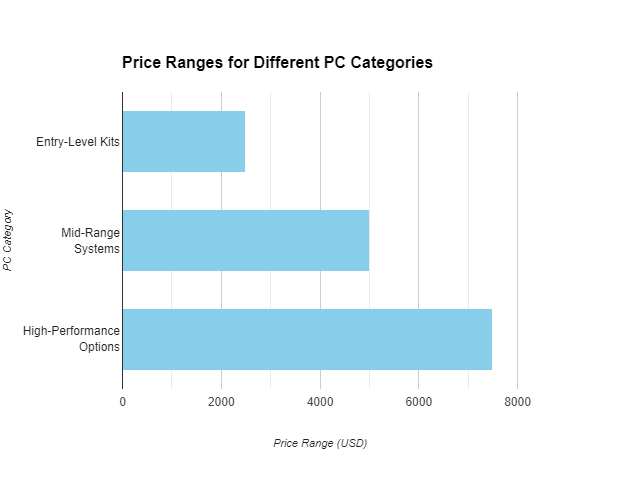
Note: The legacy chart above is illustrative; use the verified 2026 figures in the table below for budgeting.
These are practical U.S. planning ranges built from current manufacturer listings, published installation times, and current shop-rate benchmarks. Your quote can be higher or lower based on vehicle, kit contents, local labor rate, tax, shipping, tuning, and power goal.
| Project Level | Current Parts Signal | Installed Planning Range |
|---|---|---|
| Vehicle-specific centrifugal system | Current ProCharger listings start around $5,100 and reach about $9,000+ depending on platform; newer complete systems can exceed $10,000 | About $7,500–$13,000+ after labor and common supporting work |
| Roots-type or positive-displacement system | Current Edelbrock and ROUSH examples run from about $6,150 to $10,399 before installation | About $9,000–$15,000+ after labor and common supporting work |
| Custom or high-output build | Kit price is only the starting point when engine, fuel, cooling, or drivetrain upgrades are required | $15,000+ can be reached quickly; get a build-specific written quote |
Current Manufacturer Price Examples
Real current product listings show why vehicle and kit contents matter more than a generic “Brand A” estimate.
| Example | Type | Published Price or Detail |
|---|---|---|
| ProCharger Ford vehicle systems | Centrifugal | Published starting prices include $5,138 for certain F-150 applications, $6,248 for Mustang applications, and $8,998 for F-250/F-350 applications |
| Edelbrock Camaro systems | Roots-type TVS packages | $6,152.95 for a 2016–2023 Camaro V6 kit without a tune; $9,321.95 for a 2016–2024 Camaro SS kit with a tune |
| ROUSH 2026 Mustang kit | Positive-displacement supercharger system | $10,399; 810 hp and 630 lb-ft rating; estimated 10-hour advanced installation |
Manufacturer prices can change without notice and may exclude tax, shipping, shop supplies, fluids, diagnostics, or optional warranty coverage.
What a Complete Quote Should Include
- Exact kit part number and vehicle fitment
- Included calibration or separate dyno/remote tuning charge
- Fuel-system, cooling-system, and ignition parts
- Labor hours, shop rate, and fabrication allowance
- Fluids, belts, gaskets, spark plugs, shop supplies, tax, and shipping
- Emissions documentation and inspection responsibility
- Parts warranty, labor warranty, and post-install support
- Baseline and final scan, leak check, road test, and dyno sheet when applicable
Pro Tip: Compare quotes by included parts and labor scope, not by the headline kit price. A higher quote can be the better value when it includes calibration, injectors, cooling hardware, fluids, emissions paperwork, and a written labor warranty.
What Extra Costs Should You Budget For?

The upfront installation is only the beginning. A supercharged vehicle may cost more to fuel, maintain, insure, and repair.
Should You Inspect the Engine Before Adding Boost?
A reputable installer may recommend diagnostic scans, a compression or leak-down test on higher-mileage engines, fuel-pressure checks, cooling-system inspection, and a review of service history. These checks cost money, but they can expose a weak engine or fuel system before boost turns a small problem into a large one.
What Maintenance Does a Supercharger Add?
Follow the kit manufacturer’s maintenance schedule in addition to the vehicle’s normal service schedule. Requirements differ by compressor design.
- Supercharger and accessory belts: Inspect for glazing, cracking, fraying, dust, and incorrect tension.
- Supercharger oil or fluid: Some self-contained or serviceable units require fluid inspection or replacement at a specified interval; others are sealed.
- Cooling system: Check intercooler coolant, pumps, hoses, reservoirs, and heat exchangers where fitted.
- Air and fuel system: Inspect filters, clamps, charge pipes, injectors, pumps, and connections.
- Calibration health: Diagnose warning lights, knock activity, fuel-pressure loss, belt slip, or unusual noises promptly.
How Does a Supercharger Affect Running Costs?
A supercharger is installed for performance, not guaranteed fuel savings. A bypass valve can reduce pumping load during light-throttle cruising, but using boost requires additional fuel. Many calibrated kits also require premium gasoline.
| Premium Fuel | Often required or strongly recommended; follow the exact calibration requirement |
|---|---|
| Fuel Consumption | May be close to stock during gentle cruising, but rises when boost and added power are used |
| Tires and Brakes | More power can increase wear and expose the need for better traction and braking |
| Drivetrain | A clutch, transmission, driveshaft, differential, or axle upgrade may be needed at higher torque levels |
Will a Supercharger Affect Insurance?
Tell your insurer about the modification before or immediately after installation. Standard coverage may not fully protect expensive aftermarket parts, and a performance upgrade can change eligibility, premium, or coverage needs. Insurers may request receipts, photos, or an appraisal. Progressive’s modified-car insurance guidance explains that modified vehicles may need an endorsement or a custom policy.
Can You Save Money on a Supercharger Install?
An engine supercharger is performance hardware, so there is no federal EV-charger tax credit for buying or installing one. The federal Alternative Fuel Vehicle Refueling Property Credit under IRC §30C applied to qualifying refueling and EV-charging property, not engine forced-induction parts.
Are There Rebates or Tax Credits?
For engine supercharger hardware, do not budget around a federal §30C credit. IRS instructions state that the refueling-property credit ended for property placed in service after June 30, 2026, and its qualifying-property rules did not cover engine performance hardware. See the IRS Form 8911 instructions.
Will a Supercharger Save Fuel?
Do not buy an engine supercharger expecting it to pay for itself through fuel savings. Some systems can cruise efficiently while the bypass valve is open, but regular use of the added power normally increases fuel consumption and may require a more expensive fuel grade.
- Light throttle: Some properly calibrated systems can operate near stock fuel economy.
- Under boost: Fuel use increases because the engine must add fuel for the extra air.
Practical Ways to Control the Budget
- Choose a complete, vehicle-specific kit instead of mixing parts from several systems.
- Set a realistic power goal that does not immediately require internal engine or transmission work.
- Use a kit with an included, emissions-compliant calibration when it suits your application.
- Get at least two itemized quotes from forced-induction specialists.
- Fix maintenance problems before the installation begins.
- Keep the stock parts in case you later return the vehicle to factory configuration.
How Do You Choose the Right Supercharger?
More power is appealing, but the best kit is the one that matches your vehicle, fuel, legal requirements, driving style, and total budget. A system designed for a stock street engine is a different purchase from a race-oriented tuner kit.

This hardcover edition by Eric Metaxas offers a compelling look at the origins of the United States during the Colonial Period. It blends historical narrative with engaging storytelling, making it appealing for readers interested in American history, early nation-building, and the ideas that shaped the country. A strong choice for history enthusiasts, students, and anyone exploring the foundations of the nation.

See You Later, Alligator is a charming children's picture book that blends playful rhyme with colorful animal storytelling. Written by Sally Hopgood and illustrated by Emma Levey, it makes read-aloud time fun and engaging while helping young readers enjoy rhythm, repetition, and early language development.

OGX Extra Strength Damage Remedy + Coconut Miracle Hair Oil helps hydrate dry, coarse hair while smoothing frizz and flyaways for a silky finish. This nourishing leave-in treatment blends coconut oil, vanilla bean extract, and tiare essence to add softness, shine, and a pleasant scent. It is paraben-free and designed to support a restorative hair care routine for medium to coarse hair types.
What Power Goal Fits Your Use?
- Daily driving: Prioritize conservative calibration, smooth power delivery, emissions legality, and warranty support.
- Street and occasional track use: Budget for better cooling, tires, brakes, and more frequent inspections.
- Towing or off-road use: Consider heat load, low-rpm torque, fuel availability, dust exposure, and drivetrain stress.
- Maximum-power build: Expect engine, fuel-system, transmission, and safety upgrades beyond the supercharger kit.
Will the Kit Fit Your Exact Vehicle?
A kit must match the exact engine, model year, transmission, emissions family, and installed options. Hood clearance, accessory drive layout, active fuel management, cylinder deactivation, direct injection, factory calibration, and cooling package can affect fitment.
| Step | Action |
|---|---|
| 1 | Confirm the exact vehicle, engine, model year, transmission, and required fuel. |
| 2 | Verify the kit part number, included components, horsepower limit, and emissions status. |
| 3 | Have the engine, fuel system, cooling system, and drivetrain inspected. |
| 4 | Review the vehicle warranty, kit warranty, installer warranty, and insurance requirements in writing. |
| 5 | Confirm who supplies and supports the calibration if the vehicle later receives software updates or other modifications. |
What About Warranty and Street-Legal Status?
An aftermarket part does not automatically erase every part of a vehicle warranty. The Federal Trade Commission states that a manufacturer or dealer must prove an aftermarket part or improper installation caused the covered damage before denying warranty coverage for that damaged part. A supercharger can still create a real warranty dispute when an engine or drivetrain failure is connected to the modification. Read both warranties and keep every invoice, calibration file, and maintenance record.
Warning: Do not install an emissions-defeating calibration or remove required emissions equipment on a street vehicle. An incorrect tune, inadequate fuel supply, excessive boost, or poor installation can cause detonation, overheating, loss of control, engine damage, or an emissions inspection failure.
How Is a Supercharger Installed?
Installing a supercharger is a multi-stage job that combines mechanical work, cooling and fuel-system changes, electrical connections, software calibration, and verification. Always follow the exact manufacturer instructions for the kit and vehicle.
What Does the Installation Process Involve?
- Document the baseline. Scan for diagnostic trouble codes, inspect the engine, verify fluids, and record the vehicle’s current condition.
- Disconnect power and prepare the vehicle. Follow the manufacturer’s battery, lifting, fuel-pressure, and coolant safety procedures.
- Remove obstructing components. This may include the intake system, engine covers, radiator supports, fans, or intake manifold.
- Install the compressor assembly. Fit the supercharger, intake manifold or mounting bracket, bypass system, and specified gaskets.
- Install the belt drive. Fit pulleys, tensioner, idlers, brackets, and the correct belt, then verify alignment and tension.
- Add charge-air cooling. Install the intercooler, heat exchanger, pump, reservoir, hoses, or charge piping supplied with the kit.
- Upgrade fuel and ignition components. Install injectors, pumps, sensors, and spark plugs only as specified for the application.
- Complete wiring and calibration. Connect harnesses, load the approved ECM/PCM calibration, and follow any security or relearn procedure.
- Refill, bleed, and inspect. Refill fluids, purge air, check fuel and coolant connections, inspect belt tracking, and look for leaks.
- Verify operation. Perform the manufacturer’s first-start checks, scan live data, road-test carefully, and complete dyno verification when the calibration requires it.
How Do You Find a Qualified Installer?
Choose a shop that regularly installs and calibrates forced-induction systems for your platform, not simply a general repair shop that is willing to try.
- Ask how many installs the shop has completed on your engine and kit.
- Request photos, dyno sheets, and references from comparable builds.
- Confirm who is responsible for the calibration and post-install support.
- Ask whether the quote includes fuel, cooling, spark plugs, fluids, diagnostics, and emissions documentation.
- Get the parts warranty and labor warranty in writing.
- Confirm the plan if the vehicle fails a leak check, dyno test, or emissions inspection.
Should You Install a Supercharger Yourself?
Some complete kits are designed for experienced home mechanics, but “bolt-on” does not mean beginner-friendly. The job may involve fuel, electrical, cooling, software, and drivability work where one mistake can be expensive.
When Does DIY Make Sense?
A DIY installation may be reasonable when the kit has detailed instructions for your exact vehicle, you have advanced mechanical experience, safe lifting equipment, calibrated torque tools, a clean workspace, and direct access to the kit manufacturer or an experienced tuner. You still need to budget for calibration and any dyno or diagnostic work.
When Should You Use a Professional?
Professional installation is strongly preferred when the system replaces the intake manifold, requires extensive wiring, modifies the fuel system, needs custom fabrication, or targets a power level near the limits of the stock engine or drivetrain. It is also the better choice when emissions compliance or a kit warranty depends on an approved installer.
What Are the Hidden Costs of DIY?
DIY savings disappear quickly if a cross-threaded fitting, coolant air pocket, fuel leak, belt-alignment problem, wiring error, or incorrect calibration damages the engine. Add the cost of special tools, towing, lost time, replacement fluids, and professional troubleshooting before deciding that home installation is cheaper.
Note: The embedded video above can provide a general look at a home-garage installation, but the written manual for your exact kit and vehicle must control every torque value, procedure, safety step, and calibration requirement.
Is a Supercharger Worth the Cost?
A supercharger changes how a vehicle accelerates, sounds, and responds, but it also changes the maintenance, fuel, insurance, emissions, and warranty picture. The safest budget includes a reserve for supporting work rather than spending every dollar on the compressor kit.
What Should You Budget Before Saying Yes?
- Kit cost: current vehicle-specific listings run from roughly $5,100 into the $10,400+ range, depending on platform and kit contents.
- Installation: manufacturer estimates for many bolt-on systems fall around 8 to 20 hours, with additional time possible for fabrication or troubleshooting.
- Supporting parts: can add hundreds or several thousand dollars, depending on the engine, cooling system, fuel system, drivetrain, and power goal.
- Realistic total: about $7,500 to $15,000+ for many street builds, and more for custom high-output projects.
The best supercharger quote is not the cheapest kit price. It is the complete price for a compatible, calibrated, legal, tested, and supportable vehicle.
How Is Engine Supercharger Technology Changing?
Engine supercharger systems continue to improve through more efficient compressor designs, better charge-air cooling, more capable engine controls, and application-specific calibrations. The practical benefit is not simply a higher peak power number: better integration can improve heat control, drivability, diagnostics, and emissions compliance for the exact vehicle application.
| Trend | Likely Impact |
|---|---|
| More efficient compressor and intercooler design | Better heat control and drivability at a given power level |
| Vehicle-specific calibration and diagnostics | Easier integration when the kit is engineered for the exact application |
| Application-specific emissions approvals | More certainty for covered vehicles, while unapproved combinations remain a compliance risk |
Frequently Asked Questions
How much does a complete supercharger setup cost?
A modern street-oriented supercharger project usually costs about $7,500 to $15,000 or more installed. Current vehicle-specific kit listings span roughly $5,100 to $10,400+, while labor, calibration, fuel-system parts, cooling hardware, fluids, tax, shipping, and drivetrain work make up the rest.
How much does labor cost to install a supercharger?
A practical labor-only planning allowance is about $1,000 to $4,000+ for many professional street installations. ProCharger says most of its systems can be installed in 8–10 hours, while ROUSH lists about 10 hours for its 2026 Mustang kit and 20 hours for its 2022–2023 Mustang kit. Specialty-shop rates, dyno time, fabrication, and diagnostics can raise the total.
How long does it take to install a supercharger?
For a vehicle-specific bolt-on system, published manufacturer estimates commonly fall around 8–20 hours. ProCharger says most systems take 8–10 hours, while current and recent ROUSH Mustang kits list 10–20 hours. Custom fabrication, troubleshooting, or supporting upgrades can take longer.
Does a supercharger require a tune?
Yes. The engine calibration must match the added airflow, boost, fuel system, and exact vehicle application. Some complete street kits include an approved calibration, while tuner kits may require a separate professional calibration. Do not assume a universal tune is safe or emissions-compliant.
How much does it cost to install a supercharger on a Camaro?
Current Edelbrock Camaro kits list about $6,152.95 for a 2016–2023 V6 kit without a tune and $9,321.95 for a 2016–2024 Camaro SS kit with a tune. A professionally installed project can reasonably reach about $8,000 to $14,000+ after labor and supporting work, depending on the exact model and shop.
How much horsepower does a ROUSH supercharger add?
The gain depends on the exact vehicle and kit. ROUSH currently rates its 2026 Mustang supercharger kit at 810 horsepower and 630 lb-ft of torque. Older ROUSH applications publish different ratings, so use the specification for your exact model year instead of a generic horsepower-gain claim.
Can you supercharge a stock engine?
Many manufacturer-designed street kits are engineered for an otherwise stock, healthy engine at a conservative power level. That does not mean every stock engine is suitable. Mileage, compression, fuel quality, cooling capacity, previous modifications, and the strength of the engine and drivetrain all matter.
Does a supercharger reduce engine life?
Added cylinder pressure and heat increase mechanical stress, so reliability depends on the power level, calibration, fuel, cooling, maintenance, and how the vehicle is driven. A conservative complete kit on a healthy engine is less risky than an aggressive custom setup, but no power increase is mechanically free.
Will a supercharger void the vehicle warranty?
An aftermarket part does not automatically cancel every warranty protection. However, a manufacturer or dealer may deny coverage for damage it can prove was caused by the aftermarket part or improper installation. Review the vehicle, kit, and installer warranties before buying, and keep complete records.
Is an aftermarket supercharger street legal?
Legality depends on the kit, vehicle, calibration, and jurisdiction. The system must not defeat required emissions controls. In California, verify that the exact application is covered by a valid CARB Executive Order. Other states may use their own inspection or emissions rules.
Conclusion
Installing a supercharger is a major performance investment. For many modern street vehicles, a realistic U.S. planning budget is $7,500 to $15,000 or more. Current vehicle-specific kit listings run from roughly $5,100 into the $10,400+ range, and professional installation commonly adds about $1,000 to $4,000+ before tuning, fluids, tax, shipping, or supporting upgrades.
Choose a system built for your exact vehicle, inspect the engine first, get an itemized quote, verify emissions and warranty requirements, and use an installer with real forced-induction and calibration experience. The right question is not “What is the cheapest kit?” but “What will it cost to leave with a compatible, calibrated, legal, tested, and supportable vehicle?”
Sources
- ProCharger — Ford supercharger systems — current model-specific starting-price examples.
- ProCharger — Frequently Asked Questions — published 8–10 hour installation estimate for most ProCharger systems.
- ROUSH Performance — 2026 Mustang supercharger — current price, output rating, fitment, and 10-hour installation estimate.
- ROUSH Performance — 2022–2023 Mustang 750HP kit — published 20-hour installation estimate for the older application.
- Edelbrock — Camaro supercharger kits — current Camaro kit examples and pricing.
- AAA Automotive — 2026 mechanic labor rates — national shop-rate benchmark and geographic variation.
- California Air Resources Board — Aftermarket parts program — CARB Executive Orders and emissions-compliance guidance.
- U.S. EPA — Vehicle and engine tampering policy — federal emissions-tampering guidance.
- Internal Revenue Service — Form 8911 instructions — qualified refueling-property rules and the June 30, 2026 termination date.
- Federal Trade Commission — Auto warranties and service contracts — aftermarket-parts warranty guidance.
- Progressive — Insurance for modified cars — coverage considerations for performance modifications.

The Veepeak OBDCheck BLE is a Bluetooth OBD-II scanner designed for iOS and Android users who want an easy way to read and clear check engine light codes. It supports generic diagnostics such as freeze frame data, I/M readiness, and live sensor readings through compatible third-party apps. Built for most 1996+ vehicles in the US, it connects over Bluetooth LE and works with popular apps for everyday vehicle troubleshooting and monitoring.

This combo kit helps women trying to conceive track fertile days and check for pregnancy with convenient at-home testing. The ovulation strips help monitor LH surge progression and are easy to read, while the pregnancy strips provide quick results with simple line interpretation. Designed for ease of use and dependable family planning support, it offers a practical way to stay on top of your fertility journey.

This practical guide brings together traditional skills and self-sufficiency knowledge in one accessible reference. It helps readers learn time-tested home, craft, and survival techniques with clear guidance suited for beginners and hobbyists alike. Ideal for anyone interested in homesteading, DIY living, or preserving old-fashioned know-how.

2 thoughts on “How Much Does It Cost to Install a Supercharger? (2026 Guide)”
Pingback: How Much Does A Supercharger Cost To Install? Expert Tips: Unveiling The 5-Star Investment In Supercharger Installation Costs
Pingback: How Much Does It Cost To Replace Galvanized Pipes | Optimizing Your Home: The 4-Step Guide To Affordably Replace Galvanized Pipes