

In Los Angeles, you should budget about $400 to $500 a month for groceries if you live alone, and about $1,000 for a family of four. LA grocery prices run roughly 11% above the national average, so costs add up faster here than in many U.S. cities. Your total depends on household size, diet, and where you shop. If you want to lower costs and keep spending on track, there’s more to compare below.
What’s the Average Grocery Cost in Los Angeles?
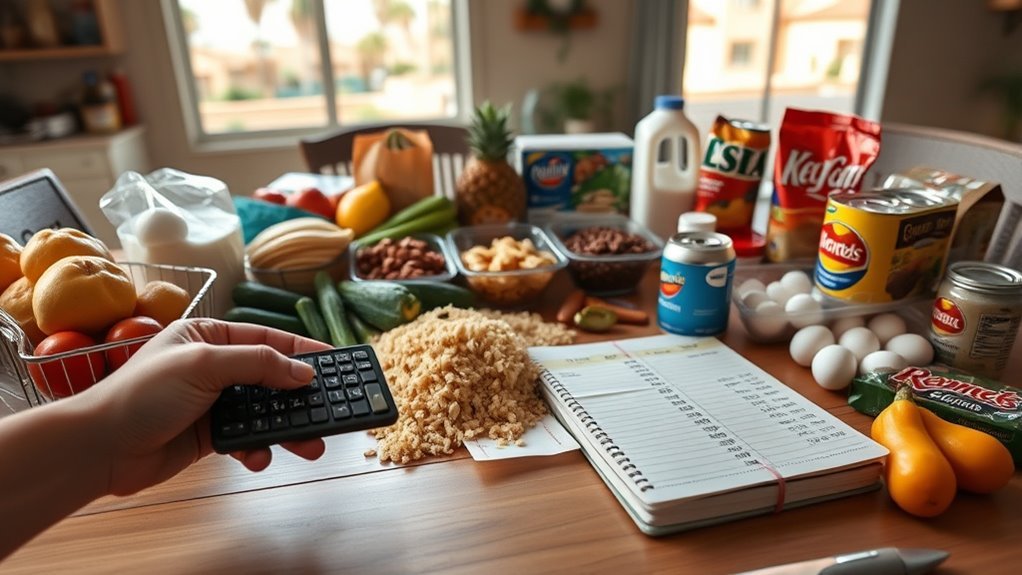
If you’re budgeting for groceries in Los Angeles, expect to pay more than the national average: a single person typically spends about $400 to $500 per month, while a family of four averages roughly $1,000.20 monthly, or more than $12,000 a year.
You’re already facing prices about 11% above the U.S. norm, so your budget has to account for that gap. Even a thrifty USDA-style plan doesn’t free you from high costs; it still pushes annual spending past $10,000.
Prices run about 11% above the U.S. norm, and even a thrifty budget can still top $10,000 a year.
Basics reflect the pressure: milk runs around $4.60 a gallon, and chicken fillets cost about $7.41 a pound.
Track grocery price fluctuations and local market trends closely, because they shape what you’ll actually pay week to week.
If you want more control, treat your grocery bill as a moving target, not a fixed number. That mindset helps you protect your resources and budget with intention, not resignation.
What Affects Grocery Costs in Los Angeles?
Several factors push grocery costs in Los Angeles above the national norm, and the biggest starts with the city’s overall price level: groceries run about 11% higher, which means a single person usually spends $400 to $500 a month and a family of four averages about $1,000.
Your household size matters: if you buy for more people, you can lower unit costs with bulk purchases, but your total still rises fast.
Your dietary choices also change the bill; vegan, gluten-free, or other specialized diets often face fewer discounts and limited shelf space.
Where you shop matters too, because urban neighborhoods usually carry higher prices from transport and competition.
Price fluctuations hit fresh foods hardest, so timing and store choice can shift your cost month to month.
You can resist this pressure by planning meals, tracking sales, and using loyalty programs.
Those small moves protect your budget and expand your freedom.
Products Worth Considering

Packing List: our product has 12 different patterns and styles of Los Angeles canvas cosmetic bags; Each design celebrates the city, making it the choice of connoisseurs of urban charm; The exquisite Los Angeles style pattern is suitable as a gift for your family

100% officially Licensed
How Much Should You Budget for Groceries in LA?
You should budget about $400 to $500 a month for groceries if you’re shopping for one person in Los Angeles, where prices run about 11% above the national average.
If you’re feeding a family of four, plan on roughly $1,000.20 per month, or more than $12,000 a year, and even USDA’s thrifty plan still tops $10,000 annually.
To keep costs down, track your spending, shop with a list, and use sales and generic brands whenever you can.
Products Worth Considering

One gallon of Spring Water Some of your favorite Happy Belly products are now part of the Amazon Grocery brand! Although packaging may vary during the transition, the...
Average Monthly Grocery Spend
In Los Angeles, a single person typically spends about $400 to $500 a month on groceries, while a family of four often spends around $1,000.20. You should read these numbers against grocery price trends: LA prices run about 11% above the national average, so your budget must reflect that reality. Use budgeting strategies that protect your freedom, not your paycheck.
| Item | Estimate |
|---|---|
| Single adult | $400-$500 |
| Family of four | About $1,000 |
| Annual thrifty plan | Over $12,000 |
| LA vs. U.S. average | +11% |
Meal planning and store brands can cut costs fast. If you follow the 50/30/20 guideline, groceries belong in your needs bucket, giving you a clear, disciplined baseline for smarter spending.
Budget by Household Size
Household size is the biggest driver of your grocery budget in Los Angeles: a single person should plan for about $400 to $500 a month. Couples usually spend roughly $695 to $1,040, and a family of four often lands near $1,000 monthly, or more than $12,000 a year.
Your actual cost rises when children, medical diets, or higher-protein eating patterns change what you buy. If you want freedom from surprise bills, track your own spending against these benchmarks and adjust fast.
Use grocery shopping tips like planning meals around your real needs, and lean on budget friendly recipes that stretch staples across several days. That way, you keep your food budget aligned with your household size, not with pressure or waste.
Save More on Groceries
Because Los Angeles grocery prices run about 11% above the national average, a realistic monthly budget starts around $400 to $500 for one person and about $1,000 for a family of four, according to USDA estimates.
To keep your spending under control, use meal planning and treat it like a financial map, not a suggestion. Choose store brands when the quality matches, and you’ll cut costs without losing nutrition.
- Track weekly prices and compare stores.
- Buy staples in bulk when storage works.
- Use sales to anchor your menu.
- Adjust your 50/30/20 budget so groceries stay inside needs.
Families can lower per-person costs with shared purchases, while singles need tighter portion control. In LA, disciplined shopping protects your autonomy.
How Do LA Grocery Costs Compare by Household Size?

How do LA grocery costs shift as your household grows? For one adult, you’ll likely spend $400 to $500 a month, already above many U.S. norms because LA runs about 11% higher than the national average.
When you add a partner, your average monthly budget rises to roughly $695, showing a clear household size impact. With four people, expect about $1,000.20 each month, or more than $12,000 a year.
Adding a partner lifts the monthly grocery budget to about $695, while four people can expect roughly $1,000.20.
These grocery shopping trends show that costs scale with mouths fed, but not linearly: larger households can spread fixed purchases across more people. You can use that scale to your advantage, since bulk buying often lowers per-person cost and frees more of your income for housing, transit, rest, and other needs.
In LA, your budget reflects both location and dietary demands, so tracking household size helps you forecast expenses with precision and keep more control over your resources.
Products Worth Considering

Packing List: our product has 6 different patterns and styles of Los Angeles canvas bags; Each design celebrates the city, making it the choice of connoisseurs of urban charm; The exquisite Los Angeles style pattern is suitable as a gift for your family

Energy metabolism support supplement(1): contains one 80 count bottle of Nature Made Energy B12 1000 mcg per serving vitamin gummies for a 40 day supply

Antioxidant support supplement: contains one 100 count bottle of Nature Made 180 mg Vit E 400 IU Softgels for a 100-day supply
How Can You Lower Grocery Costs in Los Angeles?
If your LA grocery bill is climbing with household size, you can bring it back down with a few targeted habits. Shop discount chains like Aldi or Costco first; they often undercut traditional supermarkets by a wide margin.
Choose store brands, since they can run 57% to 72% cheaper than name brands, and that gap adds up fast. Build meals around weekly specials and seasonal produce, then use meal prepping to turn those lower prices into fewer wasteful trips.
Before you leave home, check your pantry so you don’t pay twice for what you already own.
- Use bulk buying only for staples you’ll actually finish.
- Clip coupons and join loyalty programs for member-only markdowns.
- Compare unit prices, not just shelf tags, to spot real savings.
- Plan a short list and stick to it to resist impulse buys.
These moves cut leakage from your budget and keep more of your money free.
Products Worth Considering
Lightweight Yet Sturdy: Soeos Thank You Plastic Bags are engineered to be featherlight for easier carrying, yet resistant to punctures and splitting; The perfect balance of functionality and portability

Used Book in Good Condition

PREVENT INJURIES AND ACCIDENTS: Alert customers, employees, individuals, patrons, staff, and pedestrians from potential slips and falls hazards. Reduce liability and risk of injuries using this multilingual caution sign.
How Do You Set a Grocery Budget That Works?
Start by reviewing your past grocery receipts so you can set a baseline that reflects your real spending in Los Angeles, where food costs run about 11% above the national average.
Then compare that baseline with the USDA’s budget tiers and your monthly income to choose a target that fits your household.
Build in flexibility for price shifts, meal plans, and bulk buys, then adjust the budget as your needs change.
Assess Past Spending
Before you set a grocery budget, review your past spending to establish a realistic baseline; for a single person in Los Angeles, that often means roughly $400 to $500 per month.
Pull the last three months of past expenses and calculate your average. Look for spending patterns: bulk buys, takeout gaps, and price spikes at local stores.
- Compare your average to USDA budget levels: Thrifty, Low-Cost, Moderate-Cost, Liberal.
- Check whether groceries fit within about 50% of your essential-needs budget.
- Track how LA prices, about 11% above the national average, affect your total.
- Use zero-based budgeting so every dollar has a job.
This data gives you leverage. You’re not guessing; you’re setting a clear, self-directed baseline that supports freedom and control.
Build a Flexible Plan
Now that you’ve reviewed your past spending, you can turn that baseline into a flexible grocery plan that fits your income and essentials.
Start by setting food at 10-15% of your monthly take-home pay; for many single Los Angeles shoppers, that means roughly $400-$500. Use USDA budget levels as a reference point, then choose the tier that matches your reality, not someone else’s ideal.
Track results each month and adjust when income, rent, or prices shift. Lean on meal planning to build around weekly specials, seasonal produce, and pantry items before you shop.
Prioritize discount shopping and generic brands, since store labels can cost 57-72% less than name brands. That flexibility protects your cash and keeps you in control.
Which Budgeting Tools Help You Track Grocery Spending?
To keep grocery spending in Los Angeles under control, you can combine a budgeting app like EveryDollar with practical tracking habits. EveryDollar gives you real-time expense tracking, so you can cap grocery spending, compare it with your target, and spot drift before it grows.
Use grocery apps that log purchases automatically and review last month’s data to set a realistic baseline.
- Check pantry inventory before shopping to avoid duplicates.
- Plan meals first, then buy only needed ingredients.
- Join store loyalty programs for discounts and rewards.
- Audit weekly spending to find waste and adjust fast.
These tools help you redirect money from overspending to priorities that matter. When you pair data with discipline, you gain control, reduce waste, and keep your budget aligned with your goals.
Products Worth Considering


Frequently Asked Questions
How Much Do Groceries Cost per Month in Los Angeles?
You’ll usually spend $400–$500 monthly on groceries in Los Angeles if you’re single, and about $1,000 for a family of four. Compare costs by neighborhood, and use smart shopping tips to stretch your budget.
Can I Live in Los Angeles on $3,000 a Month?
No, you probably can’t live comfortably on $3,000 a month in Los Angeles. If you’re Maya, renting a studio and buying groceries leaves little room; cost saving strategies and affordable meal planning still won’t cover basics.
Can You Live on $200 a Month for Food?
No, you likely can’t live on $200 a month for food without hardship. You’ll need budget meal planning, grocery store strategies, and probably food banks to meet calories and nutrition while protecting your freedom.
What Is a Realistic Cheapest Budget for Monthly Groceries?
Your cheapest realistic monthly grocery budget is about $400 to $500; think of it as a tight rope, not a net. You’ll need budget friendly recipes and grocery shopping tips to keep freedom intact.
Conclusion
Los Angeles grocery costs can stretch your budget, but you can manage them with a clear plan. By tracking your spending, comparing store prices, and setting a realistic monthly cap, you stay in control instead of guessing. Household size, shopping habits, and food preferences all shape your total. So, why not use the data to guide better choices? A disciplined grocery budget helps you cut waste, save money, and shop with confidence.
