
You’ll pay about $224 per night on average for an Indiana Airbnb in 2026, with May peaking and February dropping near $130. Urban spots like Indianapolis can approach $300, Lawrenceburg spikes to ~$360, and rural listings fall to ~$130. Entire homes dominate, occupancy averages under 44% in places like Jeffersonville, and top hosts can earn $6,356+ monthly. Expect amenities and events to move prices; keep going to see specific timing and savings tactics.
Quick Answer: What Airbnb Costs Per Night in Indiana (2026)
In 2026 you can expect the average Airbnb night in Indiana to run about $224, with peak pricing in May and the lowest nightly rates in February. You’ll use that ADR baseline to plan stays or optimize listings, knowing Jeffersonville’s 43.9% occupancy signals uneven demand.
With 167 short-term rentals there and 93.4% being entire homes/apartments, supply favors group and family bookings—so you can target privacy-seeking guests or lean into niche local experiences to lift yield.
With 93.4% whole-home listings across 167 rentals, Jeffersonville skews toward group stays—opt for privacy and tailored local experiences.
Top-performing hosts show the upside: the top 10% can clear over $6,356 monthly, so strategic tweaks to amenities and calendar management pay.
Adopt disciplined pricing strategies—seasonal adjustments, minimum-stay rules, and event-based surges—to capture peak May rates and mitigate February dips.
If you want freedom from low returns, treat data as your roadmap: monitor occupancy, benchmark against high earners, and experiment with targeted offers to convert sporadic demand into consistent revenue.
How Airbnb Prices Vary By Region in Indiana
While Indiana’s statewide ADR sits near $224, you’ll see sharp regional swings—Indianapolis listings can push toward $300 per night, Jeffersonville aligns with the state average at $224, and markets like Lawrenceburg spike to about $360.32, whereas rural areas often drop to roughly $130.
You’ll want to factor urban demand, seasonal peaks (May) and troughs (February), and tourist draws like Indiana Dunes into pricing decisions. That blend shapes where you can undercut competitors or capture premiums.
- Target urban demand in Indianapolis for higher nightly yields and faster occupancy.
- Use Jeffersonville’s parity with the state ADR to benchmark competitive pricing.
- Exploit Lawrenceburg’s premium market when demand and events lift rates.
- Adjust strategies for rural pricing to attract longer stays and cost-conscious travelers.
- Monitor seasonality and local tourist flows to time rate increases for maximum revenue.
You’ll gain pricing freedom by measuring data, testing nights, and reallocating inventory toward the regions that liberate your returns.
Airbnb Pricing By Property Type (Cabins, Lakefront, Guesthouses)
When you compare property types, cabins average about $224 per night driven by outdoor demand, while lakefronts push rates to $360+ thanks to views and water access.
Guesthouses in cities like Indianapolis sit near $225, making them cost-competitive with cabins but more location-dependent.
Expect top-performing listings to exceed $422 nightly and seasonal peaks (May, October) to raise ADRs across all three categories.
Products Worth Considering

The repair kit includes: 4 spa latches (strap buckle + lock), 4 slides, 4 keys and 8 stainless steel screws; Male clip have a slot so it is not need to cut

𝐂𝐨𝐦𝐩𝐚𝐜𝐭 𝐚𝐧𝐝 𝐏𝐫𝐚𝐜𝐭𝐢𝐜𝐚𝐥: Bathtub tray only takes up a corner of your tub, but it brings you some serious multifunctionality. Keep your drinks, snacks, books, and bath essentials within reach, and enjoy soaking in hot water while binge-watching your favorite shows on your phone or tablet. The perfect spa relaxation experience!

Efficient Absorption of Grease and Dirt: This Scum Absorber for Spa Hot Tub boasts excellent absorption capabilities, quickly and effectively removing grease, dirt, and contaminants from the tub. spa sponges for hot tub eliminate foam on the water surface, keeping the water clear and your hot tub clean and hygienic.
Cabin Pricing Trends
Because location and amenities drive price, expect Indiana cabins to average about $224 per night with noticeable splits by type and season.
You’ll see cabin location impact clearly: properties near parks and trails command premium rates, while remote rural cabins stay closer to the mean. Unique cabin features — hot tubs, panoramic views, upgraded kitchens — push prices up to ~20% higher.
Summer and fall peaks amplify rates, and lake-adjacent listings often exceed $250 in demand spikes. You can use these trends to time bookings or price listings for freedom and income growth.
- Track peak-season demand to maximize occupancy and nightly rate.
- Price add-ons for hot tubs and views explicitly.
- Compare urban-adjacent guesthouses for competitive positioning.
- Emphasize proximity to attractions in listings.
- Monitor local comps weekly.
Lakefront Cost Factors
Moving from cabin trends to lakefront listings, you’ll find water access and views push average nightly rates well above inland properties: typical lakefronts run $200–$400/night, cabins with private docks or hot tubs often top $300 in peak season, and guesthouses usually sit between $150–$250. You’ll capitalize on lakefront amenities—private docks, hot tubs, and proximity to state parks—which create a 20–30% premium. Seasonal demand spikes in summer, so adopt dynamic pricing strategies to capture higher willingness to pay. Target guests seeking escape and autonomy; clarity in costs frees both you and renters. Monitor competitors, adjust for unique features, and document occupancy vs. price to refine revenue.
| Feature | Typical Rate Impact |
|---|---|
| Private dock | +20% |
| Hot tub | +15% |
| Peak summer | +30% |
| State park nearby | +10% |
Guesthouse Rate Comparisons
One clear benchmark: Indiana guesthouses average a $224 ADR with about 43.9% occupancy, so you should price and market them to reflect moderate demand and strong value-per-night potential.
Use this data to free yourself from guesswork: target rates up to peak-season premiums in May and October, and expect discounts in February.
High-rated Indianapolis guesthouses (4.9+) show how focused guesthouse amenities drive willingness to pay.
- Highlight outdoor spaces and modern kitchens to command higher ADRs.
- Emphasize free Wi‑Fi, smart TVs, and full kitchens for family bookings.
- Adjust nightly rates with occupancy trends, raising prices in peak months.
- Offer pet-friendly options to expand market and maintain steadier occupancy.
- Monitor reviews and ratings to sustain premium pricing and guest liberation.
How Amenities Raise Nightly Rates (Hot Tubs, Docks, Wi‑Fi, Pets)
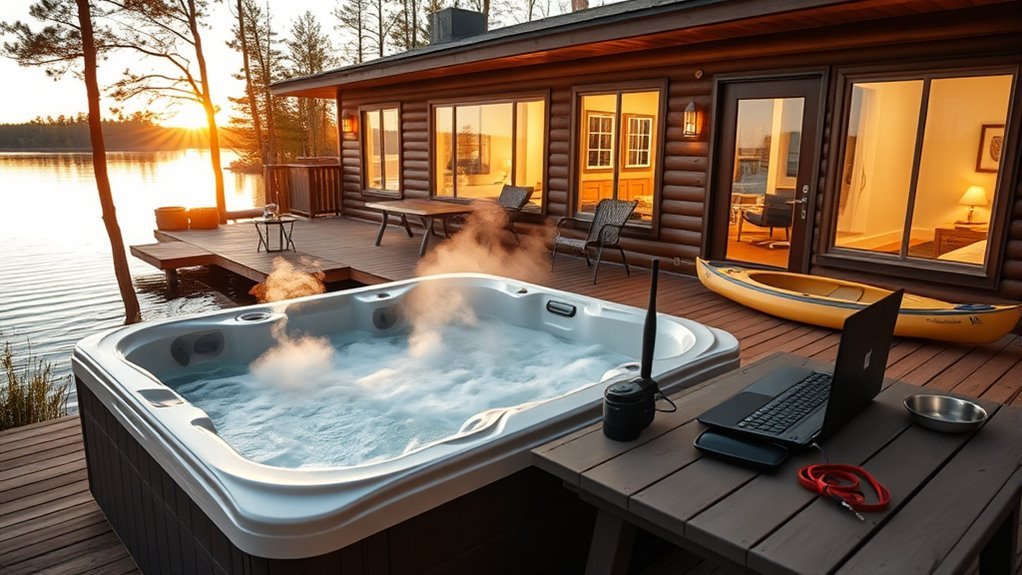
When renters want extra comfort or recreation, hosts can charge noticeably more: listings with hot tubs typically command 15–20% higher nightly rates. Lakefront properties with private docks add about 25%, and high‑speed Wi‑Fi lets you tack on another 10–15% premium for remote workers and families.
You’ll see the hot tub benefits reflected immediately in booking velocity and willingness to pay—guests trade price for privacy and relaxation. Dock access on lake properties converts occasional interest into premium stays, justifying roughly a quarter increase because of boating and fishing opportunities.
Add pet-friendly rules and you can raise rates by $20–50 per night while expanding your market reach. Amenities like pools, grills, and roomy yards can push average daily rates up to 30% over basic listings.
Allow pets and you can add $20–50/night; pools, grills, and big yards can boost rates up to 30%.
If you want freer income streams, prioritize amenities with clear ROI: calculate incremental nightly gains, weigh maintenance costs, and target listings to lucrative guest segments such as remote workers, families, and pet owners.
Products Worth Considering

Soothing Airjet Massage System: The Bestway Saluspa Cancun hot tub features 120 bubble jets that create a warm and relaxing spa experience for up to 4 people, right from the comfort of your home.
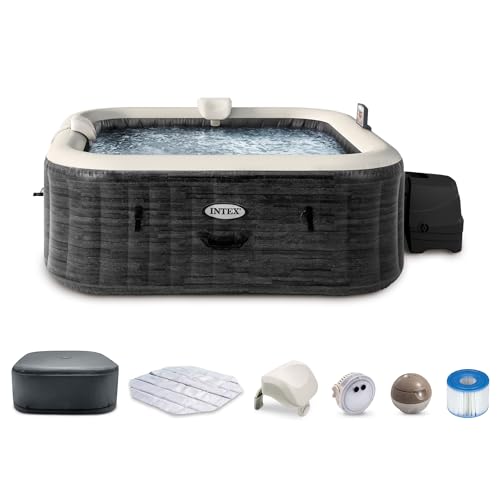
Heated Air Bubble Technology: Immerse yourself in heated air bubbles that relax your body, melt away stress, and leave you feeling rejuvenated. The heating system adjusts to fit your personal temperate preference, for an optimal spa experience.

Double the Destresser - A steamy soak combined with aromatherapy takes relaxation to the next level. Unwind with your Star Splash hot tub scents, featuring 24 packets of pure heaven.
Seasonality & Events That Push Prices Up Or Down
Expect your nightly cost to spike around peak event weekends—May and October often push the average daily rate toward the 2026 projection of about $224.
Seasonal weather swings and July’s high occupancy mean summer vacations raise prices even if ADR dips in February.
Book early for holidays and festivals in spring and fall to avoid premium last‑minute rates.
Peak Event Weekends
During major Indiana events—most notably the Indianapolis 500 in late May—Airbnb nightly rates spike sharply as demand outpaces supply. You can expect similar surges during the Indy Jazz Fest and peak fall foliage weekends in October.
You’ll see clear correlations between event attraction and price hikes: hosts raise rates; occupancy concentrates near venues; average nightly costs climb well above baseline. Use data-driven pricing strategies to capture value without alienating guests.
Monitor historical peaks, set minimum stays for high-demand weekends, and adjust cleaning fees to protect margins. Plan to avoid February bookings when revenue dips.
- Track historical ADR and occupancy by event
- Prioritize listings near major venues
- Implement dynamic minimum-night rules
- Adjust fees for peak demand
- Publish transparent surge notices
Seasonal Weather Swings
Although seasonal swings in Indiana push ADR and occupancy in predictable patterns, you can use those trends to maximize revenue: May ADR peaks near $224 while February drops to $130, and July shows highest occupancy (~43.9%) versus January (~26%). October yields the strongest revenue thanks to pleasant fall weather and steady demand. Track weather impact and seasonal trends to price dynamically—raise rates heading into May or October, discount in February, and target occupancy strategies in January. Aim for freedom from guesswork by using data-driven rules for nightly rates and minimum stays. Use the table below to guide quick adjustments.
| Month Focus | Action |
|---|---|
| May (ADR peak) | Raise rates |
| July (Occ peak) | Optimize availability |
| October (Revenue) | Premium pricing |
| Feb (Low ADR) | Discount & promos |
Holiday And Festival Demand
When major events roll through Indiana, you can see ADR spike sharply—May rates climb highest around the Indianapolis 500 while October bookings generate the strongest revenue from fall festivals and foliage-driven demand—whereas February registers the weakest pricing and fewer events.
You’ll plan pricing and availability around clear festival trends: May and October lift ADR and occupancy, February drags averages down.
Target properties near venues to capture premium holiday booking rates and use dynamic pricing to seize short windows of demand. Track historical event weekends, adjust minimum nights, and promote flexible cancellation to attract liberated travelers seeking experiences.
- May (Indy 500): highest ADR, peak occupancy
- October: strongest revenue, foliage-driven demand
- February: lowest ADR, thin demand
- Venue-adjacent properties: premium rates
- Dynamic pricing: maximizes returns
How To Book Cheaper: Timing, Minimum‑Stay Tactics, And Cancellations
Want to pay less on your Indiana Airbnb? Aim for off-peak months: January–February averages drop to about $130/night versus May spikes near $422.
Use booking strategies that exploit seasonality and last-minute demand—hosts often reduce rates days before a stay to avoid vacancies, especially in low-demand periods.
Seek listings with flexible minimum-stay rules; longer stays frequently reveal lower nightly rates, so combine weekend nights into short weeklong blocks to maximize savings.
Add price negotiation when appropriate: politely ask for slight discounts on longer or last-minute bookings to capture marginal savings.
Monitor local event calendars—festivals drive prices up, so either book those dates early or shift travel to quieter windows.
Favor lenient cancellation policies so you can pivot if a cheaper option appears; that flexibility protects your budget and preserves freedom.
Track rates, compare similar listings, and act when the data shows clear savings opportunities.
Sample Budgets: Weekend, Weeklong, And Family Trip Estimates
Now that you’ve learned timing and booking tactics to shave costs, let’s look at concrete budgets so you can plan with numbers. Use these budgeting strategies and travel tips to reclaim time and money: the state ADR sits near $224, so two nights typically cost $448–$672 for a weekend; a seven‑night stretch is about $1,568; families pursuing space and amenities should estimate near $1,200 for a week, often below ADR-driven options.
Seasonal demand pushes prices up in peak months like May, so off‑peak timing lowers totals.
- Weekend escape: $448–$672 (2 nights at ADR) — quick reset without overspending.
- Weeklong solo or couple: ~$1,568 (7 nights at ADR) — steady cost baseline.
- Family week: ~$1,200 — optimized for space and savings.
- Peak vs off‑peak: expect higher in May; shift dates to save.
- Strategy: combine flexible dates with clear budgeting strategies and travel tips to control costs and gain freedom.
Cost Tradeoffs: When To Splurge Vs. Save On Indiana Rentals
Although splurging on top-tier Airbnbs can boost comfort and status, you should weigh that against concrete numbers: the Indiana average sits near $224 per night, while the top 10% exceed $422.
Splurge on luxury experiences when those amenities—high-end kitchens, private outdoor space, reliable Wi‑Fi—deliver measurable value: longer stays where productivity or celebration matters, or short trips where comfort amplifies the experience.
Splurge on luxury when amenities like gourmet kitchens, private outdoor space, or reliable Wi‑Fi clearly boost productivity, comfort, or celebration.
Save when your trip is activity-focused, seasonal demand is low (think February), or you’re staying longer: the bottom 25% averages about $130, which is ideal for extended stays or larger groups sharing costs.
Use budget strategies like booking off-peak, targeting lower-quartile listings, and prioritizing must-have amenities so you don’t pay for extras you won’t use.
Track occupancy trends—summer and May/October peaks—to time reservations.
Decide by marginal benefit: if the added nightly cost produces more freedom, productivity, or joy than an economical alternative, splurge; otherwise, save and reallocate funds to experiences that liberate you.
Products Worth Considering

LUXURY INGREDIENTS - Delight your guests with American-designed and formulated hotel amenities; A superior blend of 100% natural grade-A tested ingredients to clean,...
Frequently Asked Questions
How Much Should I Charge per Night for My Airbnb?
Charge around $224 as a baseline, then tweak higher for premium features or peak May demand; use pricing strategies and market research to optimize rates, boost occupancy, and free yourself financially by tracking trends and competitor costs.
Is Airbnb Profitable in Indiana?
Absolutely — you can make serious returns in Indiana, but you’ll tackle Airbnb regulations and market competition head-on; use ADR, occupancy, and revenue trends to set data-driven prices, cut costs, and liberate your income potential strategically.
What Is the 75-55 Rule for Airbnb?
The 75-55 rule says you’ll target 75% occupancy in peak months and 55% in off-peak, guiding rental strategies and pricing psychology so you’ll optimize revenue, manage costs, track trends, and free yourself from inconsistent cash flow.
What Are the Most Popular Airbnb Areas in Indiana?
Like a magnet, you’ll find popular destinations: Indianapolis, Brown County, Jeffersonville, Columbus, and lakefront towns; you’ll track local attractions, cost trends, occupancy data, and tips to maximize revenue and guest freedom.
Conclusion
Think of Indiana Airbnb hunting like scanning a gas gauge: I once found a $72/night cozy Bloomington guesthouse that stretched my weekend budget far further than splurging on a $220 Lake Wawasee cabin. With Indiana’s 2026 average around $115/night, that gap shows how small choices shift totals fast. Use data-driven filters (price, dates, amenities) and you’ll steer costs where you want—economy for errands, premium for memories.
