Welding gas cylinder costs are easy to misread because one listing may include an empty cylinder, another may cover gas only, and a third may require an exchange bottle. In current U.S. retail examples checked July 29, 2026, small gas-only fills were near $60, while customer-owned cylinders ranged from roughly $220 to more than $550. Your real total depends on the gas, size, supplier, ownership plan, and local fees.
Quick Answer
A welding gas setup can cost about $220 to more than $550 for a customer-owned small or medium cylinder, while gas-only refills or exchanges commonly run about $60 to $90 in current national-retailer examples. Actual prices depend on gas, cylinder size, ownership terms, location, fees, and whether the listing includes the cylinder.
Key Takeaways
- Confirm whether a price is for the cylinder, the gas contents, or both.
- A larger cylinder usually lowers the refill cost per cubic foot, but it is heavier and may be lease-only at some suppliers.
- Pure argon is the usual all-purpose TIG shielding gas; 75% argon/25% CO2 is common for short-circuit MIG welding on mild steel.
- Estimate continuous gas time by dividing cylinder capacity in cubic feet by the flow rate in cubic feet per hour.
- Compare ownership, lease, deposit, delivery, hazmat, exchange, and recertification policies before buying.
At a Glance
| Current Gas-Only Examples | About $60 for a 40 CF argon fill, about $63 for a 40 CF 75/25 exchange, and about $88 for 125 CF of shielding gas |
| Current Cylinder Examples | About $220 for a small 20 CF cylinder, roughly $405–$450 for an empty 125 CF Argon/CO2 cylinder, and about $530 for an 80 CF argon cylinder |
| Typical Continuous Flow | A 40 CF cylinder provides about 2–4 hours at 20–10 CFH; a 125 CF cylinder provides about 6.25–12.5 hours |
| Best Value Check | Compare total first-year cost, refill price per cubic foot, supplier distance, exchange rules, and how often you weld |
Note: Prices in this guide are dated examples, not national fixed rates. Welding-gas prices and cylinder policies vary by ZIP code, supplier, gas purity, inventory, and whether you buy, lease, rent, or exchange the bottle.
Understanding Welding Gas Types
Choosing the right gas matters more than choosing the cheapest cylinder. The wrong shielding gas can increase spatter, reduce arc stability, or damage weld quality.
Argon for TIG Welding
Miller Electric identifies 100% argon as the best all-around TIG shielding gas. It works across common metals and gives reliable arc starting. Argon-helium blends can create a hotter arc for thicker material or faster travel, but they cost more and may require different flow settings.
Argon/CO2 and CO2 for MIG Welding
For short-circuit MIG welding on mild steel, 75% argon/25% CO2—often called C25—is a common all-purpose choice because it provides a smooth arc with relatively low spatter. Miller’s MIG gas guide also notes that straight CO2 can provide deeper penetration at a lower gas cost, although it usually creates more spatter.
Other Gases
- Helium: Often blended with argon for a hotter TIG arc, especially on thicker nonferrous metal.
- Oxygen: Used with fuel gases for cutting, brazing, and heating—not as a general inert shielding gas.
- Acetylene: A fuel gas used with oxygen. Its cylinders, valves, storage rules, and pricing differ from argon shielding-gas cylinders.
- Specialty blends: Stainless steel, spray-transfer MIG, and specialty alloys may need tri-mixes or low-CO2 blends specified by the wire and welding-procedure manufacturer.
Warning: Argon, helium, and carbon dioxide can displace oxygen. Use shielding gases only with adequate ventilation, and never treat a confined or enclosed space as safe without proper atmospheric testing and controls.
Welding Gas Cylinder Cost: Pricing Breakdown by Size
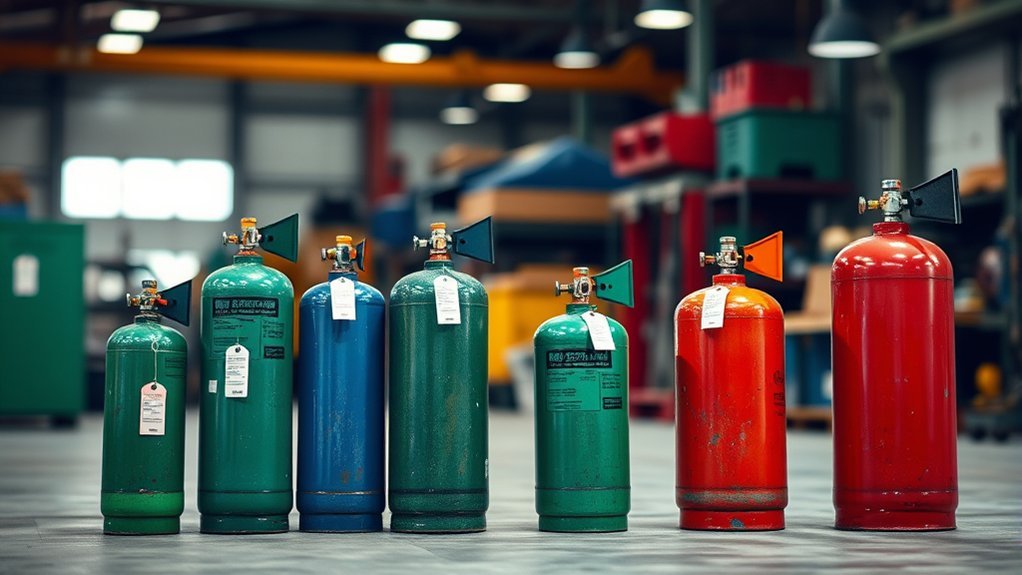
Cylinder size affects purchase price, refill frequency, weight, and supplier options. However, size labels are not perfectly standardized between suppliers. Always compare the stated gas capacity in cubic feet, the cylinder dimensions, the valve connection, and whether the unit is empty or filled.
Cylinder Size Pricing Comparison
The following examples were checked on July 29, 2026. They show why a single national price range can be misleading:
| Listing | Observed Price | What the Price Includes |
|---|---|---|
| 40 CF argon contents | $59.99 | Gas only; an eligible cylinder is required |
| 40 CF 75/25 Argon/CO2 exchange | $62.99 | Gas exchange only; cylinder purchase is separate |
| 125 CF shielding-gas contents | $87.99 | Gas only; matching exchange cylinder required |
| 125 CF Argon/CO2 cylinder | About $405–$450 | Empty customer-owned cylinder; gas is separate |
| 80 CF argon cylinder | $529.99 | Refillable and exchangeable cylinder listing |
These examples replace the older assumption that every 40 CF cylinder costs $212–$260, every 80 CF cylinder starts near $253, or every 125 CF bottle costs $350–$400. Current listings can be lower or higher depending on whether the bottle is empty, full, customer-owned, leased, or sold through an exchange program.
Refill Costs Overview
Current examples put a 40 CF gas-only fill or exchange near $60–$63 and a 125 CF shielding-gas fill near $88. That does not mean every supplier will match those prices. Local shops may add handling, hazmat, delivery, account, or cylinder-service fees, while some bundle those charges into one exchange price.
In the cited examples, 40 CF of shielding gas cost about $1.50–$1.57 per cubic foot, while 125 CF at $87.99 cost about $0.70 per cubic foot.
Pro Tip: Ask for the out-the-door refill or exchange price and divide it by the cylinder’s cubic-foot capacity. This gives a cleaner comparison than looking only at the total ticket.
Initial Purchase Costs of Gas Cylinders

The first purchase may include more than the bottle. Depending on the supplier and your equipment, you may also need the first gas fill, a compatible regulator or flowmeter, a hose, a cart or chain, a valve cap, and delivery or handling fees.
Cylinder Size Impact
Smaller 20–40 CF cylinders are easier to carry and store, but they run out sooner. Mid-size 80–125 CF cylinders reduce exchange trips and often improve gas cost per cubic foot, but they are heavier. For example, the cited 80 CF steel argon cylinder weighs about 53 pounds, while the cited 125 CF cylinder weighs about 79 pounds before considering the handling demands of a tall pressurized bottle.
- 20–40 CF: Good for occasional repair work, portability, and limited storage.
- 60–80 CF: A practical middle ground for hobbyists who weld regularly.
- 125 CF: Better for longer sessions when the supplier allows customer ownership or exchange.
- 150–330+ CF: Common in higher-volume shops, but often subject to lease, delivery, and account rules.
Ownership vs. Rental
Ownership is not automatically cheaper for every welder. A customer-owned cylinder can avoid recurring rent, but you pay more upfront and must use a supplier willing to fill or exchange that size and ownership type. Rental or lease programs reduce the initial bottle cost and may simplify testing and maintenance, but they add recurring charges.
Airgas explains that customers who do not refill a cylinder they already own generally rent or lease the supplier’s cylinder, with rates based on factors such as gas type and consumption. Before buying a used bottle, check the neck-ring or shoulder ownership markings and confirm that a local supplier will accept it.
Initial Cost Comparison
Use this checklist when comparing first-time quotes:
- Cylinder: Empty bottle, filled bottle, deposit, rental, lease, or customer-owned exchange rights
- Gas: Pure argon, C25, CO2, oxygen, acetylene, helium, or specialty blend
- Hardware: Correct regulator or flowmeter, hose, cart, chain, and valve protection
- Fees: Hazmat, delivery, cylinder service, account, rush, tax, and pickup charges
- Future access: Distance to the exchange location and whether another supplier will accept the bottle
Acetylene cylinders can cost more than comparable shielding-gas bottles because they use a different internal design and fuel-gas service. Do not compare an acetylene cylinder with an argon cylinder by cubic feet alone.
Ongoing Refill Expenses to Consider
Refill frequency depends on cylinder size, flow rate, pre-flow and post-flow settings, leaks, and how many arc-on hours you log. Using the dated examples above:
- Six 40 CF C25 exchanges at $62.99 each would cost $377.94 per year before tax or added fees.
- Four 125 CF shielding-gas exchanges at $87.99 each would cost $351.96 per year before tax or added fees.
The larger cylinder in this example supplies more than twice as much annual gas for slightly less refill money, but that advantage matters only if you can safely store it, transport it, and use a matching exchange program.
Calculating the Total Cost of Ownership
Total cost of ownership includes the initial setup plus every recurring expense during the period you plan to keep the cylinder.
Initial Tank Investment
Start with the cylinder or deposit, first gas fill, regulator or flowmeter, hose, cart or restraint, and initial delivery or pickup expense. A listing marked “contents only” does not include the cylinder. A listing marked “empty cylinder” does not include the gas.
Ongoing Refill Expenses
Use this formula:
Total cost = initial cylinder/setup cost + (number of refills × refill price) + rental/lease fees + delivery and service fees.
For example, if your complete cylinder setup costs $300 and you make six $62.99 exchanges during the first year, the first-year total is $677.94 before tax and any extra fees. In year two, the same usage would cost $377.94 if the exchange price and fees did not change.
Note: A supplier may handle periodic cylinder requalification for leased or exchange bottles. With a privately owned bottle, ask who pays if testing, valve work, or recertification is due.
Factors Affecting Welding Gas Prices

The main price drivers are:
- Gas type and blend: Helium and specialty blends can cost more than common argon/CO2 mixes.
- Purity: Industrial welding grade and laboratory or ultra-high-purity gas are not priced the same.
- Cylinder capacity: Larger bottles usually reduce cost per cubic foot but increase upfront cost and handling weight.
- Ownership model: Customer-owned, exchange, deposit, monthly rental, and long-term lease programs use different fee structures.
- Location and competition: Local supply, delivery distance, and the number of nearby gas distributors affect quotes.
- Extra fees: Hazmat, delivery, cylinder maintenance, account, and rush charges can change the final bill.
- Availability: A low online price has little value if the cylinder cannot be shipped or exchanged near you.
How Long Does a Cylinder Last?
For a compressed shielding gas, estimate ideal continuous-flow time with this formula:
Hours of gas = cylinder capacity in cubic feet ÷ flow rate in cubic feet per hour.
| Cylinder Capacity | At 10 CFH | At 15 CFH | At 20 CFH |
|---|---|---|---|
| 20 CF | 2 hours | 1.3 hours | 1 hour |
| 40 CF | 4 hours | 2.7 hours | 2 hours |
| 80 CF | 8 hours | 5.3 hours | 4 hours |
| 125 CF | 12.5 hours | 8.3 hours | 6.25 hours |
Actual arc time may differ because gas also flows during pre-flow and post-flow, and leaks waste gas. Wind can force you to use a higher flow or a wind screen. Excessive flow can create turbulence and pull air into the shielding zone, so follow the welder, torch, cup, and consumable manufacturer’s recommendations.
A pressure gauge gives only a rough indication for many high-pressure shielding-gas cylinders. Full pressure is not universally 2,015 psi; read the cylinder’s stamped service pressure and account for temperature. Pressure is also a poor quantity gauge for liquefied CO2 and is not a simple remaining-volume measure for acetylene.
For more detail on specific cases, see our guides to welding gas refill costs, small welding tank costs, welding tank costs and the 65 cu ft oxygen cylinder cost.
Where to Purchase or Refill Welding Gas
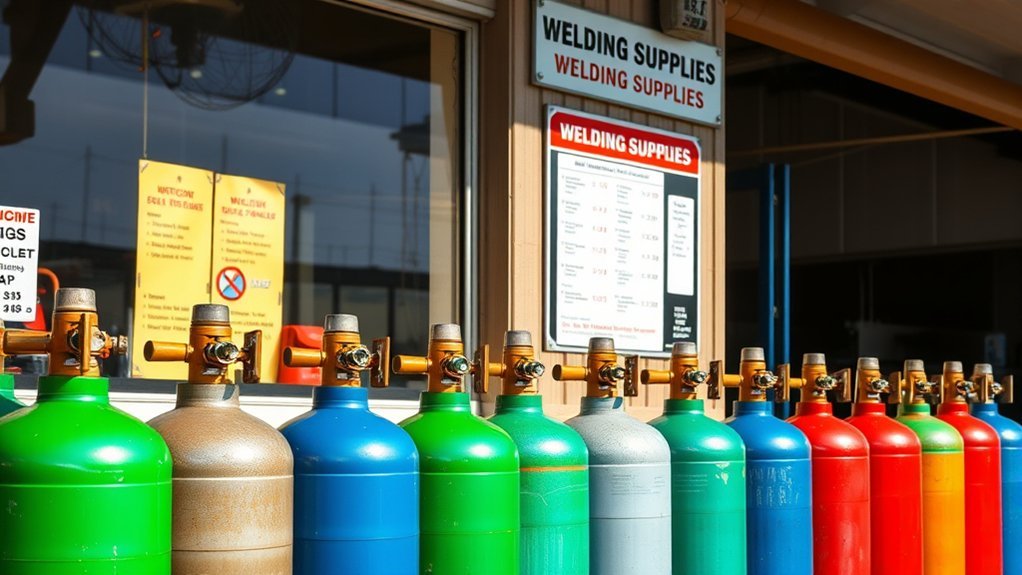
Common options include local welding-supply stores, national industrial-gas companies, farm and tool retailers with cylinder-exchange programs, and online cylinder sellers. Gas-filled high-pressure cylinders often have shipping restrictions, so an online bottle price may not include the fill or a usable local exchange network.
Before paying, ask these questions:
- Is the quoted price for the cylinder, the gas, or both?
- Is the bottle customer-owned, rented, leased, or deposit-based?
- Will you exchange this exact size and gas type later?
- Do you accept cylinders bought from another seller?
- Are hazmat, delivery, service, or testing fees added?
- Is the cylinder within its requalification period and free of rejected ownership markings?
- What regulator connection is required?
Comparing Rental vs. Ownership Costs
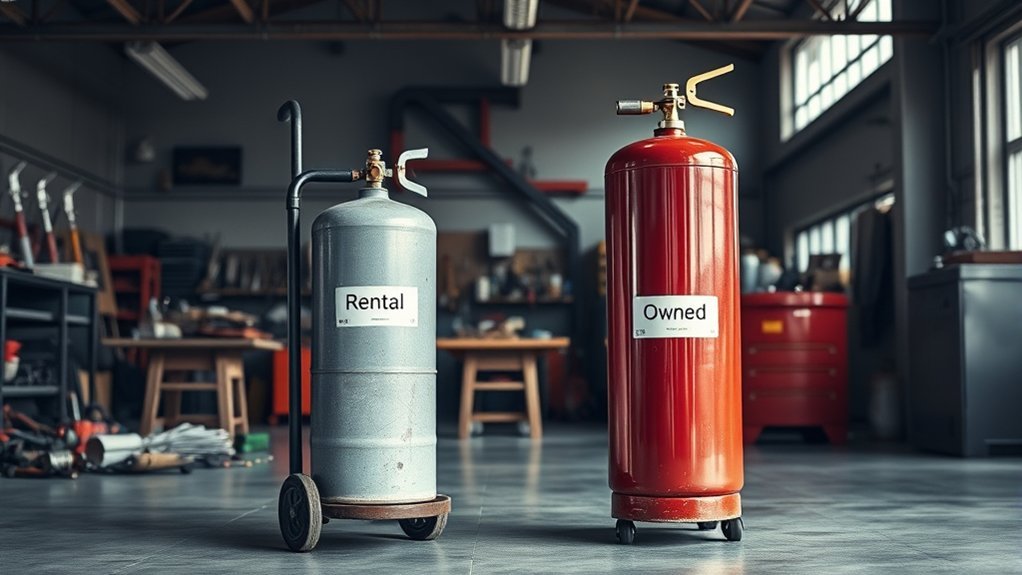
Ownership often works well for hobbyists who use one small or medium cylinder for years and have a reliable local exchange program. Rental or lease plans may work better for businesses that need large bottles, several gases, regular delivery, and supplier-managed cylinder maintenance.
| Option | Advantages | Trade-Offs |
|---|---|---|
| Own | No recurring cylinder rent; simple for occasional use | Higher upfront cost; supplier acceptance and testing policies matter |
| Rent | Low initial bottle cost; flexible for short projects | Monthly charges can continue while the bottle sits unused |
| Lease | Useful for larger cylinders and regular commercial supply | Contract terms, annual fees, and return obligations apply |
Calculate a break-even point by dividing the owner-cylinder purchase cost by the yearly rental or lease charge you would avoid. Then add any differences in refill price, delivery, testing, and travel.
Tips for Saving on Welding Gas Expenses
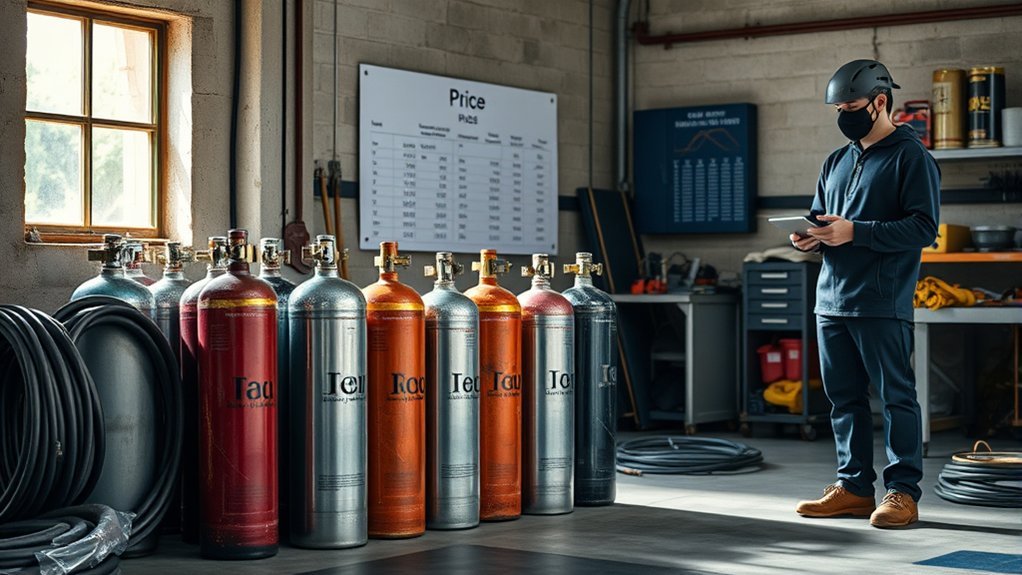
- Compare the out-the-door cost per cubic foot, not just the advertised refill price.
- Choose the largest cylinder you can safely handle and that your supplier will support.
- Check every hose, fitting, flowmeter, and torch connection for leaks using an approved leak-detection solution.
- Close the cylinder valve when welding is finished, even if the bottle appears empty.
- Use the lowest flow rate that still provides sound shielding for the torch, cup, draft conditions, and procedure.
- Avoid long unnecessary pre-flow and post-flow settings.
- Keep a spare cylinder only if you can store it correctly and the extra capital makes sense.
- Consider self-shielded flux-cored wire or stick welding for suitable outdoor jobs where shielding gas is not required.
Safety, Storage, Transport, and Cylinder Condition
Compressed-gas cylinders store substantial energy. OSHA requires cylinders at covered workplaces and construction sites to be secured, and valve protection caps must be in place when the cylinder is moved or not connected for use. Store cylinders in a dry, protected, well-ventilated area away from heat, ignition sources, and physical damage.
- Keep cylinders upright and secured with a chain, strap, rack, or approved cart.
- Close the valve before moving a cylinder. Remove the regulator and install the valve cap when the cylinder design accepts one, unless an approved carrier permits otherwise.
- Do not drag, drop, strike, or use a cylinder as a roller.
- Secure cylinders against movement during vehicle transport and provide ventilation. Do not leave them in a hot, enclosed vehicle.
- Keep labels readable and never identify the gas by cylinder color alone.
- Separate stored oxygen from fuel-gas cylinders by at least 20 feet or an approved noncombustible barrier where OSHA’s oxygen-fuel rules apply.
- Do not use a damaged, leaking, heavily corroded, fire-exposed, or out-of-test cylinder. Contact the supplier or an authorized requalifier.
Warning: Do not roll a cylinder on its side to “remix” gas. Follow the gas supplier’s written instructions for the specific mixture, and use a suitable hand truck whenever you move the bottle.
PHMSA regulates the qualification and requalification of DOT specification cylinders used in hazardous-material transportation. Test intervals vary by cylinder specification and service, so read the stamped markings and use a PHMSA-authorized cylinder requalifier when testing is required.
Frequently Asked Questions
Are there safety regulations for storing welding gas cylinders?
Yes. Requirements depend on the gas, workplace, and jurisdiction. Core practices include securing cylinders upright, protecting valves, keeping the storage area dry and ventilated, and separating oxygen from fuel gas as required. Follow the cylinder label, safety data sheet, supplier rules, OSHA requirements, and local fire code.
How do I know when a welding gas cylinder is empty?
For many high-pressure shielding gases, the regulator’s cylinder-pressure gauge trends downward as gas is used, but temperature affects the reading. Close the valve and arrange an exchange before pressure becomes too low for stable flow. Do not rely on pressure alone for liquefied CO2 or dissolved acetylene.
Can I transport welding gas cylinders in my vehicle?
A private user may transport a cylinder, but it must be closed, protected, secured against movement, and carried with ventilation. Install the valve cap when applicable and remove the regulator before transport. Commercial transportation can trigger additional federal hazardous-material rules, so businesses should check PHMSA requirements.
What should I do with an expired, damaged, or leaking cylinder?
Move people away from a suspected leak and contact the supplier or emergency services as the label directs. Do not repair, vent, drill, cut, or scrap the cylinder yourself. A supplier or PHMSA-authorized requalifier can decide whether it may be tested, repaired, returned, or condemned.
How should I dispose of an unwanted welding gas cylinder?
Start with the cylinder owner or gas supplier. Many cylinders remain supplier property, and many waste facilities will not accept a pressurized bottle. Never place a cylinder in household trash or scrap metal unless an authorized party has made it safe and approved the disposal route.
Is a larger welding gas cylinder always cheaper?
Not always. A larger bottle usually lowers gas cost per cubic foot and reduces exchange trips, but it costs more upfront, weighs more, and may require a lease or delivery account. Compare the full ownership or lease cost for your actual usage.
Can any welding supplier refill a cylinder I own?
No. Suppliers may reject another company’s marked cylinder, an unsupported size, an out-of-test bottle, or a cylinder with damage or unclear ownership. Confirm acceptance before buying a used or online cylinder.
Do welding gases expire?
The gas itself may remain usable when the cylinder stays sealed and uncontaminated, but that does not make the cylinder serviceable forever. Cylinder requalification dates, valve condition, leakage, contamination, and mixture specifications still matter. Ask the supplier to evaluate any old or unknown bottle.
Conclusion
Welding gas cylinder cost is more than one sticker price. Separate the cylinder charge from the gas charge, compare refill cost per cubic foot, and include rent, lease, deposits, delivery, testing, and travel. A 40 CF bottle may suit occasional work, while an 80–125 CF bottle often gives better refill value for regular welding. The best choice is the largest cylinder you can safely handle and reliably exchange through a local supplier.
Sources
- Miller Electric — Proper Shielding Gas Coverage Is Key to Success in GTAW — TIG shielding-gas selection and argon/helium guidance
- Miller Electric — What Type of Gas Is Best for MIG Welding? — C25 and straight-CO2 guidance for mild steel
- OSHA 29 CFR 1910.253 — oxygen-fuel cylinder storage, valve caps, and separation requirements
- OSHA — Controlling Hazardous Fume and Gases During Welding — ventilation and oxygen-displacement hazards
- PHMSA 49 CFR 180.209 — cylinder requalification requirements
- PHMSA Cylinder Requalifiers — finding authorized cylinder testing facilities