
Welding school can be a relatively low-cost path into the skilled trades, but prices vary much more than a single national average suggests. A short public technical program may cost only a few thousand dollars, while an intensive private welding program can exceed $25,000 before housing, transportation, and lost work time are included.
Quick Answer
Published welding-program prices currently range from about $2,700 for some public technical programs to more than $26,000 for intensive private training. Your actual welding school cost depends on program length, residency, tools, lab fees, certification testing, transportation, housing, and the financial aid you receive.
Key Takeaways
- Short public welding certificates may cost less than $5,000, while longer private programs can exceed $20,000.
- Always compare the total program cost, not just the advertised tuition.
- PPE, tools, books, lab fees, consumables, certification tests, transportation, and housing may add thousands of dollars.
- Schools normally provide welding machines in their labs, so most students do not need to buy a personal machine.
- FAFSA aid, scholarships, workforce grants, veterans benefits, employer assistance, and paid apprenticeships may reduce out-of-pocket costs.
Welding School Cost Overview

There is no single standard price for welding school. A program’s advertised amount may represent tuition only, tuition and mandatory fees, or a more complete estimate that includes books, tools, and supplies.
The following examples were published by the schools and checked on July 28, 2026. They show why a fixed national range can be misleading.
| Published program | Length | Published cost | What the figure includes |
|---|---|---|---|
| Davis Technical College Welding Technology | About 10–15 months, depending on weekly hours | $2,774 | Estimated adult tuition, fees, and course materials |
| Carroll Community College Welder Certificate | About 120 hours over six months | $3,173 | Published program price, including a certification exam |
| Salt Lake Community College Welding Technology | Technical certificate | $4,737 | Tuition, fees, supplies, books, and required materials |
| Hobart Structural Welding Program | 24 weeks / 840 clock hours | $16,828 | Projected tuition, equipment, and training materials |
| Lake Area Technical College Welding Technology | Degree program | $22,539 | Published tuition, fees, tools, books, and laptop estimate; living costs excluded |
| Hobart Pathways Welding Program | 40 weeks / 1,400 clock hours | $26,485 | Projected tuition, equipment, and training materials |
Note: These examples are not national averages. They demonstrate how prices change by school, credential, location, length, and included expenses. Tuition and fees can change before your enrollment date.
What Affects the Cost of Welding School?
Two programs that both use the words “welding certificate” may have very different prices and training hours. Compare the following factors before assuming one school is cheaper.
Products Worth Considering

🧲 Sticks to Toolboxes & Welders – Heavy-duty magnetic welding chart adheres to metal surfaces like your welding table, toolbox, or wall for instant reference while working.
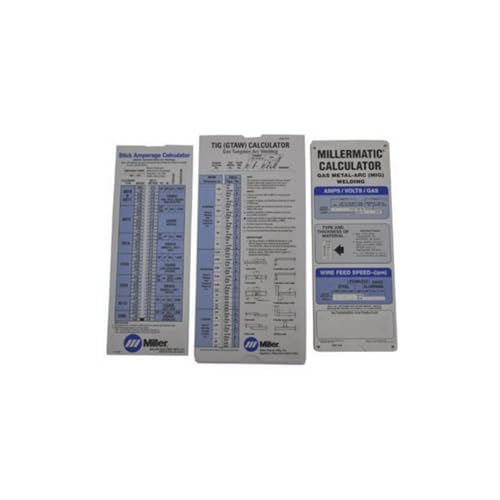
Comprehensive 3‑in‑1 reference pack covers MIG, TIG and Stick welding parameters—ideal for welders who work across multiple processes

Richard Finch, Welder's Handbook: A Complete Guide to MIG, TIG, Arc & Oxyacetylene Welding, "Completely Revised and Updated Edition!" paperback
Program Length
A basic course covering one process may last several weeks. A broader certificate may require six to twelve months, while an associate degree can take about two years of full-time study. More instructional and lab hours normally increase tuition and fees.
Public or Private Institution
Public community and technical colleges often charge lower in-district or in-state tuition because they receive public funding. Private career schools may charge more but may offer concentrated schedules, longer daily lab sessions, or programs that finish in less than one year.
Residency Status
A public college may have separate in-district, out-of-district, in-state, and out-of-state rates. Confirm which rate applies to you before comparing prices.
Welding Processes Covered
A more complete program may teach shielded metal arc welding, gas metal arc welding, flux-cored arc welding, gas tungsten arc welding, oxy-fuel cutting, plasma cutting, blueprint reading, fabrication, and weld inspection. A lower-cost course may cover only one or two processes.
Lab Hours and Materials
Hands-on practice requires booths, power sources, shielding gas, electrodes, wire, plate, pipe, ventilation, and instructor supervision. These expenses may appear as lab, consumable, course, or materials fees.
Included Tools and Testing
One school may include a helmet, jacket, hand tools, books, and a certification test. Another may advertise lower tuition but require you to buy those items separately.
Pro Tip: Ask every school for a written, itemized cost sheet showing tuition, mandatory fees, tools, PPE, books, consumables, testing, and refund rules. Compare that total instead of comparing advertised tuition alone.
Types of Welding Institutions
Welding education is available through public colleges, private trade schools, high schools, unions, employers, correctional education programs, and registered apprenticeships. The best option depends on your budget, schedule, local job market, and career goal.
Community and Technical Colleges
Public colleges may offer short workforce certificates, one-year diplomas, and two-year associate degrees. They often have lower tuition for local residents and may allow credits to count toward a later degree.
An associate degree may include general education, technical math, blueprint reading, metallurgy, fabrication, and other subjects beyond basic welding practice. This broader education can be useful for future roles in supervision, inspection, estimating, quality control, or manufacturing technology, but a degree is not required for every entry-level welding job.
Private Trade Schools
Private welding schools usually focus on accelerated occupational training. Programs may provide many lab hours and cover several welding processes in less than a year. Their total cost can be higher, so compare completion rates, debt, employer relationships, included testing, and the school’s refund policy.
Short Courses and Workforce Programs
Short programs can be useful when you need one process, an introductory skill, or preparation for a performance test. They may not provide the same breadth of blueprint reading, fabrication, pipe welding, or metallurgy as a longer program.
Registered Apprenticeships
An apprenticeship combines paid work with classroom or technical instruction. This route can reduce education debt because apprentices earn wages while training. Availability is local and competitive, and welding may be taught within occupations such as ironworker, pipefitter, boilermaker, sheet metal worker, shipbuilder, or industrial maintenance technician.
You can search current opportunities through the Apprenticeship.gov Job Finder.
Employer or Union Training
Some employers hire helpers or entry-level workers and provide process-specific training. Unions and industry organizations may also operate apprenticeships or training centers. Ask about starting wages, required travel, tools, classroom hours, and any obligation to remain with the employer after training.
Program Length and Structure
Program length should match the skills required by the jobs you plan to pursue. A short course can be economical, but choosing only by price may leave you without enough booth time or process coverage.
| Program type | Common duration | Best suited for | What to verify |
|---|---|---|---|
| Introductory course | Days to several weeks | Exploring welding or learning one basic process | Actual arc time and whether it prepares you for employment |
| Short certificate | Several weeks to six months | Entry-level process training or rapid skill development | Processes, positions, materials, testing, and employer recognition |
| Diploma or comprehensive certificate | About six to twelve months | Broader entry-level preparation across multiple processes | Clock hours, lab-to-classroom ratio, pipe training, and credentials |
| Associate degree | About two years full-time | Welding plus fabrication, technical studies, and general education | Transferability, general-education costs, and local employer demand |
| Apprenticeship | Often multiple years | Paid, occupation-specific training | Starting pay, wage progression, travel, classroom obligations, and entry requirements |
A lower tuition figure is not a better value when the program provides too little supervised booth time to develop consistent, testable welding skills.
Products Worth Considering

Comprehensive Welding Protection Package: this welding protection gear set, with a color of yellow, is a handy kit that includes a welding apron, a pair of welding gloves, a pair of welding sleeves, a welding hood and boot covers; This all encompassing package is designed to meet your safety needs and provide full coverage, safeguarding you from welding splashes and intense heat
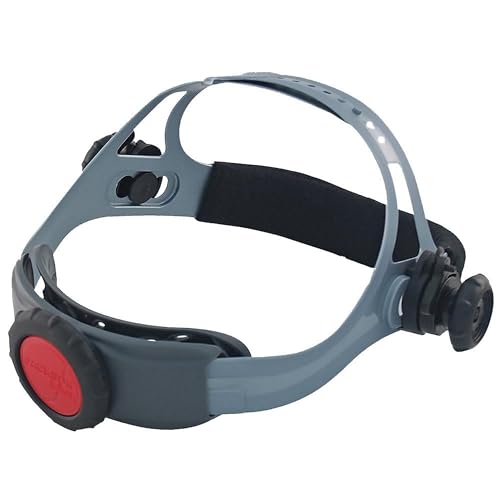
REPLACEMENT WELDING HELMET HEADGEAR - Jackson Safety's Premium 370 Speed Dial Replacement Headgear offers a perfect fit and secure hold for your welding hood

Reinforced Stitching: Features double stitching with flame-resistant thread and rivet design for enhanced durability and longevity under heavy-duty use.
Full-Time Versus Part-Time Training
Full-time programs can lead to faster completion but may make it difficult to maintain a full work schedule. Part-time, evening, and weekend formats spread the expense and may let you keep earning income, although they take longer to finish.
Ask whether the school guarantees access to required courses each term. A nominally part-time program may take much longer if advanced classes are offered only once per year.
What a Strong Entry-Level Curriculum May Include
- Welding safety, PPE, ventilation, and fire prevention
- Shielded metal arc welding
- Gas metal arc welding
- Flux-cored arc welding
- Gas tungsten arc welding
- Oxy-fuel and plasma cutting
- Blueprint reading and welding symbols
- Trade math, measurement, and layout
- Joint preparation, fit-up, and distortion control
- Visual inspection and destructive testing basics
- Welding procedure specifications and welder qualifications
- Resume, interview, and job-search preparation
Additional Welding School Costs
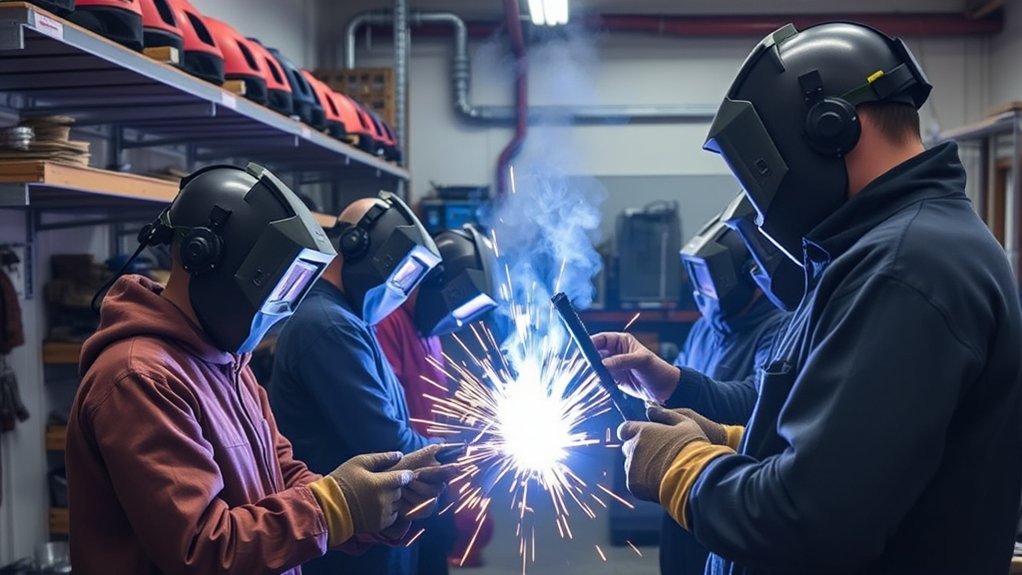
Tuition is only one part of your budget. Request exact figures for both direct school charges and indirect living expenses.
Products Worth Considering

Used Book in Good Condition
Personal Protective Equipment and Clothing
A school may require an approved helmet, safety glasses, welding jacket or sleeves, leather gloves, work boots, hearing protection, cotton work clothing, and other PPE. Some programs include an equipment kit, while others provide only a list of items you must buy.
Hand Tools
Common student tools can include welding pliers, chipping hammers, wire brushes, soapstone holders, squares, clamps, tape measures, files, locking pliers, and grinders. Requirements vary by program.
Students normally use school-owned welding power sources in the lab. Do not buy a personal welding machine unless the school specifically requires one or you independently want equipment for home practice.
Books, Online Materials, and Technology
Budget for textbooks, code excerpts, online learning platforms, calculators, and possibly a laptop. Ask whether used books or digital editions are permitted.
Lab and Consumable Fees
Steel plate, pipe, electrodes, wire, shielding gas, cutting tips, grinding discs, and replacement lenses may be covered by tuition or billed through separate course fees.
Certification and Qualification Testing
A school completion certificate is not automatically the same as an industry certification. The AWS Certified Welder program requires a hands-on performance test at an AWS Accredited Test Facility. The qualification applies to the tested process, material, position, procedure, and code range.
The AWS price list effective January 1, 2026 shows a $70 Certified Welder application fee. The Accredited Test Facility sets the separate testing price, so ask for the full amount before enrolling. Retesting and future credential-maintenance costs may also apply.
Transportation and Housing
Include fuel, public transportation, parking, relocation, rent, food, and utilities. Housing should be kept separate from the program price because it depends heavily on your location and living arrangement.
Lost Income and Childcare
A full-time schedule may reduce the number of hours you can work. Childcare and lost wages can be among the largest indirect expenses even though they do not appear on the tuition bill.
Warning: Do not enroll based only on a low monthly payment or advertised tuition. Review the full program price, loan amount, refund policy, completion rate, and likely entry-level earnings before signing an enrollment agreement.
How to Calculate Your Total Cost
Use the following formula when comparing programs:
Total welding school cost = tuition + mandatory fees + PPE and tools + books and supplies + testing + transportation + housing and food + childcare + lost income − grants and scholarships
- Request an itemized price sheet. Do not rely on a general website headline or recruiter’s verbal estimate.
- Confirm your tuition category. Determine whether you qualify for in-district or in-state pricing.
- Ask what the school provides. Confirm whether tools, PPE, consumables, books, and tests are included.
- Add the entire program length. Do not compare one semester at one school with the full program at another.
- Estimate transportation and living costs. Use your expected schedule, not a generic national estimate.
- Subtract gift aid. Grants and scholarships reduce cost; loans only change when you pay.
- Compare net price and debt. Use the Department of Education’s College Scorecard when the institution is listed.
Funding Options for Welding School
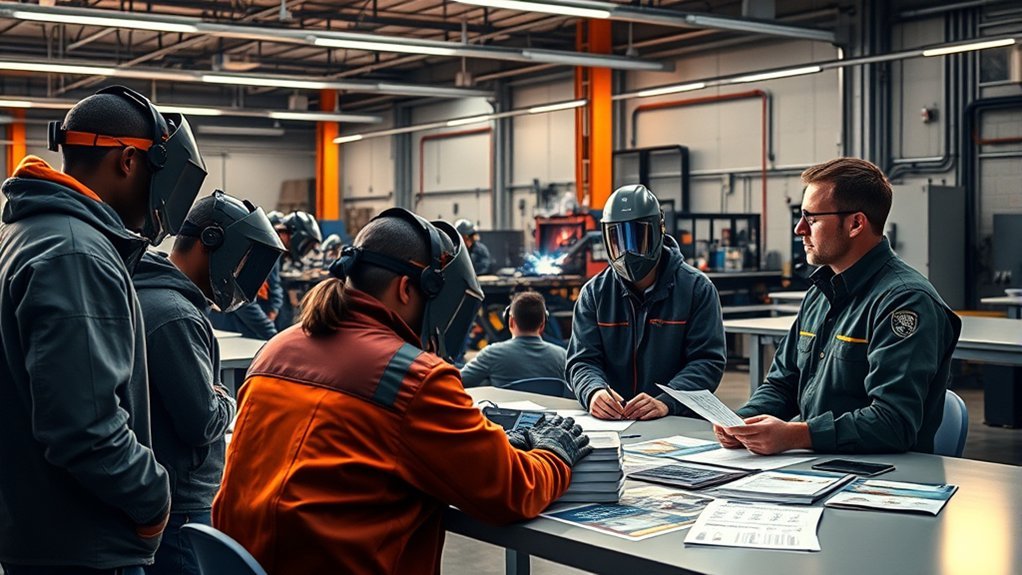
Funding eligibility depends on the student, school, and program. Confirm that the exact welding program qualifies before assuming aid will cover it.
FAFSA and Federal Student Aid
Submitting the Free Application for Federal Student Aid may provide access to federal grants, work-study, and federal student loans for eligible career-school and college programs. States, schools, and some private aid providers also use FAFSA information.
A grant generally does not need to be repaid when its conditions are met. A loan must be repaid with interest, so it should not be subtracted from the program’s true price.
School and Industry Scholarships
Look for awards from the school, local foundations, manufacturers, unions, contractors, and welding organizations. Apply early and confirm whether an award can be used for tools, testing, transportation, or only tuition.
State and Local Workforce Funding
Workforce-development agencies may fund approved occupational training for eligible unemployed, underemployed, dislocated, or low-income workers. Ask your local American Job Center whether the welding program appears on the state’s eligible training-provider list.
Veterans Education Benefits
Veterans, service members, and eligible family members should verify the exact school and program using the VA GI Bill Comparison Tool. Approval of one program at a school does not automatically mean every course is covered.
Employer Tuition Assistance
Manufacturers, contractors, shipyards, utilities, and fabrication shops may reimburse approved classes or pay for qualification testing. Ask whether assistance requires you to remain employed for a minimum period.
Paid Apprenticeships
A paid apprenticeship can be an alternative to borrowing for a full-time private program. Apprentices earn wages while completing supervised work and related instruction, although openings may be limited and selection standards can be competitive.
Note: Financial aid reduces your out-of-pocket cost only when it is a grant, scholarship, employer payment, or other non-repayable benefit. Student loans spread payment over time but increase the total amount repaid.
How to Choose a Welding School
A school’s value depends on its training quality, price, completion outcomes, and connection to the jobs available in your area. Ask the admissions office and welding instructor the following questions.
- What is the complete program price for my residency status?
- How many clock hours and supervised lab hours are included?
- How many students share each welding booth?
- Which processes, materials, thicknesses, and positions will I practice?
- Does the program include plate welding, pipe welding, or both?
- Are PPE, tools, books, consumables, and testing included?
- Will I earn a school certificate, an AWS SENSE credential, an AWS Certified Welder qualification, or another credential?
- Who pays for a retest if I do not pass the first qualification test?
- Does the school participate in federal student aid?
- What are the completion, withdrawal, and job-placement rates?
- How does the school define a placed graduate?
- Which local employers have hired recent graduates?
- Can I speak with the welding instructor before enrolling?
- Can I tour the lab while classes are in session?
- What is the cancellation and refund policy?
Accreditation and Industry Recognition
Institutional accreditation can affect access to federal aid, transfer credit, and recognition by other schools. Industry alignment is a separate issue. For example, AWS SENSE provides curriculum standards and training credentials, while an AWS Accredited Test Facility administers qualifying performance tests.
Do not assume that the phrases “AWS curriculum,” “AWS-aligned,” “prepares for AWS testing,” and “AWS Accredited Test Facility” mean the same thing. Ask the school to identify the exact credential you can earn.
Job-Placement Claims
Many schools provide resume help, interview practice, employer introductions, or job leads. These services can be useful, but they do not guarantee employment. Ask for written outcome data and confirm whether the reported jobs are related to welding, full-time, and obtained after graduation.
Is Welding School Worth the Cost?
Welding school may be worth the cost when it gives you enough supervised practice to qualify for available jobs without requiring unmanageable debt. The decision is less favorable when a high-priced program teaches skills that a local employer or paid apprenticeship would provide at a lower cost.
The latest national May 2025 wage release from the U.S. Bureau of Labor Statistics reports a mean annual wage of $56,760 and a median hourly wage of $25.84 for welders, cutters, solderers, and brazers. Earnings vary by location, industry, experience, shift, overtime, travel, union agreement, and qualification.
The Bureau of Labor Statistics projects 2% employment growth from 2024 through 2034, which is slower than the average for all occupations. However, it projects about 45,600 openings per year, mainly because workers leave the occupation or retire.
Six-figure earnings are possible in selected specialized, supervisory, inspection, travel, overtime-heavy, or high-cost-location roles, but they are not the typical outcome for a new welding-school graduate.
A Simple Return-on-Investment Check
Before borrowing, compare the program’s total price with the wages offered for entry-level welding jobs in your area.
- Search current local job postings and note the required processes and qualifications.
- Ask employers which nearby programs they respect.
- Estimate your monthly loan payment after graduation.
- Compare at least three schools and one apprenticeship or employer-training option.
- Avoid borrowing substantially more merely for a school’s branding or recruiting promises.
Warning: Welding involves fumes, ultraviolet radiation, burns, fire, electrical shock, eye injuries, and other hazards. A reputable program should teach PPE selection, ventilation, cylinder handling, fire prevention, and safe equipment operation in line with applicable OSHA welding safety guidance.
Frequently Asked Questions
Are there scholarships specifically for welding students?
Yes. Welding students may find scholarships through schools, local foundations, employers, trade associations, unions, manufacturers, and welding organizations. Apply early and check whether each award can pay for tuition only or also cover tools, PPE, books, testing, and transportation.
What jobs can I get after completing welding school?
Depending on your skills and local employers, you may qualify for entry-level work in manufacturing, structural fabrication, construction, repair, shipbuilding, agricultural equipment, automotive fabrication, or metal-product production. Pipe welding, aerospace, inspection, underwater work, and other specialties normally require additional experience, qualifications, or training.
Do welding schools offer job-placement services?
Many schools offer resume assistance, interview preparation, employer visits, career fairs, or job leads. Placement assistance is not a job guarantee. Ask the school for written completion and placement data and how it defines a graduate as successfully placed.
Can I attend welding school part-time?
Some schools offer part-time, evening, or weekend schedules, but availability varies. Ask how many hours you must attend each week, whether advanced courses are offered every term, and how part-time enrollment affects financial aid and your expected graduation date.
What certifications can I earn from a welding program?
Possible credentials include a school certificate or diploma, an AWS SENSE training credential, and performance qualifications for particular welding procedures. An AWS Certified Welder qualification requires a hands-on test at an AWS Accredited Test Facility. Ask the school to name the exact credential, test code, process, material, position, and fees.
How long does welding school take?
An introductory course may last a few days or weeks. Job-focused certificates often take several months, comprehensive diploma programs may take six to twelve months, and associate degrees generally require about two years of full-time study. Part-time attendance extends the timeline.
Do I need welding school to become a welder?
Not always. Some welders learn through registered apprenticeships, military training, high-school career programs, employer training, or entry-level shop work. Formal school can provide structured practice and access to several processes, but the AWS Certified Welder program has no formal education prerequisite if you can pass the required performance test.
Do welding students need to buy a welding machine?
Usually not. Schools normally provide welding machines and booths for lab training. Students are more commonly responsible for PPE, clothing, hand tools, books, and consumables. Obtain the official equipment list before purchasing anything.
Does financial aid cover every welding program?
No. Federal aid, state funding, scholarships, and veterans benefits have separate eligibility rules. Confirm that the institution and exact welding program qualify before enrolling. Very short noncredit courses may not qualify for the same aid as eligible certificate or degree programs.
Conclusion
Welding school can cost less than $5,000 at some public technical programs or more than $25,000 for longer, intensive training. The most useful number is not advertised tuition but the full amount you will spend after tools, PPE, fees, testing, transportation, living expenses, and financial aid are considered.
Compare several schools, speak with local employers, and investigate paid apprenticeships before borrowing. A well-chosen program can provide valuable supervised practice and access to entry-level opportunities, but neither graduation, certification, employment, nor a particular salary is guaranteed.
Sources
- Federal Student Aid: Choosing a College or Career School — net price, completion, debt, and earnings comparisons.
- Federal Student Aid: FAFSA Student Steps — grants, work-study, loans, and eligible career schools.
- American Welding Society Certified Welder Program — performance testing, eligibility, and qualification scope.
- American Welding Society Certification and Education Price List — 2026 AWS application and program fees.
- Occupational Safety and Health Administration: Welding Hazards and Solutions — fumes, radiation, electrical, burn, and PPE hazards.
- U.S. Bureau of Labor Statistics: Welders, Cutters, Solderers, and Brazers — education, work environment, pay, openings, and employment outlook.
