
Last updated: August 10, 2026. Horse boarding prices vary by location and facility, so confirm current rates and exactly what is included before signing a boarding agreement.
In 2026, a practical U.S. planning range for horse boarding is roughly $200 to $2,000+ per month, depending on location, board type, services, and amenities. Pasture and self-care arrangements are usually the least expensive, while full-care and training board cost more because the facility provides more labor and services. Local prices can vary widely, so use national ranges for planning and compare several barns in your area before choosing one.
For context, the Rutgers Equine Science Center reports boarding prices from $250 to $1,500 per month within New Jersey alone, depending on amenities and whether training is included. A current 2026 listing-based guide from Board & Stable likewise shows that board type and location create a very wide national range.
Horse Boarding Cost at a Glance
| Board Type | 2026 Planning Range | What It Usually Means | Best For |
|---|---|---|---|
| Pasture Board | About $150–$400/month | Horse lives outdoors with water and shelter; feed and other services vary by facility. | Horses suited to outdoor living and owners seeking lower costs. |
| Self-Care Board | About $200–$500/month | The facility provides space while the owner handles most daily care. | Experienced owners with time for daily barn work. |
| Partial-Care Board | About $400–$800/month | The barn and owner divide feeding, cleaning, turnout, or other responsibilities. | Owners who want some help but remain involved in daily care. |
| Full-Care Board | About $800–$1,500/month | The barn generally handles routine feeding, water, stall cleaning, and turnout. | Owners who want most daily care handled by staff. |
| Training Board | About $1,500–$4,000/month | Full care plus scheduled professional training or riding. | Horses in an active training program. |
Key takeaway: Do not compare boarding prices by the monthly fee alone. Ask what the fee includes, how much daily work you must provide, which services cost extra, and whether the facility meets your horse’s health, turnout, feeding, and exercise needs.
Introduction To Horse Boarding

Horse boarding means paying a stable or farm to house your horse. Depending on the arrangement, the facility may provide only a stall or pasture, or it may also handle feeding, cleaning, turnout, blanketing, routine handling, and other daily care.
Why Board A Horse?
- Space: Many owners do not have suitable land, fencing, shelter, or horse facilities at home.
- Daily care: Full-care barns can handle routine feeding, cleaning, turnout, and monitoring when the owner cannot be there every day.
- Facilities: Boarding barns may provide riding arenas, trails, wash areas, tack storage, trainers, or lesson programs.
- Community: Boarding can give riders access to trainers, other horse owners, and shared riding facilities.
Types Of Horse Boarding Facilities
Boarding facilities differ mainly in how much care the barn provides and how much responsibility remains with the owner. The names are not standardized, so always read the facility’s description and contract instead of relying on the board type alone.
| Type | Typical Features | Best for |
|---|---|---|
| Full Board | Barn staff handle most routine care, commonly including feeding, water, stall cleaning, and turnout. | Busy owners who want daily care handled. |
| Partial Board | The owner and facility divide specified care responsibilities. | Owners who want to stay involved while receiving some help. |
| Self-Care Board | The facility mainly provides the stall, pasture, or other space; the owner handles most care. | Experienced owners with time for daily care. |
| Pasture Board | The horse generally lives outdoors with access to water and shelter; feed and services vary. | Suitable horses whose owners want a lower-cost arrangement. |
| Training Board | Full or substantial care plus scheduled professional training. | Horses that need an active training program. |
Basic Boarding Costs
The monthly boarding fee pays for the housing and services listed in your agreement. Location, labor, feed, bedding, facilities, turnout, riding amenities, and training can all affect the price. A cheaper base fee is not automatically the cheaper option if you must separately supply hay, bedding, labor, or transportation.
Monthly Boarding Fees
Use the following ranges as planning estimates rather than guaranteed prices. A 2026 listing-based boarding guide shows substantial variation among board types and regions.
- Pasture board: About $150 to $400 per month. The horse usually lives outdoors with access to water and shelter, while feed and other services depend on the barn.
- Self-care board: About $200 to $500 per month. Owners usually provide much of the daily labor and may need to supply feed, hay, bedding, or other necessities.
- Partial-care board: About $400 to $800 per month. The barn and owner split specified responsibilities.
- Full-care board: About $800 to $1,500 per month as a broad planning range. Premium metropolitan, show, or highly serviced barns may charge more.
- Training board: About $1,500 to $4,000 per month when regular professional training is included with care.
These ranges are not quotes. Call several facilities within a realistic driving distance and compare the complete service package. A lower board rate may require significantly more owner labor or additional purchases.
Annual Boarding Budget
For a simple annual board estimate, multiply the monthly boarding fee by 12. Keep veterinary care, farrier work, insurance, supplements, training, lessons, transportation, and emergency expenses in separate budget lines unless your boarding contract explicitly includes them.
| Board Type | Approximate Annual Board-Only Range |
|---|---|
| Pasture Board | $1,800 – $4,800 |
| Self-Care Board | $2,400 – $6,000 |
| Partial-Care Board | $4,800 – $9,600 |
| Full-Care Board | $9,600 – $18,000 |
| Training Board | $18,000 – $48,000 |
Actual totals can fall outside these ranges. Your local market and the exact services in the boarding agreement determine the real cost.
Factors Affecting Boarding Prices
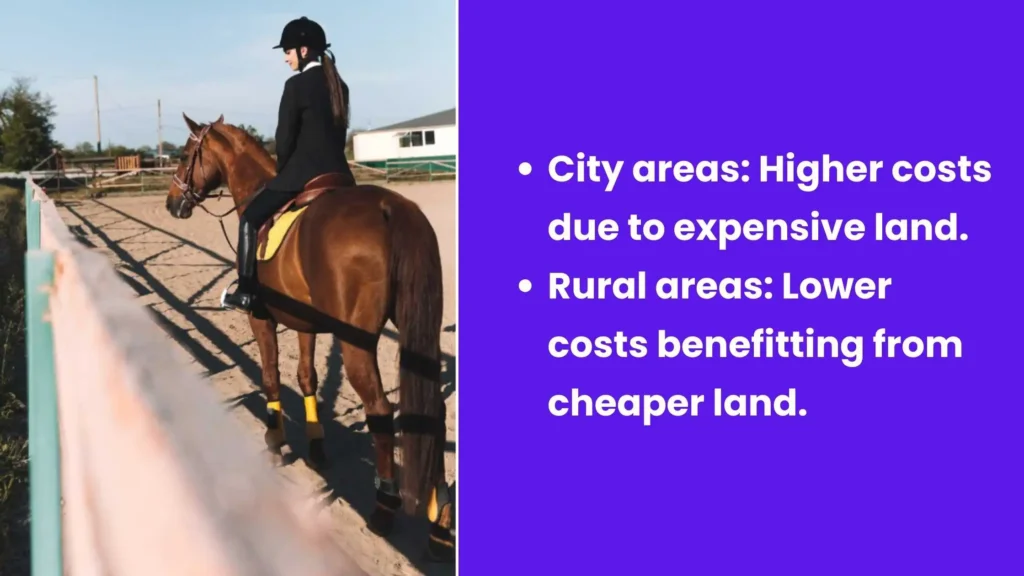
Two barns can charge very different prices even when they are both described as “full board.” The difference usually comes from location, labor, feed and bedding costs, facilities, turnout, riding amenities, training, and the amount of individual care provided.
Location And Regional Variations
Location has a major effect on horse boarding cost. Land, labor, taxes, hay availability, insurance, and demand all vary by region. Facilities near large cities, show circuits, or expensive equestrian communities may charge substantially more than rural barns.
The Rutgers Equine Science Center, for example, reports a $250 to $1,500 monthly range within New Jersey depending on amenities and whether training is included. That spread illustrates why a local quote is more useful than a single national average.
- Higher-cost markets: Land, labor, insurance, demand, and premium facilities can raise monthly board.
- Lower-cost markets: Rural areas may have lower land and operating costs, although the services offered still matter.
Facility Amenities And Services
Penn State Extension notes that boarding operations may range from pasture arrangements to stall and deluxe board, with higher fees as more services are provided. When comparing barns, focus on the care and facilities your horse actually needs rather than paying for amenities you will rarely use.
| Service/Amenity | How It Can Affect Cost |
|---|---|
| Stall Boarding | Usually requires bedding, stall cleaning, feeding, and more staff labor than basic pasture housing. |
| Pasture Boarding | Usually requires less individual stall labor, although feed, hay, shelter, and monitoring still affect the rate. |
| Indoor or Outdoor Arenas | Construction, footing, lighting, maintenance, and insurance add to facility overhead. |
| Training and Exercise | Professional rides, lessons, lunging, or exercise programs are often separate or included in higher-priced training board. |
| Special Care | Medication, specialized feeding, stall rest, individual turnout, or extra handling may carry additional charges. |
Compare the total service package, not just the advertised monthly fee. A facility with a higher base rate can be better value if it already includes services that another barn charges for separately.
Types Of Boarding Arrangements
The right boarding arrangement depends on your horse, your schedule, and how much daily care you want to provide yourself. Because terminology varies by barn, confirm every responsibility in writing.
Full Board
Full board generally means the barn handles most routine daily care. Depending on the facility, that may include:
- Housing in a stall, paddock, or other designated area
- Hay, feed, and water according to the barn’s standard program
- Routine stall cleaning and bedding
- Turnout and bringing the horse back in
Blanketing, supplements, medication, grooming, holding for veterinary or farrier visits, lessons, and training may still cost extra. Confirm these details before assuming they are part of “full” board.
Partial Board
With partial-care board, the owner and facility divide specific responsibilities. One barn might feed while the owner cleans the stall; another might provide weekday care while the owner handles selected chores.
- Housing for the horse
- Some feeding, turnout, cleaning, or other routine services
- Defined owner responsibilities that reduce the barn’s labor
Partial board can reduce the monthly fee, but it works best when the responsibilities and schedule are clear in writing.
Self-care Board
Self-care board is the most hands-on arrangement. The facility commonly provides the space, while the owner handles most or all daily care. According to Penn State Extension, self-care arrangements can require owners to visit daily to feed and clean stalls.
- A stall, field, paddock, or pasture
- Access to water or water facilities
- Owner responsibility for feeding, cleaning, turnout, supplies, or other care specified by the barn
The lower boarding fee must be weighed against your time, fuel, supplies, bad-weather travel, and the need for backup care when you are sick or away.
Pasture Board
Pasture board usually means the horse lives outdoors most or all of the time with access to water and appropriate shelter. Hay, grain, supplements, blanketing, and individual handling vary by facility, so ask exactly what the quoted rate covers.
Pasture board is often one of the least expensive staffed arrangements, but it must still be appropriate for the individual horse and local weather conditions.
Training Board
Training board combines boarding with regular professional training. The higher fee usually reflects both daily horse care and scheduled rides, groundwork, lessons, or other training services.
Before choosing training board, ask how many training sessions are included each week, who rides the horse, what happens when sessions are missed, and whether lessons for the owner are included.
Additional Expenses To Consider
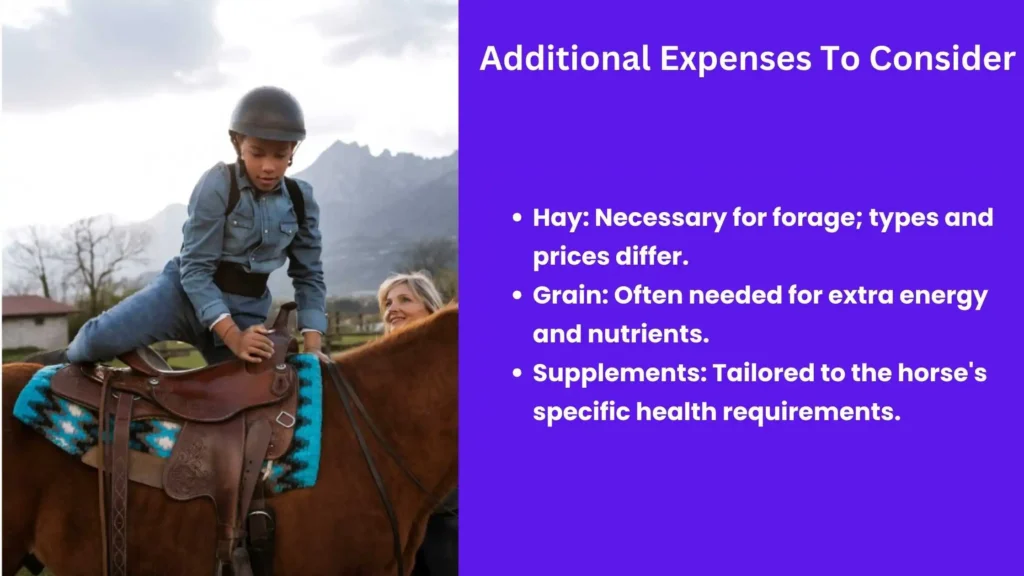
The advertised boarding rate is not always your total monthly horse bill. Some barns include feed, bedding, turnout, blanketing, or routine handling; others charge separately. Veterinary care, farrier work, insurance, supplements, training, transportation, and emergency care are also commonly separate ownership expenses.
Feed And Bedding
Ask whether hay, grain, bedding, and routine feeding are included in the quoted rate. The answer can vary even between facilities that both advertise “full board.” If your horse needs a special feed, supplement, or feeding schedule, ask whether the barn will provide it, whether you must supply it, and whether there is an administration fee.
- Hay: Confirm the barn’s normal feeding program and what happens when pasture quality changes.
- Grain or concentrate: Ask which feed is included and whether substitutions cost extra.
- Supplements: Owners commonly supply specialty supplements even when the barn agrees to feed them.
- Bedding: Confirm whether bedding is included and whether extra bedding has a surcharge.
Veterinary And Farrier Care
Routine veterinary care, vaccinations, dental care, parasite-control planning, injuries, and emergency treatment are generally separate from the normal boarding fee unless the contract says otherwise.
Farrier services are also normally separate. Many horses receive routine hoof care about every six to eight weeks, but the correct schedule depends on the individual horse, its hoof condition, workload, environment, and whether it wears shoes.
Ask whether the barn charges an additional fee to hold your horse for a veterinarian or farrier appointment when you cannot attend.
Insurance Costs
Insurance can help manage certain financial risks, but policies differ substantially. Discuss appropriate coverage with an insurance professional and read the exclusions, deductibles, limits, and conditions carefully.
| Type of Insurance | Purpose | Cost |
|---|---|---|
| Major Medical / Surgical | May help with eligible veterinary treatment under the policy terms. | Varies by horse, policy, deductible, limits, and insurer. |
| Mortality | May provide coverage for qualifying loss of the insured horse. | Varies by insured value and policy terms. |
| Liability | May help protect an owner against certain covered liability claims. | Depends on the policy and coverage limits. |
Plan for expenses outside the boarding fee. A realistic budget separates normal board from routine health care, hoof care, optional services, and unexpected veterinary needs.
Common Barn Add-ons
Ask for an add-on price list before you sign. Depending on the stable, extra charges may apply to:
- Blanketing or fly-mask changes
- Giving supplements or medication
- Holding the horse for veterinary or farrier appointments
- Individual turnout or special handling
- Stall rest or rehabilitation care
- Lessons, training rides, lunging, or exercise
- Trailer parking or equipment storage
Cost-saving Tips
The safest way to lower boarding cost is to reduce services you genuinely do not need without reducing essential care. Compare total costs before choosing a cheaper arrangement that requires more driving, supplies, or daily labor.
Negotiating Boarding Agreements
Some facilities may offer different packages or discounts. Ask clearly and respectfully whether any of these options are available:
- Long-term boarding rates.
- Prepayment discounts, if the contract terms are acceptable.
- A lower-service plan if you do not need all included amenities.
- Pasture or self-care options when appropriate for you and your horse.
Do not choose a cheaper arrangement until you understand which responsibilities and expenses shift to you.
Volunteering For Reduced Rates
Some barns reduce board in exchange for agreed work. University of Minnesota Extension specifically notes that owners may reduce boarding costs by cleaning stalls, feeding, or helping with weekend chores.
- Feed horses according to the barn’s instructions.
- Clean stalls or paddocks.
- Assist with agreed barn or weekend chores.
If you use a work-for-board arrangement, put the required hours, tasks, schedule, and exact discount in writing so both sides understand the agreement.
| Tip | How It Helps |
|---|---|
| Compare board levels | Prevents paying for services you do not need. |
| Ask about work exchange | May reduce the cash boarding fee in return for agreed labor. |
| Compare the total bill | Shows whether a lower base rate is still cheaper after supplies, fuel, and add-ons. |
Questions To Ask Before Boarding
A boarding facility should fit both your horse’s needs and your budget. Visit the property, read the contract, and get clear answers about daily care before moving your horse.
Evaluating Care And Facility Standards
Penn State Extension recommends asking detailed questions about turnout, feed, included services, emergency procedures, and the boarding contract. Use these questions when touring a facility:
- Staff Expertise: Who provides daily care, and who is responsible when the manager is away?
- Feeding Regimen: What hay and feed are provided, in what amounts, and how often?
- Turnout Schedule: How many hours of turnout are typical, and are horses turned out individually or in groups?
- Stable Cleanliness: Are stalls, water sources, fencing, aisles, and turnout areas clean and safe?
- Emergency Plans: Who calls the veterinarian, and what authority does the barn have if it cannot reach you?
- Included Services: Are blanketing, supplements, medications, vet/farrier holding, bedding, and stall cleaning included?
- Facility Access: When can you visit, ride, use arenas, or access tack and trailer storage?
- Health Requirements: What vaccinations, testing, quarantine, or biosecurity rules apply before arrival?
Understanding Contract Terms
Use a written boarding agreement and read it before signing. University of Minnesota Extension recommends written contracts for horse-related agreements and emphasizes that the terms should clearly reflect the parties’ responsibilities.
| Term | What To Confirm |
|---|---|
| Duration | Whether the agreement is month-to-month or has a fixed term. |
| Costs | Monthly board, deposit, late fees, add-on charges, and rate-change rules. |
| Services | Exactly what feed, bedding, turnout, cleaning, handling, and amenities are included. |
| Emergency Care | Who can authorize veterinary treatment if the owner cannot be reached. |
| Termination | Required notice and the conditions under which either party can end the agreement. |
| Rules | Facility hours, safety requirements, guest policies, riding rules, and other barn regulations. |
Making The Decision
The best boarding choice is not necessarily the cheapest or most luxurious facility. It is the arrangement that provides appropriate care for your horse at a total cost and workload you can sustain.
Assessing Your Budget
Start with the complete monthly cost, not just the boarding fee.
- Choose a realistic board level for your schedule.
- Add any feed, bedding, supplements, or special care not included.
- Budget separately for veterinary and farrier care.
- Add lessons, training, insurance, transportation, and barn add-ons you expect to use.
- Keep a plan for unexpected veterinary or other emergency costs.
Boarding costs vary widely by location, services, and facilities. The following comparison shows how responsibility changes as the service level rises.
| Service Type | Owner Labor | Typical Cost Position |
|---|---|---|
| Pasture Board | Varies by facility | Usually among the lowest |
| Self-Care Board | High | Usually low |
| Partial-Care Board | Moderate | Mid-range |
| Full-Care Board | Low for routine daily care | Higher |
| Training Board | Low for routine care, with professional training included | Usually the highest |
Include veterinary care, farrier services, insurance, transportation, and emergency planning in your overall horse budget even when they are not part of the monthly boarding bill.
Long-term Commitments And Exit Strategies
Boarding a horse is an ongoing financial and care commitment. Your plan should still work if prices rise, your schedule changes, or the current facility stops meeting your needs.
- Understand the boarding contract before signing.
- Know the notice period and any termination fees.
- Keep contact information for alternative facilities when practical.
- Plan how daily care will continue during illness, travel, severe weather, or another emergency.
An exit and backup plan helps protect both your horse and your finances if circumstances change unexpectedly.
Frequently Asked Questions
Is It Cheaper To Board A Horse Or Keep It At Home?
Keeping a horse at home can be cheaper if you already own suitable land, fencing, shelter, equipment, and can provide the labor. If you must build or maintain those facilities, boarding may avoid substantial setup and maintenance costs. Compare the full cost of both options, including your time. University of Minnesota Extension notes that keeping horses on suitable owner property can reduce boarding costs, while the owner remains responsible for housing and care expenses.
What Does Horse Boarding Typically Include?
It depends on the boarding plan. Full-care board commonly includes routine feeding, water, stall cleaning, and turnout. Pasture or self-care arrangements may include much less. Blanketing, supplements, medications, holding for veterinary or farrier visits, lessons, and training can cost extra, so rely on the written contract rather than the name of the plan.
How Much Does A Horse Cost Per Month?
Boarding alone can range from roughly $200 to $2,000+ per month in the U.S., with pasture, self-care, partial-care, full-care, and training arrangements occupying different price levels. Total horse ownership costs more because veterinary care, farrier work, insurance, supplies, transportation, training, and emergencies may be separate.
How Much Does It Cost To Board A Horse In Il?
A June 2026 Illinois boarding market report listed a median price of $445 per month across 43 priced listings, with the 10th-to-90th-percentile range running from $250 to $800 per month. Individual barns can fall outside that range depending on location, board type, facilities, and services.
What Is The Cheapest Type Of Horse Boarding?
Pasture board and self-care board are usually the least expensive options. Pasture board reduces stall-related labor, while self-care reduces the labor supplied by the barn. The tradeoff is that the owner may need to provide more supplies, travel, or daily work.
What Hidden Fees Should I Ask About Before Boarding A Horse?
Ask about extra charges for blanketing, supplements, medications, special feed, extra bedding, individual turnout, holding for veterinary or farrier appointments, stall rest, lessons, training, trailer parking, storage, late payments, and emergency handling. Get the current fee schedule in writing before signing.
Conclusion
Horse boarding can cost from a few hundred dollars per month for basic pasture or self-care arrangements to well over $1,000 for full-care or training programs. The number that matters most is the total local cost for the care your horse actually needs, not a national average or the cheapest advertised rate.
Compare at least several realistic local options, tour the facilities, ask what is included, review every add-on charge, and read the boarding contract before committing. A clear comparison of cost, care, owner workload, and facility quality will help you choose a sustainable arrangement.