

Last updated: August 11, 2026 — attorney-fee benchmarks, online pricing, tax guidance, and funding-cost guidance were refreshed.
How much does it cost to set up a trust? For a revocable living trust prepared by an attorney, a 2026 study of 909 U.S. law firms found a national median of $2,475 for a standalone trust, with the middle 50% of quoted fees at $1,600 to $3,000. Trust-based estate-planning packages had a $2,700 median and a $2,500 to $3,500 middle-50% range. Online services can cost much less; for example, LegalZoom currently lists an individual Basic Trust plan at $399. Complex or specialized trusts can cost more, and funding the trust may add deed-recording, notarization, appraisal, tax, or professional-advice costs.
The final price depends on the type of trust, your state, the number and type of assets, family complexity, tax planning, and whether the quoted fee includes related documents and trust funding. A low drafting price can be misleading if deed work, account retitling, or follow-up legal help is billed separately.
This guide provides general U.S. cost information, not legal, tax, or financial advice. Trust rules and fees vary by state, so confirm the legal requirements and the exact scope of any quote before you sign or transfer assets.
How Much Does It Cost to Set Up a Trust?
| Setup route | Current cost benchmark | What to check |
|---|---|---|
| Attorney-drafted revocable living trust | $2,475 national median; middle 50%: $1,600-$3,000 | Whether the fee includes a pour-over will, powers of attorney, signing, and funding help |
| Attorney trust estate-planning package | $2,700 national median; middle 50%: $2,500-$3,500 | Which companion documents and revisions are included |
| Online legal service | From $399 for LegalZoom’s individual Basic Trust plan at the time of this update | Attorney review, state availability, revisions, and funding guidance |
Sources: LegalTemplates 2026 estate-planning cost study and LegalZoom current living-trust pricing. Prices can change and are not a quote for your situation.
What Is A Trust?

A trust is a legal arrangement in which a grantor creates the trust, a trustee holds and administers trust property under the trust’s terms, and beneficiaries receive the benefits. The IRS notes that a revocable living trust can be changed or ended during the grantor’s life and is generally treated as a grantor trust for federal income-tax purposes. Properly funded living-trust assets can generally pass outside probate, but assets left outside the trust may still require another transfer method or probate.
The Role Of Trusts In Asset Management
A trust can set rules for who manages property, what happens if the grantor becomes incapacitated, and when beneficiaries receive assets. For a revocable living trust, the main practical benefits are usually continuity of management, privacy, and probate avoidance for assets that were actually transferred to the trust. It generally does not protect the grantor’s own assets from creditors merely because those assets are in a revocable trust.
Legal background: IRS Form 1041 instructions and California Superior Court living-trust guidance.
Varieties Of Trusts And Their Purposes
- Revocable Trusts: The grantor generally keeps the power to amend or revoke the trust during life.
- Irrevocable Trusts: The trust’s terms generally restrict the grantor’s ability to revoke or amend it; modification rules depend on the instrument and applicable state law.
- Charitable Trusts: These can be designed to benefit charitable organizations while meeting specific tax and distribution rules.
- Special Needs Trusts: These can hold assets for a beneficiary with a disability while addressing eligibility rules for needs-based public benefits when properly structured.
- Spendthrift Trusts: Spendthrift provisions may limit some beneficiary-creditor claims, but they do not automatically protect a revocable-trust grantor from the grantor’s own creditors.
The right structure depends on your goals, family situation, assets, and state law. A basic revocable living trust is a different legal and tax project from an irrevocable, charitable, or special-needs trust, so comparing them only by drafting price can be misleading.
Initial Considerations For Establishing A Trust
Before paying to establish a trust, define the result you need. A revocable living trust may help with probate avoidance, privacy, and management during incapacity, while specialized irrevocable trusts may address tax or asset-protection goals. Those are different projects with different costs and legal consequences.
Products Worth Considering

Comprehensive Legal Guidance: Discover the ultimate guide with "The Estate Guide" – offering clear guardianship provisions and instructions to ensure your wishes are honored.


REVOCABLE LIVING TRUST KIT: Create a trust-based estate plan with attorney-prepared fill-in-the-blank forms designed for one person or a married couple.
Assessing Your Financial Goals

Start by writing down the specific problem the trust should solve. That makes it easier to compare quotes and avoid paying for features you do not need.
- Probate and privacy: Identify which assets would otherwise pass through probate and which can use beneficiary or transfer-on-death designations instead.
- Incapacity planning: Decide who should manage trust assets if you cannot manage them yourself.
- Beneficiary control: Decide whether distributions should be immediate, staged by age, or managed for a beneficiary with special circumstances.
- Tax or creditor planning: Treat these as specialized legal goals; a standard revocable living trust does not automatically provide them.
Selecting Assets For The Trust
Trust funding is the step that turns a signed document into a working estate-planning tool. The correct transfer method depends on the asset.
| Type of Asset | Trust-funding consideration |
|---|---|
| Real Estate | Usually requires a new deed or other state-specific transfer document and may involve recording fees. |
| Bank or Brokerage Accounts | The institution may require a certificate of trust, new account title, or its own forms. |
| Personal Property | Some items may be assigned to the trust through a general or specific assignment, subject to applicable law and ownership rules. |
| Retirement Accounts | Do not retitle an IRA or qualified retirement plan into a living trust without professional tax advice. A trust can instead be named as a beneficiary in some situations, and special distribution rules may apply. |
Ask the attorney or service exactly which funding steps are included in the quoted price. A trust that is signed but not properly funded may fail to deliver the probate-avoidance result you expected.
Main Types Of Trusts And Their Costs
Trust type is one of the biggest cost drivers because different trusts require different drafting, tax analysis, funding, and administration.
Products Worth Considering
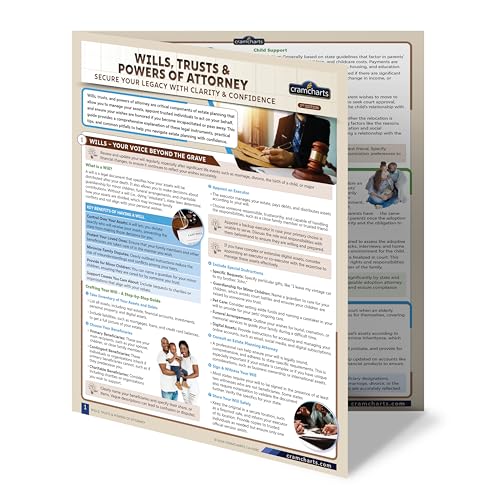
Complete Estate Planning Guide – Covers wills, trusts, powers of attorney, healthcare directives, digital assets, and essential estate planning topics in one laminated reference.


【MULTIFUNCTIONAL COSMETICS BAG】: These makeup bags not only can storage your cosmetics, but also jewelry, electronic accessories, camera, essential oil, toiletries, shaving kit, valuable objects and so on.
Revocable Vs. Irrevocable Trusts
Revocable living trusts are the most useful category for a national price benchmark. In the 2026 LegalTemplates study, the median attorney fee was $2,475 for a standalone revocable living trust and $2,700 for a trust estate-planning package. The middle 50% of quotes were $1,600-$3,000 and $2,500-$3,500, respectively.
Irrevocable trusts can involve gift, estate, income-tax, creditor, Medicaid, business, or beneficiary-planning issues. Because the design can vary dramatically, a single national “average” price is not reliable enough to use as a quote. Get a written scope and fee from an attorney who handles the specific irrevocable trust you are considering.
Testamentary Trusts And Living Trusts
- Testamentary trusts are created under a will and generally come into existence after death. Their cost is tied to will drafting plus later estate and trust administration, not simply a standalone trust-document fee.
- Living trusts are created during life. A revocable living trust can manage assets during incapacity and can avoid probate for assets properly transferred to it.
Professional Fees Involved
Professional fees are easier to compare when you separate document drafting from funding and ongoing advice. Ask for a written scope, not just a headline price. The cheapest quote may exclude deed work, revisions, or companion estate-planning documents.
Lawyer Fees For Trust Creation
Many attorneys use flat fees for standard estate-planning packages, while unusually complex matters may involve additional or hourly billing. Use the 2026 national benchmark as a comparison point, then ask what your local quote actually includes.
| Fee question | Why it changes the total |
|---|---|
| Is this trust-only or a full estate-plan package? | A package may include a pour-over will, financial power of attorney, healthcare documents, and other related documents. |
| Are deed preparation and trust funding included? | Drafting the trust and transferring assets into it are separate tasks unless the engagement says otherwise. |
| How many review rounds or amendments are included? | Extra revisions can create additional legal fees. |
| Will specialized tax planning be required? | Irrevocable, charitable, business, and special-needs planning can require additional legal and tax work. |
Compare at least the scope, attorney experience with your trust type, funding support, revision policy, and total expected out-of-pocket cost before choosing a provider.
Financial Advisor Consultation Costs
A financial advisor may be useful when investment management, beneficiary cash-flow planning, insurance, or coordination with an estate plan is part of the project. Advisor pricing is not standardized: it may be hourly, flat-fee, subscription-based, or tied to assets under management.
- Ask whether estate-planning coordination is included in the advisor’s existing fee.
- Request the advisor’s written fee schedule before adding trust-related work.
- Keep legal drafting and tax advice with appropriately qualified professionals.
Clarify all costs upfront and ask which professional is responsible for each step.
The Role Of The Trustee
The trustee administers the trust under its terms and owes fiduciary duties to the beneficiaries. Your choice of trustee can affect both control and long-term cost. A grantor often serves as the initial trustee of a revocable living trust, while a successor or professional trustee may take over later.
Products Worth Considering

LARGE WEEKLY SERVICE SCHEDULE PAD: Oversized 22 x 17 weekly appointment schedule pad provides ample writing space for service appointments, installation schedules, technician assignments, and customer job tracking in busy office and repair shop environments.


55 sheets per pad wtih a heavy chipboard backing
Selecting A Trustee
Selecting the right trustee means balancing competence, availability, family dynamics, and cost.
- Family members may know the beneficiaries well and may charge little or no fee, but the role can involve substantial record-keeping and conflict management.
- Professional or corporate trustees can add continuity and expertise, but their compensation should be reviewed before the trust is signed.
Trustee Compensation And Expenses
Trustee compensation depends on the trust document, state law, the work required, and the trustee’s own fee schedule. Do not assume a universal percentage.
| Type of Trustee | What to verify |
|---|---|
| Family Member | Whether the trust allows compensation, how “reasonable” compensation is determined under state law, and whether expenses are reimbursed |
| Professional Trustee | Annual minimums, asset-based tiers, hourly charges, termination fees, and extra fees for real estate or unusual assets |
In addition to compensation, trustees may have expenses that the trust must cover. These can include:
- Legal fees
- Accounting fees
- Investment advisory fees
These expenses matter most when comparing the lifetime cost of a trust, not just the one-time drafting fee.
Additional Costs To Anticipate
The drafting fee is only part of the setup budget. Ask separately about signing, notarization, deed preparation, recording, appraisals, account retitling, and tax advice.
Notary Fees And Document Recording
Notary fees are state-specific, so a single national per-signature estimate is unreliable. California currently caps an acknowledgment or jurat at $15 per signature, while Florida allows an online notary to charge up to $25 for an online notarial act. Other states use different limits and rules.
Real-estate recording fees also vary by county and document. Check the recorder or clerk fee schedule for each property instead of relying on a national average.
Examples: California Government Code §8211 and Florida Statutes §117.275.
Costs Related To Transferring Assets Into The Trust
Funding costs depend on the asset and location. Common items include:
- Deed preparation and recording for real estate.
- Title, registration, or ownership forms where state law allows or requires them.
- Financial-institution paperwork for bank and brokerage accounts.
- Appraisals or tax advice when specialized planning requires valuation or tax analysis.
| Asset Type | Budget approach |
|---|---|
| Real Estate Deed Transfer | Verify attorney/deed-preparer fees plus the county recorder’s current fee schedule |
| Vehicle or Titled Property | Verify whether transfer to the trust is appropriate and check the state agency’s current fees |
| Bank or Brokerage Account | Ask the institution whether retitling is allowed and whether it charges an account or transfer fee |
Ask for a funding checklist before you compare total prices. A lower drafting fee can become more expensive if every transfer step is billed separately.
Maintaining Trust Over Time
Ongoing costs depend heavily on the trust type. A revocable living trust managed by its grantor can be relatively simple during life, while an irrevocable or professionally managed trust may require separate tax work, accounting, investment management, or trustee fees.
Annual Fees And Taxes

The IRS generally treats a revocable living trust as a grantor trust for federal income-tax purposes while the grantor retains the relevant powers. Grantor-trust reporting can differ from the reporting required for non-grantor trusts, so do not assume every trust needs the same annual tax return or tax-preparation budget.
- Trustee Fees: May apply when a successor, professional, or corporate trustee is serving.
- Accounting Costs: May be needed for record-keeping, beneficiary reporting, or fiduciary accounting.
- Tax Preparation: Depends on whether the trust is treated as a grantor trust or a separate taxpayer and on its income and reporting obligations.
- Legal Fees: May arise for amendments, interpretation, administration, disputes, or changes in law or family circumstances.
Federal tax reference: IRS Instructions for Form 1041.
The Impact Of State Laws On Trust Expenses
State law can affect trust validity, modification, trustee compensation, creditor rights, income taxation, deed requirements, and administration. Because these rules differ by jurisdiction, use the actual governing state rather than a generic national assumption.
| State-specific item | What to verify |
|---|---|
| Trust law | Execution, amendment, revocation, trustee powers, and beneficiary rights |
| Tax treatment | Whether the trust or its beneficiaries may owe state income or other taxes |
| Real-estate transfers | Deed format, recording fees, exemptions, and local transfer requirements |
| Trustee compensation | What the trust document and state law allow when no fixed fee is stated |
For a realistic budget, identify the governing state and every state where the trust will own real estate or generate significant tax issues.
Ways To Minimize Trust Setup Costs
You can often reduce setup costs by matching the planning method to the complexity of your estate and by comparing the same scope of work across providers.
Diy Trust Kits
DIY trust forms and software can reduce drafting costs for straightforward situations, but the savings disappear if the document is invalid, the wrong trust type is chosen, or assets are never funded correctly. DIY is a weaker fit for blended families, tax planning, special-needs planning, business interests, disputed family situations, or property in multiple states.
Utilizing Online Legal Services
Online legal services can be less expensive than a traditional attorney engagement, but compare the actual package rather than the starting price.
- Confirm whether attorney review is included or costs extra.
- Check whether a pour-over will, powers of attorney, and healthcare documents are included.
- Confirm how revisions and future updates are priced.
- Check whether the service provides asset-funding instructions or deed support.
Cost-benefit Analysis Of Setting Up A Trust

A trust is worth the cost only if it solves a problem that matters in your estate plan. Compare the full setup and maintenance cost with the value of probate avoidance, privacy, incapacity management, beneficiary controls, and any specialized tax or asset-protection planning you actually need.
Long-term Financial Benefits
The upfront cost does not automatically “pay for itself.” The value depends on your state, assets, family goals, and alternatives.
- Tax planning: Certain irrevocable trusts may be used in estate or gift-tax planning. A standard revocable living trust is generally treated as a grantor trust for federal income-tax purposes and does not by itself remove the grantor’s assets from the taxable estate.
- Avoid probate: Assets properly transferred to a living trust can generally pass under the trust without probate, while unfunded assets may not.
- Better control: A trust can set detailed distribution rules and provide management during incapacity.
Instead of assuming a break-even point, compare the trust’s total cost with the probate procedures, beneficiary designations, joint ownership, transfer-on-death options, and will-based planning available in your state.
Protection Against Uncertainties
Trusts can address several planning risks, but the protection depends on the trust type and how it is funded:
| Uncertainty | Trust Protection |
|---|---|
| Incapacity | A successor trustee can manage funded trust assets if the trust terms allow it and the required incapacity standard is met. |
| Creditor claims | A revocable living trust generally does not shield the grantor’s own assets from creditors. Specialized irrevocable planning is different and state-specific. |
| Family dynamics | A trust can set clear distribution rules, but it cannot guarantee that disputes will never occur. |
Use these benefits as a decision checklist, not a guarantee. The trust must be correctly drafted, signed, and funded to work as intended.
What Makes a Trust Cheap or Expensive?
The most useful way to predict your cost is to identify how far your situation is from a standard revocable living-trust package.
Lower-complexity Setup
A quote is more likely to stay near standard package pricing when the estate has straightforward assets, clear beneficiaries, no unusual tax planning, and limited customization. Cost control improves when you organize asset information and decisions before the attorney begins drafting.
- Compare the same scope: Trust-only pricing is not directly comparable with a full estate-plan package.
- Prepare asset and beneficiary information: Fewer missing details can reduce revision cycles.
- Ask about funding: Know whether deeds and account-transfer guidance are included.
Higher-complexity Setup
Costs can rise when the plan requires specialized legal, tax, valuation, or administration work.
| Complexity driver | Why it can increase cost |
|---|---|
| Business or multiple real-estate interests | Ownership, valuation, transfer restrictions, and multi-state rules may require additional work. |
| Specialized beneficiary planning | Special-needs, spendthrift, or long-term discretionary provisions require more tailored drafting. |
| Tax or asset-protection goals | Irrevocable planning can involve additional tax analysis and reduced flexibility for the grantor. |
| Blended-family or conflict concerns | Distribution rules, trustee choices, and dispute-reduction provisions may require more customization. |
When comparing quotes, ask each provider to separate drafting, companion documents, funding, tax work, and ongoing administration. That exposes the real total more clearly than a single “trust price.”
Frequently Asked Questions About Trust Setup Costs
How much money do you need to have a trust?
There is no single U.S. net-worth threshold that makes a trust automatically necessary. The better question is whether the trust’s benefits—such as probate avoidance, privacy, incapacity management, or controlled distributions—justify its setup and maintenance costs for your assets and state.
What are the three types of trust?
Three broad categories people commonly compare are revocable living trusts, irrevocable trusts, and testamentary trusts. These are not the only trust types, and an irrevocable or testamentary trust can have many specialized subtypes.
What Is The Downside Of A Living Trust?
The main downsides of a revocable living trust are the higher upfront cost compared with a simple will, the work required to fund and maintain it, and the fact that it generally does not protect the grantor’s assets from creditors or create automatic estate-tax savings. You may still need a pour-over will for assets left outside the trust.
What Type Of Trust Is Best?
The best trust type depends on the problem you are trying to solve. A revocable living trust is commonly used for probate avoidance and incapacity planning; irrevocable trusts may be used for specialized tax, asset-protection, charitable, or beneficiary goals. State law and tax consequences matter, so complex plans should be reviewed by an appropriately qualified attorney and tax professional.
Do I Need a Lawyer to Set Up a Living Trust?
Not always. DIY software and online services can work for some straightforward estates, but legal review becomes more important when you have a blended family, business interests, property in multiple states, a beneficiary with special needs, tax-planning goals, creditor concerns, or uncertainty about how to fund the trust.
How Long Does It Take to Set Up and Fund a Trust?
There is no universal timeline. Drafting and signing can take days or weeks depending on the provider and complexity, while funding can take longer because deeds and financial institutions have their own processing steps. Ask for separate timelines for document completion and asset funding.
Does a Living Trust Avoid Probate?
A living trust can generally avoid probate for assets that were properly transferred to the trust before death. Assets left in the owner’s individual name may still need probate or another valid transfer method, which is why funding is a critical part of the setup process.
Conclusion
For a standard revocable living trust, current attorney pricing commonly centers around the mid-$2,000s, but the real total depends on what the quote includes and what it costs to fund the trust. Start by defining your goal, listing the assets that must be transferred, and requesting an itemized scope covering drafting, companion documents, deed or funding work, revisions, and ongoing fees. If your plan involves tax strategy, creditor protection, special-needs planning, a business, or multiple states, use a qualified estate-planning attorney rather than choosing solely on price.
