
A month in a hotel can give you freedom, but the bill can climb fast. In the USA, a full month in a standard hotel often costs far more than a typical apartment lease, especially in large cities. This guide explains what hotel living may cost, when extended stay hotels make sense, and which housing options may save you money.
Quick Answer
Living in a hotel for a month in the USA can cost about $4,500 to $9,000, depending on the city, hotel type, taxes, and fees. Extended stay hotels may lower the monthly bill, but apartments, corporate housing, and furnished rentals often cost less for stays over 30 days.
Key Takeaways
- Monthly hotel living often costs more than renting an apartment.
- Extended stay hotels can help if you need flexibility and included utilities.
- Taxes, resort fees, parking, laundry, and meals can raise the total cost.
- Corporate housing, serviced apartments, and furnished rentals may offer better value for longer stays.
- You should compare total monthly costs, not just the nightly rate.
What’s in This Article
- What’s the Average Monthly Hotel Cost?
- How Do Hotel Prices Compare to Apartment Rentals?
- Key Factors Affecting Hotel Rates for Extended Stays
- Are Extended Stay Hotels a Good Deal?
- Key Amenities in Monthly Hotel Stays
- Choosing Between a Hotel and an Apartment
- Pros and Cons of Living in a Hotel
- Budgeting for a Month-Long Hotel Stay
- Alternative Housing Options to Consider
- Frequently Asked Questions
What’s the Average Monthly Hotel Cost?
A month in a hotel in the USA can cost about $4,500 to $9,000 before discounts. That range comes from nightly rates of about $150 to $300, multiplied across a 30-day stay.
Your final bill can change a lot based on the city, hotel brand, room type, season, and fees. Large urban areas, tourist hubs, and business districts usually cost more than small towns or suburban locations.
Some extended stay hotels offer weekly or monthly discounts. Even with a discount, hotel living often costs more than an apartment because you pay for service, flexibility, utilities, and furnished space.
You may still find value in hotel living if you need a short-term setup. Housekeeping, Wi-Fi, utilities, front desk help, and flexible move-out dates can make the higher cost easier to justify.

This hardcover cookbook offers fast, approachable recipes designed for busy days and low-energy nights. Caroline Chambers focuses on simple, flavorful meals that help you get dinner on the table without overthinking it. It's a practical pick for home cooks who want quick weeknight inspiration and minimal-fuss cooking.

Come Eat offers 100 approachable recipes designed to make everyday cooking more enjoyable, nourishing, and sustainable. With a focus on flavorful meals and practical preparation, this hardcover cookbook is ideal for home cooks looking for inspiration for salads, sides, and main dishes. Author Melissa Ben-Ishay shares recipes that encourage consistent, feel-good eating without sacrificing taste.

This heartfelt memoir blends laugh-out-loud honesty with tender reflections on love, loneliness, and the unexpected healing power of rescue dogs. Isabel Klee shares her journey fostering pups in the city while navigating dating and self-discovery, offering an intimate, relatable story for readers who enjoy emotional, character-driven narratives. It is a warm, engaging read about opening your heart and finding connection in surprising places.
How Do Hotel Prices Compare to Apartment Rentals?
Hotel prices usually cost more than apartment rentals for a full month. A hotel may charge thousands more because the rate includes furnished space, staff support, utilities, and short-term flexibility.
An apartment often costs less each month, but it may require a lease, deposit, furniture, utility setup, and application approval. That makes hotels more convenient for short stays but less affordable for long ones.
Monthly Costs Overview
For a 30-day stay, a hotel at $150 per night costs about $4,500 before tax and fees. A hotel at $300 per night costs about $9,000 before tax and fees.
Extended stay hotels may cost less than standard hotels because they often price rooms by the week or month. Many include kitchenettes, basic utilities, and laundry access, which can help you control daily expenses.
A regular apartment may offer the lowest monthly housing cost, but you need to count the full move-in cost. Deposits, furniture, utilities, parking, internet, and lease terms can change the real value.
Flexibility vs. Stability
Hotels work well when you need short-term flexibility. You can often book quickly, leave with less notice, and avoid a long lease.
Apartments give you more stability, more privacy, and more room. They also make more sense when you plan to stay in one place for several months or longer.
Corporate housing can sit between both options. It usually gives you a furnished place with utilities included, but it may cost less than a full-service hotel.
| Housing Type | Best For | Main Advantage | Main Drawback |
|---|---|---|---|
| Standard hotel | Short stays and flexible plans | Easy booking and daily service | Higher total monthly cost |
| Extended stay hotel | Work trips and temporary housing | Kitchenette and included utilities | Still costly for long stays |
| Apartment | Longer stays and stable living | Lower monthly housing cost | Lease and move-in costs |
| Corporate housing | Relocation and project work | Furnished space with more room | Less flexible than hotels |
Key Factors Affecting Hotel Rates for Extended Stays
Several factors shape hotel rates for extended stays. Location has the biggest impact because demand, taxes, labor costs, and local events can push prices up.
Location, season, fees, and room type can change the true cost of hotel living more than the nightly rate alone.
Hotels in New York, Los Angeles, Miami, San Francisco, and other high-demand cities often charge more than hotels in smaller markets. A major conference, holiday, or sports event can also raise rates during your stay.
Amenities affect the price too. You may pay more for a kitchenette, laundry room, parking, gym, pool, business center, or larger suite.
Taxes and fees matter. Some hotels add resort fees, destination fees, parking charges, pet fees, or extra-person charges.
Pro tip: Ask the hotel for a written monthly quote that includes taxes, fees, parking, and pet charges before you book.
You should also ask about long-stay discounts. Some hotels lower the nightly rate after 7, 14, or 30 nights.
Are Extended Stay Hotels a Good Deal?
Extended stay hotels can offer a good deal when you value convenience more than the lowest possible rent. They work best for relocations, work assignments, insurance stays, family visits, and gaps between leases.
They may not offer the best deal if you plan to stay for several months. In that case, a furnished apartment or corporate housing may give you more space for less money.
Cost Comparison Analysis
Extended stay hotels often cost less than standard hotels because they target longer bookings. Still, their total price can beat your budget if you stay for several months.
Before you book, compare these costs:
- Nightly or weekly room rate
- Hotel taxes and local fees
- Parking, resort, or destination fees
- Pet fees or deposits
- Laundry and meal costs
- Internet speed upgrades
A lower nightly rate does not always mean a lower total bill. You need the full monthly number to compare options fairly.
Amenities and Services Offered
Extended stay hotels usually offer furnished rooms, kitchenettes, utilities, Wi-Fi, and laundry access. These features can make daily life easier than a standard hotel room.
Some locations also offer fitness centers, business areas, breakfast, weekly housekeeping, and 24-hour front desk support. These services can save time, but they also help explain the higher cost.
A kitchenette can matter most. Cooking some meals in your room can lower your food budget during a long stay.
Ideal Stay Duration
Extended stay hotels often make sense for stays of one week to one month. They give you flexibility without the setup work of an apartment.
For stays over 30 days, compare at least three options before you book. Check extended stay hotels, furnished rentals, and corporate housing in the same area.
If your stay may last several months, an apartment or furnished rental may give you the strongest value. You may trade some flexibility for a lower monthly cost.
Key Amenities in Monthly Hotel Stays
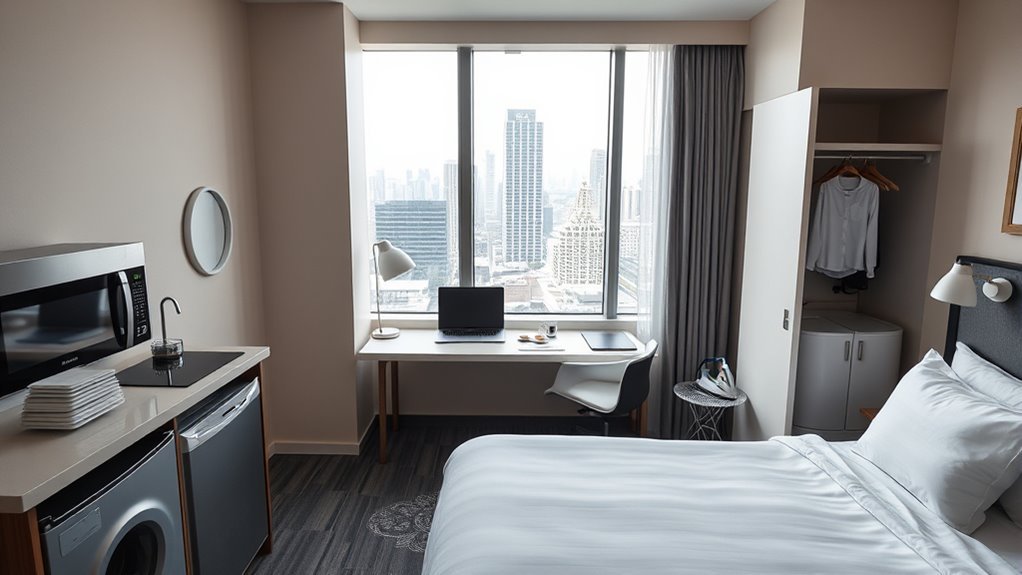
Monthly hotel stays can include helpful amenities that make daily life easier. The right features can also reduce your out-of-pocket costs.
Many extended stay hotels include a kitchenette with a refrigerator, microwave, sink, and cooktop. That setup lets you prepare simple meals instead of eating out every day.
Hotels may also include electricity, water, Wi-Fi, basic cable, and climate control in the rate. This can make budgeting simpler than setting up separate utility accounts.
Security can add peace of mind. Front desk staff, key-card access, cameras, and well-lit entrances can help you feel safer during a temporary stay.
Other useful amenities may include:
- Laundry rooms or laundry service
- Housekeeping on a daily or weekly schedule
- Fitness centers, pools, or shared lounges
- Business centers or meeting rooms
- Free or paid parking
Choosing Between a Hotel and an Apartment
Your best choice depends on your timeline, budget, and need for flexibility. A hotel can solve short-term housing fast, while an apartment usually fits longer stays better.
Choose a hotel if you need a furnished room right away, don’t want a lease, or only plan to stay a few weeks. You may also prefer a hotel if you value housekeeping and front desk support.
Choose an apartment if you want more space, lower monthly costs, and a more settled routine. You may need to handle furniture, utilities, deposits, and lease rules.
Choose corporate housing or a furnished rental if you want a middle ground. These options can give you a full kitchen, more privacy, and a shorter commitment than a standard apartment lease.
Note: A hotel may look cheaper at first, but a furnished rental can cost less once you compare a full month.

Die With Zero offers a fresh perspective on personal finance by encouraging readers to use money intentionally to create memorable life experiences instead of simply accumulating wealth. Written by Bill Perkins, this book combines practical guidance with a motivating philosophy to help readers align spending, saving, and life goals for a more fulfilling future.

Velveeta Shells and Cheese Original Cup delivers a creamy, comforting mac and cheese experience in convenient single-serve cups. Made with real cheese and shelf-stable for easy storage, it’s a quick microwave meal or side that works for busy nights, kids’ meals, and snack cravings. Each cup includes shell pasta and cheese sauce for rich flavor with minimal prep.

Ouidad Advanced Climate Control Featherlight Curls Styling Cream creates soft, touchable definition while helping protect curls from frizz and humidity. Its lightweight blend of humectants and natural oils nourishes and hydrates dry, damaged hair for flexible hold and shiny, healthy-looking results. Designed for curly textures, it supports air-drying or diffuser styling while remaining free of harsh ingredients and safe for color-treated hair.
Pros and Cons of Living in a Hotel
Hotel living can feel simple and comfortable, especially when you want fewer chores. Still, the convenience comes with trade-offs.
| Pros | Cons | Summary |
|---|---|---|
| Housekeeping services | Higher monthly costs | Convenient but expensive |
| Front desk support | Less privacy | Helpful but less personal |
| Included utilities | Limited storage space | Simple but cramped |
| Access to amenities | Rules on guests, pets, and cooking | Easy but restrictive |
The biggest benefit is convenience. You can move in with little setup and avoid utility accounts, furniture shopping, and long leases.
The biggest drawback is cost. A hotel can drain your budget if you treat it like a long-term home.
Budgeting for a Month-Long Hotel Stay

Budgeting for a month-long hotel stay takes more than multiplying the nightly rate by 30. You need to include taxes, fees, food, laundry, and transportation.
Start with the room rate and ask for the full monthly total in writing. Then add every recurring charge that might apply.
Use this simple budget checklist:
- Room rate for 30 nights
- Hotel taxes and local fees
- Resort, destination, or facility fees
- Parking or transit costs
- Meal and grocery costs
- Laundry costs
- Pet fees, if needed
- Storage costs, if your room has limited space
Meal costs can change your budget the most after the room rate. A room with a kitchenette may cost more per night but save money across the month.
Warning: Hidden fees can make a low nightly rate more expensive than a higher all-inclusive quote.
Alternative Housing Options to Consider
Hotel living is not your only option for a month-long stay. You may find better value by comparing several short-term housing types.
Serviced apartments come furnished and often include kitchens, laundry, and utilities. They can feel more like a home than a hotel room.
Corporate housing works well for business travel, relocation, and project work. It often includes furniture, utilities, and more living space than a hotel.
Vacation rentals can save money for 30-day stays, especially outside peak travel periods. Check cleaning fees, service fees, parking rules, and cancellation terms before you book.
Co-living spaces can lower costs if you don’t mind shared areas. You usually get a private room and share kitchens, lounges, or workspaces.
Weekly hotels can help when you need a basic room and a flexible stay. Compare reviews carefully because quality and safety can vary by property.
Frequently Asked Questions
How much is it per month to live in a hotel?
A month in a hotel can cost about $4,500 to $9,000 before discounts, taxes, and fees. Budget hotels and extended stay hotels may cost less, while major cities and upscale hotels can cost more.
Is it possible to live in a hotel for a month?
Yes, many hotels allow month-long stays, and extended stay hotels design their rooms for longer visits. You should confirm the monthly rate, tax treatment, guest rules, and payment schedule before booking.
Do hotels give discounts for monthly stays?
Many hotels offer lower rates for weekly or monthly stays, but policies vary by property. Call the hotel directly and ask for a long-stay quote instead of relying only on online rates.
Is a hotel cheaper than an apartment for one month?
A hotel can be cheaper if you only need a short stay and want to avoid deposits, furniture, and utility setup. For a full month or longer, an apartment, furnished rental, or corporate housing often costs less overall.
What should you check before booking a monthly hotel?
Check the full monthly price, cancellation rules, taxes, fees, parking, pet policy, kitchen access, laundry options, and housekeeping schedule. You should also read recent reviews for cleanliness, safety, and noise.
Conclusion
Living in a hotel for a month can give you comfort and flexibility, but it often costs more than other housing options. Compare the full monthly price before you book, including taxes, fees, meals, and parking. If you need a short, simple stay, a hotel may fit your plans well. If you want better long-term value, compare extended stay hotels with furnished rentals, corporate housing, and apartments.

The Manbook offers a blunt, practical approach to mental toughness, responsibility, and professional growth. Written by Nick Freitas, it is designed to help readers push through excuses, build discipline, and get the job done with focus and confidence. This hardcover edition is a useful pick for anyone looking for straightforward guidance on self-improvement and resilient living.

This pop-up laundry hamper offers a spacious, easy-to-use solution for keeping laundry and household items organized. Its collapsible mesh design saves space when not in use, while the built-in side pocket adds convenience for sorting smaller items or labeling contents. Breathable construction helps promote airflow and reduce odors, making it a practical choice for laundry rooms, travel, dorms, and versatile storage around the home.

Mitchum Women Roll-On Deodorant and Antiperspirant is expertly formulated to deliver ultra-powerful 48 hour sweat and odour control. Its triple odour defence technology helps protect against odour caused by heat, motion, and stress, while minimising white marks for cleaner wear. Dermatologist tested and alcohol free, it offers dependable daily freshness in a convenient two-pack.
