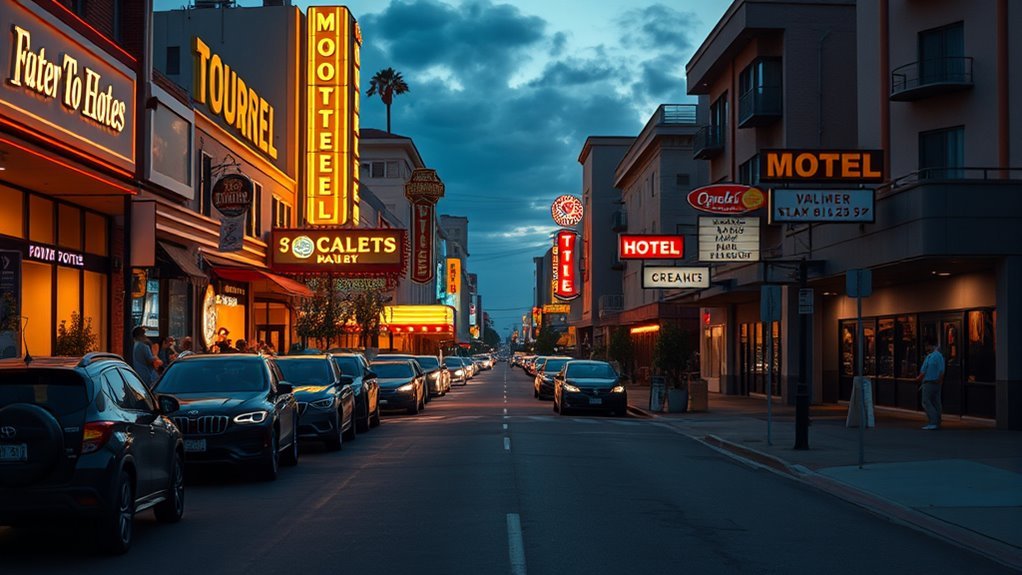
Hotel prices in the United States can change sharply from one neighborhood, date, and property to the next. A room near a major attraction or event may cost far more than a similar room a few miles away. The best comparison is not “tourist” versus “non-tourist” alone. It is the total trip cost for the same dates, including taxes, mandatory fees, parking, and transportation.
Quick Answer
Hotels in popular U.S. tourist districts usually cost more when demand is high, but there is no fixed national markup. Compare the final price for the same dates and room type. A hotel outside the center may be cheaper, but parking, transit, and travel time can erase part of the savings.
Key Takeaways
- There is no official nationwide rate for “tourist-area” or “non-tourist-area” hotels.
- Dates, events, hotel class, room supply, and neighborhood demand often matter more than distance from a landmark.
- Since May 12, 2025, covered sellers must show mandatory lodging fees in the upfront total price, although taxes and optional charges may appear later.
- Compare the final payment amount, cancellation terms, parking, and transportation before choosing a cheaper location.
Why Are Hotel Prices So Different in the USA?

Hotel pricing is dynamic. A property may change its rate several times as rooms sell, demand rises, or a major event approaches. Two hotels that look similar can have very different prices because of:
- Demand: Popular weekends, school breaks, conventions, concerts, and sports events can fill rooms quickly.
- Supply: A district with few available hotels may stay expensive even outside the main travel season.
- Location: Walkable access to attractions, convention centers, beaches, airports, or nightlife often raises the base rate.
- Hotel type: Luxury, full-service, boutique, select-service, extended-stay, motel, and hostel properties serve different budgets.
- Room terms: Refundable rates, breakfast, parking, resort access, and room size can change the true value.
- Booking timing: Rates can rise or fall as the arrival date gets closer. There is no single best booking window for every city.
CoStar reported a U.S. average daily rate of $173.76 in June 2026, but local event markets varied widely. National averages are useful benchmarks, not quotes for a specific trip.
The labels tourist area and non-tourist area are useful for planning, but they are not formal hotel-industry price categories. A suburban hotel can be expensive during a tournament, wedding season, or major business event. A downtown hotel can be affordable on a quiet night.
2026 Hotel Rate Benchmarks for Major U.S. Markets
The latest available national data show why a single annual average can mislead travelers. According to CoStar’s June 2026 hotel report, the U.S. average daily rate was $173.76 for that month. The same report linked strong year-over-year gains to the 2026 World Cup.
| Benchmark | Reported ADR | What It Shows |
|---|---|---|
| U.S. overall, June 2026 | $173.76 | A national monthly benchmark across many market types |
| San Francisco/San Mateo, June 2026 | $264.42 | A major market affected by World Cup demand |
| Miami, June 2026 | $218.37 | Another event-affected market with above-average rate growth |
Note: ADR means average daily rate. It is a market-performance measure, not the final price every traveler pays. Your quote may be lower or higher based on the hotel, room, taxes, fees, and dates.
Budget-Friendly Options Outside Tourist Districts
Hotels outside the busiest district can offer better value, but the savings are not guaranteed. Compare several location types for the same dates:
- Adjacent neighborhoods: You may stay one or two transit stops from the main attraction without moving far from the city.
- Airport hotels: These can be useful for early flights, but daily travel into the city may add time and fare costs.
- Suburban hotels: They may include free parking or breakfast, but a rental car or commuter train may be necessary.
- Motels and limited-service hotels: These often provide fewer on-site services and may have a lower total cost.
- Extended-stay hotels: A kitchenette and weekly pricing can help on longer trips.
- Hostels: Dorm beds can lower the price for solo travelers, while private rooms should be compared with budget hotels.
Check safety, late-night transportation, parking rules, and the time needed to reach the places you plan to visit. A lower room rate is not a bargain if it creates a costly or exhausting commute.
How Seasonal Demand and Events Affect Hotel Prices

Seasonal demand does not affect every destination in the same way. Beach destinations may peak in summer, ski towns in winter, and convention cities on specific event dates. Weather, school calendars, holidays, and local festivals can all shift demand.
| Demand Trigger | Possible Price Effect |
|---|---|
| Major sports event, concert, or convention | Fast rate increases, fewer room choices, and stricter cancellation terms |
| School break or holiday weekend | Higher leisure demand, especially in family and resort destinations |
| Business slowdown or quiet midweek period | Lower rates may appear in some business-focused markets |
| Poor weather or shoulder season | Potential savings, but some attractions or services may be limited |
June 2026 gives a clear event example. CoStar reported that U.S. ADR rose 6.7% from June 2025, while San Francisco/San Mateo ADR rose 21.7% and Miami ADR rose 23.2%, with World Cup demand affecting both markets. These figures show event impact, not a standard markup that applies to every trip.
Common Hotel Fees and Charges
The phrase hidden fees needs an important update. Under the FTC Rule on Unfair or Deceptive Fees, covered hotel sellers and booking platforms must display the total price more prominently than other pricing information. That upfront total must include mandatory charges the business knows and can calculate.
Taxes, government charges, and optional services may be shown later, but they must be disclosed before payment. Hotels can still charge fees; the rule changes how mandatory fees are presented.
| Charge | What to Check |
|---|---|
| Resort or destination fee | If mandatory, it should be included in the upfront total price under the FTC rule. |
| Taxes and government charges | These may be added later in the booking flow and vary by city and state. |
| Parking | Check nightly cost, taxes, valet-only rules, and nearby public parking. |
| Pet, extra-person, or rollaway charge | Confirm whether it is per night, per stay, or refundable. |
| Early check-in or late checkout | Usually optional and subject to availability. |
| Restaurant service charge | Read the bill before adding a tip. A service charge is not automatically the same as a gratuity. |
Warning: Do not compare only the first nightly rate shown in search results. Compare the final amount due for the full stay, then add optional costs you expect to use, such as parking or breakfast.
Comparing Amenities in Tourist and Non-Tourist Hotels
Location affects which services a hotel is likely to offer, but price alone does not prove quality. A central full-service hotel may charge more for convenience, staffing, and on-site facilities. A hotel outside the center may offer free parking, a larger room, or breakfast.
Hotel Location Impact
- Walkability: A central hotel may reduce transit, rideshare, and parking costs.
- Noise: Nightlife and event districts can be loud even when the hotel is well rated.
- Transportation: Check the first and last train or bus, not just daytime travel time.
- Safety: Review recent guest comments and official local guidance for the exact block and route.
- Time: A long daily commute can reduce the value of a lower room rate.
Amenities Offered Comparison
| Tourist-District Hotel May Emphasize | Outside-Center Hotel May Emphasize |
|---|---|
| Walkability and attraction access | Parking and highway access |
| Concierge, bell service, or on-site dining | Free breakfast, kitchenette, or laundry |
| Views, rooftop spaces, or resort facilities | Larger rooms or longer-stay features |
Price Variability Factors
Compare equivalent offers. A nonrefundable room without breakfast is not equal to a refundable room with breakfast and parking. Match these details before deciding which hotel is cheaper:
- Room and bed type
- Refund and change rules
- Mandatory fees and taxes
- Parking or transit cost
- Breakfast and Wi-Fi
- Check-in and checkout times
- Occupancy limits and extra-person charges
Hotel Taxes Can Change the Final Price
Hotel taxes vary by location and may include state sales tax, local sales tax, occupancy tax, and daily room fees. Always check the tax line for the exact property.
| City Example | Current Official Charges |
|---|---|
| New York City | The combined state and local sales tax rate is 8.875%. The city hotel occupancy tax is 5.875% plus up to $2 per room per day, and New York State adds a $1.50 per-unit daily fee. See NYC311 and the New York State hotel occupancy guide. |
| San Francisco | San Francisco imposes a 14% transient occupancy tax for stays under 30 days. Tourism district assessments of 2.00% or 2.25% may also be passed through to guests. See the San Francisco Treasurer and Tax Collector. |
These examples show why a blanket “3% to 7% occupancy tax” estimate is unsafe. The total tax burden can be much higher in major cities, and the taxable base can vary.
Tips for Finding Affordable Hotels in Popular Areas

- Search the exact dates first. General city averages do not reflect your event calendar.
- Use the map view. Compare the central district with nearby transit-connected neighborhoods.
- Match room terms. Use the same occupancy, bed type, refund policy, and included services.
- Compare the full-stay total. Review the final amount due, not only the nightly headline.
- Add transportation. Include parking, transit, tolls, fuel, or rideshare costs.
- Check flexible dates. Moving the trip by one night can avoid a sold-out event date.
- Price direct and third-party options. Compare totals and cancellation support, not just loyalty points.
- Read recent reviews. Look for repeated comments about noise, cleanliness, deposits, and unexpected charges.
Pro Tip: Book a refundable rate when prices are uncertain, then recheck the same room and dates before the cancellation deadline. Read the new terms before changing the reservation.
Budgeting for Your USA Trip in 2026
Build your lodging budget from the full stay rather than a single nightly rate. Use this formula:
Total lodging cost = displayed mandatory-price total + taxes and government charges + optional services you plan to use.
Booking Cost Checklist
| Displayed Stay Total | Base room price plus known mandatory property charges |
| Taxes | State, local, occupancy, tourism, or daily government charges |
| Optional Hotel Costs | Parking, pet fees, breakfast, rollaway bed, or late checkout |
| Location Costs | Transit, rideshare, fuel, tolls, and extra travel time |
Essential Budgeting Tips
- Set a maximum trip total, not just a nightly room target.
- Keep a buffer for taxes, deposits, and optional charges.
- Check whether a security deposit is a temporary hold or a nonrefundable fee.
- Confirm when the hotel will release an incidental hold after checkout.
- For a long stay, compare laundry, kitchenette, and breakfast costs.
Worked Budget Example
Suppose a four-night booking shows a mandatory-price total of $780. The booking page then adds $93.60 in taxes, and you expect to pay $30 per night for parking. Your estimated total is:
$780 + $93.60 + ($30 × 4) = $993.60.
This is only an example. Taxes and parking rules vary by property. The point is to compare $993.60 with the total cost of another hotel, not compare only the first nightly rate.
How Location Affects Your Total Trip Cost
A hotel outside a tourist district may have a lower room price, but location changes more than the rate. Use a total-cost comparison:
- Calculate the complete hotel total.
- Add daily transportation and parking.
- Estimate travel time for each planned activity.
- Check late-night access and safety.
- Compare included amenities you will actually use.
A central hotel may be the better value for a short, attraction-heavy visit. An outer-area hotel may work better for a road trip, a long stay, or a traveler who needs free parking. The best choice depends on the trip, not the neighborhood label.
Frequently Asked Questions
Are hotels always cheap in the low season?
No. A local convention, sports event, holiday, weather disruption, or limited room supply can keep rates high. Search your exact dates and check the local event calendar.
Is U.S. tourism increasing or decreasing in 2026?
The latest National Travel and Tourism Office forecast projects total international arrivals to rise 3.2% to 70.5 million in 2026. That is growth from 2025, but it remains below the 79.4 million international arrivals recorded in 2019.
What is the best lodging option for a traveler on a budget?
Compare motels, hostels, limited-service hotels, extended-stay properties, and hotels in transit-connected neighborhoods. The cheapest room is not always the lowest-cost trip after transportation, parking, and fees.
What is a tourism fee at a hotel?
The term may refer to a government tax, a tourism district assessment, or a hotel-imposed destination fee. Read the label and description. Mandatory hotel charges must be included in the upfront total under the FTC rule, while government taxes may be disclosed later before payment.
Is it worth staying outside the city center?
It can be, especially when the outer hotel includes parking or breakfast. Add transit, rideshare, fuel, tolls, and travel time before deciding. For a short sightseeing trip, a central hotel may provide better overall value.
How far ahead should I book a U.S. hotel?
There is no universal best window. Book earlier for major events or limited-room destinations. A refundable reservation can protect your plans while allowing you to recheck rates before the cancellation deadline.
Conclusion
Hotel prices in tourist and non-tourist areas can differ, but a fixed nationwide savings percentage is not reliable. Use current rates for your exact dates, compare equivalent rooms, and review the complete payment amount. Then add parking, transportation, and the value of included amenities. A slightly higher room rate can still be the better deal when it saves time and other trip costs.
Sources
- CoStar: U.S. Hotel Performance for June 2026 — national ADR and event-driven market performance.
- Federal Trade Commission: Rule on Unfair or Deceptive Fees FAQ — upfront total-price and fee-disclosure requirements.
- NYC311: Hotel Room Occupancy Tax — New York City hotel occupancy tax rate.
- New York State Department of Taxation and Finance: Hotel and Short-Term Rental Unit Occupancy — sales tax treatment and the New York City daily unit fee.
- San Francisco Treasurer and Tax Collector: Transient Occupancy Tax — San Francisco hotel tax and tourism district assessments.
- National Travel and Tourism Office: Travel and Tourism Forecasts — 2026 international visitor forecast.