
California makes fishing simple for younger anglers, but the rules are often misunderstood. The key cutoff is age 16: children under 16 generally do not need a sport fishing license, while teens who are 16 or 17 must buy the same license sold to adults.
Quick Answer
In California, anglers under 16 do not need a sport fishing license. At ages 16 and 17, they pay the standard 2026 fees: $64.54 for a resident 365-day license or $174.14 for a nonresident license. Species report cards and local fishing rules may still apply to younger children.
Key Takeaways
- Children age 15 and younger can fish without a California sport fishing license.
- Anglers age 16 or older need a regular sport fishing license unless a specific exemption applies.
- California does not sell a separate discounted “junior” sport fishing license.
- Report cards, bag limits, size limits, seasons, closures, and gear rules can apply even when no license is required.
At a Glance
| Angler age | Under 16: no sport fishing license; age 16 or older: license required unless exempt |
| 2026 resident cost | $64.54 for a 365-day sport fishing license |
| Short-term options | $21.09 for one day or $32.40 for two consecutive days |
| Possible extra cost | Species report cards or area and gear validations |
Understanding Youth Fishing Licenses
California does not have a separate junior sport fishing license. Under California Fish and Game Code section 7145, anyone age 16 or older generally must carry a valid sport fishing license while attempting to take fish, shellfish, reptiles, or amphibians.
Children under 16 may fish without a sport fishing license. They still must follow every rule for the water they are fishing, including seasons, closures, legal methods, bag limits, and size limits. A child may also need a species report card.
For 2026, the California Department of Fish and Wildlife sport fishing fee table lists these standard prices:
- Resident 365-day license: $64.54
- Nonresident 365-day license: $174.14
- One-day license: $21.09
- Two-day license: $32.40
- Ten-day nonresident license: $64.54
A 365-day license remains valid for 365 days from the purchase date. California generally treats a person as a resident for licensing after six continuous months of residency, with additional statutory categories for active-duty military personnel and Job Corps members.
Note: Fishing fees are adjusted periodically. The amounts in this guide are the official 2026 fees listed by CDFW as of July 29, 2026. Check the state fee page before purchasing.
Benefits of Youth Fishing Access
Although California does not offer a discounted junior license, its under-16 exemption removes the main license cost for younger children. Families can use that opportunity to introduce fishing without buying a license for the child.
Affordable Fishing Opportunities
Families can keep a first trip inexpensive by choosing a nearby stocked pond, shore-fishing area, or community fishing clinic. CDFW’s Fishing in the City program offers beginner-focused opportunities in some urban areas.
California also schedules two Free Fishing Days each year. On those dates, people of any age can fish without buying a sport fishing license. All other rules remain in force, and required report cards are not waived.
Encouraging Outdoor Activities
A short, child-focused fishing trip can build patience, observation skills, and confidence outdoors. Choose an easy-to-reach location, target common fish such as sunfish or stocked trout where legal, and end the trip before the child becomes tired or frustrated.
Keep the outing centered on the young angler. Let the child help choose bait, watch the float, reel in fish, and learn how to handle or release a catch safely.
Educational Experience Benefits
Fishing gives families a practical way to teach:
- Fishing ethics: Respect other anglers, private property, wildlife, and posted rules.
- Conservation: Follow limits and release rules that protect fish populations.
- Accountability: Record catches correctly when a report card is required.
- Stewardship: Pack out fishing line, hooks, bait containers, and other trash.
The license may be free for a child under 16, but the fishing regulations are not optional.
Cost of Youth Fishing Licenses in California
The cost depends on the angler’s age, residency, trip length, fishing area, gear, and target species.
| Situation | 2026 cost |
| Child age 15 or younger | No sport fishing license fee |
| Resident age 16 or 17, 365-day license | $64.54 |
| Nonresident age 16 or 17, 365-day license | $174.14 |
| One-day license, resident or nonresident | $21.09 |
| Two-day license, resident or nonresident | $32.40 |
Most listed fees include a 5% license-agent handling fee and a 3% nonrefundable application fee. CDFW also states that sport fishing licenses, validations, and report cards are generally nonrefundable.
Products Worth Considering

FISHING LICENSE HOLDER W/ZIP CLOSURE
CALIFORNIA STATE FLAG DESIGN: Features a textured, raised California flag design for an authentic, high-end look and feel.

【MATERIAL】: oFloral License plate frame is made from premium quality aluminum, which can provide long-lasting protection from corroding, rusting and aging, durability for long lasting usage.Personalized Car Frame Can Perfect to Put on Your Front of Car or for Decorative Purposes Around the House Like in Your Bedroom, Garage, Basement, Ect.
Eligibility Requirements by Age
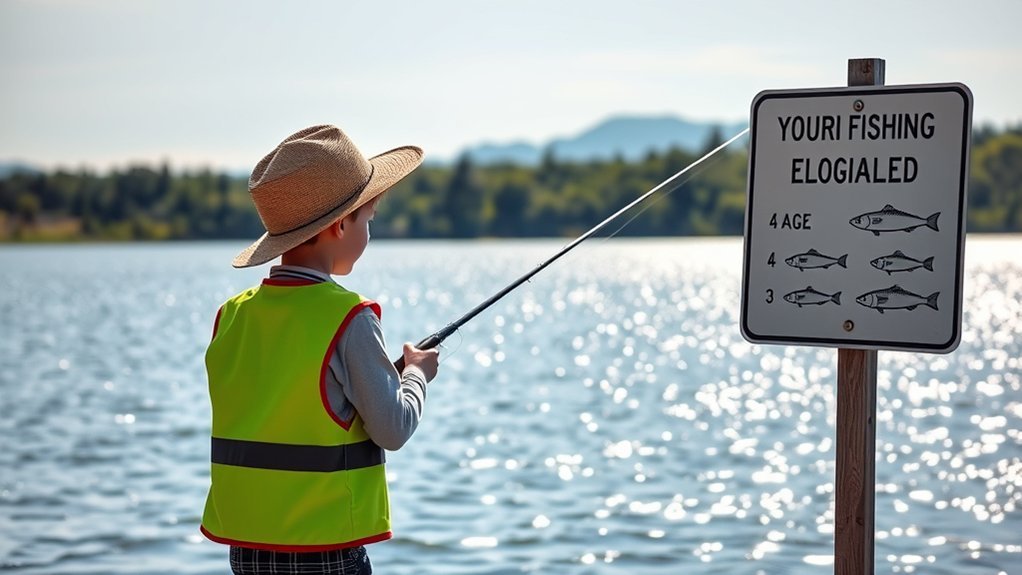
- Age 15 or younger: No California sport fishing license is required.
- Age 16 or 17: The teen must buy a standard resident or nonresident license unless a legal exemption applies.
- Report cards: Children must carry the required report card when fishing for steelhead, sturgeon, spiny lobster, or salmon in the Smith and Klamath-Trinity river systems.
- Local rules: License exemptions do not cancel seasons, closures, tackle restrictions, bag limits, or size limits.
A parent or guardian does not gain a license exemption by accompanying a child. Any adult who fishes must have a license unless that adult qualifies for a separate exemption, such as angling from a qualifying public pier in ocean waters.
Warning: Always supervise young anglers around water. Use a properly fitted life jacket on boats and wherever current, depth, cold water, slippery banks, or local rules create a drowning risk. Store hooks, knives, and fishing line where children cannot handle them unsupervised.
How to Purchase a License for a Teen
A child under 16 does not need a sport fishing license, so no application is necessary for ordinary fishing. For an angler age 16 or 17, use one of these CDFW-authorized purchase methods:
- Online: Buy through CDFW Online License Sales and Services.
- License agent: Purchase from an authorized sporting-goods store, bait shop, or other license agent.
- CDFW office: Visit a participating CDFW license sales office.
- Telephone: Use CDFW’s authorized telephone sales agent at 800-565-1458.
The purchaser needs a CDFW customer record and Get Outdoors Identification number. After purchase, the angler must keep the license in immediate possession while fishing. The CDFW License App can display sport fishing licenses and validations on a compatible mobile device.
Pro Tip: Buy the license before leaving home, save the digital license in the CDFW app, and carry a charged phone or printed backup. Also check the current regulation page for the exact lake, river, pier, or ocean area you plan to fish.
Products Worth Considering

THE SOL BABY BRAND: We specialize in creating cool, unique and trendy fashions for babies and kids with a focus on capturing the California vibe! All products are proudly designed by the Sol Baby team in southern California. When you buy one of our custom trucker hats or beach inspired fashions, you are assured of getting an original design that is not mass-produced.

CUSTOMIZE NOW – Add your personalized text. (Not embossed or stamped). Printed with a subtle shadow effect to create a dimensional look.

【Material】Our License Plate Frame Is Made Of Stainless Steel, Strong And Durable.
Additional Fees for Validations and Report Cards

A basic license does not cover every area, gear choice, or species. The following official 2026 fees may apply:
| Item | 2026 fee and when it applies |
| Ocean Enhancement Validation | $7.30; generally required to fish ocean waters south of Point Arguello, except with a one-day or two-day license |
| Second Rod Validation | $20.26; permits two rods or lines in eligible inland waters |
| Recreational Crab Trap Validation | $2.98; required when taking crabs with qualifying crab traps |
| Steelhead Report Card | $10.29; required for anyone fishing for steelhead in inland waters |
| North Coast Salmon Report Card | $9.21; required for salmon in the Smith and Klamath-Trinity river systems |
| Spiny Lobster Report Card | $12.70; required for everyone taking spiny lobster |
| Sturgeon Fishing Report Card | $8.13 for the 2026–2027 card; CDFW lists sales beginning August 15, 2026 |
Report cards apply even to children under 16, anglers on Free Fishing Days, and people fishing from a qualifying public ocean pier. White sturgeon fishing is currently catch-and-release only under the rules described by CDFW.
Spiny lobster report-card holders must report online or return the card by April 30 after the season. Missing that deadline can trigger a $21.60 non-return fee when buying a card for the next season.
Free and Reduced-Fee Options
The main youth benefit is the under-16 license exemption. California does not offer a general reduced-fee license for low-income youth.
Products Worth Considering

Enough to Use: you will receive 6 pieces of fishing license holders, and 6 pieces of safety pins, abundant in quantity, enough for you to choose and replace, can meet your different needs; You can also share them with your friends

3 Pack - Fluorescent Orange Hunting & Fishing License Holder is perfect for all hunters, hunt clubs, gun shops, ranges, wildlife management areas, taxidermists, sporting goods stores, anglers, boaters, hikers & sports enthusiasts.

Fishing & Hunting License Holder: The clear front window allows quickly check your fishing or hunting license without having to remove it, saving time during inspections. The side zippered pocket provides easy access to your permits and helps prevent them from getting lost.
Eligibility Criteria Explained
CDFW’s separate free and reduced-fee programs are based on specific eligibility categories, not simply age or household income. They include:
- Reduced-fee licenses for qualifying disabled veterans and recovering service members.
- A reduced-fee license for qualifying California residents age 65 or older who receive SSI or CAPI benefits.
- Free licenses for qualifying people who are blind, developmentally disabled, or severely mobility impaired.
- A free license for a qualifying low-income Native American resident of California.
A young person may qualify only by meeting the exact requirements of one of the applicable free-license categories. Proof and advance approval are required for an initial license.
Application Process Simplified
- Read the eligibility criteria on the CDFW fishing license page.
- Complete the correct application and collect the required certification or supporting documents.
- Submit the application as directed by CDFW and allow time for eligibility review.
- After approval, purchase or renew through the sales channel permitted for that license type.
CDFW advises allowing 15 business days to review and process a first free-license application. Extra validations and report cards still cost the regular fee.
California Free Fishing Days for 2026
The official 2026 California Free Fishing Days are:
- Saturday, July 4, 2026
- Saturday, September 5, 2026
No sport fishing license is required on those dates. Bag and size limits, gear restrictions, fishing hours, stream closures, and report-card requirements remain in effect.
Other License Exemptions Families Should Know
A sport fishing license is generally not required when angling from a qualifying public pier in California ocean waters. The structure must meet the legal definition of a public pier; a private dock, seawall, beach, or ordinary harbor structure may not qualify. Report cards and all other fishing rules still apply.
Children under 16 may use two rods in eligible inland waters without buying a Second Rod Validation, except where rules require artificial lures or barbless hooks only.
Tips for Young Anglers and Their Families
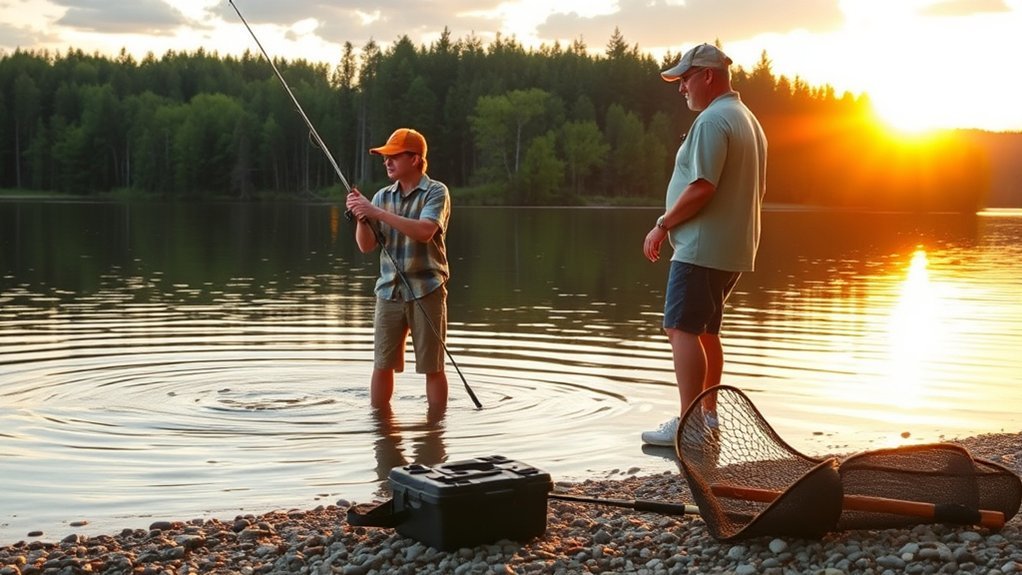
- Check the exact water: Review the current CDFW fishing regulations, including any emergency updates or local closures.
- Keep the first trip short: A nearby pond or pier is easier than a full-day trip.
- Use simple tackle: Start with one rod, one basic rig, and an easy knot.
- Put safety first: Bring life jackets where needed, drinking water, sun protection, a first-aid kit, and pliers for hook removal.
- Teach clean handling: Wet hands before touching a fish that will be released and minimize time out of water.
- Respect other anglers: Give people space, control casting, and keep noise reasonable.
- Pack out waste: Retrieve loose line, hooks, bait containers, and food wrappers.
- Stop while it is still fun: A positive 45-minute outing is better than forcing a tired child to stay for hours.
Frequently Asked Questions
Can a youth fishing license be renewed annually?
California does not issue a separate youth license. A standard 365-day sport fishing license for an angler age 16 or 17 may be renewed, and eligible license items may be enrolled in CDFW auto-renewal. The license is valid for 365 days from its effective date, not only through the end of the calendar year.
What is the age limit for fishing without a license in California?
A child under 16 may fish without a California sport fishing license. Beginning at age 16, the angler generally needs a standard license unless a specific legal exemption applies.
Do children need fishing report cards?
Yes. A child must have the appropriate report card when fishing for steelhead, sturgeon, spiny lobster, or salmon in the Smith and Klamath-Trinity river systems. Report-card rules apply even when the child does not need a sport fishing license.
Does a sport fishing license cover every type of fishing?
No. Some locations, gear, and species require a validation or report card. Every angler must also follow area-specific seasons, closures, bag limits, size limits, and tackle rules.
Can parents fish with a child who does not need a license?
Yes, but an adult who fishes must have a valid license unless the adult qualifies for a separate exemption. Merely supervising a child does not let the adult cast, retrieve, or otherwise fish without a license.
Is a license required for catch-and-release fishing?
Generally, yes for anglers age 16 or older. California’s legal definition of taking fish includes attempting to catch them, so releasing every fish does not remove the license requirement. Age-based and location-based exemptions may still apply.
Can a child under 16 fish with two rods?
CDFW says a child under 16 may use two rods in inland waters without a Second Rod Validation, except in waters where only artificial lures or barbless hooks may be used. Always check the rules for the specific water.
Is a fishing license required on a California public pier?
A license is generally not required when angling from a qualifying public pier in ocean waters. The exemption does not cover every dock, jetty, seawall, or beach, and report cards plus all other fishing regulations still apply.
Sources
- California Department of Fish and Wildlife: Sport Fishing Licenses and Report Cards — 2026 fees, age rules, validations, report cards, exemptions, and special licenses.
- California Department of Fish and Wildlife: Free Fishing Days — 2026 dates and rules that remain in effect.
- California Fish and Game Code section 7145 — the age-based sport fishing license requirement.
- California Department of Fish and Wildlife: Fishing Regulations — current freshwater and ocean regulation resources.
- California Department of Fish and Wildlife: Teach Your Child to Fish — family guidance and confirmation that children under 16 do not need a license.
- California Department of Fish and Wildlife: License App — mobile display of licenses and validations.
Conclusion
California’s youth fishing rule is simpler than the original “junior license” wording suggests. Children under 16 do not need a sport fishing license, while anglers age 16 or 17 pay the standard license fee. Before each trip, check the exact water, target species, and current regulations. A report card or validation may still be required, even on a Free Fishing Day or when the angler is otherwise exempt from buying a license.
