
In Illinois, the permit you need depends on where and how you fish. For the 2026 license year, the annual Inland Trout Stamp costs $6.50 for most licensed anglers. Lake Michigan uses a separate Salmon Stamp, and Illinois does not sell an $8.50 second-pole permit. Pole limits are set by statewide and site-specific fishing regulations.
Quick Answer
Illinois charges $6.50 for an annual Inland Trout Stamp in the 2026 license year; licensed residents age 75 or older pay $0.50. Illinois does not sell an $8.50 second-pole permit. Most fishing is limited to one pole, while waters marked “2 Pole and Line Fishing Only” allow two without an extra permit.
Key Takeaways
- The standard 2026 Inland Trout Stamp costs $6.50; licensed Illinois residents age 75 or older pay $0.50.
- Lake Michigan requires the separate Lake Michigan Salmon Stamp for licensed anglers taking trout or salmon.
- Illinois has no paid second-pole permit. Most pole-and-line fishing is limited to one pole unless a waterbody is listed for two-pole fishing.
- Anglers under 16 and other people who are exempt from the sport-fishing license generally do not need a Trout or Salmon Stamp.
- A 2026 annual license or stamp expires March 31, 2027, rather than one year from the purchase date.
At a Glance
| Time Required | Usually a few minutes online or at an authorized vendor |
| Difficulty | Easy, provided you select the correct inland or Lake Michigan stamp |
| Tools Needed | Phone or computer, customer information, and payment method; identification may help at a vendor |
| Cost | $6.50 for the standard stamp plus the applicable fishing license; no second-pole permit fee |
Understanding the Illinois Trout Stamp Cost
The annual Inland Trout Stamp costs $6.50 for licensed resident and nonresident anglers. A licensed Illinois resident who is 75 or older pays the reduced stamp fee of $0.50.
The stamp applies when a licensed angler fishes for or takes trout in Illinois waters outside Lake Michigan. Licensed anglers taking salmon or trout from Lake Michigan need the separate Lake Michigan Salmon Stamp instead. That stamp has the same standard and age-75 rates.
The current fees appear in the official 2026 Illinois Fishing Information guide, which is effective from April 1, 2026, through March 31, 2027.
| 2026 privilege | Fee or rule |
|---|---|
| Inland Trout Stamp | $6.50 for most licensed anglers |
| Resident Inland Trout Stamp, age 75 or older | $0.50 |
| Lake Michigan Salmon Stamp | $6.50 for most licensed anglers |
| Resident Lake Michigan Salmon Stamp, age 75 or older | $0.50 |
| Second-pole permit | Not offered or required in Illinois |
Products Worth Considering
Approximate Size: 3/4" x 2"
1" x 2.5" Stamp Block

Fishing Silicone Stamps: Our fishing silicone stamps are designed with 16 patterns, including 6 different species of fishes, a fishing rod, several different fishing equipment and 3 greeting words and phrases. These patterns are perfect for making cards to record your fishing memories or adding to your stamps collection.
Total License and Stamp Cost
The stamp is normally purchased in addition to a sport-fishing license. Based on the 2026 fees, common inland-trout totals before any transaction charge are:
- Illinois resident age 16–64: $15 annual license plus $6.50 stamp, for a total of $21.50.
- Illinois resident age 65–74: $7.75 senior license plus $6.50 stamp, for a total of $14.25.
- Illinois resident age 75 or older: $1.50 super-senior license plus $0.50 stamp, for a total of $2.
- Nonresident with an annual license: $31.50 license plus $6.50 stamp, for a total of $38.
- Angler under 16: No Illinois sport-fishing license or Trout or Salmon Stamp is required.
Note: Agent or online transaction charges may apply, and state fees can change. Confirm the amount shown during checkout before paying.
Does Illinois Require a Second-Pole Permit?
No. Illinois does not sell a general second-pole permit for $8.50 or any other price. The number of poles you may use is controlled by the Illinois sport-fishing regulations and the rules for the specific waterbody.
Under the general statewide pole-and-line rule, an angler may use one pole and line with no more than two hooks. A waterbody listed as “2 Pole and Line Fishing Only” permits up to two poles, with no more than two hooks or lures on each. You do not purchase another privilege to use the second pole at one of those waters.
Pole Limits by Fishing Method
- Regular pole-and-line fishing: One pole under the general statewide rule unless the site-specific listing permits two.
- Two-pole-designated waters: No more than two poles and two hooks or lures per pole.
- Trolling: Up to three poles and lines with no more than two hooks or lures on each, unless the waterbody has a two-pole restriction.
- Ice fishing: Up to three poles or tip-ups, with a maximum of two hooks per line. Two-pole-designated sites remain limited to two poles or tip-ups.
Warning: Do not assume that two poles are legal because another nearby lake allows them. Check the current site-specific listing and posted signs for the exact waterbody before setting up a second rod.
Who Needs an Illinois Trout Stamp?
You generally need an Inland Trout Stamp when all three of the following apply:
- You are required to hold an Illinois sport-fishing license.
- You plan to fish for or take trout.
- You are fishing Illinois waters outside Lake Michigan.
The requirement applies to licensed residents and nonresidents. It is not limited to people who plan to keep their catch, because Illinois defines fishing broadly to include attempting to take aquatic life.
Products Worth Considering

Fishing Theme: Transparent silicone stamp in various fishing design includes different patterns, such as fishes, hat, fishing rod, barrel, fishing man. The fishing pattern clear stamps is very suitable for fishing enthusiasts, enjoying the fun of the cards making and decoration.

EDUCATIONAL: Ideal for STEAM curriculum, this fish can be used to introduce students or an entire classroom to a traditional Japanese fish printing technique. Learn how to make gyotaku (that's Japanese for 'fish print') by using a realistic fish replica made of rubber. It is an excellent interdisciplinary project that will stimulate discussion about Japanese culture, different species of fish, other types of nature printing, fish anatomy, and more.

PACKAGE INCLUDES: one wooden rubber stamp
Lake Michigan Trout and Salmon
Do not buy the Inland Trout Stamp for Lake Michigan trout or salmon fishing. Licensed anglers taking those fish from Lake Michigan need the Lake Michigan Salmon Stamp. The standard fee is $6.50, while licensed Illinois residents age 75 or older pay $0.50.
Pro Tip: Check the privilege name before completing the purchase. “Inland Trout Stamp” covers Illinois trout waters outside Lake Michigan, while “Lake Michigan Salmon Stamp” covers trout and salmon taken from Lake Michigan.
How to Purchase an Illinois Trout Stamp
You can purchase a fishing license and stamp online or from an authorized Illinois license vendor. Start with the Illinois DNR license sales and information page, which provides access to online sales, current fees, and vendor information.
Purchase Options
- Confirm the water: Determine whether you will fish inland waters or Lake Michigan.
- Select the fishing license: Choose the resident, senior, super-senior, veteran, nonresident, short-term, or other license that applies to you.
- Add the correct stamp: Select the Inland Trout Stamp or Lake Michigan Salmon Stamp.
- Review the license year: Make sure you are purchasing the current privilege rather than the prior year’s license.
- Save your proof: Keep an electronic or printed copy available while fishing.
You do not need to search for or add a second-pole permit. If your chosen waterbody permits two poles, that authority comes from the site-specific regulation.
Information to Have Ready
| Information or item | Why it helps |
|---|---|
| Name, address, and date of birth | Used to identify your customer record and determine age-based privileges |
| Residency information | Determines whether resident or nonresident fees apply |
| Existing DNR customer information | Helps retrieve prior license records and reduce duplicate accounts |
| Payment method | Needed to complete an online or in-person transaction |
Validity Period and Replacement Copies
The 2026 license year began March 1, 2026. An annual 2026 fishing license or stamp expires March 31, 2027. It is not valid for a rolling year from the date of purchase.
Licenses bought before March 1, 2026, were issued for the 2025 license year and expired March 31, 2026. Check the year displayed in your cart before completing a purchase near the annual changeover.
If you lose an internet-purchased license, the Illinois DNR allows you to reprint it online without a reprint charge. The 2026 guide lists replacement licenses, permits, and stamps at $3 through the Springfield office. Vendors may charge $3 per replacement item plus a transaction fee.
Exemptions and Special Considerations
Illinois provides several license and stamp exemptions. Eligibility rules can be narrow, so confirm your status before relying on one.
- Anglers under 16: Resident and nonresident anglers under 16 may fish without an Illinois sport-fishing license. Because they are not required to obtain the license, they are also exempt from the Inland Trout Stamp and Lake Michigan Salmon Stamp.
- Qualifying disabled or blind residents: Illinois residents with the required disability documentation may fish without a sport-fishing license and are not required to obtain the Trout or Salmon Stamp.
- Qualifying disabled veterans: Eligible resident and nonresident disabled veterans may be exempt from the sport-fishing license. Other qualifying resident veterans may receive half-price license and stamp privileges after certification.
- Active-duty residents on leave: A person who entered the armed forces from Illinois, remains an Illinois resident, and is on ordinary or emergency leave may fish without a license.
- Resident landowners and tenants: Owners or tenants who live on the land may fish without a license in waters wholly contained on or flowing over their property. The exemption does not extend to club or organizational lakes.
- Licensed daily-fee fishing areas: A sport-fishing license and Inland Trout Stamp are not required at qualifying daily-fee fishing waters licensed by the Illinois DNR.
2026 Illinois Free Fishing Days
Illinois Free Fishing Days ran from June 19 through June 22, 2026. During those four days, anyone could fish waters under Illinois jurisdiction without purchasing a sport-fishing license, Inland Trout Stamp, or Lake Michigan Salmon Stamp. Size limits, harvest limits, closed areas, and other fishing rules still applied.
Future dates may change, so check the official Illinois Free Fishing Days page before planning a license-free trip.
Note: Being exempt from a license or stamp does not remove daily harvest limits, size limits, closed seasons, property-access rules, or site-specific pole restrictions.
What the Inland Trout Stamp Supports
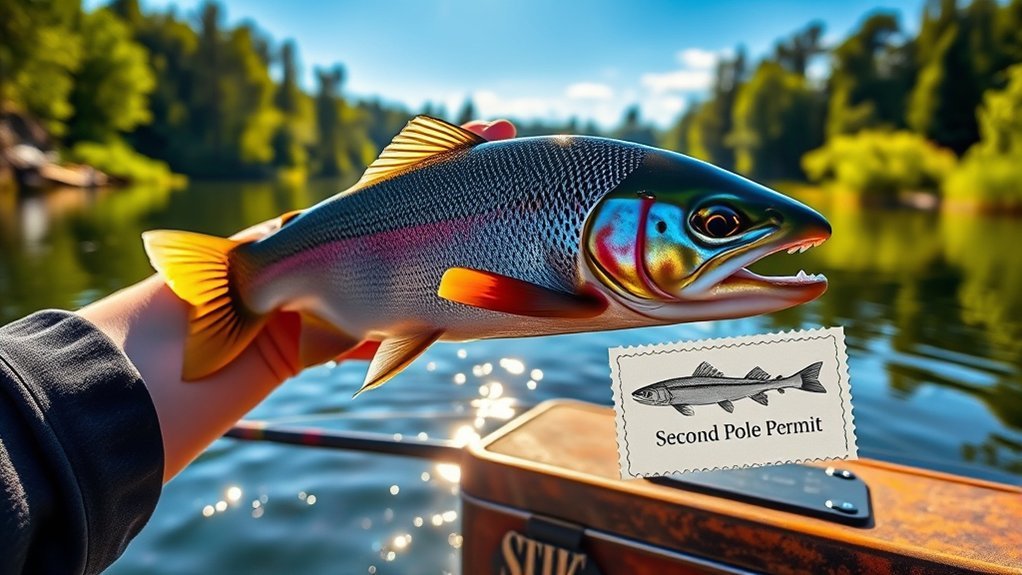
The Inland Trout Stamp is more than an access requirement. Revenue from stamp sales helps fund the Illinois Catchable Trout Program, including the stocking of rainbow trout in approved public waters.
Illinois uses Inland Trout Stamp revenue to support its catchable-trout stocking program.
The program creates seasonal trout-fishing opportunities at lakes and ponds that may not otherwise maintain catchable trout populations. Current locations, opening dates, and program notices are available through the official iFish Illinois Catchable Trout Program.
A second rod does not provide additional conservation funding because Illinois does not sell a second-pole permit. When two poles are legal, the angler’s responsibility is to follow the waterbody’s pole, hook, harvest, and size restrictions.
Rules to Check Before Trout Fishing
Buying the correct license and stamp is only one part of fishing legally. Review the following rules before visiting a stocked trout water:
- Open season: Many stocked waters have spring or fall closed seasons before their opening dates. Some offer an early catch-and-release period.
- Daily harvest limit: The statewide limit is five trout or salmon per day, either singly or in aggregate, unless a site-specific rule is more restrictive.
- Pole limit: Use one pole unless the waterbody is listed for two-pole fishing or a trolling or ice-fishing rule applies.
- Hook and lure limit: The general and site-specific rules limit how many hooks or lures may be attached to each line.
- Posted rules: Obey signs at the lake or park even when they are more restrictive than the statewide rule.
- Proof of privileges: Carry or retain access to your current fishing license and stamp unless an exemption applies.
Warning: Stocked trout waters may close temporarily before the spring or fall opener. Possessing a current stamp does not authorize fishing during a closed season.
Frequently Asked Questions
Can I purchase the Illinois trout stamp online or in person?
Yes. You can buy the Inland Trout Stamp, Lake Michigan Salmon Stamp, and fishing licenses online through the Illinois DNR license-sales system or from an authorized vendor. Confirm that you select the correct stamp and license year.
Does Illinois require a second-pole permit?
No. Illinois does not sell a second-pole permit. The general statewide pole-and-line rule allows one pole. A waterbody specifically listed as “2 Pole and Line Fishing Only” allows up to two poles without an additional purchase.
Do children need an Illinois trout stamp?
No. Resident and nonresident anglers under 16 do not need an Illinois sport-fishing license. Anglers who are not required to hold the license are also exempt from the Inland Trout Stamp and Lake Michigan Salmon Stamp.
Are there senior or veteran discounts on the trout stamp?
Licensed Illinois residents age 75 or older pay $0.50 for the Inland Trout Stamp or Lake Michigan Salmon Stamp. Qualifying resident veterans may receive half-price privileges after certification. Eligible disabled veterans may be exempt from the sport-fishing license and related stamp requirement.
How long is the 2026 Illinois trout stamp valid?
The 2026 annual license and stamp privileges expire March 31, 2027. They do not remain valid for one year from the individual purchase date.
Do I use the Inland Trout Stamp on Lake Michigan?
No. Licensed anglers taking salmon or trout from Lake Michigan need the Lake Michigan Salmon Stamp. The Inland Trout Stamp applies to trout fishing in Illinois waters outside Lake Michigan.
What is the Illinois daily limit for trout?
The statewide daily harvest limit is five trout or salmon, either singly or in aggregate. A listed waterbody may have a stricter limit, a catch-and-release period, or a closed season, so check its current site-specific rules.
Conclusion
The standard Illinois Inland Trout Stamp costs $6.50 for the 2026 license year, while licensed residents age 75 or older pay $0.50. Lake Michigan anglers need the separate Salmon Stamp, and anglers under 16 or otherwise exempt from the fishing license generally do not need either stamp. Illinois does not charge an $8.50 second-pole permit fee. Check the current waterbody rules to determine whether you may use one pole, two poles, or a method-specific limit before fishing.
Sources
- 2026 Illinois Fishing Information — current license fees, stamp requirements, exemptions, pole limits, seasons, and harvest rules
- Illinois DNR Fishing Licenses — current license-year and fee information
- Illinois Administrative Code, Part 810 — statewide and site-specific sport-fishing regulations
- Illinois DNR License Reprints — online reprint and replacement guidance
- Illinois Free Fishing Days — official license-free fishing dates
- Illinois Catchable Trout Program — trout-stocking information and program updates
