
California sport fishing license prices depend on residency, license length, fishing location, and the species or gear you plan to use. The fees below are the California Department of Fish and Wildlife’s 2026 prices and were checked on July 28, 2026. Always review current fishing regulations before your trip because seasons, closures, limits, and gear rules can change.
Quick Answer
In 2026, a California 365-day sport fishing license costs $64.54 for residents and $174.14 for nonresidents. Short-term licenses cost $21.09 for one day, $32.40 for two consecutive days, and $64.54 for a ten-day nonresident license. Extra validations or report cards may apply.
Key Takeaways
- Most people age 16 or older need a valid sport fishing license to fish in California.
- A resident 365-day license costs $64.54, while a nonresident license costs $174.14 in 2026.
- One-day and two-day licenses are available to residents and nonresidents and do not require an Ocean Enhancement Validation.
- Report cards may still be required for children, public-pier anglers, and people fishing on a Free Fishing Day.
- Fishing licenses do not override species seasons, closures, size limits, bag limits, or local gear restrictions.
365-Day California Sport Fishing License Fees
California’s resident and nonresident sport fishing licenses remain valid for 365 days from the purchase date. They no longer expire automatically at the end of the calendar year.
| License | 2026 Fee | Who Can Buy It |
|---|---|---|
| Resident 365-Day Sport Fishing License | $64.54 | Qualifying California residents age 16 or older |
| Nonresident 365-Day Sport Fishing License | $174.14 | Nonresidents age 16 or older |
For licensing purposes, a resident generally means someone who has lived continuously in California for at least six months immediately before applying. Active-duty members of the U.S. Armed Forces and people enrolled in the Job Corps may also qualify under the state definition.
You can purchase most licenses through the CDFW Online License Sales and Services system, an authorized license agent, a participating CDFW license sales office, or CDFW’s authorized telephone sales service.
Note: Eligible licenses and validations can be displayed in the CDFW License App. A digital proof-of-purchase screen does not replace a physical steelhead, sturgeon, salmon, or spiny lobster report card when a physical card is required.
Short-Term California Fishing License Costs
Short-term licenses are useful for visitors, occasional anglers, and residents who only plan to fish for one or two days.
| Short-Term License | 2026 Fee | Validity |
|---|---|---|
| One-Day Sport Fishing License | $21.09 | One specified day; available to residents and nonresidents |
| Two-Day Sport Fishing License | $32.40 | Two consecutive days; available to residents and nonresidents |
| Ten-Day Nonresident Sport Fishing License | $64.54 | Ten consecutive days; nonresidents only |
One-day and two-day licenses are exempt from the Ocean Enhancement Validation requirement. The ten-day nonresident license does not receive that exemption, so the validation may be required when fishing in applicable ocean waters south of Point Arguello.
Pro Tip: A ten-day nonresident license costs the same as a resident 365-day license, but residency is determined by California law. A visitor cannot purchase the resident license simply because the prices are equal.
Products Worth Considering
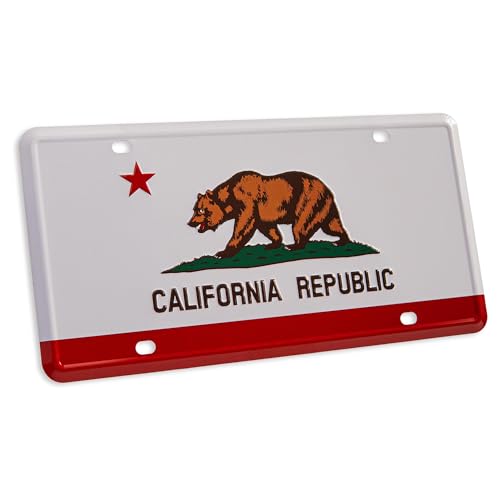
CALIFORNIA STATE FLAG DESIGN: Features a textured, raised California flag design for an authentic, high-end look and feel.

FISHING LICENSE HOLDER W/ZIP CLOSURE

Bone fish license plate featuring a fish skeleton in silver accents across the center.
Who Needs a California Fishing License?
Anyone age 16 or older generally needs a valid sport fishing license when taking or attempting to take fish, shellfish, amphibians, reptiles, mollusks, crustaceans, or other covered aquatic species in California inland or ocean waters.
A sport fishing license may not be required in these common situations:
- Anglers under age 16: Children younger than 16 generally do not need a sport fishing license.
- Qualifying public piers: A license is not required when recreationally angling from a qualifying public pier in California ocean or bay waters.
- Free Fishing Days: California’s 2026 Free Fishing Days are July 4 and September 5.
A public pier must meet California’s legal definition. A private dock, marina dock, seawall, promenade, or ordinary jetty does not automatically qualify. CDFW provides additional guidance on its public-pier and beach-fishing page.
Warning: A license exemption does not cancel fishing regulations. Seasons, closures, bag limits, size limits, gear rules, and applicable report-card requirements still apply. Children, public-pier anglers, and people fishing on a Free Fishing Day may still need a species report card or crab-trap validation.
Validations and Report Cards
A standard sport fishing license does not cover every location, fishing method, or species. Depending on where and how you fish, you may need a validation or report card.
Products Worth Considering

Enough to Use: you will receive 6 pieces of fishing license holders, and 6 pieces of safety pins, abundant in quantity, enough for you to choose and replace, can meet your different needs; You can also share them with your friends

Durable Material: Car license plate is crafted from high-quality ETP (electrolytic tinplate) with 2 layers of clear epoxy lacquer coating making the car tag water-proof, rust-proof, and weather-resistant

LPG Apparel Co. A Lobo Lures Company . Big Game Sport Fishing Vanity Front License Plate Tag | Made in the USA. Our plates feature famous marine artists sublimated on premium metal plates! to last years in front of your vehicle
2026 Validation Fees
| Validation | 2026 Fee | When It Is Needed |
|---|---|---|
| Ocean Enhancement Validation | $7.30 | Generally required to fish in ocean waters south of Point Arguello, except with a one-day or two-day license |
| Second Rod Validation | $20.26 | Allows two rods or lines in eligible inland waters |
| Recreational Crab Trap Validation | $2.98 | Required when using a regulated crab trap; not required for hoop nets or crab loop traps |
A Second Rod Validation does not permit two rods in waters restricted to artificial lures or barbless hooks. It is also not the general authorization for using two rods in ocean waters, where separate gear rules apply.
Beginning January 1, 2026, passengers using crab traps from a licensed commercial passenger fishing vessel are no longer required to possess an individual recreational crab-trap validation. The vessel operator is subject to separate commercial validation requirements.
2026 Report Card Fees
| Report Card | 2026 Fee | Main Requirement |
|---|---|---|
| Sturgeon Fishing Report Card | $8.13 | Required when fishing for sturgeon; white sturgeon fishing is catch-and-release only |
| North Coast Salmon Report Card | $9.21 | Required when taking salmon in designated Smith and Klamath-Trinity river systems |
| Steelhead Report Card | $10.29 | Required when fishing for steelhead in inland waters |
| Spiny Lobster Report Card | $12.70 | Required for every person taking spiny lobster |
| Abalone Report Card | Not available | The recreational abalone fishery is closed |
The 2026-2027 Sturgeon Fishing Report Card is scheduled to become available on August 15, 2026. Because sturgeon regulations and reporting dates have changed, check the current CDFW sturgeon report-card page before fishing.
Report cards are tied to the species or activity, not only to the angler’s age or basic license requirement.
Free and Reduced-Fee Sport Fishing Licenses
CDFW offers reduced-fee or free licenses to people who meet specific statutory requirements. Additional validations and report cards are normally purchased separately at their standard prices.
| Category | 2026 Fee | Basic Eligibility |
|---|---|---|
| Disabled Veteran | $10.04 at a CDFW office or $10.54 through a license agent | Honorably discharged veteran with a service-connected disability rating of at least 50% |
| Recovering Service Member | $10.04 at a CDFW office or $10.54 through a license agent | Qualifying service member receiving outpatient treatment, recuperation, or therapy for a service-related serious injury or illness |
| Low-Income Senior | $10.04 | California resident age 65 or older who receives SSI or CAPI; available only through CDFW license sales offices |
| Low-Income Native American | No fee | Qualifying California resident Native American who is financially unable to pay the resident license fee |
| Blind, Mobility Impaired, or Developmentally Disabled | No fee | Applicants who meet CDFW’s specific medical or developmental-disability criteria and provide the required certification |
Free disability-based licenses are not available for every disability. Applicants must meet the exact vision, mobility, or developmental-disability criteria listed by CDFW.
How to Apply for a Free or Reduced-Fee License
At a Glance
| Time Required | About 15-30 minutes to prepare the application; CDFW advises allowing 15 business days to review a first free-license application |
| Difficulty | Easy to moderate, depending on the certification required |
| Tools Needed | Identification, GO ID or CDFW customer record, application form, and eligibility documents |
| Cost | The qualifying license costs $0, $10.04, or $10.54, depending on the program and purchase channel |
1. Confirm Your Eligibility Category
Review the eligibility requirements on the CDFW sport fishing license page. Do not use a general disability letter when CDFW requires a specific VA, medical, SSI, CAPI, or tribal document.
2. Create or Find Your CDFW Customer Record
Applicants generally need a CDFW customer record and GO ID. If you previously purchased a California fishing or hunting license, use your existing record instead of creating a duplicate one.
3. Gather the Required Verification
- Disabled veterans: Submit identification and a VA Benefit Summary Letter showing honorable discharge and a service-connected disability rating of at least 50%.
- Recovering service members: Submit a letter from a commanding officer or military medical doctor that confirms eligibility and includes the expected recovery date.
- Low-income seniors: Bring current verification from the Social Security Administration or California Department of Social Services showing SSI or CAPI eligibility. Verification is required annually.
- Free disability-based licenses: Use the applicable CDFW form and obtain certification from the qualified physician, optometrist, ophthalmologist, regional-center director, or other authorized professional listed on the form.
- Low-income Native American applicants: Submit the application and acceptable documentation of tribal enrollment or membership as directed by CDFW.
4. Submit the Application Through the Correct Channel
Disabled veterans and recovering service members may submit identification and eligibility documents through their online CDFW customer record, by mail to a CDFW license sales office, by fax to the number listed by CDFW, or through CDFW’s secure-document-upload process. Sensitive documents should not be sent through ordinary email.
Low-income senior licenses must be renewed annually at a CDFW license sales office. First-time free-license applicants must follow the submission instructions on their category’s application form.
5. Wait for Approval and Purchase or Renew
Once a disabled veteran or recovering service member has been prequalified, the customer record is updated so future eligible licenses can be purchased through approved sales channels. CDFW advises first-time free-license applicants to allow 15 business days for review and processing.
Online Reporting of Fishing Activity
Report-card holders can use CDFW’s online license service to submit required fishing activity. After signing in, select the harvest-reporting option and follow the instructions for the applicable card.
Common reporting deadlines include:
- Spiny lobster: Report online or return the card by April 30 following the season. A $21.60 non-return fee may be charged when purchasing the following season’s card if the deadline is missed.
- Steelhead: The standard reporting deadline is January 31 following the card period.
- North Coast salmon: The standard reporting deadline is January 31 following the card period.
- Sturgeon: The season-based reporting deadline is July 31 after the card expires. The 2025-2026 season card reporting period runs through July 31, 2026.
Follow the instructions printed on the card, including any requirement to report that you did not fish or did not catch the target species. Reporting obligations can apply even when the recorded catch is zero.
Pro Tip: Save the confirmation number after reporting online. Write it on the report card when instructed and retain the physical card for the required period in case CDFW requests it.
Lifetime Licenses, Replacements, and Refunds
2026 Lifetime Fishing License Fees
California residents can purchase a lifetime fishing license. The price depends on the purchaser’s age when the license is issued.
| Age at Purchase | 2026 Lifetime License Fee |
|---|---|
| Age 0-9 | $709.00 |
| Age 10-39 | $1,160.25 |
| Age 40-61 | $1,045.00 |
| Age 62 or Older | $709.00 |
The optional 2026 Lifetime Fishing Privilege Package costs $478.75 and includes lifetime privileges associated with the Second Rod Validation, Ocean Enhancement Validation, North Coast Salmon Report Card, and Steelhead Report Card. The applicable annual items still need to be claimed or issued as directed by CDFW.
Replacing a Lost License
A duplicate sport fishing license costs $14.30 in 2026 and may be purchased online or from an authorized sales location. Lost report cards may have separate affidavit, replacement, or reporting requirements.
Refunds and Auto-Renewal
California fishing license, validation, and report-card purchases are generally nonrefundable. Auto-renewal is available for eligible 365-day licenses, but anglers should review their account settings before the scheduled renewal if they no longer want the next license issued automatically.
Frequently Asked Questions
What are the benefits of having a fishing license?
A valid license allows you to fish legally when a license is required. License revenue also supports fishery management, habitat work, hatcheries, public access, enforcement, and other conservation programs.
Can I fish without a license in California?
You may fish without a sport fishing license if you are under 16, are angling from a legally qualifying public pier in ocean or bay waters, or are fishing on an official California Free Fishing Day. All other applicable rules, including report-card requirements, remain in effect.
How do I renew my California fishing license?
A standard license is valid for 365 days. You can purchase the next license through CDFW’s online system, an authorized license agent, a participating CDFW office, or telephone sales. Eligible customers may also enroll in auto-renewal.
Are there age restrictions for obtaining a fishing license?
People age 16 or older generally need a sport fishing license. Anglers under 16 normally do not need the basic license, but they may still need a report card or crab-trap validation for certain activities.
What should I do if I lose my fishing license?
Purchase a duplicate through CDFW’s online sales system or an authorized license location. The 2026 duplicate sport fishing license fee is $14.30. Contact CDFW for a lost report card because additional forms or reporting steps may be required.
Does a California fishing license expire on December 31?
No. Resident and nonresident 365-day sport fishing licenses are valid for 365 days from the purchase date. Species report cards may follow different seasonal or calendar-based validity periods.
Can I show my fishing license on my phone?
Many license items and validations can be displayed in the CDFW License App. Physical report cards must still be carried when CDFW rules require the original card to be in your possession.
Conclusion
A California fishing license can cost as little as $21.09 for a one-day trip or $64.54 for a resident 365-day license in 2026. Nonresidents pay $174.14 for the full 365-day option, while qualifying applicants may receive a reduced-fee or free license. Before fishing, confirm whether your location, gear, or target species requires an additional validation or report card.
Keep your license or approved electronic version in your immediate possession, carry any required physical report card, and check the latest CDFW regulations for seasons, closures, size limits, bag limits, and in-season changes.
Sources
- California Department of Fish and Wildlife: Sport Fishing Licenses and Report Cards — 2026 license fees, validations, report cards, eligibility, applications, and general license rules
- California Department of Fish and Wildlife: Free Fishing Days — 2026 Free Fishing Day dates and continuing regulatory requirements
- California Department of Fish and Wildlife: Beach Fishing and Public Piers — public-pier definition and license exemption
- California Department of Fish and Wildlife: License App — electronic license display and physical report-card limitations
- California Department of Fish and Wildlife: Sturgeon Report Card — current sturgeon season, catch-and-release rules, and reporting requirements
- California Department of Fish and Wildlife: Fishing Regulations — current freshwater and ocean regulation booklets and updates
