
In California, children age 15 and younger can fish without buying a sport fishing license. A license becomes required at age 16. That makes the basic California youth fishing license cost $0, although a young angler may still need a paid report card when fishing for steelhead, sturgeon, North Coast salmon, or spiny lobster.
Quick Answer
California does not require a sport fishing license for children under 16, so the license cost is $0. Starting at age 16, a resident 365-day license costs $64.54 in 2026. Species-specific report cards may still be required for younger anglers and cost extra.
Key Takeaways
- Children age 15 and younger do not need a California sport fishing license.
- At age 16, an angler needs a license unless a specific exemption applies.
- The 2026 resident 365-day license is $64.54; the nonresident license is $174.14.
- Report cards apply to all ages when targeting certain species.
- Bag limits, seasons, gear rules, closures, and local regulations still apply to youth.
At a Glance
| Time Required | No application for anglers under 16; about 5–10 minutes to buy a license online at age 16 or older |
| Difficulty | Easy |
| Tools Needed | Birth date, customer information, internet access or a license agent, and payment for any required license or report card |
| Cost | $0 for children under 16; optional or required report cards cost extra; age 16+ license fees start at $21.09 for one day in 2026 |
Importance of Youth Fishing Licenses
California’s age exemption makes fishing easier for families to try. A child can learn casting, fish identification, safe hook handling, and responsible catch-and-release practices without paying for a sport fishing license.
The exemption does not remove the rules. Young anglers must still follow the current bag limits, size limits, seasons, gear restrictions, fishing hours, and closures for the water they visit. The California Department of Fish and Wildlife fishing regulations are the best place to check before each trip.
License and report-card revenue also helps support fisheries management and habitat work. Teaching children why regulations exist can turn a first fishing trip into a practical lesson in conservation.
The key rule is simple: children under 16 fish license-free, but they are not regulation-free.
Eligibility Requirements for Youth Fishing Licenses
California bases the sport fishing license requirement on age, not on whether the young angler is a resident. Children under 16 do not need a sport fishing license. Once an angler turns 16, the normal resident or nonresident rules apply.
Age Requirements
An angler who is 15 or younger may fish in California without a sport fishing license. An angler who is 16 or older must carry a valid license while taking or attempting to take fish, shellfish, amphibians, or reptiles, unless a recognized exemption applies.
There is no separate annual “junior sport fishing license” that a child must buy. Do not confuse California’s fishing rules with its junior hunting-license system.
License Types
The appropriate option depends on age and where the person plans to fish:
- Child under 16: No sport fishing license is required.
- Resident age 16 or older: A resident 365-day sport fishing license is available.
- Nonresident age 16 or older: A nonresident 365-day license or an eligible short-term license is available.
- Qualifying public ocean pier: No sport fishing license is required for angling from the pier, regardless of age, but all other rules and report-card requirements still apply.
- Free Fishing Day: Anyone may fish without a sport fishing license on the designated date, but all other regulations remain in force.
Application Process
A child under 16 does not need to submit an application for ordinary sport fishing. If the child will target a species that requires a report card, purchase the correct card in the child’s name before fishing.
At age 16 or older, the angler can buy a license through the CDFW Online License Sales and Services system, an authorized license agent, or a CDFW license sales office. Use the same customer record or GO ID for later purchases.
Cost of Youth Fishing Licenses in California
The basic license cost for a California angler under 16 is $0. The first standard license cost begins when the angler turns 16. The following are the official 2026 fees published by CDFW:
| License or Exemption | 2026 Cost | Who It Covers |
| Under-16 age exemption | $0 | Residents and nonresidents age 15 or younger |
| Resident 365-day license | $64.54 | California residents age 16 or older |
| Nonresident 365-day license | $174.14 | Nonresidents age 16 or older |
| One-day license | $21.09 | Resident or nonresident for one specified day |
| Two-day license | $32.40 | Resident or nonresident for two consecutive days |
| Ten-day nonresident license | $64.54 | Nonresident for ten consecutive days |
Note: CDFW adjusts many fees annually. The amounts above are the 2026 fees, not permanent prices.
Products Worth Considering

FISHING LICENSE HOLDER W/ZIP CLOSURE
CALIFORNIA STATE FLAG DESIGN: Features a textured, raised California flag design for an authentic, high-end look and feel.

USA, License, plate, Vintage, tag, lot, set, plates, number, wall, decor, art, bar, restaurant, design, gift, cool, nice, american, america, hawaii, alaska, california, texas
Junior Fishing License Fees
California does not charge $9.75, $10.04, or any other annual “junior fishing license” fee for ordinary fishing. The under-16 exemption is free. A family may still pay for a required species report card, optional equipment, park admission, boat fees, bait, or a future lifetime fishing license, but those are not junior annual-license charges.
Eligibility for Youth Licenses
The age exemption applies to both California residents and visitors. Residency becomes relevant at age 16 because resident and nonresident annual licenses have different prices.
A lifetime fishing license can be purchased for an eligible California resident child, but it is optional and is not needed for the child to fish before age 16.
Purchasing Youth Fishing Licenses
For a child under 16, there is normally nothing to purchase unless the trip requires a report card. For an angler age 16 or older, choose the 365-day or short-term license that fits the trip. A 365-day license is valid for 365 days from the purchase date, not only through December 31.
How to Purchase a Youth Fishing License
Use these steps to confirm what the young angler needs and complete any required purchase:
- Confirm the angler’s age. No sport fishing license is needed before age 16.
- Identify the target species and location. Check whether a report card, validation, local permit, or special rule applies.
- Review current regulations. Confirm open seasons, bag limits, size limits, gear rules, and emergency closures for the exact water.
- Buy required items. Use CDFW’s online system, an authorized agent, or a CDFW sales office.
- Carry proof in the correct form. Anglers may display supported licenses in the CDFW License App, but a phone image of a report-card purchase does not replace the required physical report card.
Pro Tip: Save the child’s GO ID and use the same CDFW customer record for future report cards and licenses. This reduces duplicate records and makes online reporting easier.
Products Worth Considering

【MATERIAL】: oFloral License plate frame is made from premium quality aluminum, which can provide long-lasting protection from corroding, rusting and aging, durability for long lasting usage.Personalized Car Frame Can Perfect to Put on Your Front of Car or for Decorative Purposes Around the House Like in Your Bedroom, Garage, Basement, Ect.

THE SOL BABY BRAND: We specialize in creating cool, unique and trendy fashions for babies and kids with a focus on capturing the California vibe! All products are proudly designed by the Sol Baby team in southern California. When you buy one of our custom trucker hats or beach inspired fashions, you are assured of getting an original design that is not mass-produced.

CUSTOMIZE NOW – Add your personalized text. (Not embossed or stamped). Printed with a subtle shadow effect to create a dimensional look.
Additional Fees and Validations for Youth Licenses
Report cards are the main extra cost that can apply to a young angler who does not need a license. Validations generally apply to licensed anglers or particular fishing methods, while report cards apply to every person targeting the listed species.
Required Report Cards
A child under 16 must have the correct report card in immediate possession when fishing for a covered species. The 2026 fees are:
- Steelhead Report Card: $10.29 for fishing for steelhead in inland waters.
- North Coast Salmon Report Card: $9.21 for salmon in the Smith River or Klamath-Trinity river systems.
- Sturgeon Fishing Report Card: $8.13 for the 2026–27 season. White sturgeon fishing is catch-and-release only, and the 2026–27 card is scheduled to be available beginning August 15, 2026.
- Spiny Lobster Report Card: $12.70 for anyone taking spiny lobster.
- Abalone Report Card: Not available because the fishery is closed.
Validation Fees Overview
- Ocean Enhancement Validation: $7.30 for a licensed angler fishing in ocean waters south of Point Arguello. It is not required with a one-day or two-day sport fishing license.
- Second Rod Validation: $20.26 for a licensed angler using two rods or lines in inland waters. A child under 16 may use two rods without this validation, except where regulations limit fishing to artificial lures or barbless hooks.
- Recreational Crab Trap Validation: $2.98 for any person taking crabs with qualifying crab traps. It is not required for hoop nets or crab loop traps, and a 2026 exemption applies when using crab traps from a commercial passenger fishing vessel.
Warning: A digital proof-of-purchase screen does not replace a physical fishing report card. The angler must carry the actual card and complete entries as required.
Free and Reduced-Fee Youth Fishing Licenses
Children under 16 do not receive a special free license; they are simply exempt from the sport fishing license requirement. This distinction matters because report cards and fishing regulations still apply.
California also offers free or reduced-fee licenses to people who meet specific disability, veteran, service-member, low-income senior, or low-income Native American criteria. These programs are not general youth discounts, and proof of eligibility is required.
Products Worth Considering

STARTER FISHING GEAR KIT includes: 65 inch camo green telescopic fishing rod, spinning reel, minnow net, beginner’s guide, fishing lures, carry case and tackle box stocked with gear.

【 Best Value Kids Fishing Gear 】- It's an all-in-one fishing rod and reel combo kit with tackle box including a selection of fishing lures accessories suited to different fishing situations. A travel carry bag is also offered. Perfect boys fishing pole for ages 3-15.

ALL-IN-ONE KIDS FISHING SET - The kit includes a portable telescopic rod & pre-spooled (8lb test line) reel combo, carry bag, collapsible chair, rod holder, bait net and loaded tackle box.
Free Fishing Days in 2026
California’s two Free Fishing Days in 2026 are Saturday, July 4, and Saturday, September 5. On those dates, anyone may fish without a sport fishing license. Bag limits, size limits, closures, gear restrictions, fishing hours, and report-card requirements remain in effect. See the official CDFW Free Fishing Days page for details.
License-Free Public Pier Fishing
Anglers of any age may fish without a sport fishing license from a qualifying public pier in California ocean waters. The structure must meet the state’s legal definition of a public pier. Fishing from a beach, private dock, seawall, or an unqualified structure does not automatically receive the exemption. Report cards and all other regulations still apply.
Reporting Requirements for Youth Anglers
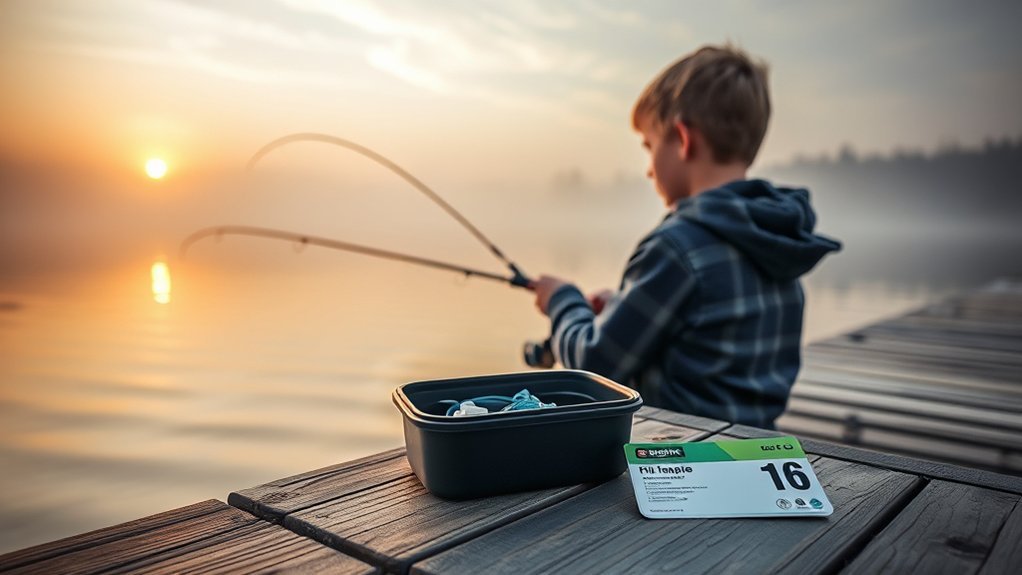
Report-card rules apply to the individual angler, including a child. A parent or guardian can help, but the card must be issued to the young angler and completed accurately.
- Carry the physical card. Have it in immediate possession before fishing for the covered species.
- Enter information at the required time. Follow the instructions printed on the card for dates, locations, catches, releases, and retained fish.
- Report even when required by the program and no fish were kept. Some cards collect effort and release data, not only harvest.
- Submit by the correct deadline. Steelhead and North Coast salmon cards are generally due January 31; spiny lobster cards are due April 30; sturgeon cards now follow the October 1–June 30 season and are due July 31.
A missed spiny lobster reporting deadline can trigger a $21.60 non-return fee when buying the next season’s card. Because reporting dates can change, use the date printed on the card and the current CDFW instructions.
Fishing Regulations for Youth in California
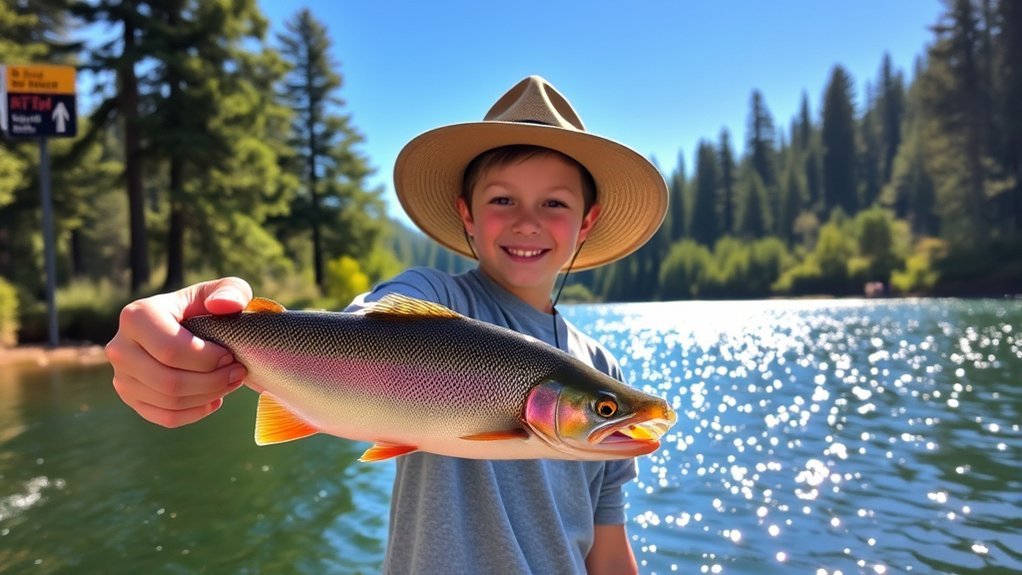
License-free does not mean rule-free. Before fishing, check the regulations for the exact lake, stream, river, bay, beach, or ocean district. Rules may differ by species, season, location, and fishing method, and emergency changes can occur during the year.
- Follow daily bag and possession limits.
- Measure fish subject to minimum or maximum size limits.
- Use only legal hooks, lines, bait, lures, nets, and traps.
- Respect closed seasons, closed waters, marine protected areas, and low-flow closures.
- Keep required report cards and licenses in immediate possession.
- Follow park, local, tribal, and land-manager rules in addition to state regulations.
Warning: Give children close adult supervision around water and hooks. Use a properly fitted life jacket where conditions or local rules call for one, keep hooks covered during transport, and maintain a safe casting zone.
Resources for Young Anglers
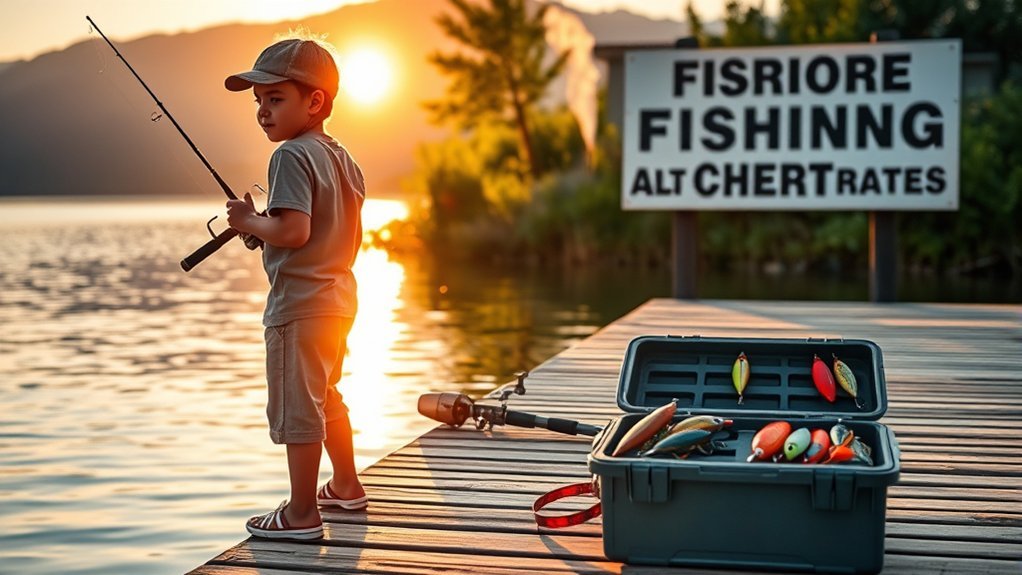
CDFW offers several tools that can help a family plan a legal and enjoyable first trip:
- Fishing in the City provides clinics and local fishing opportunities in participating regions.
- Sport Fishing Licenses and Report Cards lists current fees, exemptions, report cards, and purchase options.
- Fishing Regulations links to current freshwater and ocean rules.
- The CDFW License App can display supported license items, locate agents, and provide access to regulations. Physical report cards are still required when applicable.
Encouraging Youth Participation in Fishing Activities
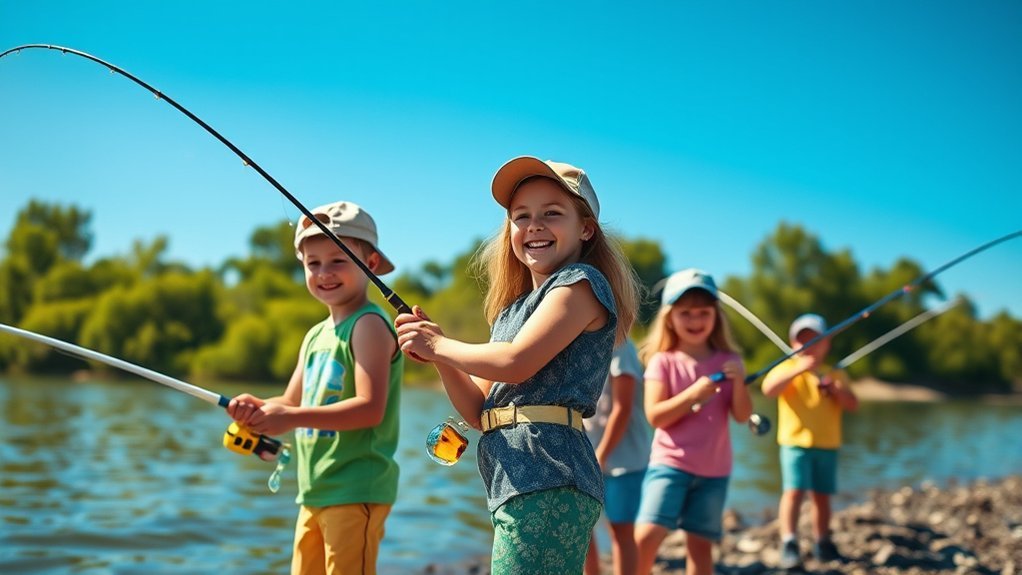
A successful first trip should be simple, safe, and focused on the child rather than on catching the biggest fish. These approaches can help:
- Choose an easy location: Pick a nearby pond, lake, or pier with safe access and simple rules.
- Keep the trip short: A one- or two-hour outing may be better than an all-day trip for a beginner.
- Teach one skill at a time: Start with safe casting, one knot, and how to handle a fish gently.
- Attend a clinic: CDFW’s Fishing in the City events can provide beginner instruction and loaner equipment at selected locations.
- Use free opportunities: Children under 16 can fish license-free year-round, and Free Fishing Days let licensed-age family members join without buying a license for that date.
- Model responsible behavior: Follow limits, clean up line and hooks, respect other anglers, and release fish properly when required.
Frequently Asked Questions
How much is a youth fishing license in California?
The cost is $0 for a child under 16 because California does not require that child to have a sport fishing license. Required report cards for certain species cost extra.
What age requires a California fishing license?
A sport fishing license is generally required beginning at age 16. Children age 15 and younger are exempt.
Can adults accompany youth fishing without a license?
Yes. An adult may supervise a child without a license. However, an adult who fishes or attempts to take fish generally needs a valid license unless a public-pier, Free Fishing Day, or other legal exemption applies.
Are California youth fishing privileges valid in other states?
No. California’s under-16 exemption applies in California. Check the fishing-license rules for the other state before the trip.
Do California fishing licenses expire on December 31?
No. Standard resident and nonresident sport fishing licenses are valid for 365 days from the purchase date. Short-term licenses are valid for the specified day or consecutive days.
Can youth fish without a license from a public pier?
Yes, but children under 16 are already exempt statewide. A qualifying public ocean pier also provides a license exemption for anglers age 16 and older. Report cards and all other rules still apply.
Can a child under 16 use two fishing rods?
Yes. CDFW states that a child under 16 may use two rods in inland waters without a Second Rod Validation, except in waters where only artificial lures or barbless hooks may be used.
Do children need fishing report cards?
Yes, when fishing for a species covered by a report-card program, including steelhead, sturgeon, North Coast salmon, and spiny lobster. The child must carry the proper physical card.
Conclusion
For most families, the answer is straightforward: a California angler age 15 or younger pays $0 for a sport fishing license. The child still needs to follow every fishing regulation and may need a paid report card for certain species. At age 16, choose the appropriate resident, nonresident, or short-term license and confirm current fees before fishing.
Sources
- California Department of Fish and Wildlife — Sport Fishing Licenses and Report Cards — age requirements, 2026 fees, validations, report cards, public-pier rules, and license validity.
- CDFW Online License Sales and Services — official purchasing and harvest-reporting portal.
- CDFW Free Fishing Days — 2026 dates and rules that remain in effect.
- CDFW Fishing Regulations — current freshwater and ocean regulation resources.
- CDFW Fishing in the City — youth clinics and beginner fishing resources.
- CDFW Sturgeon Report Card — current catch-and-release rules, season dates, and reporting deadline.
