Florida residents age 65 or older generally do not have to purchase a recreational freshwater or saltwater fishing license. You must carry proof of both your age and Florida residency while fishing. The exemption also covers Florida snook and spiny-lobster permits, but it does not cancel size limits, seasons, bag limits, special registrations, tags, or location-specific rules.
Quick Answer
A Florida resident age 65 or older can fish in fresh water and salt water without buying a recreational fishing license. Carry a valid Florida driver license, Florida ID card, or other accepted proof of age and residency. Special registrations, tags, site certificates, and all fishing regulations may still apply.
Key Takeaways
- The exemption applies to Florida residents age 65 or older, not automatically to out-of-state seniors.
- A Florida driver license or ID card is normally enough to prove age and residency.
- The free Resident 65+ Hunt/Fish Certificate is optional, not mandatory.
- Qualifying seniors are also exempt from Florida snook and spiny-lobster permit fees.
- Reef-fish designations, shark permits, crab-trap registrations, tarpon tags, and site rules may still apply.
- License-exempt anglers must follow every applicable season, size limit, bag limit, gear rule, and area restriction.
At a Glance
| Time Required | No application time if you already carry accepted proof; about 5–10 minutes for an optional certificate or no-cost registration |
| Difficulty | Easy |
| Documents Needed | Proof of age and Florida residency, usually a valid Florida driver license or Florida ID card |
| Base License Cost | $0 for qualifying Florida residents age 65 or older; certain tags, programs, rentals, or access fees may cost extra |
Eligibility for Florida’s Senior Fishing License Exemption
Under Florida Statute 379.353, a resident who is 65 years of age or older does not need a recreational freshwater fishing license or saltwater fishing license when the resident carries proof of age and residency.
The exemption applies whether you fish from shore, a pier, or a private boat, subject to the rules for the location, species, and fishing method. It also covers the standard Florida snook and spiny-lobster permits, according to the Florida Fish and Wildlife Conservation Commission licensing FAQ.
You do not lose the exemption simply because you do not obtain a printed senior certificate. The free Resident 65+ Hunt/Fish Certificate is an optional way to place the exemption in your FWC customer account.
Note: The age exemption is based on both age and Florida residency. A 65-year-old visitor from another state normally needs a Florida fishing license unless another specific exemption applies, such as fishing from a properly licensed charter boat or licensed fishing pier.
What the Senior Exemption Covers
- Resident freshwater fishing license
- Resident saltwater fishing license
- Florida snook permit
- Florida spiny-lobster permit
- Management-area permit requirements covered by the statutory senior exemption, subject to any area-specific exceptions
The exemption does not create a right to fish in closed waters, keep undersized fish, exceed a bag limit, use prohibited gear, or ignore federal rules.
Required Documentation for Seniors
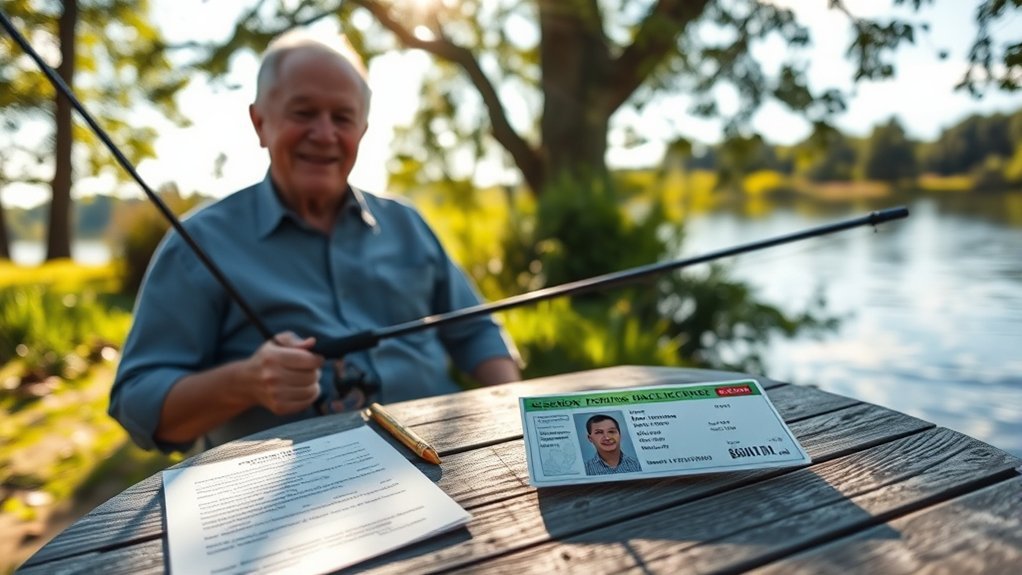
While fishing under the senior exemption, carry documentation that proves both your age and Florida residency. The simplest option is a current Florida driver license or Florida identification card showing a Florida address and residency verified by the Florida Department of Highway Safety and Motor Vehicles.
FWC’s Florida residency guidance also lists alternate documents for residents who do not have a Florida driver license or ID card. These may be presented through the appropriate licensing or tax-collector process.
- Florida driver license or ID card: The easiest proof of age and residency.
- Current Florida voter-registration information card: An accepted alternate proof for residents without Florida identification.
- Declaration of domicile: Available through a county clerk’s office.
- Florida homestead exemption documentation: Another accepted alternate proof.
- Optional Resident 65+ Hunt/Fish Certificate: A free certificate available online or through a county tax collector.
- Activity-specific documents: Carry any required reef-fish designation, shark permit, crab-trap registration, tarpon tag, or location certificate.
Pro Tip: Keep a clear photo of your identification and any electronic registrations on your phone, but carry the original or official digital credential whenever the applicable rule requires it.
Benefits of Fishing for Seniors
Fishing can combine light movement, outdoor time, concentration, and social contact. The amount of physical activity varies: fishing from a chair may be mostly sedentary, while walking a shoreline, launching equipment, casting repeatedly, or fishing from a kayak can require much more effort.
The Centers for Disease Control and Prevention reports that regular physical activity can support heart health, bone health, balance, sleep, mood, and independent living in older adults. Fishing may contribute when it includes safe, regular movement, but it should not be treated as a substitute for an individualized exercise or medical plan.
Potential Physical Benefits
- Gentle movement: Casting, reeling, walking, and handling light equipment can keep joints and muscles moving.
- Balance and coordination: Preparing tackle and landing a fish require controlled hand and body movements.
- Time outdoors: Fishing can encourage people to leave the house and spend time in daylight and fresh air.
- Adjustable effort: Anglers can choose a pier, bank, boat, or accessible fishing site that fits their mobility.
Use sun-protective clothing, sunscreen, drinking water, secure footwear, and a properly fitted life jacket when conditions require one. Avoid lifting heavy coolers or gear without help.
Mental Well-Being and Relaxation
The quiet routine of preparing a line, watching the water, and waiting for a bite may feel calming and help some anglers focus on the present moment. Outdoor recreation can also provide a welcome change of setting.
These experiences vary from person to person. Fishing is not a treatment for anxiety, depression, memory problems, or another health condition. Anyone experiencing persistent symptoms should seek advice from a qualified health professional.
Social Interaction Opportunities
- Plan outings with friends: A regular fishing day can create an easy social routine.
- Join a local club: Clubs may share access information, fishing reports, and conservation projects.
- Include family members: Fishing can provide a relaxed setting for time with children and grandchildren.
- Attend public events: Adult clinics, cleanups, seminars, and fishing events can introduce anglers to new people.
Understanding Florida’s Fishing Regulations
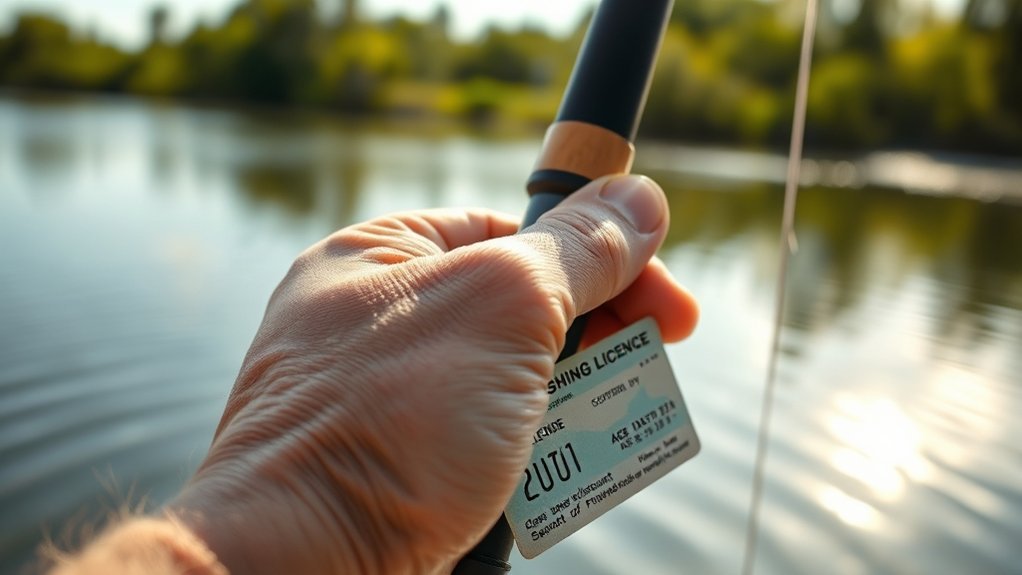
A license exemption removes the need to purchase certain licenses and permits. It does not remove the fishing rules that protect fish populations and public access areas.
Before each trip, check the current freshwater fishing regulations or saltwater recreational regulations for your destination and target species.
Warning: License-free does not mean regulation-free. Senior anglers must obey all seasons, closures, minimum and maximum sizes, daily bag limits, possession limits, gear restrictions, protected-species rules, and local access requirements.
License Types and Current Comparison Fees
Qualifying Florida residents age 65 or older do not have to buy the licenses below. These prices show what generally applies to anglers who are not exempt and were listed by FWC when this article was updated:
| License or Permit | Listed Cost | Senior Resident Rule |
|---|---|---|
| Resident annual freshwater license | $17 | Exempt at age 65+ |
| Resident annual saltwater license | $17 | Exempt at age 65+ |
| Resident freshwater and saltwater combination | $32.50 | Not needed for the senior exemption |
| Nonresident three-day freshwater or saltwater license | $17 | Age 65 alone does not create an exemption |
| Nonresident seven-day freshwater or saltwater license | $30 | Age 65 alone does not create an exemption |
| Nonresident annual freshwater or saltwater license | $47 | Age 65 alone does not create an exemption |
Prices and transaction charges can change. Confirm the current total on the official FWC freshwater license page or FWC saltwater license page before making a purchase.
Resident and Nonresident Age Rules
A Florida resident age 65 or older may use the senior exemption with accepted proof. An out-of-state resident does not receive the exemption merely because the person is 65 or older.
Nonresidents age 16 or older generally need a Florida license to attempt to take fish, including catch-and-release fishing. Exceptions can apply when fishing from a properly licensed charter or party boat, from a licensed fishing pier, during a license-free fishing day, or under another exemption listed by FWC.
Special Permits, Registrations, Tags, and Site Rules
The following requirements are separate from the ordinary senior fishing-license exemption:
| Activity | Requirement | Cost Listed by FWC |
|---|---|---|
| Targeting listed reef fish from a private vessel | Annual State Reef Fish Angler designation, including for anglers age 65+ | $0 |
| Taking or attempting to take sharks from shore | Shore-Based Shark Fishing Permit after completing the educational course; no permit exemption | $0 |
| Using recreational blue-crab traps | Annual blue-crab trap registration; no permit exemption | $0 |
| Using recreational stone-crab traps | Annual stone-crab trap registration; no permit exemption | $0 |
| Landing or possessing a tarpon when a tag is required | Tarpon tag; no senior exemption | $51.50 per tag |
| Fishing at Skyway Fishing Pier State Park | Annual educational course certificate, including for anglers age 65+ | No-cost course certificate |
The safest rule is simple: verify the license exemption, the target species, the fishing method, and the exact location before putting a line in the water.
How to Get the Optional Resident 65+ Hunt/Fish Certificate
You do not have to obtain a special senior fishing license to use the exemption. Your accepted proof of age and Florida residency is sufficient. However, you may obtain the free Resident 65+ Hunt/Fish Certificate for convenience.
- Confirm eligibility: You must be a Florida resident and at least 65 years old.
- Gather proof: Use a valid Florida driver license or identification card. Residents without one should review FWC’s alternate-document rules.
- Choose a method: Request the optional certificate through Go Outdoors Florida or a county tax collector’s office.
- Complete the no-cost transaction: Follow the prompts to add the Resident 65+ Hunt/Fish Certificate to your account.
- Save the certificate: Store the electronic copy in the Fish|Hunt FL app or keep a printed copy with your fishing documents.
- Add activity-specific items: Obtain any required reef-fish designation, trap registration, shark permit, tag, or site certificate separately.
The optional certificate does not replace a no-exemption registration or special tag. It also does not replace your duty to check current fishing regulations.
Where to Get Certificates, Registrations, and Fishing Licenses
Qualifying seniors do not need to purchase a standard fishing license, but the same service channels can issue optional certificates, required registrations, and licenses for nonexempt anglers.
Online and Mobile Options
- Go Outdoors Florida: The state-authorized online licensing portal.
- Fish|Hunt FL app: Use the official FWC app to obtain, renew, and store many licenses and permits.
- Electronic record storage: Keep available credentials on your mobile device for easier access in the field.
- Review the total before checkout: Some paid online transactions include handling or processing charges.
FWC states that recreational license sales placed online may include a $2.25 handling fee or a $1.75 fee plus a 2.95% surcharge, depending on the transaction. No-cost designations may have vendor fees waived when FWC specifically says so.
County Tax Collector Offices
A county tax collector’s office can help with the optional Resident 65+ Hunt/Fish Certificate, fishing licenses, and many permits. This is also the best route for a resident who needs to present alternate residency documentation.
Contact the office before visiting to confirm its hours, accepted documents, appointment policy, and whether it handles the exact certificate or permit you need.
License Agents, Retailers, and Phone Orders
FWC licenses and permits are also available through participating license agents, including some tackle shops and sporting-goods retailers. Not every store provides every service, so verify the location through the official agent search before traveling.
You may also call 888-FISH-FLORIDA (888-347-4356). FWC lists higher handling charges for paid phone transactions, so review the total before completing the order.
Additional Fishing Opportunities for Seniors
Florida does not guarantee one statewide schedule of senior-only fishing programs. Opportunities vary by county, park, nonprofit organization, fishing club, and season. FWC does maintain fishing-access resources, community fishing waters, educational programs, and a public event calendar.
| Opportunity Type | What It May Include | What to Confirm |
|---|---|---|
| Adult fishing workshops | Casting, knot tying, fish identification, ethics, and regulations | Age eligibility, registration, equipment, and cost |
| Guided excursions | Boat, pier, freshwater, or saltwater trips with a guide | Charter licensing, accessibility, cancellation terms, and total price |
| Community fishing events | Social outings, demonstrations, contests, or family activities | Date, location, license exemption, entry fee, and event rules |
| Conservation programs | Shoreline cleanups, habitat projects, education, or volunteer work | Physical demands, tools, clothing, and volunteer registration |
| Accessible fishing locations | Piers, bank access, parking, railings, or accessible routes | Current access conditions and site-specific regulations |
Use FWC’s Fishing Access page to search for freshwater sites, saltwater sites, piers, boat ramps, and Fish Management Areas. FWC manages about 80 designated Fish Management Area waters, many of which provide bank-fishing opportunities or stocked sportfish.
Conservation Efforts and Senior Anglers
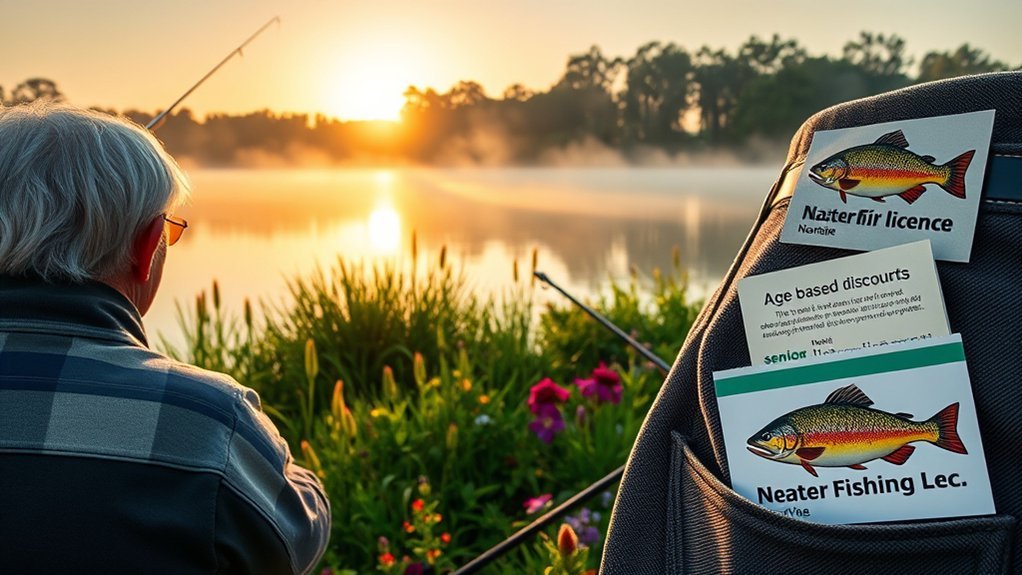
Senior anglers can support conservation without giving up the license exemption. Responsible fishing protects fish populations, habitat, wildlife, and access for future anglers.
- Follow current limits: Seasons, size limits, and bag limits are designed around species and population conditions.
- Handle released fish carefully: Minimize handling time, use suitable tools, and return the fish promptly when release is required.
- Prevent litter: Retrieve fishing line, hooks, bait containers, and other waste.
- Protect wildlife: Avoid nesting birds, manatees, sea turtles, and other protected animals.
- Report violations or wildlife emergencies: Use the appropriate FWC reporting channel.
- Volunteer: Consider shoreline cleanups, educational events, citizen-science projects, or fishing-club conservation work.
FWC also allows legally exempt anglers to purchase a license voluntarily. FWC explains that voluntary license purchases can help support fisheries work and Florida’s share of federal sport-fish restoration funding. This is optional; it is not required to use the senior exemption.
Community Fishing Events for Seniors
Community events can be a useful way to learn a new technique, meet nearby anglers, or try a new fishing location. FWC’s public calendar includes categories such as adult fishing clinics, educational workshops, cleanups, fishing shows, and other outdoor events.
Senior-only tournaments and workshops may also be offered by county parks, retirement communities, senior centers, veterans’ organizations, nonprofits, marinas, or local fishing clubs. These are local programs rather than a guaranteed statewide benefit.
Before attending, confirm:
- Whether advance registration is required
- Whether rods, bait, or safety equipment are supplied
- Whether the event has a temporary license exemption
- Whether the site is accessible for your mobility needs
- Whether parking, entry, equipment rental, or charter fees apply
- Whether fish may be kept or must be released
- Which bag, size, gear, and area rules apply
Check the FWC Outreach event calendar and local parks or recreation listings for current dates. Event details can change, so verify them directly with the organizer.
Connecting With Other Senior Anglers
Fishing with other people can make trip planning easier and add an extra layer of safety. A partner can help carry equipment, watch changing weather, assist with a fall or injury, and contact emergency services when needed.
- Join a fishing club: Search for clubs through community centers, marinas, tackle shops, or county recreation departments.
- Attend public clinics: Adult classes create a structured way to meet anglers with similar interests.
- Take part in local tournaments: Review the rules, fees, eligibility, and fish-handling requirements before entering.
- Volunteer at an event: Conservation projects and educational programs can provide a social role even when you are not fishing.
- Use online groups carefully: Do not publicly share home addresses, financial information, gate codes, or precise private fishing locations.
- Tell someone your plan: Share the location, expected return time, vehicle description, and emergency contact before fishing alone.
Frequently Asked Questions
Can seniors fish in saltwater without a license in Florida?
Yes. A Florida resident age 65 or older may fish recreationally in Florida salt water without purchasing a saltwater fishing license when carrying proof of age and Florida residency. Nonresident seniors do not receive this exemption solely because of their age.
Are there size or bag limits for senior anglers?
Yes. Every applicable size limit, daily bag limit, possession limit, season, closure, gear rule, and area restriction applies to senior anglers. The exemption affects licensing requirements, not harvest regulations.
What age qualifies for Florida’s senior fishing exemption?
A person must be at least 65 years old and qualify as a Florida resident. Carry proof of both age and residency while fishing.
Does a Florida senior need to apply for a free fishing license?
No standard application is required to use the statutory exemption. A qualifying senior can carry accepted proof of age and residency. The free Resident 65+ Hunt/Fish Certificate is optional and may be obtained online or through a county tax collector.
Do seniors need special permits for certain fishing activities or locations?
Sometimes. Requirements can include the State Reef Fish Angler designation, a shore-based shark permit, blue-crab or stone-crab trap registration, a tarpon tag, or the Skyway Fishing Pier course certificate. Check the exact species, method, and location before fishing.
Do Florida seniors need snook or spiny-lobster permits?
Qualifying Florida residents age 65 or older are exempt from the Florida snook and spiny-lobster permit requirements. They must still follow all seasons, harvest limits, size limits, gear restrictions, and closed-area rules.
Does the senior exemption apply to visitors from another state?
No. The exemption is for qualifying Florida residents. A nonresident age 65 or older generally needs a Florida fishing license unless another exemption applies, such as fishing from a licensed charter vessel or licensed pier.
Are there additional fees for senior fishing equipment rentals?
The fishing-license exemption does not cover private equipment rentals. Rod, reel, tackle, kayak, boat, guide, launch, parking, and pier fees are set by the individual business or location. Ask for the full price, deposit, taxes, damage terms, and return deadline before renting.
Conclusion
Florida’s senior fishing benefit is straightforward: a qualifying resident age 65 or older can fish recreationally without buying a standard freshwater or saltwater license. Carry proof of age and Florida residency, check whether your activity requires a separate designation, registration, tag, or site certificate, and review the current rules for your target species and location before every trip.
The optional Resident 65+ Hunt/Fish Certificate can make recordkeeping easier, but it is not required. With the correct documents and current regulations in hand, senior anglers can enjoy Florida’s waters without paying the standard license fee.
Sources
- Florida Fish and Wildlife Conservation Commission — Do I Need a License or Permit? — senior exemptions and proof requirements
- Florida Statute 379.353 — statutory recreational-license exemptions
- Florida Fish and Wildlife Conservation Commission — Florida Residency — primary and alternate residency documents
- Florida Fish and Wildlife Conservation Commission — Saltwater Licenses and Permits — current fees, shark permit, trap registrations, and tarpon tags
- Florida Fish and Wildlife Conservation Commission — State Reef Fish Survey — annual reef-fish designation requirements
- Centers for Disease Control and Prevention — Physical Activity Benefits for Adults 65 or Older — general health benefits of regular physical activity