
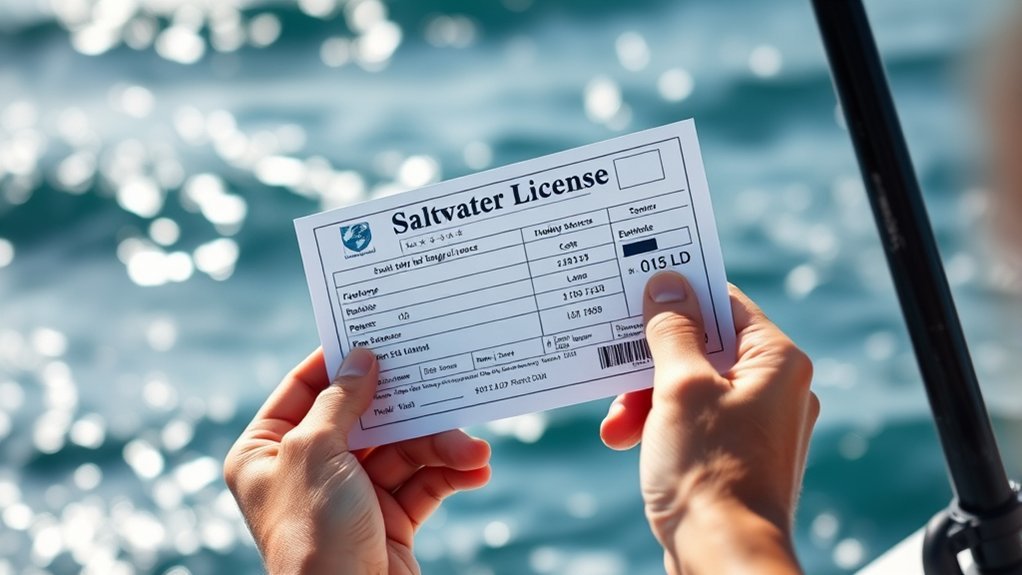
New York does not sell a standard recreational saltwater fishing license. Instead, most anglers age 16 or older enroll in the state’s free Recreational Marine Fishing Registry. The registry covers saltwater fishing in designated coastal waters and migratory sea fish in certain tidal rivers. Extra state or federal permits may apply when fishing for tuna, sharks, lobster, and other regulated species.
Quick Answer
New York’s Recreational Marine Fishing Registry costs $0. Most anglers age 16 or older must enroll before fishing for saltwater species in the Marine and Coastal District or migratory sea fish in certain tidal rivers. Registration lasts 365 days. Tuna, shark, and lobster fishing may require separate permits.
Key Takeaways
- The New York Recreational Marine Fishing Registry is free for residents and visitors.
- Registration is generally required at age 16 and remains valid for 365 days.
- Passengers on appropriately licensed party or charter boats usually do not need individual registration.
- Fishing from an ordinary private boat does not create an exemption.
- Separate permits may apply to tuna, sharks, swordfish, billfish, or recreational lobstering.
- Species seasons, sizes, and possession limits can change, so check current rules before each trip.
Cost of a New York Saltwater Fishing License or Registration
The standard New York Recreational Marine Fishing Registry costs $0. Both New York residents and visitors can enroll without paying a registration fee.
The registration is valid for 365 days from the date you enroll. There is no lifetime version of the marine registry, so you must renew it when the 365-day period ends.
You can avoid all delivery charges by choosing email delivery or printing the registration from your DECALS account. A License Issuing Agent may charge up to $1 for a printed transaction. If you register online or by phone and ask DEC to print and mail the document, the mailing charge is $2.
At a Glance
| Time Required | One short DECALS, telephone, or agent transaction; mailed proof may take up to 14 business days |
| Difficulty | Easy |
| Tools Needed | Internet or telephone access, an email address, and the personal information requested by DECALS |
| Cost | $0 registration; optional $1 agent printing fee or $2 printing and mailing fee; separate activity permits may cost extra |
Most anglers age 16 or older must enroll in New York’s free marine registry before targeting saltwater fish in covered waters.
Products Worth Considering

Fully Updated for 2026 Regulations: This new edition integrates the 2026 Fishing Regulation Updates, including current seasons and size limits for Gag Grouper, Red Snapper, and the April 1st Lane Snapper changes. No more checking websites while on the water—everything you need is right at your fingertips

[2026 REGULATION ALERT & WATERPROOF DURABILITY]: Stay compliant with crucial 2026 updates for Gag Grouper, Red Snapper, and Lane Snapper not on all printed guides. This essential Florida saltwater fishing gear features 4 double-sided, rugged PVC cards. They are completely waterproof, tear-resistant, and wipe-clean, built to survive harsh conditions from boat splashes to full dunks while staying intact and readable.
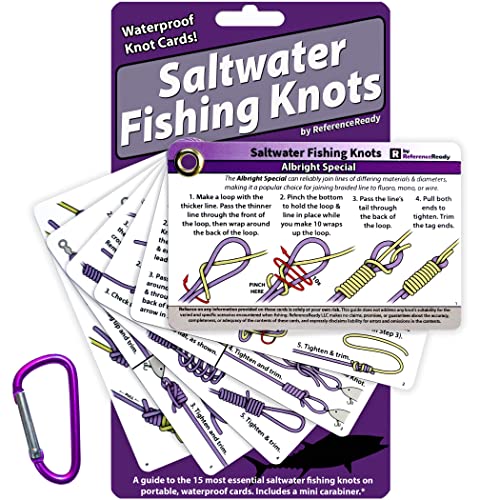
WATERPROOF: A rugged, portable, waterproof pocket guide to 15 essential saltwater fishing knots.
New York Saltwater Fishing Registration Requirements
Who Must Register?
You generally need to register when you are 16 or older and plan to do either of the following:
- Fish for saltwater fish species in New York’s Marine and Coastal District.
- Fish for migratory fish of the sea in tidal waters of the Hudson River and its tributaries or in applicable waters of the Delaware or Mohawk rivers.
New York’s Marine and Coastal District includes ocean waters within three miles of the state coastline, Long Island Sound, coastal bays and embayments, and tidal Hudson River waters south of the Governor Mario M. Cuomo Bridge.
The requirement applies to both residents and visitors. It also applies whether you fish from shore, a pier, a kayak, or an ordinary private boat unless a listed exemption covers you.
Who Does Not Need to Register?
You do not need individual marine-registry enrollment when:
- You are age 15 or younger.
- You are fishing aboard an appropriately licensed party or charter boat in the Marine and Coastal District.
- You are the owner of a New York-licensed party or charter boat.
- You are a Connecticut or Rhode Island resident with a valid marine fishing license from your home state.
- You are harvesting only lobster, crab, clams, mussels, scallops, oysters, or certain other shellfish. Separate permit and harvest rules may still apply.
Warning: Owning or fishing from a private boat does not automatically exempt you. The boat exemption applies to appropriately licensed party or charter operations, not ordinary recreational boats.
Required Documentation and Proof
DEC does not list a special training certificate for standard marine-registry enrollment. Complete the requested identity and contact information through DECALS, by telephone, or with a License Issuing Agent.
After registering, keep proof available while fishing. Anglers may use an emailed or printed copy, an electronic record in the HuntFishNY app, or their 12-digit DEC ID number.
| Requirement | Details |
|---|---|
| Age | Generally required at age 16 or older |
| Enrollment methods | Online through DECALS, by telephone, or through a License Issuing Agent |
| Validity | 365 days from enrollment |
| Proof | Email or paper copy, HuntFishNY record, or 12-digit DEC ID |
| Main exemptions | Anglers under 16, qualifying party or charter anglers, and eligible Connecticut or Rhode Island residents |
Types of Registrations, Licenses, and Permits
The correct document depends on the species, location, and fishing activity. The free marine registry does not replace every federal, state, or local permit.
Products Worth Considering

Watertight floating container – Keeps registration, licenses, or small valuables safe and dry.

Material :High-Quality Metal Aluminum With High Gloss Stamped Metal License Plate.Lightweight, Waterproof,Anti-Rust And Very Durable.

FISHING LICENSE HOLDER W/ZIP CLOSURE
Marine Registration and Special Permit Overview
| Activity | Requirement | Cost or Duration |
|---|---|---|
| General recreational saltwater fishing | New York Recreational Marine Fishing Registry | Free; valid for 365 days |
| Tuna, sharks, swordfish, or billfish | NOAA Atlantic Highly Migratory Species vessel permit; a shark endorsement is also required when targeting sharks | Annual vessel permit; current fee depends on permit type |
| Recreational lobstering | New York Recreational Lobster Permit; available to New York residents | $10; expires December 31 |
| Recreational crabbing | No New York recreational crab license; size, season, and possession rules still apply | $0 state license fee |
| Recreational shellfishing by non-mechanical means | No general state license, but a town permit or local residency rule may apply in town waters | Local fees vary |
Note: NOAA’s recreational HMS permits attach to the vessel rather than to each individual angler. The vessel permit must be renewed annually, and separate reporting or endorsement rules may apply.
Where New York Registration Is Recognized
New York’s reciprocity rules vary by location:
- Federal waters: New York residents can use their New York marine registration when fishing in the Atlantic Exclusive Economic Zone, generally beyond three miles from shore, subject to federal permits and rules.
- Connecticut and Rhode Island waters: New York registration is recognized under the reciprocity information published by DEC.
- New Jersey waters: New York registration alone is not enough. Anglers must enroll in New Jersey’s saltwater registry when New Jersey registration applies.
- Other states: Obtain the license or registration required by the state where you fish.
Connecticut and Rhode Island residents who hold valid marine fishing licenses from their home state do not need to enroll separately in New York’s registry. New Jersey residents and residents of non-bordering states generally must enroll when fishing in covered New York waters.
Saltwater Registry vs. Freshwater License Costs
New York’s freshwater fishing license is separate from the marine registry. You may need both when a trip includes covered freshwater and saltwater activities.
- Resident annual freshwater license, ages 16–69: $25
- Resident annual freshwater license, age 70 or older: $5
- Nonresident annual freshwater license: $50
- Resident one-day freshwater license: $5
- Nonresident one-day freshwater license: $10
- Resident seven-day freshwater license: $12
- Nonresident seven-day freshwater license: $28
A resident lifetime freshwater fishing license costs $460 for ages 0–69 and $65 for ages 70 and older. These lifetime privileges cover freshwater fishing only. New York does not offer a lifetime Recreational Marine Fishing Registry.
Exemptions and Free or Reduced Freshwater Licenses

The marine registry is already free, so military, disability, senior, or veteran programs do not reduce its registration price below $0. However, separate free or reduced programs may matter if you also need a freshwater fishing license.
- New York residents who are legally blind may qualify for a free freshwater fishing license with current medical documentation and proof of residency.
- Qualifying resident members of the New York State Organized Militia or U.S. Reserve Forces may receive free freshwater fishing, hunting, and trapping licenses.
- New York residents serving in the U.S. Armed Forces outside the state who return home on qualifying leave of 30 days or less may receive free sporting licenses.
- Resident veterans with a service-connected disability of at least 40% may qualify for New York’s reduced-fee sporting-license program.
- A patient residing at a qualifying U.S. Department of Veterans Affairs hospital or facility in New York may fish in freshwater without a standard fishing license.
- Enrolled members of the Shinnecock, Unkechaug, or Haudenosaunee Nations who meet DEC’s residency requirements may qualify for free sporting licenses when fishing off Nation territory.
- Children age 15 or younger do not need a standard New York freshwater fishing license or marine-registry enrollment.
These freshwater programs have their own proof and residency rules. Review the DEC free and reduced-fee license guidance before applying.
How to Register for Saltwater Fishing in New York
Products Worth Considering


【Material】Our License Plate Frame Is Made Of Stainless Steel, Strong And Durable.

Decorative Design: License plate featuring iconic Manhattan New York Empire State design in standard measurement size
Registration Process Steps
- Confirm that registration applies. Check your age, fishing location, target species, and whether you are using a licensed party or charter boat.
- Choose a registration method. Enroll online through DECALS, call 1-866-933-2257, or visit a New York License Issuing Agent.
- Complete the transaction. Provide the identity and contact information requested by the licensing system.
- Save your proof. Keep the emailed document, print a copy, use the HuntFishNY app, or retain your 12-digit DEC ID.
- Check the expiration date. Renew after 365 days if you plan to continue fishing.
- Check current fishing limits. Review the species, size, season, gear, and possession rules that apply on the date of your trip.
Online transactions are normally delivered by email. Telephone transactions provide a 12-digit DEC ID that can serve as proof, and the registration is also available through your DECALS account.
If you ask DEC to print and mail your registration after an online or telephone transaction, the mailing fee is $2 and delivery may take up to 14 business days. A License Issuing Agent may charge a $1 printing fee.
Pro Tip: Register before arriving at the water and save the email on your phone. You can also take a screenshot or carry a paper copy in case mobile service is weak.
Warning: A marine registration does not replace species limits or special permits. DEC states that its recreational saltwater rules were last changed on May 12, 2026 and may change again. Check the official regulations before every trip.
Additional Information and Resources
Use official government pages as your primary source for permit requirements and fishing limits. Local clubs, online forums, mobile apps, workshops, and seminars can help with techniques and fishing locations, but they should not replace current DEC or NOAA rules.
- New York State Department of Environmental Conservation: Check registry requirements, marine boundaries, exemptions, and reciprocity.
- DEC Recreational Saltwater Fishing Regulations: Review current minimum sizes, open seasons, possession limits, gear rules, and prohibited species.
- NOAA Fisheries: Check vessel permits, endorsements, reporting requirements, and current rules for tuna, sharks, swordfish, and billfish.
- Town or municipal shellfish offices: Confirm local clamming and shellfish permits before harvesting in town waters.
- Local fishing clubs and workshops: Learn about safe handling, catch-and-release methods, access points, and local fishing techniques.
- Fishing apps and forums: Use them for conditions and general trip planning, but verify all legal information through official sources.
Information collected through New York’s marine registry helps fisheries managers estimate recreational fishing activity and make decisions about quotas, seasons, size limits, and possession limits.
Frequently Asked Questions
Can I fish without registering during certain seasons?
There is no general seasonal waiver from New York’s marine registry. When the registry applies to your age, species, and fishing location, you must have active registration. New York’s designated Free Fishing Days concern freshwater fishing-license requirements and do not create a broad marine-registry exemption.
Is a New York marine fishing registration transferable?
No. Enrollment is tied to the individual angler and that person’s DEC record. Another angler who is required to register must complete a separate no-fee registration.
What should I do if I lose my registration?
Reprint it from the original email or your DECALS account. You may also show the registration through the HuntFishNY app or provide your 12-digit DEC ID. You do not normally need to pay for another registration simply because a paper copy was lost.
Can I fish from a boat without individual registration?
You may be exempt when fishing as a passenger aboard an appropriately licensed party or charter boat. Fishing from your own boat, a friend’s private boat, a kayak, or another ordinary recreational vessel does not create an exemption.
Are there age restrictions for the marine registry?
Yes. Registration generally begins at age 16. Anglers age 15 or younger do not need to enroll. There is no senior discount because the registry is already free.
Do nonresidents need New York saltwater registration?
Most nonresidents age 16 or older must enroll when fishing in covered New York waters. Connecticut and Rhode Island residents with valid marine fishing licenses from their home state are listed exceptions. New Jersey residents and residents of non-bordering states generally must enroll.
Do I need another permit to fish for tuna or lobster?
Yes. A vessel targeting or retaining Atlantic tuna and other highly migratory species generally needs the appropriate annual NOAA HMS permit. Recreational lobstering requires a $10 New York permit available to residents, and that permit expires on December 31.
Conclusion
New York’s standard saltwater fishing registration is free, simple to obtain, and valid for 365 days. Most anglers age 16 or older need it when fishing covered coastal or tidal waters, but exemptions apply to younger anglers and qualifying party or charter trips. Before fishing, confirm whether you also need a NOAA HMS permit, a New York lobster permit, or a local shellfish permit. Then check the latest species limits and keep proof of registration available during your trip.
Sources
- New York DEC Recreational Marine Fishing Registry — cost, age rules, validity, exemptions, reciprocity, and activity-specific requirements
- New York DEC Recreational Saltwater Fishing Regulations — current seasons, minimum sizes, possession limits, and rule updates
- New York DEC Automated Licensing System — email delivery, mailed-copy fees, proof, and replacement information
- NOAA Fisheries Atlantic Highly Migratory Species Permits — tuna, shark, swordfish, billfish, vessel-permit, and endorsement requirements
- New York DEC Lobster Permits — recreational lobster cost, eligibility, duration, application, and reporting
- New York DEC Fishing Licenses — separate freshwater-license prices and eligibility requirements
