

A New York 7-day fishing license is a practical option for residents and visitors who plan to fish the state’s freshwaters for one week. The license costs $12 for residents and $28 for nonresidents. It is generally required for anglers age 16 or older, but it does not replace New York’s separate recreational marine fishing registration.
Quick Answer
A New York 7-day freshwater fishing license costs $12 for residents and $28 for nonresidents. Anglers age 16 or older can buy it online, by phone, or through an authorized agent. Saltwater anglers generally need New York’s separate, no-fee Recreational Marine Fishing Registry instead.
Key Takeaways
- The official seven-day fee is $12 for New York residents and $28 for nonresidents.
- The license is for freshwater fishing and does not replace the no-fee marine registry required for most saltwater anglers age 16 or older.
- You can buy the license online, by phone at 1-866-933-2257, or from an authorized License Issuing Agent.
- Special seasons, catch limits, fishing-method rules, access permits, and private-property restrictions still apply.
- Proof may be shown with a printed license, through the HuntFishNY app, or by providing your 12-digit DEC ID.
Overview of the New York 7-Day Fishing License
The 7-day fishing license gives an angler the general privileges of a New York freshwater fishing license for a shorter period than an annual license. It is designed for vacations, short visits, trial fishing trips, and other situations in which a full-year license may not offer good value.
According to the New York State Department of Environmental Conservation, a freshwater fishing license is generally required for anyone age 16 or older who fishes for freshwater fish, takes frogs by regulated methods, or collects freshwater baitfish for personal use.
The official New York seven-day freshwater fishing license fee is $12 for residents and $28 for nonresidents.
The license may be used at many lakes, ponds, streams, and rivers across New York. However, it does not guarantee access to private land, eliminate access-permit requirements, or override seasons, size limits, daily limits, bait rules, and special regulations for individual waters.
Warning: A New York seven-day freshwater fishing license does not cover ordinary saltwater fishing. Anglers age 16 or older fishing for saltwater species or migratory fish of the sea generally need the separate Recreational Marine Fishing Registry, which has no registration fee.
Cost for New York State Residents
A New York resident pays $12 for a seven-day freshwater fishing license. For comparison, a resident one-day license costs $5, while an annual license costs $25 for residents ages 16 through 69. Residents age 70 or older can purchase an annual fishing license for $5.
Products Worth Considering

Material: Aluminum, making our product sturdy, durable, safe and reliable, capable of withstanding rain and sun exposure.

【MATERIAL】: oFloral License plate frame is made from premium quality aluminum, which can provide long-lasting protection from corroding, rusting and aging, durability for long lasting usage.Personalized Car Frame Can Perfect to Put on Your Front of Car or for Decorative Purposes Around the House Like in Your Bedroom, Garage, Basement, Ect.

Officially licensed product
License Fee Breakdown
| License or Registration | Resident Fee | Nonresident Fee | Best For |
|---|---|---|---|
| 1-day freshwater license | $5 | $10 | One isolated fishing day |
| 7-day freshwater license | $12 | $28 | A weeklong trip or several fishing days |
| Annual freshwater license | $25 for ages 16–69; $5 for residents age 70+ | $50 | Frequent or repeat fishing |
| Recreational Marine Fishing Registry | No registration fee | No registration fee | Saltwater species and specified migratory fish |
Pro Tip: For residents, three separate one-day licenses would cost $15, so the $12 seven-day license can be the better choice when you expect to fish on three or more days within one trip. The $25 annual license generally offers better value if you expect to buy three seven-day licenses during the year.
Purchase Options Available
You can buy a resident seven-day license online through DECALS, by phone at 1-866-933-2257, or from an authorized License Issuing Agent. Online and phone customers can choose email delivery and print the license at home.
An issuing agent may charge a $1 printing fee. Online and telephone transactions may have a $2 printing and mailing fee when the customer asks for a physical copy to be mailed. Choosing email delivery avoids these additional printing and mailing charges.
Eligibility and Requirements
To qualify for resident sporting-license pricing, you generally must have maintained a fixed, permanent home in New York for more than 30 days. Merely owning property in the state does not establish residency.
Accepted proof can include a New York DMV driver’s license or non-driver ID showing a valid New York address, current vehicle registration, voter registration, a previous-year IT-201 or W-2, qualifying pay records, military documentation, or a current New York lease in the applicant’s name. Review the DEC residency qualifications before purchasing if your status is unclear.
Qualifying active military personnel stationed in New York and full-time students attending a New York college or university may be eligible to purchase certain licenses at resident rates even when they are otherwise nonresidents.
Cost for Nonresidents
A nonresident pays $28 for a seven-day New York freshwater fishing license. A nonresident one-day license costs $10, and the annual freshwater license costs $50.
The seven-day option is usually suitable for a visitor taking one weeklong trip. Three nonresident one-day licenses would cost $30, which is already more than the seven-day fee. Two seven-day licenses cost $56, so the $50 annual license may be the better value when a nonresident expects to make two separate weeklong fishing trips.
There is no paid “seven-day saltwater license” or “daily saltwater license” for ordinary recreational saltwater angling in New York. The Recreational Marine Fishing Registry is generally free and remains valid for 365 days from registration.
Products Worth Considering

Durable Material: Car license plate is crafted from high-quality ETP (electrolytic tinplate) with 2 layers of clear epoxy lacquer coating making the car tag water-proof, rust-proof, and weather-resistant

Bone fish license plate featuring a fish skeleton in silver accents across the center.

Decorative Design: License plate featuring iconic Manhattan New York Empire State design in standard measurement size
Who Needs a 7-Day Fishing License?

A seven-day license is worth considering when you are age 16 or older, plan to fish New York freshwaters legally, and do not need a full annual license.
It is especially useful for:
- Out-of-state visitors: The license provides a week of freshwater fishing without requiring a $50 nonresident annual license.
- New residents: A short-term license can be useful while exploring nearby lakes, ponds, streams, and rivers.
- Casual anglers: Someone fishing several days during one vacation may spend less than they would on several one-day licenses.
- Family-trip participants: Adults and older teenagers can obtain short-term licenses while children age 15 or younger fish without a freshwater license.
- Business travelers and temporary visitors: A seven-day term can fit a short stay without committing to an annual license.
You do not need to be a United States citizen to purchase a nonresident fishing license. However, you must provide accurate identifying information and pay the applicable resident or nonresident fee.
How to Purchase a 7-Day Fishing License
New York offers three main ways to purchase a seven-day freshwater fishing license. Buying online is usually the fastest option, but telephone and in-person sales are also available.
Products Worth Considering

【MATERIAL】: oFloral License plate frame is made from premium quality aluminum, which can provide long-lasting protection from corroding, rusting and aging, durability for long lasting usage.Personalized Car Frame Can Perfect to Put on Your Front of Car or for Decorative Purposes Around the House Like in Your Bedroom, Garage, Basement, Ect.
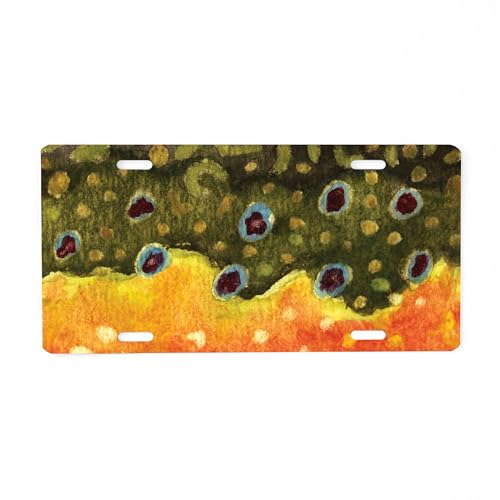
Express yourself with the front license plate design that fits your sense of humor, political views, or promotes your cause and beliefs.

This Largemouth Bass fishing license plate features a black background with silver design elements. Choose with our without the American flag faded into the background!
Purchase Options Available
- Online: Purchase through the official DECALS system linked from the DEC Automated Licensing System page. You can choose email delivery and print the license at home.
- By phone: Call 1-866-933-2257. A $2 charge may apply if you request printing and mailing rather than email delivery.
- In person: Visit an authorized License Issuing Agent. Agents may include town clerks, sporting-goods stores, tackle shops, and some large retailers. An agent may charge a $1 print fee.
Check the effective dates, spelling of your name, date of birth, address, and residency status before completing the transaction. Errors can make a license invalid and should be reported to DEC License Sales promptly.
Required Documentation Needed
Have your legal name, date of birth, address, and identification information ready. Returning customers should use their existing DEC customer account rather than creating duplicate profiles.
Residents may need accepted proof showing a valid New York address and the required period of residency. Examples include a New York driver’s license, non-driver ID, vehicle registration, voter registration, qualifying tax or employment records, military orders, or a current lease.
Note: Keep proof of licensure available while fishing. New York anglers may use a printed copy, electronic proof through the HuntFishNY app, or their 12-digit DEC ID when asked to prove that they hold a valid license.
License Requirements for Freshwater Fishing
A freshwater fishing license is generally required for anglers age 16 or older who take freshwater fish by legal methods. It is also required for taking frogs by specified methods and collecting freshwater baitfish for personal use.
The license requirement applies to activities that can include angling, tip-ups, spearing, hooking, or longbow fishing where the chosen method is legal. It does not authorize every method in every location. Review the general freshwater fishing regulations, baitfish rules, and special regulations before using anything other than ordinary rod-and-line angling.
Your license also does not provide unrestricted access to land or water. You must obtain the landowner’s permission before crossing or fishing from private property. Certain public areas, including some New York City watershed lands and Long Island state lands, may require separate access permits.
Freshwater License Versus Saltwater Registration
The seven-day license applies to freshwater fishing. Anglers age 16 or older generally must enroll in the no-fee marine registry when fishing for saltwater species in New York’s Marine and Coastal District or for specified migratory fish of the sea in certain tidal rivers.
Examples of migratory fish of the sea include striped bass, American eel, American shad, hickory shad, and anadromous river herring. Depending on the location and species, freshwater regulations, saltwater regulations, or both sets of water-specific rules may be relevant.
Anglers targeting sharks or tuna may also need federal permits. Check the current New York recreational saltwater regulations before each trip because marine seasons and limits can change during the year.
Exemptions From Freshwater Licensing
Children age 15 or younger do not need a New York freshwater fishing license. DEC also publishes several limited exemptions for older anglers.
A freshwater license may not be required when you are:
- Fishing on a licensed fishing preserve.
- Fishing during a designated New York Free Fishing Day.
- Participating in an approved free learn-to-fish clinic.
- A resident landowner primarily engaged in farming, a qualifying lessee, or an immediate family member fishing on occupied and cultivated farmland.
- A farm fish pond license holder or qualifying immediate family member fishing in waters covered by that license.
- A Native American living and fishing on reservation land.
- A patient residing at a qualifying United States Veterans Administration hospital or facility in New York.
Exemptions are narrow and do not necessarily remove seasons, catch limits, method restrictions, or access rules. Check the current DEC exemption page before relying on an exemption.
2026 Free Fishing Days
New York waived the freshwater fishing-license requirement on six days in 2026:
- February 14 and 15, 2026
- June 27 and 28, 2026
- September 26, 2026
- November 11, 2026
Residents and visitors can fish New York freshwaters without a license on those dates. All other seasons, size limits, daily limits, access rules, and fishing regulations remain in effect.
Benefits of Choosing a 7-Day License
The seven-day license balances price and flexibility for anglers who expect to fish more than once during a short stay.
- Lower cost than several one-day licenses: Three resident one-day licenses cost $15, compared with $12 for the seven-day option. Three nonresident one-day licenses cost $30, compared with $28.
- Short commitment: You do not have to pay for an annual license when your plans involve only one week of freshwater fishing.
- Broad freshwater use: The license can be used in many New York freshwaters, subject to local access and fishing regulations.
- Convenient purchasing: Online, telephone, and in-person options are available.
- Electronic access: Email delivery and the HuntFishNY app reduce the need to wait for a mailed paper copy.
The seven-day license provides the same general freshwater licensing function as an annual license during its shorter term. It does not remove species rules, method restrictions, special-water regulations, access permits, or landowner-permission requirements.
Fishing Regulations to Know
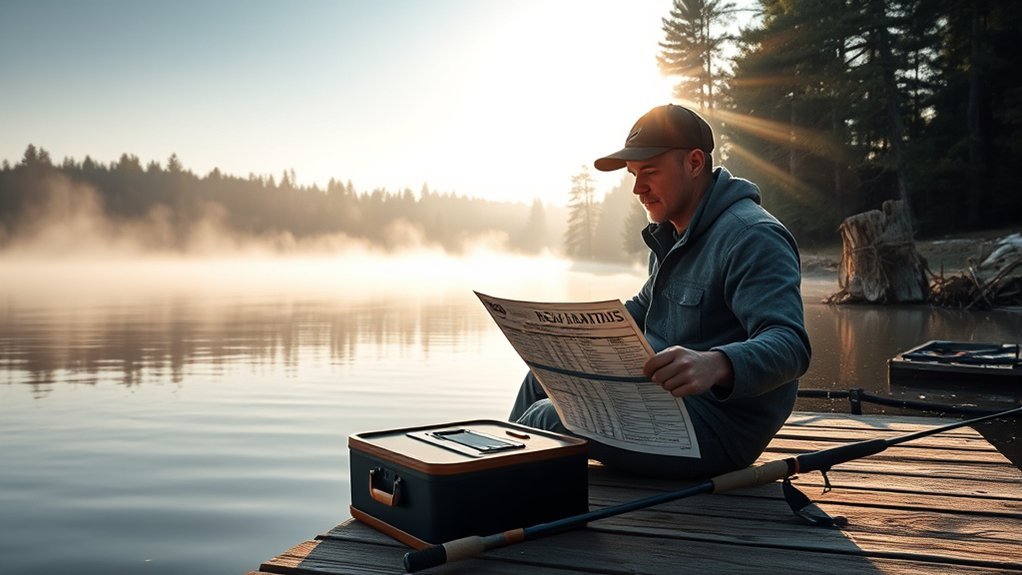
Buying a license is only one part of fishing legally. New York’s 2026 Freshwater Fishing Regulations include statewide seasons, minimum sizes, daily limits, method restrictions, and special rules for particular waters.
License Types and Duration Overview
Choose a one-day, seven-day, or annual freshwater license based on how often you expect to fish. The annual license is valid for 365 days from purchase or renewal. Check the dates printed in your DECALS account or proof of licensure so you know when a short-term license begins and ends.
The license belongs only to the named holder. It cannot be transferred or shared. Check your name, identifying details, license type, and residency status as soon as the transaction is completed.
Statewide and Special Fishing Rules
Statewide rules provide a starting point, but exceptions apply to many waters. Separate regulations cover inland trout streams, the Great Lakes and tributaries, Finger Lakes tributaries, the tidal Hudson River, border waters, and individual regions and counties.
Before fishing, confirm:
- The open season for the species you intend to target.
- The minimum legal length and daily possession limit.
- Whether catch-and-release fishing is allowed during a particular period.
- Which bait, hooks, lures, nets, traps, spears, or other methods are legal.
- Whether the water has a special regulation that differs from the statewide rule.
- Whether a local access permit or landowner’s permission is required.
Warning: A closed season can prohibit intentionally fishing for a species, including catch-and-release fishing. A fish caught unintentionally during a closed season must be released immediately and may not be handled for photographs or other purposes.
Border-Water License Rules
A New York license does not automatically authorize fishing in every neighboring state, province, or portion of a border water.
- A New York license does not cover the Canadian portion of Lake Ontario, Lake Erie, the St. Lawrence River, or the Niagara River.
- Lake Champlain has specific reciprocal-license boundaries that anglers should review on DEC’s map.
- A New York license is recognized on the boundary section of the Delaware River and West Branch Delaware River.
- Reciprocity on Greenwood Lake and Indian Lake is limited to fishing from a boat or through the ice.
Check the exact boundary, launch location, and neighboring jurisdiction’s rules before crossing a state or international line.
Fish-Consumption Advice
Legal-size fish are not automatically suitable for unlimited consumption. Mercury, PCBs, PFOS, and other contaminants can produce different health advice depending on the waterbody, species, fish size, and person eating the fish.
Review the New York State Department of Health fish advisories before keeping fish for food. People who can become pregnant and children younger than 15 should follow the more protective sensitive-population guidance.
Plan Your Fishing Trip: Tips and Resources
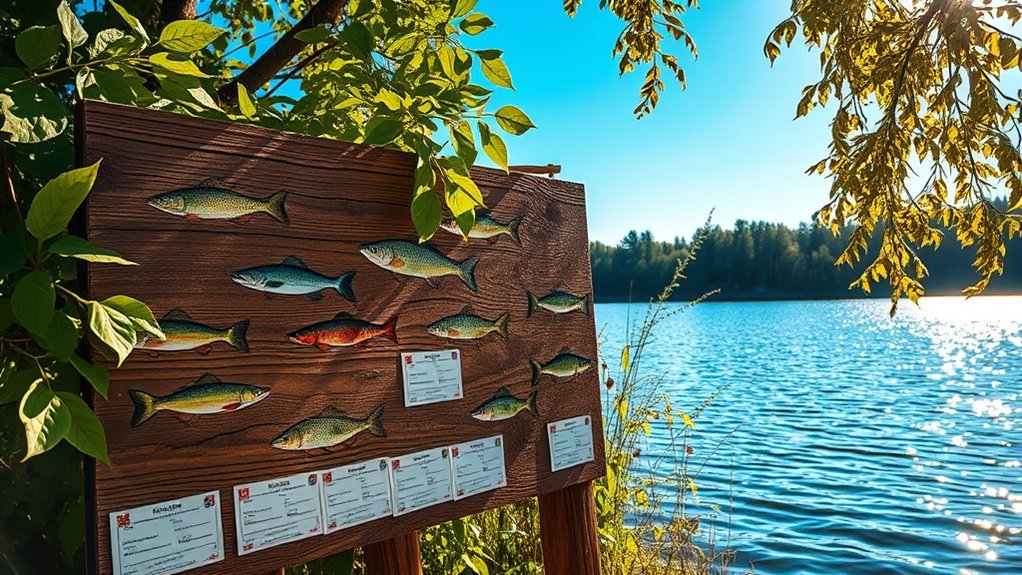
Start by deciding whether your destination is freshwater, marine water, or a tidal area where migratory species rules apply. Purchase the correct license or complete the required marine registration before fishing.
Use this checklist before leaving:
- Confirm your credential: Make sure the license or registration covers the water and species you plan to fish.
- Check the dates: Verify that your seven-day license is active for every planned fishing day.
- Review the current rules: Check statewide and special-water seasons, sizes, daily limits, bait restrictions, and legal methods.
- Confirm access: Obtain any required public access permit and get permission before entering private property.
- Carry proof: Bring a printed license, keep electronic proof in HuntFishNY, or have your DEC ID available.
- Prepare suitable gear: Match your rod, line, hooks, lures, and bait to the target species and local rules.
- Check health advice: Review waterbody-specific guidance before keeping fish to eat.
- Plan for safety: Check weather and water conditions, wear an appropriate personal flotation device when boating, and tell someone where you are going.
Free Fishing Days can be useful for beginners, but they do not suspend ordinary fishing regulations. If you plan to fish beyond the designated free date, buy the correct license before continuing.
Frequently Asked Questions
Can I fish in saltwater with a New York 7-day fishing license?
No. The seven-day license is a freshwater fishing license. Anglers age 16 or older fishing for saltwater species or specified migratory fish generally need New York’s separate Recreational Marine Fishing Registry. The registry has no registration fee and is valid for 365 days.
What is the minimum age for a New York fishing license?
A freshwater fishing license is generally required beginning at age 16. Children age 15 or younger can fish without a freshwater license, although seasons, limits, access rules, and other fishing regulations still apply.
Can I use the license at multiple fishing locations?
Yes. A valid seven-day license can be used at many New York freshwater locations during its term. Special-water regulations, access permits, private-property restrictions, and border-water limitations may differ by location.
Is an unused 7-day fishing license refundable?
Do not assume that an unused short-term license will be refunded. Review the license type, residency status, and effective dates before completing the purchase. Contact DEC License Sales promptly if the transaction contains an error.
Do I need a separate fishing-rod license?
No. New York does not require a separate license simply for the rod. The freshwater fishing license covers the licensed angler, but the angler must still follow restrictions on fishing methods, number of lines, hooks, bait, species, and waterbody.
Can I show my fishing license on my phone?
Yes. Anglers may provide electronic proof through the HuntFishNY app. A printed plain-paper copy is also acceptable, and an angler may provide the 12-digit DEC ID associated with the valid license.
How does New York determine resident license eligibility?
Resident sporting-license pricing generally requires a fixed, permanent New York home for more than 30 days. Owning property alone is not enough. Qualifying full-time New York college students and certain military personnel may be eligible for resident rates under separate rules.
Conclusion
A New York 7-day freshwater fishing license offers a useful middle ground between a one-day permit and an annual license. The current fee is $12 for residents and $28 for nonresidents, and the license can be purchased online, by phone, or through an authorized agent.
Before fishing, confirm that the credential matches the water and species you intend to target. Saltwater anglers generally need the separate no-fee marine registry, while freshwater anglers must follow the current statewide and special-water regulations. Check access requirements, keep acceptable proof of licensure available, and review fish-consumption advice when you plan to keep your catch.
Sources
- New York State DEC: Fishing Licenses — official fees, age requirements, exemptions, and border-water rules.
- New York State DEC: General Sporting License Information — residency qualifications, print fees, and license-holder responsibilities.
- New York State DEC: 2026 Freshwater Fishing Regulations — current seasons, catch limits, and special-water rules.
- New York State DEC: Recreational Marine Fishing Registry — saltwater registration requirements, fees, and validity.
- New York State DEC: 2026 Free Fishing Days — official dates when the freshwater license requirement is waived.
- New York State Department of Health: Fish-Consumption Advisories — waterbody, species, and population-specific guidance for eating caught fish.
