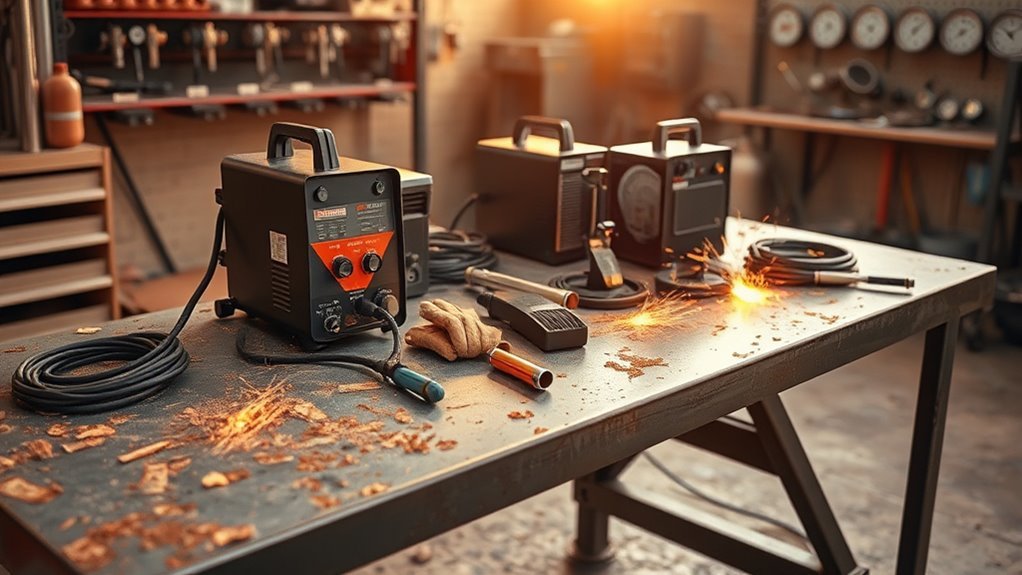
Welding machine cost runs from about $100 to well over $10,000, depending on the process, duty cycle, and how much production you need. These are approximate ranges, not quotes from a single price list. Entry-level stick welders start near $100–$300; MIG units are commonly $300–$1,000 for hobby to shop use and climb above $1,000 for industrial models. TIG machines begin around $500 and can exceed $5,000 for precision AC/DC units. Factor consumables, PPE, calibration and maintenance into the real total cost, and keep reading for a clear breakdown of every category plus long-term ownership tips.
Welding Machine Cost Snapshot and Key Takeaways
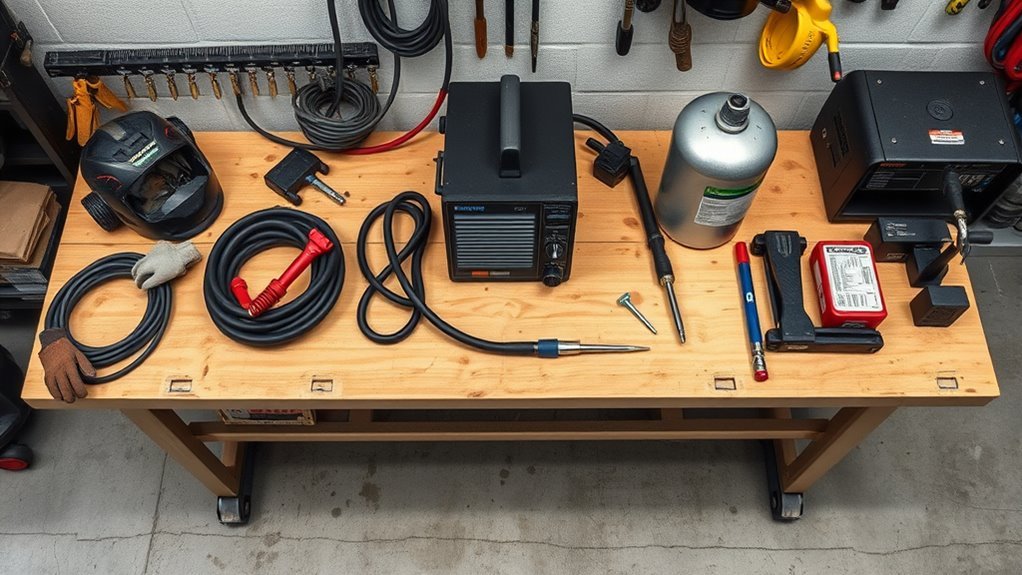
One smart way to handle welding equipment costs is to match the machine class to your actual work and budget. MIG units typically run $300–$1,000 for entry-level models and rise above $1,000 for industrial-grade machines; basic TIG units start near $500 and scale to $5,000+ for precision systems; stick welders run $100–$1,000 and offer the lowest entry cost; and multiprocess systems span roughly $1,000 to over $10,000 depending on capabilities.
Always figure your total ownership cost: add consumables, calibration, and scheduled maintenance. Pick gear with the right certifications, solid controls, and a duty cycle that matches your jobs to stay safe and avoid overbuying. Budget extra for training, PPE, and a simple preventive plan — it keeps you compliant and cuts long-term expenses.
Overview of Welding Machine Categories
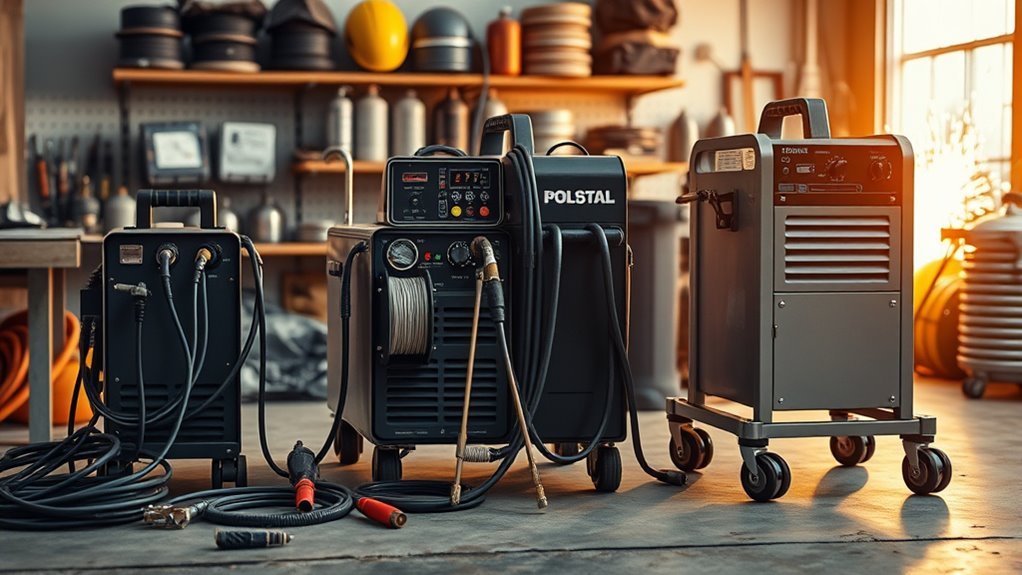
Every welding job needs the right power, duty cycle, and electrode control, so the industry groups machines into five main categories: engine-driven, MIG, TIG, stick, and multi-process. This makes it easy to match the tool to your material, position, and work environment.
You’ll pick by task: engine-driven for remote high-output jobs, MIG for fast production and fabrication, TIG for clean precision on thin stock, stick for tough outdoor work on a budget, and multi-process when you want one machine that does it all. Look at duty cycle, input power, shielding gas, and how portable it needs to be. The price bands below help with buying decisions and long-term planning.
Consider duty cycle, input power, shielding method and portability—use price bands to guide procurement and lifecycle planning.
- Engine-driven: mobile, high kVA
- MIG: fast, suited to steel/aluminum
- TIG: precise, clean welds
- Stick: simple, economical
- Multi-process: adaptable, premium cost
Detailed Cost Breakdown: MIG Welders
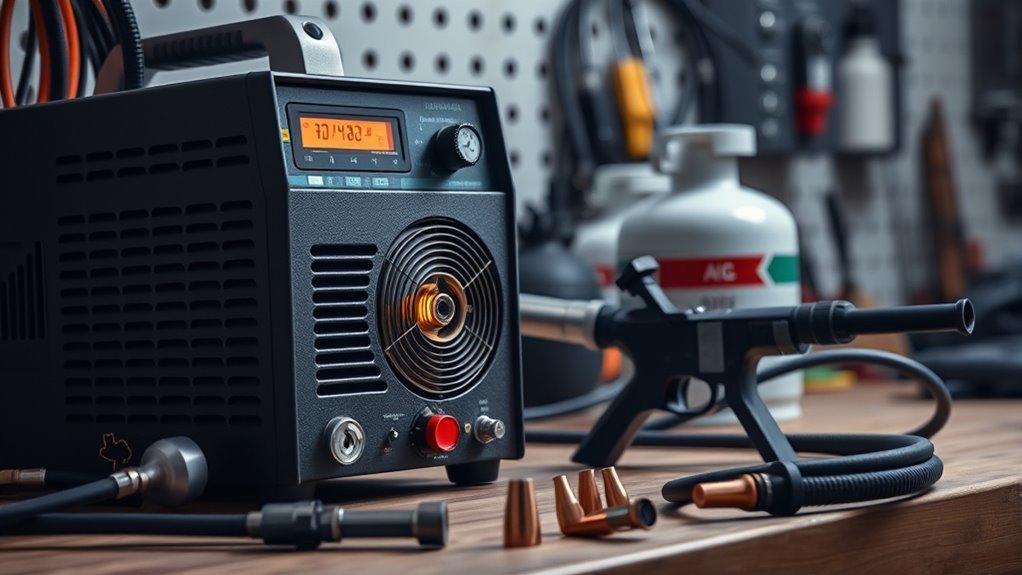
Entry-level MIG welders start around $300 and work fine for light shop jobs or weekend projects. For a deeper breakdown, see our MIG welding equipment cost guide.
Mid-range models ($600–$1,000) add better duty cycles, energy efficiency, and digital controls so you can dial in exact settings.
Industrial and specialty units run above $1,000 — often $2,000 or more — because they deliver higher output, better cooling, and full safety certifications.
Entry-Level Price Range
Entry-level MIG welders start around $300 and give hobbyists and light contractors solid basic performance.
These machines meet everyday standards and handle steel plus light aluminum. When shopping, check duty cycle, spool-gun compatibility, and simple controls. Most have a compact body, easy wire feed, front-panel dials, basic gas hookup, and a tough frame you can move around the shop or job site.
Some tougher entry models reach about $1,000 and save money on repairs down the road.
Mid-Range Performance Features
Mid-range MIG welders ($500–$1,000) give you reliable performance without the big price tag. They weld steel, aluminum, and stainless, come with adjustable controls, gas solenoids, and spool-gun ready setups. Brands like Hobart and Miller are common choices, so compare their current warranties and support — perfect for automotive, home, or light fab work.
Pick one that matches your needed amperage and duty cycle, then double-check consumables and service parts. A quick comparison table helps:
| Feature | Typical Spec | Benefit |
|---|---|---|
| Price | $500–$1,000 | Cost-performance balance |
| Materials | Fe/Al/SS | Versatility |
| Features | Adjustable/Gas/Spool | Improved control |
| Brands | Hobart/Miller | Support |
Industrial and Specialty Costs
Industrial MIG welders cost over $1,000 because they run all day with certified parts and steady weld settings. The $300–$1,000 range still covers most hobby and light fab needs.
For specialty materials or strict environments, pay extra for rugged cabinets, cooling systems, diagnostic readouts, traceable consumables, and modular power sections. It cuts downtime and keeps everything compliant.
- rugged cabinet and cooling systems
- certified wire feed and drive assemblies
- integrated diagnostics and logging
- consumable traceability for specialty materials
- replaceable modular power modules
Detailed Cost Breakdown: TIG Welders
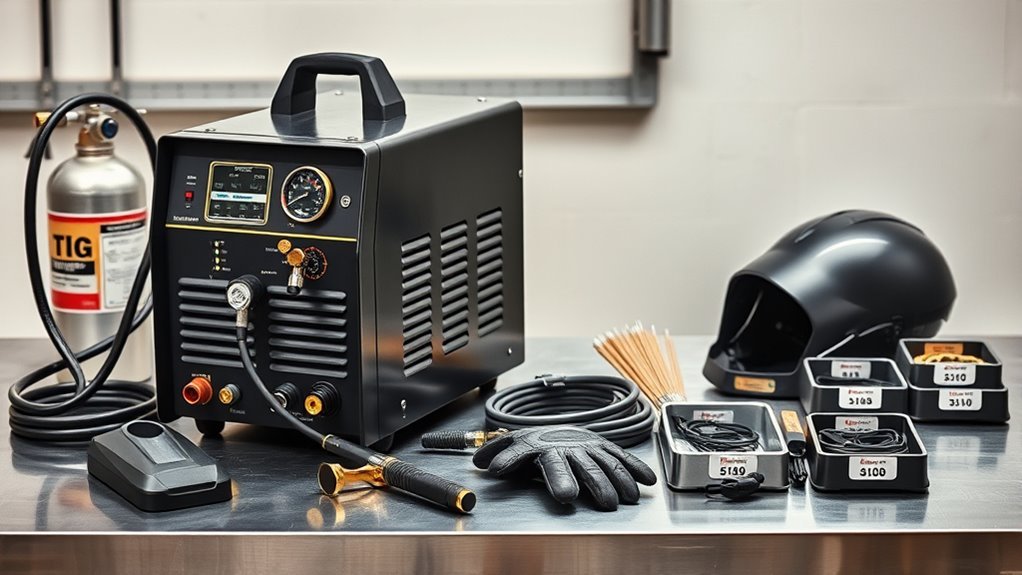
TIG welders usually start between $500 and $2,500 for base models, while top precision units easily top $5,000. The price jump comes from better power control, AC/DC switching, pulse features, and digital screens.
Choose based on duty cycle, AC/DC capability, and waveform options — especially for thin aluminum, stainless repairs, or aerospace work.
Remember ongoing costs: tungsten electrodes, gas, back caps, and regular maintenance. Always calculate total ownership cost before you buy. For TIG-specific prices, see our TIG welding machine cost guide.
Detailed Cost Breakdown: Stick Welders
Stick welders range from about $100 for basic units to nearly $1,000 for heavy-duty models. Check the duty cycle and input power before you decide.
Compare amperage output, case strength, and arc features against your projects. Add in electrode costs, chipping tools, and higher consumption on dirty or thick material.
Price Range Overview
Stick welders cost $100 to $1,000 overall. Entry models ($100–$300) suit learning and quick repairs. Mid-range ($300–$700) add stability and better duty cycle. High-end ($700–$1,000) handle frequent heavy work.
- A basic unit in a garage setting, portable and simple
- A mid-range shop unit with improved duty cycle and thermal protection
- A weather-tolerant model for outdoor site work on thick steel
- A high-durability unit built for continuous heavy-duty operation
- Brand-focused premium models with verified component standards
Features vs. Cost
Match features to price tiers so you buy exactly what you need. Basic control and portability cost $100–$300. Better duty cycle and toughness run $300–$700. High output and rugged build hit $700–$1,000.
| Feature | Typical Cost Tier |
|---|---|
| Basic control, portability | ~$100–$300 |
| Improved duty cycle, durability | ~$300–$700 |
| High output, rugged build | ~$700–$1,000 |
Pick the tier that fits your material thickness and site conditions to get the best value over time.
Operating & Consumables
Operating costs for a stick welder include electrodes, electricity, cleaning tools, and PPE; see our welding electrode cost guide for current electrode prices. Keep electrodes dry, clean your holder regularly, and store everything properly to stretch the machine’s life.
- spool or box of electrodes ready at the bench
- power meter tracking per-weld kWh
- tool-cleaning kit for electrode holders
- storage cabinet to prevent corrosion
- certified welding gloves and jacket
Detailed Cost Breakdown: Multiprocess and Engine‑Driven Welders
Multiprocess welders run from about $1,000 to $10,000+ because they handle MIG, TIG, stick, and plasma in one box. The higher price pays off with faster job changes and advanced controls.
Engine-driven models shine in the field. Dealer prices vary and change often: Cyberweld listed the Lincoln Ranger 225 (K2857-1) at $6,399.00 when this article was updated, with a manufacturer price of $6,917.99 shown on the same page, and the larger Ranger 330MPX costs more — both deliver welding power plus generator output. Features like CrossLinc raise the cost but make site work smoother. Match duty cycle and controls to your mix of jobs for the best return.
Accessories, Consumables, and Safety Gear Costs
Plan for PPE, consumables, and maintenance supplies right from the start. Good gloves, helmets, and fire-resistant clothing keep you safe and meet code. Wire, tips, nozzles, and electrodes are recurring expenses that affect every weld.
Personal Protective Equipment
When you set up a welding station, choose certified personal protective equipment that meets relevant OSHA safety standards and still fits your budget.
Key items include an auto-darkening helmet, cowhide gloves, FR jackets or sleeves, safety glasses, and hearing protection. Prices vary widely by brand and rating, so see our welding helmet cost guide for helmet pricing. Inspect everything regularly and replace worn pieces to stay compliant.
- Auto-darkening helmet (advanced optical filters)
- Cowhide welding gloves
- Fire-resistant jacket or sleeves
- Safety glasses
- Earmuffs
Consumables and Replaceables
Consumables directly hit weld quality and uptime. Good MIG wire or stick electrodes cost more upfront but cut rework. Track usage, buy from approved suppliers, and budget for regular glove and helmet replacement.
Tools and Maintenance Supplies
List every accessory and supply with its cost so you can forecast spending. Purge chambers, small pads, and other accessories add to the total, wire and electrodes vary by spool, and cleaning kits follow manufacturer hours.
- Purge chamber / foot control: price varies by model
- Backhand pads and simple accessories: small items that add up
- Welding wire / electrodes: cost per lb/spool varies by alloy
- PPE: glasses, FR jackets, gloves, and helmets (see the PPE section above)
- Cleaning systems & replacement parts: schedule per hours operated
Factors That Drive Welding Equipment Prices
Power output, controls, brand reputation, and operating costs all push the final price. Higher amperage and duty cycle cost more but let you weld thicker material longer. Digital features and automation add dollars because they improve consistency.
Established brands charge a premium for proven reliability and documented compliance with industry standards from the American Welding Society. Factor in consumables, maintenance, and training — they often save money over the life of the machine. Watch market demand so you buy at the right time and avoid overspecifying.
Buying New vs. Used: Cost, Risks, and Savings
New machines bring fresh tech, full warranties, and lower first-year maintenance. Used units often cost less but may need inspection and carry hidden wear. Weigh total operating cost and compliance risk before you decide. A refurbished machine inspected to current standards often sits in the sweet spot. For used-machine prices and red flags, see our used welding machines cost guide.
- A new MIG unit with digital controls and warranty
- A used MIG offering immediate savings but uncertain history
- Industrial new models exceeding $1,000 with advanced features
- A refurbished unit inspected to standards, bridging cost and reliability
- Ongoing maintenance scenarios comparing repair frequency and cost
Budgeting for Long‑Term Ownership and Operating Expenses
The sticker price is only the start. Add annual maintenance, consumable usage based on hours, and electricity costs using the machine’s efficiency rating. Quality gear that uses less power often pays for itself. Write down your assumptions and review the budget every year.
Frequently Asked Questions
How Long Do Welders Typically Last With Regular Maintenance?
With regular maintenance, many welders last a decade or more, though lifespan varies. Duty cycle, shop environment, part wear, and daily hours all affect lifespan. Good care keeps performance steady and meets safety rules.
Can I Get Financing or Rent-To-Own Welding Equipment?
Yes — financing and rent-to-own options exist. Check interest rates, maintenance clauses, warranty length, and safety compliance before you sign.
Are Training or Certification Costs Included in Equipment Budgets?
No, training and certification are separate line items. Budget for classes, exam fees, travel, and renewals according to the standards you follow.
How Do Local Electricity Rates Affect Operating Costs?
Local rates change hourly costs. Calculate kWh per weld, apply your tariff, and compare machines so you pick the most efficient one for your shifts.
What Warranties and Service Plans Are Commonly Offered?
Warranties range from limited to extended or lifetime. Service plans often include on-site repair, preventive visits, and loaner machines with clear response times and documentation.
Conclusion
You now have solid price ranges for MIG, TIG, and stick machines plus the real costs of consumables, safety gear, and upkeep. Buy equipment that meets code, matches your duty cycle, and delivers the amperage you need. Used gear can save money but brings extra inspection work. Budget for everything over the machine’s life — one bad weld can ruin a job, so go with proven, reliable equipment every time.