

Youth fishing license costs are low and age‑specific: in Florida residents ages 8–15 pay $17 for saltwater or freshwater licenses that stay valid until their 17th birthday, while many states set youth rates around $10–$20 and often exempt anglers under 16. Nonresident youth fees vary and short‑term options exist. Species endorsements (snook, lobster) can add small fees. Check local rules and carry ID and digital proof, and keep going to see exact state comparisons and buying steps.
What Is a Youth Fishing License and Who Qualifies
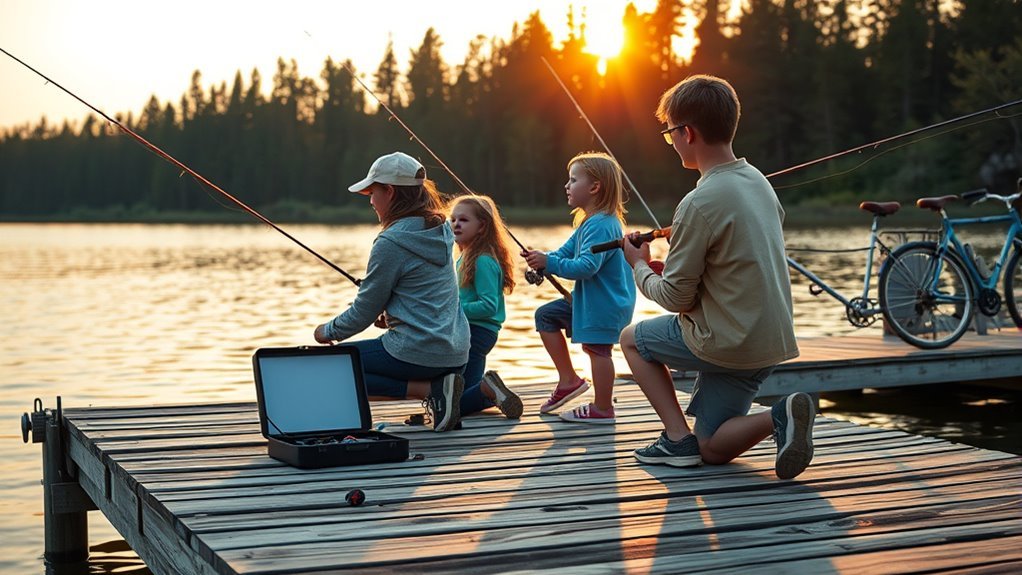
A Youth Fishing License is an optional, age‑specific permit that lets young anglers legally fish in Florida waters; it’s available to kids aged 8 through 15 and stays valid until their 17th birthday.
You’ll find this license bridges recreational access and regulatory compliance: although Florida exempts youth under 16 from needing a fishing license, obtaining the youth license gives explicit documentation of permissions and clarifies fishing zones and bag limits under youth fishing regulations.
The youth license bridges recreation and regulation—giving clear proof of fishing permissions, zones, and bag limits for young anglers
For $17 you can get a Resident Youth Saltwater Fishing License, enabling lawful saltwater angling; comparable freshwater options exist depending on the license type.
From field experience, carrying the permit reduces enforcement friction and helps you understand species-specific seasons and size limits.
If you complete hunter education, you may also qualify for a Resident Youth Gold Sportsmans License ($100) that bundles broader hunting privileges with angling.
Weigh the fishing license benefits against exemption rules to choose the right credential for your situation.
Age Ranges and Validity Periods for Junior Permits
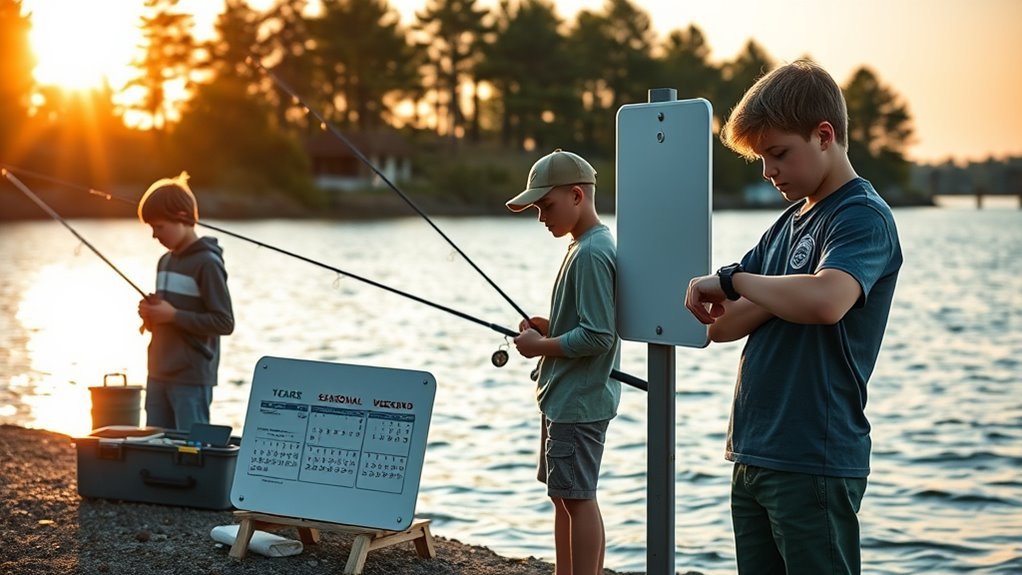
You’ll see that age brackets for junior permits are precise: Florida’s resident youth saltwater and freshwater licenses cover ages 8–15 and cost $17.00 each.
Both permits remain valid until the holder’s 17th birthday, which creates a clear, uniform validity span for field enforcement and record-keeping.
Given that residents under 16 are generally exempt from licensing, these junior permits mainly formalize participation and responsibility for anglers up to 15.
Age Brackets Explained
Because Florida ties youth permits to specific age cutoffs, it’s important you know the exact ranges and validity periods: resident youth saltwater and freshwater licenses cover ages 8–15 and remain valid until the holder’s 17th birthday, each costing $17.00, while anyone under 16 is generally exempt from needing a license.
You should treat these brackets as regulatory boundaries: ages 8–15 require the affordable $17 youth permit for legal fishing, and exemptions apply for many younger anglers, which supports youth participation and highlights clear fishing benefits for families.
In practice, you’ll verify birthdates when registering or inspecting, keep documentation accessible, and plan around the fixed validity end date (17th birthday) to avoid fines or confusion during enforcement.
Permit Validity Spans
When confirming permit validity spans, note that Florida’s resident youth saltwater and freshwater licenses cost $17 and remain valid only until the holder’s 17th birthday.
This means anyone aged 8–15 can opt for the youth permit while anglers under 16 are generally exempt from licensing. You’ll treat the permit duration as age-tied: purchase grants legal access to both salt and freshwater until age 17, after which standard adult licensing and relevant fishing regulations apply.
In practice, that means training youth anglers on size, bag, and seasonal rules without immediate adult-license burden. You should document birthdates at sale, counsel families about change timing, and track renewal needs so compliance aligns with regulatory windows and avoids inadvertent violations once a junior angler turns 17.
Typical Costs by State and How Pricing Varies
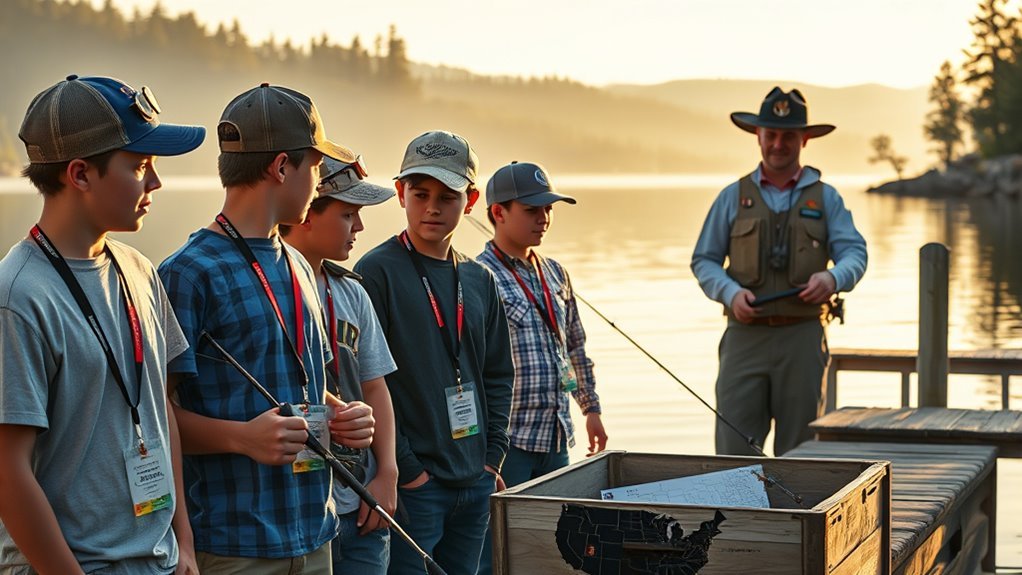
Although prices vary widely by jurisdiction, most states keep youth fishing licenses inexpensive to promote early participation, with fees commonly ranging from free or nominal ($1–$10) up to about $17–$20 for multi-year or specialty permits.
Youth fishing licenses are typically inexpensive—often free or $1–$10, up to about $17–$20 for special permits.
You’ll see clear cost comparisons when you survey state regulations: Texas and several others waive fees for anglers under 17, while California lists a typical youth license at $14.00.
Florida’s resident youth saltwater license is $17.00 and stays valid until the angler’s 17th birthday, reflecting a multi-year approach tied to age.
You should expect variability driven by policy goals—some agencies use free or nominal pricing to boost recruitment, others charge modest fees to cover administration or specialty access.
When planning, check the specific state fish-and-wildlife site for current rates and eligibility rules; those regulatory pages give the precise fee structure, age cutoffs, and permit durations you’ll need to budget and comply with local requirements.
Products Worth Considering

Premium Quality: Our rugged license holder is made from durable water-resistant synthetic leather, ready for harsh hunting and fishing conditions. Soft to the touch and more comfortable to wear than the typical hard plastic feel of cheaper options. This license holder is made to last

Enough to Use: you will receive 6 pieces of fishing license holders, and 6 pieces of safety pins, abundant in quantity, enough for you to choose and replace, can meet your different needs; You can also share them with your friends

Resident Vs Nonresident Youth License Fees
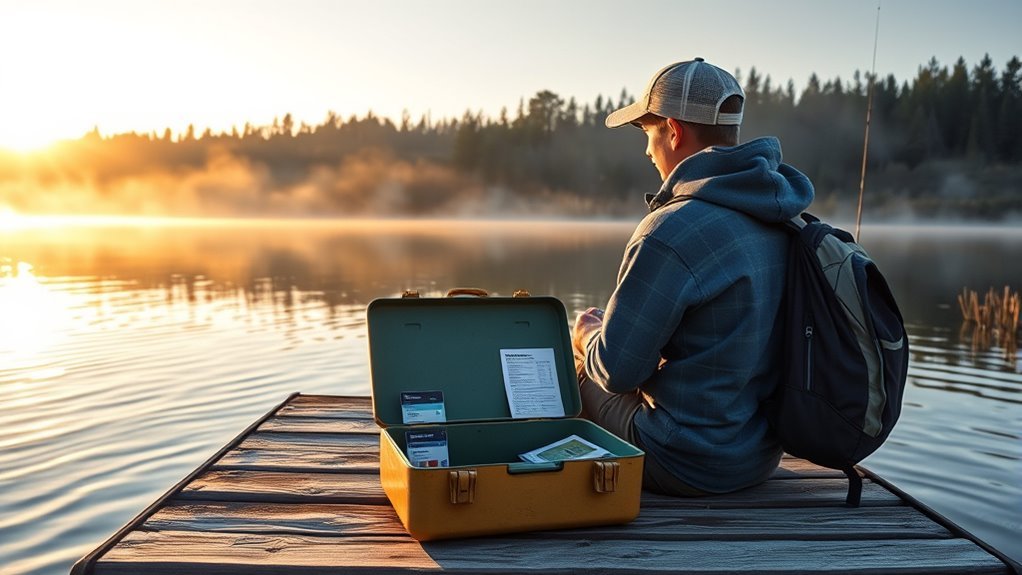
When you compare resident and nonresident youth fees, Florida sets a clear benchmark: the Resident Youth Saltwater Fishing License is $17.00 and stays valid until the holder turns 17.
Nonresident youth rates aren’t itemized in state materials, though nonresident annual freshwater licenses typically start around $47.00.
Remember that youths under 16 (and residents 65+) are exempt, which affects who actually needs to purchase a license.
Products Worth Considering

FISHING LICENSE HOLDER W/ZIP CLOSURE

Fishing Guide for Anglers – A must for avid fishermen in Florida. This fish chart features more than 90 fish and shark’s native to Atlantic waters and boasts rules, regulations, limits, and sizes to ensure a fun and legal catch.

INSTANT FISH IDENTIFICATION. 60 commonly caught Florida saltwater species PLUS 17 shark species shown in true-to-life color photographs not illustrations. Covers inshore, nearshore, and offshore species from both the Gulf and Atlantic coasts. No squinting at phone screens in bright sunlight. Perfect for all skill levels. Great educational tool for classrooms and marine biology enthusiasts too.
Resident Youth Rates
1 clear distinction you should note is cost and residency: Florida charges residents $17 for both the youth saltwater and freshwater licenses, valid until the holder’s 17th birthday, while nonresident youth rates aren’t listed separately and nonresident annual freshwater licenses run $47, so nonresidents often face higher or differently structured fees; also remember kids under 16 are exempt from any license requirement.
As a resident youth angler, you’ll find consistent $17 pricing simplifies compliance and budgeting. These resident youth licenses grant specific freshwater or saltwater privileges until age 17, so check gear and area rules against current fishing regulations.
From field experience, carrying proof of residency and age prevents citations; verify renewals and exemptions before you fish.
Nonresident Youth Fees
Having covered resident youth rates, you should also compare what nonresident young anglers face: Nonresident youth don’t get a special youth fee; you must buy the standard Non-Resident Fishing License at $47.00 annually or choose nonresident options for short visits. Field experience shows the Resident Youth Saltwater License ($17.00) is more economical for locals, while nonresidents often rely on temporary licenses for brief trips.
| Option | Cost |
|---|---|
| Annual Non-Resident | $47.00 |
| 3-day Non-Resident | $17.00 |
Regulatory awareness: youth under 16 are exempt, but if you’re older or visiting, weigh annual vs 3- or 7-day temporary licenses ($30.00 for 7-day) for cost-effective access.
Validity and Exemptions
Because Florida law exempts anglers under 16 from needing a saltwater license, you’ll only need the $17 Resident Youth Saltwater License if you want coverage through your 17th birthday or if you’re a resident aged 16, while nonresidents generally must buy the standard nonresident options (annual or short-term) since there’s no special nonresident youth fee—so check residency and age before choosing annual versus 3- or 7-day permits to avoid unnecessary cost.
You’ll get full license benefits with a youth permit; it grants the same access and privileges as adult licenses and supports compliance and fishing education initiatives. Verify residency documentation and expiration dates.
Consider these operational points:
- Confirm age and residency before purchase.
- Compare annual vs. 3-/7-day nonresident rates.
- Factor license benefits into training and compliance.
Combination Licenses and Bundled Youth Options
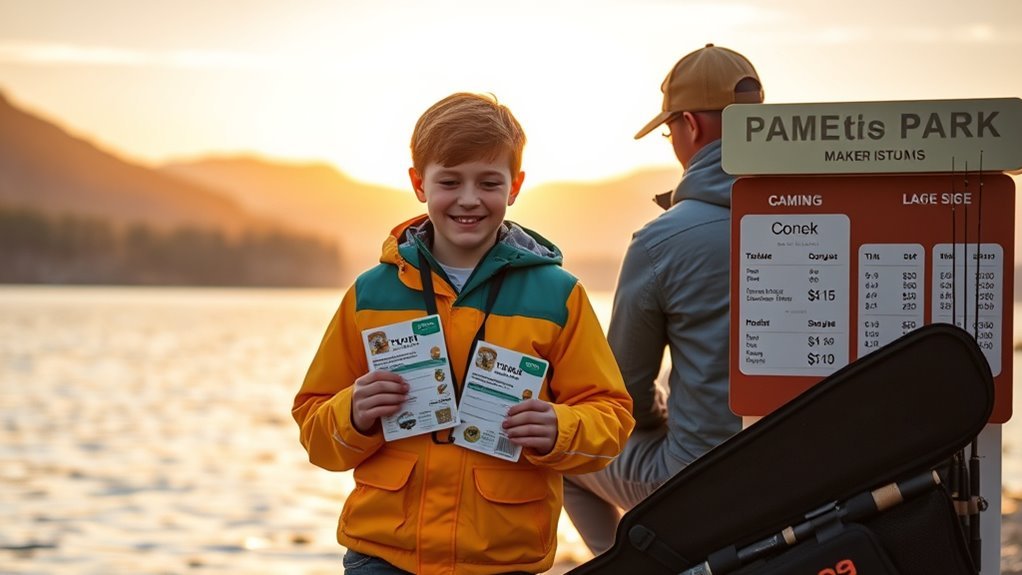
When you’re weighing youth options, combination and bundled licenses often deliver the best value for families who hunt and fish: you’ll want to match cost, coverage, and compliance with youth fishing regulations during the license application process. Data show a Resident Youth Saltwater Fishing License costs $17 and stays valid until the holder’s 17th birthday, while an Annual Resident Freshwater|Saltwater Combination runs $32.50 — nearly double saltwater alone but covering both fisheries. If your family also hunts, the Resident Youth Gold Sportsmans License bundles hunting and freshwater fishing for $100 after completing hunter education, offering broad coverage for multi-activity youth and reducing separate transactions. You’ll appreciate that youth licenses are optional for anglers aged 8–15, letting them fish without an adult-obtained permit in many situations. From a field perspective, combining permits simplifies compliance checks and lowers per-activity cost; from a regulatory view, bundled options reduce administrative overhead and make it easier to document lawful participation across seasons.
Products Worth Considering

Premium Quality: Our rugged license holder is made from durable water-resistant synthetic leather, ready for harsh hunting and fishing conditions. Soft to the touch and more comfortable to wear than the typical hard plastic feel of cheaper options. This license holder is made to last

INTEGRATED PEN - The license holder includes a secure pen, ensuring that hunters have quick and easy access to a writing instrument upon a successful harvest; This feature eliminates the need to search for a pen when you need it most

Enough to Use: you will receive 6 pieces of fishing license holders, and 6 pieces of safety pins, abundant in quantity, enough for you to choose and replace, can meet your different needs; You can also share them with your friends
Where and How to Purchase a Youth Fishing License
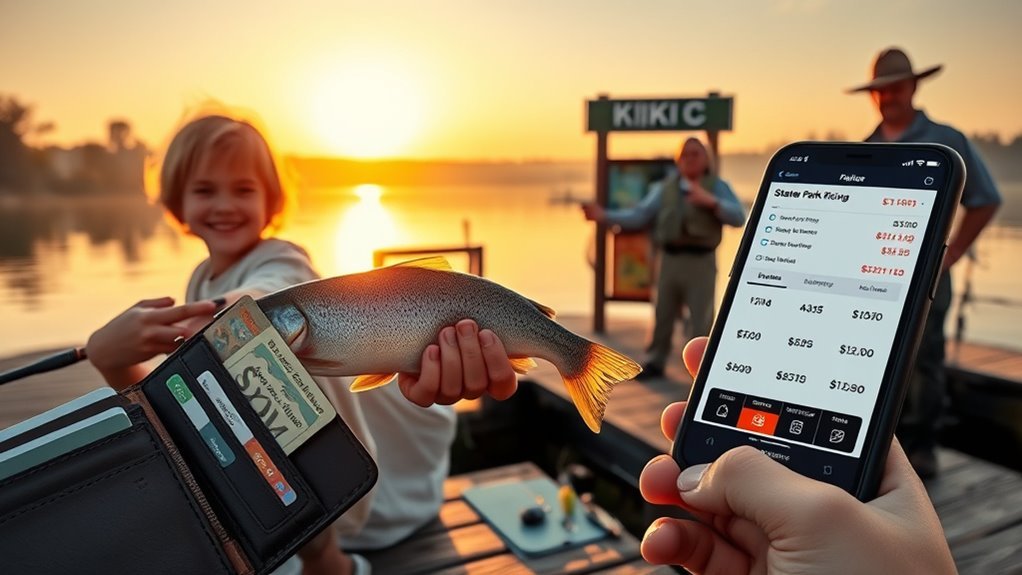
Where do you get a youth fishing license and how fast can you be on the water? You can obtain a Resident Youth Saltwater Fishing License for $17.00, valid until the holder turns 17. If the child is under 16, no license is required.
Resident youth saltwater fishing license is $17 and valid until age 17; kids under 16 don’t need one.
For fast, compliant access use online purchasing or app access to minimize delays.
- Go Outdoors Florida website — complete purchase online purchasing, print or show digital proof.
- Call 888‑FISH‑FLORIDA — phone ordering for those who prefer assistance; processing is immediate.
- FWC Fish‑Hunt‑FL app (iPhone, Android) — instant app access to display and save your youth license.
Field experience shows digital proof is accepted by officers; carry ID matching license details.
Combination packages that include freshwater or hunting reduce overall cost if you need multiple privileges.
Follow state rules: buy the correct resident youth saltwater license and retain proof while fishing to avoid citations.
Products Worth Considering

Material :High-Quality Metal Aluminum With High Gloss Stamped Metal License Plate.Lightweight, Waterproof,Anti-Rust And Very Durable.

Pro-Tip: 2026 Fishing Regulation Alert:As regulations evolve, we are committed to keeping you informed. Please note the following 2026 updates not yet reflected on all printed materials. Gag Grouper: Season,Atlantic - Closed Jan 1–April 30 ;Gulf - Visit MyFWC.com for season updates Red Snapper:Gulf - Visit MyFWC.com for updates Lane Snapper:Visit MyFWC.com for new lane snapper regulations effective April 1, 2026.

Exemptions, Special Rules, and Local Variations
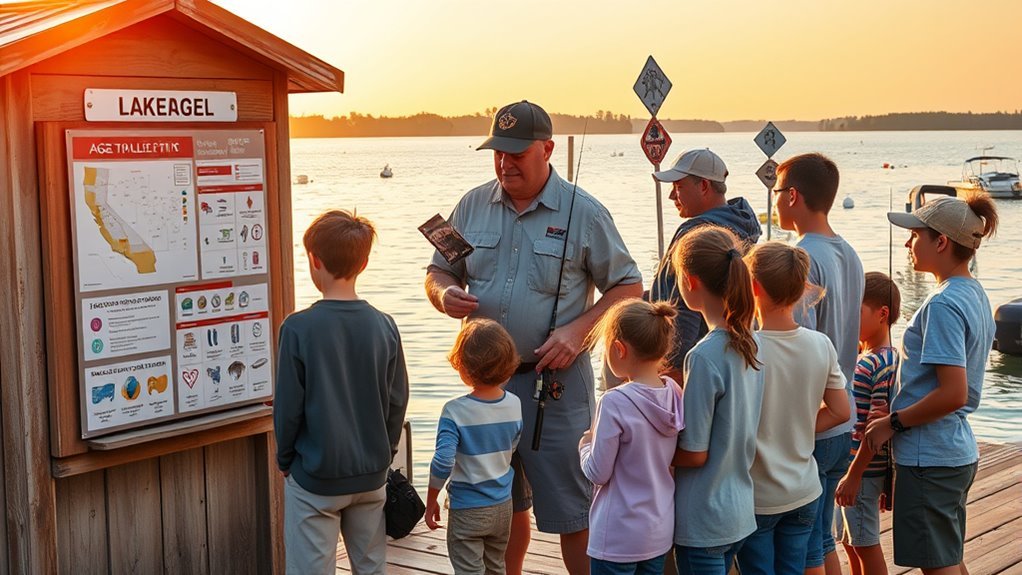
Although most young anglers between 8 and 15 must carry the $17 resident youth saltwater license until they turn 17, several clear exemptions and local rules can change what you actually need to buy and carry.
You should first check exemption criteria: children under 16 generally don’t need a license, so many juniors fish legally without purchase; similarly, residents 65+ are exempt with proof of age and residency.
Operationally, if you’re using live bait in your home county you can use the cane-pole exemption and fish without licensing, but that’s limited to specific gear and location.
If you’re U.S. Armed Forces on short leave (30 days or less), you’re also exempt.
Be aware local jurisdictions may adopt special fishing regulations—seasonal closures, size limits, or gear restrictions—that apply regardless of license status.
Always confirm county and state regulatory notices before you fish to avoid fines and to guarantee compliance with both exemption criteria and any special fishing regulations.
Required Permits Beyond the Youth Fishing License
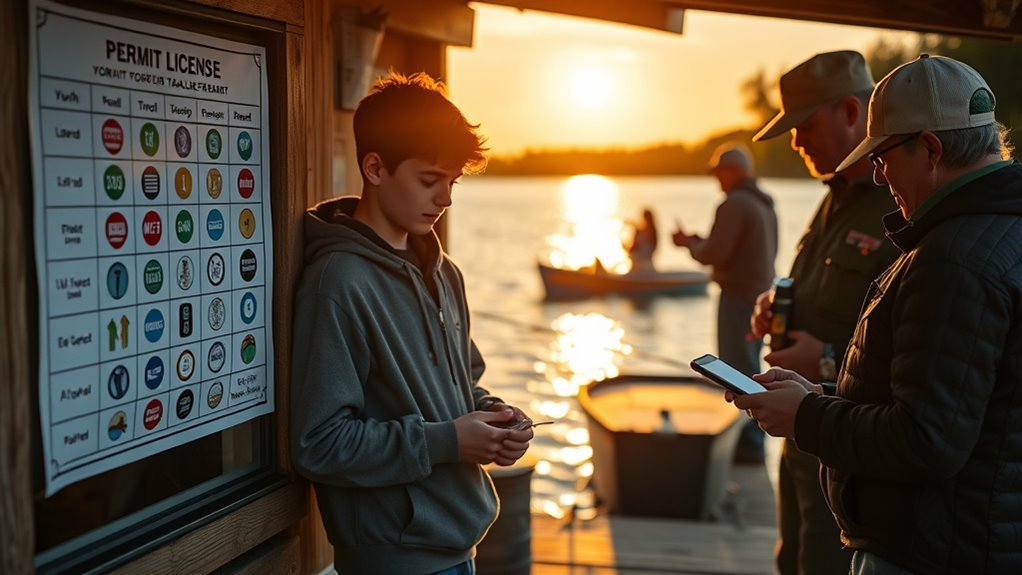
If you plan to target specific species or fish in different waters, know that the $17 resident youth saltwater license doesn’t cover every legal requirement and you may need additional permits.
You’re expected to follow permit requirements and fishing regulations beyond the base license: species-specific permits apply and freshwater versus saltwater licensing differs.
Data shows the resident youth saltwater license is valid until your 17th birthday; however, exemptions may apply for anglers under 16.
Resident youth saltwater licenses remain valid until your 17th birthday; anglers under 16 may qualify for exemptions.
Consider these common add-ons:
- Snook Permit — $10.00 annually when you fish for snook in saltwater; mandatory for compliance with state rules.
- Spiny Lobster Permit — $5.00 annually if you intend to harvest lobsters; check season and gear restrictions.
- Freshwater Youth License — $17.00 if you’ll fish inland waters; separate from the saltwater endorsement.
Confirm current fishing regulations before you go: permits, seasons, bag limits and gear rules change, and enforcement is active.
Tips for Parents: Saving Money and Preparing Young Anglers
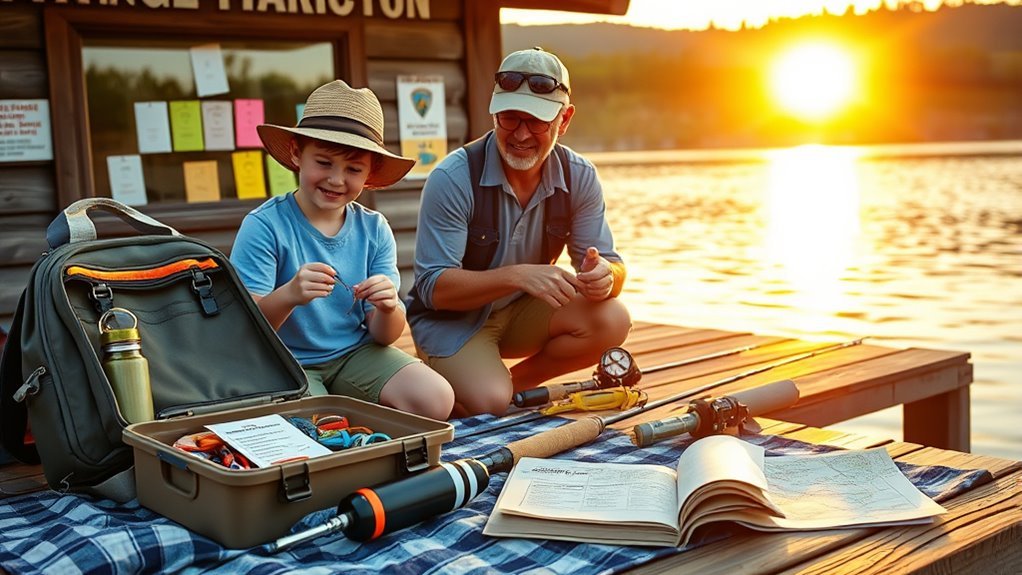
When you plan outings with young anglers, use the $17 resident youth saltwater license, the $32.50 freshwater/saltwater combo, or the free shoreline endorsement strategically to minimize costs while staying compliant with regulations.
You’ll choose based on habitat and duration: buy the $17 saltwater license if you’ll fish only saltwater sites, the $32.50 combo if you need both, and rely on the shoreline endorsement for pier or beach trips to avoid fees.
Pack durable, age-appropriate fishing gear and teach knot-tying, bait selection, and safety—youth education reduces lost tackle and repeat purchases.
Fish on private property when possible; kids under 16 are exempt, so you’ll save on licensing entirely.
Schedule trips during off-peak seasons and watch for community events that offer free or discounted instruction and access.
Keep licenses or proof of exemption accessible, log catches to reinforce regulations, and rotate inexpensive terminal tackle to manage costs while building practical skills.
Products Worth Considering

ALL-IN-ONE KIDS FISHING SET - The kit includes a portable telescopic rod & pre-spooled (8lb test line) reel combo, carry bag, collapsible chair, rod holder, bait net and loaded tackle box.

Waterproof & Breathability: WP-Waterproof Index: 5000 | WVP-Moisture Permeability: 3000. This material gives the rain suits water-resistant ability, and it is also soft, anti-oxidant, the inner mesh lining makes excellent airflow, this design is comfortable for windproof and wet weather
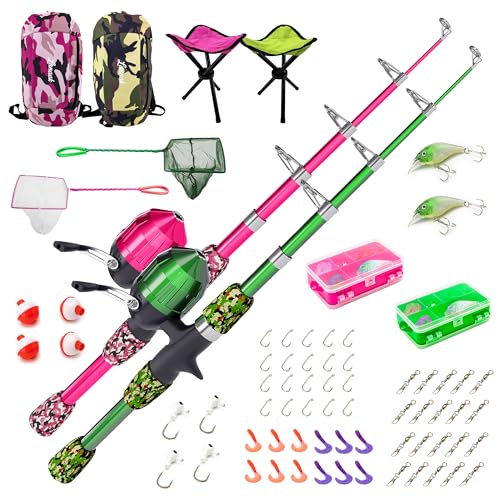
STARTER FISHING GEAR KIT includes: 47.2 inch Green telescopic fishing rod, spinning reel, minnow net, beginner’s guide, fishing lures, carry case and tackle box stocked with gear.
Frequently Asked Questions
Do Youth Licenses Cover Ice Fishing and Saltwater Species at the Same Fee?
Generally, no — you’ll need to check jurisdictional rules because ice fishing regulations and saltwater species coverage often differ; some youth licenses include both, but many require separate endorsements or permits based on local regulations.
Can Lost or Stolen Youth Licenses Be Replaced Online for Free?
Ironically, you can’t always get a free replacement online; the license replacement process often requires fees, ID proof and differing online application availability by state. You’ll want field-tested instructions, policy citations, and payment ready.
Are There Age-Based Equipment Restrictions Tied to the Youth License?
Yes — you’ll face age restrictions and some equipment limitations: agencies often prohibit certain tackle (big hooks, spear guns) or require size-appropriate gear for minors; check local regs, which vary by state and species.
Do Youth Licenses Allow Participation in Youth-Only Fishing Tournaments?
Yes — you can generally enter youth-only tournaments if you meet youth tournament eligibility and local fishing permit requirements; check event rules and state regulations, as age cutoffs, permit types, and documentation often vary across jurisdictions and organizers.
Is a Parent or Guardian Signature Ever Required on the Youth License?
Yes — you’ll sometimes need a parent or guardian signature: signature requirements and guardian consent vary by state, so check regulations; field experience shows agencies often require signed consent for minors, especially for permits or residency verification.
Conclusion
You’ve got the facts: youth licenses usually cover ages 0–17, costs vary widely by state and residency, and combos or exemptions can cut fees. Like a seasoned guide pointing out river currents, use age, residency, and activity data to pick the right permit, confirm local rules, and add required stamps. Keep receipts, check renewal windows, and bundle when possible—those small moves save money and keep young anglers legal and fishing-ready.
