
You can buy a one-time California Lifetime Fishing License that lets you legally fish statewide for life while still following seasons, bag and size limits, and gear rules. Costs are age-based: ages 0–9 and 62+ $691.75; ages 10–39 $1,131.75; ages 40–61 $1,019.50. Purchase requires proof of age and residency, payment by card/check, and may include handling fees; add-on validations cost extra, and more specifics follow if you want further details.
What a Lifetime Fishing License Covers
When you buy a California Lifetime Fishing License, you’re securing the legal right to fish in the state for life without annual renewals, making it a cost-effective option for frequent anglers; fees are age-tiered (currently $691.75 for ages 0–9 and 62+, up to $1,131.75 for ages 10–39) and the license covers both freshwater and saltwater fisheries statewide.
You’ll get permanent authorization to fish broad jurisdictional waters, but you still must follow the fishing regulations overview: seasons, bag limits, size limits, gear restrictions, and area-specific rules remain in force.
The license’s scope reduces administrative renewals and improves compliance tracking, which helps managers allocate enforcement resources more efficiently.
Note that certain species need extra validations or report cards—examples include ocean enhancement validations and spiny lobster report cards—so budget for those add-ons.
Policy analyses show lifetime fee revenue contributes to conservation funding impact by providing predictable capital for fish and wildlife resource management, habitat projects, and enforcement.
Lifetime License Pricing by Age Group
Having outlined what a California Lifetime Fishing License covers, let’s examine how pricing varies by age group and what those tiers mean for long-term cost-effectiveness.
You’ll see clear age based pricing: ages 0–9 and seniors 62+ are set at $691.75, ages 10–39 at $1,131.75, and ages 40–61 at $1,019.50. These bands reflect actuarial expectations of participation and remaining years of benefit receipt.
From a policy perspective, you can evaluate net present value: younger purchasers (0–9) and seniors pay the same flat fee, but your per-year cost depends on expected usage and lifespan.
Middle-age cohorts pay higher upfront sums, balancing longer anticipated participation against current revenue needs.
If you’re considering supplemental items, a Fishing Privilege Package (validations and report cards) costs $467.25 and modifies total license benefits.
Use these figures to compare one-time outlays versus recurring annual fees and to assess which age-based pricing tier delivers the best lifetime value for you.
Products Worth Considering

PREMIUM QUALITY: Crafted from high-grade materials, our License Plate is built to withstand the elements and maintain its vibrant appearance over time. It is resistant to fading, cracking, and peeling, ensuring long-lasting performance.

DESIGN: Military-style camouflage pattern license plate featuring rugged outdoor aesthetics perfect for vehicle customization

【Auto Parts Material】: Made of stainless steel, the design style is fashionable and the appearance is more beautiful, which is very suitable for decorating the front and rear of the car license plate. Make your car more attractive and recognizable, and make your car more distinctive.
Who Is Eligible for a Lifetime Fishing License
Who qualifies for a California Lifetime Fishing License, and what documentation will you need to apply?
You qualify if you meet the license eligibility details set by CDFW: you must satisfy age residency requirements and provide verifiable proof of age and residency.
Age-based pricing applies (e.g., $691.75 for 0–9 and 62+, $1,131.75 for 10–39), so confirm your birth date with a birth certificate or driver’s license.
Residency is defined as living in California at least six months or being on active military duty; you should have documents that substantiate that status if requested.
The license grants lifelong fishing privileges without annual renewal, supporting fish and wildlife conservation through one-time funding.
Keep records of the issued lifetime credential once CDFW processes your application.
Note policy-driven distinctions: nonresidents are ineligible under state rules, and age residency requirements determine fee category and acceptance.
How to Apply for a Lifetime Fishing License
To apply, you’ll need the CDFW application form plus proof of age (birth certificate or driver’s license) to confirm the tiered fees:
$691.75 (ages 0–9, 62+),
$1,131.75 (ages 10–39),
or $1,019.50 (ages 40–61).
Submit the completed packet by mail or fax to CDFW, allow about 15 business days for processing, and pay by check, money order, or debit/credit (cash not accepted).
Once approved, the lifetime license grants permanent fishing privileges and funds statewide conservation.
Products Worth Considering

USA, License, plate, Vintage, tag, lot, set, plates, number, wall, decor, art, bar, restaurant, design, gift, cool, nice, american, america, hawaii, alaska, california, texas
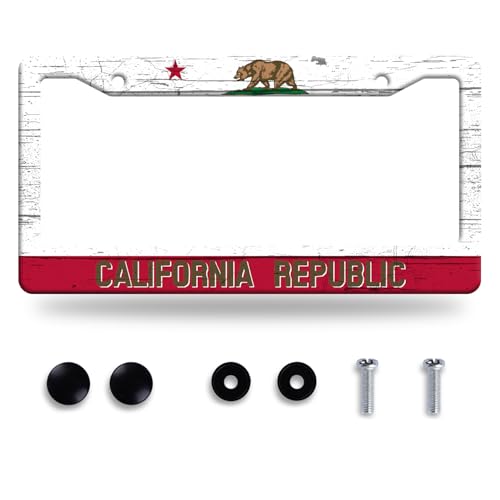
Product Material:made of Stainless steel. Personalized Car Frame Can Perfect to Put on Your Front of Car,Decorate your car to make it look more beautiful and unique,just wipe with a damp cloth

【MATERIAL】: oFloral License plate frame is made from premium quality aluminum, which can provide long-lasting protection from corroding, rusting and aging, durability for long lasting usage.Personalized Car Frame Can Perfect to Put on Your Front of Car or for Decorative Purposes Around the House Like in Your Bedroom, Garage, Basement, Ect.
Eligibility and Documentation
Eligibility for a California Lifetime Fishing License hinges on documented age and any special-status qualifications: you’ll need proof of age (for example, a birth certificate or driver’s license), complete the CDFW application forms, and submit them with the appropriate fee—$691.75 for ages 0–9 and 62+, $1,131.75 for ages 10–39, and $1,019.50 for ages 40–61—while disabled veterans and low-income seniors must include additional documentation to qualify for reduced-fee licenses.
You should verify eligibility criteria before applying, confirming age brackets and any veteran or low-income status definitions. Documentation requirements include legible copies of identity proof, supporting disability or income verification when applicable, and completed CDFW forms.
Retain copies of all materials; incomplete or missing documents will delay processing and may trigger fee disputes.
Application Methods and Locations
Although you can submit your California lifetime fishing license application online for fastest processing, CDFW also accepts in-person, mail, and fax submissions to accommodate different needs.
You’ll follow a consistent documentation checklist: proof of age (birth certificate or driver’s license) is mandatory for issuance. Choose the method that matches your access to digital services and need for immediacy.
- Online application via the CDFW portal: upload ID, complete forms, submit electronically.
- In person application at CDFW license sales offices: present original ID, sign forms, get staff confirmation.
- Mail submission: include photocopies of required documents and completed forms; retain proof of mailing.
- Fax submission: send forms and ID copies to the designated CDFW fax number; confirm receipt with the office.
Processing Time and Fees
When you apply for a California Lifetime Fishing License, expect the Department of Fish and Wildlife to review and issue the license within up to 15 business days, whether you submit online or by mail; include proof of age (birth certificate or driver’s license) with your application and note that fees vary by age group—$691.75 for ages 0–9 and 62+, $1,019.50 for ages 40–61, and $1,131.75 for ages 10–39—and are non-refundable once purchased. You’ll plan around the stated processing time and confirm required documents to avoid delays. Processing time and application fees are fixed policy items; they fund conservation and CDFW operations. Track your submission and retain receipts. Below is a concise fee reference.
| Age group | Fee |
|---|---|
| 0–9 | $691.75 |
| 10–39 | $1,131.75 |
| 40–61 | $1,019.50 |
| 62+ | $691.75 |
Lifetime Privilege Packages and Add-Ons
When you purchase a lifetime fishing license, you can add the Fishing Privilege Bundle for $467.25 to obtain required validations and report cards for specific species and activities.
This add‑on consolidates ocean enhancement validations and extra‑rod permissions, removing the need to buy them separately and simplifying compliance.
Including the privilege package at purchase also directs funds to conservation programs that support sustainable fisheries.
Fishing Privilege Bundles
A single Fishing Privilege Package, priced at $467.25, bundles the validations and report cards that complement a Lifetime Fishing License and lets you add targeted permissions without annual renewals.
You’ll evaluate package options by matching fishing benefits to activity-specific validations and report cards; bundles reduce administrative overhead and simplify compliance.
Pricing strategy remains one-time for privileges, while license fees still vary by age (e.g., $691.75 for 0–9 and 62+, $1,131.75 for 10–39).
You can buy additional validations separately when needed, keeping the base package lean and cost-effective.
- Species-specific report cards included or optional
- Activity validations curated per package
- Separate purchase path for enhancements
- Policy-aligned documentation and recordkeeping
Add‑On Validations & Cards
Moving from how bundled Fishing Privilege Packages streamline reporting and permissions, you can further tailor your lifetime license with targeted add-on validations and report cards that carry specific fees and regulatory functions. You’ll buy the $467.25 Fishing Privilege Package, then select add on benefits and validation options to match your fishing goals. Cost and compliance matter: Ocean Enhancement Validation is $7.05, Second Rod Validation is $19.70. Species report cards support monitoring — North Coast Salmon Report Card is $8.90; Sturgeon Report Card is free for catch-and-release. You’ll combine these to guarantee legal coverage across regions and gear. Below is a concise cost-summary to help you decide.
| Item | Fee |
|---|---|
| Privilege Package | $467.25 |
| Ocean Validation | $7.05 |
Payment Methods and Transaction Fees
Because you’ll be completing a fiscal transaction, plan to pay by check, money order, or debit/credit card (Visa/Mastercard)—cash isn’t accepted at CDFW offices—and note that most license amounts include a 5% handling fee plus a 3% nonrefundable application fee.
You’ll see fees vary by age bracket (e.g., $691.75 for 0–9 and 62+, $1,131.75 for 10–39). For transparency, verify total cost before submitting payment; all fees are nonrefundable and fund conservation programs.
The agency’s payment processing systems uphold transaction security and recordkeeping standards; keep receipts and reference numbers for audits or inquiries.
- Use check or money order if you prefer paper audit trails and reduced card exposure.
- Debit/credit cards (Visa/Mastercard) provide faster clearing but incur merchant handling adjustments.
- Verify added privilege packages and their fees separately to avoid underpayment.
- Retain documentation; refunds aren’t issued and disputes depend on original transaction records.
Follow posted payment policies to guarantee compliance and complete licensing.
Products Worth Considering

FISHING LICENSE HOLDER W/ZIP CLOSURE

Showcase your passion for fishing with intricately etched designs

Receiving and Replacing Your Lifetime License Card
When you receive your lifetime fishing license it will be a credit card–style plastic card that serves as your permanent proof of fishing privileges, so keep it protected from extreme heat and physical damage; discolored cards remain valid provided text and signature are legible.
You should store the card in a protective sleeve and avoid leaving it in direct sunlight or high-temperature vehicles to prevent warping or legibility loss.
If you have a lost license or sustain damage, the duplicate process is straightforward: request a duplicate online or visit a CDFW office and pay the standard small fee.
Note exceptions: certain report cards (for example, the Sturgeon Fishing Report Card) require in-person replacement at CDFW offices only.
Retain transaction receipts and record your license number separately to expedite verification.
Follow CDFW policy precisely when requesting a replacement to minimize processing delays and guarantee continuous compliance with fishing regulations.
Moving, Residency, and License Validity
If you buy a California Lifetime Fishing License as a resident — defined as someone who’s lived in the state at least six months or is on active military duty — the license remains valid for life and doesn’t require annual renewal, even if you later change your residence or move out of state; you can continue to fish in California waters under the same privileges.
You’ll retain statutory fishing rights so long as you obey state regulations; the policy intent is permanence of privilege notwithstanding residency changes. Fees vary by age cohort at purchase, so document age at acquisition for record accuracy. Residency requirements apply at purchase only.
- Keep your original purchase documentation and ID to verify initial residency when questioned.
- Update contact information with the issuing agency to receive regulation notices.
- Understand that license transfer rules are distinct and handled separately (see next section).
- Nonrenewal reduces administrative burden but doesn’t exempt you from compliance with current fishing laws.
Transferring or Gifting a Lifetime License
Wondering whether you can transfer or gift a California lifetime fishing license? You can’t.
Policy is clear: lifetime fishing licenses are non-transferable and can’t be gifted once issued. Transferring licenses or gifting options don’t apply because the license is tied to the original purchaser for life, can’t be sold, exchanged, inherited, or assigned to family members after death.
If a holder dies, the license becomes void.
Operationally, if you lose or damage your lifetime license, you may request a duplicate; the duplicate remains linked to you as the original licensee.
Enforcement is also straightforward: the only administrative revocation arises from regulatory violations, which can suspend your fishing privileges.
For cost analysis and planning, treat the lifetime license as an irrevocable, personal entitlement rather than an asset you can transfer or monetize.
That distinction affects estate planning, family gifting strategies, and any consideration of transferring licenses or exploring gifting options.
Products Worth Considering
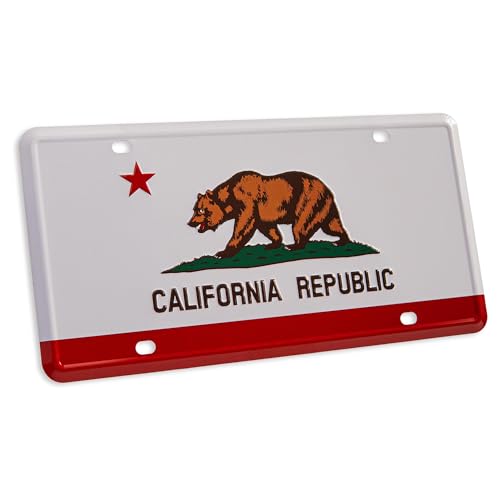
CALIFORNIA STATE FLAG DESIGN: Features a textured, raised California flag design for an authentic, high-end look and feel.

Secure & Dry - With a clear waterproof zip closure, this heavy-duty badge holder keeps your license and tags protected from the elements. Adventure with confidence.

【Material】Our License Plate Frame Is Made Of Stainless Steel, Strong And Durable.
Common Rules, Report Cards, and Required Validations
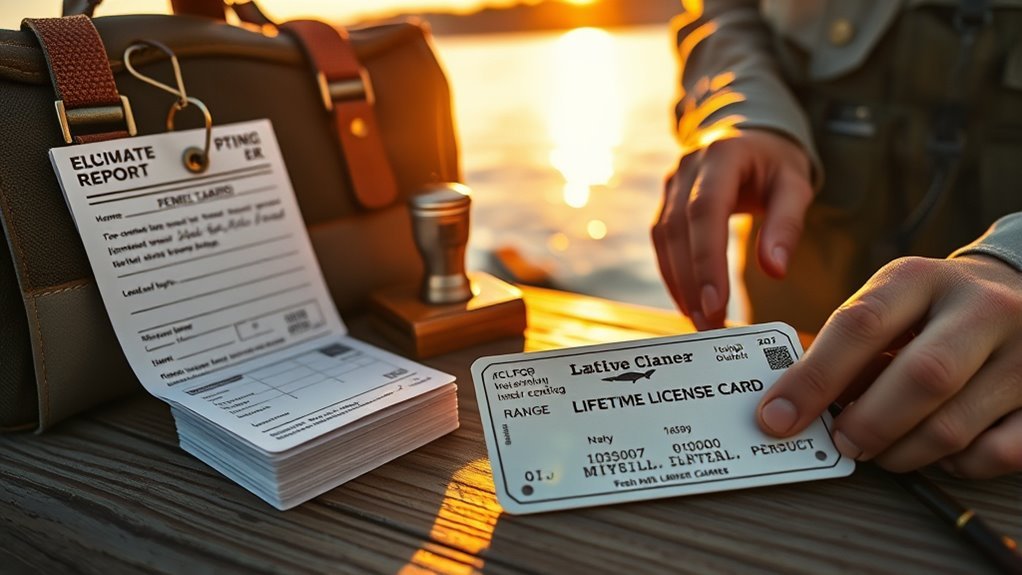
Since lifetime licenses are personal and non-transferable, you still have to follow the same regulatory requirements as other anglers: carry your license and any required validations or report cards at all times, obtain specific report cards for species like Sturgeon and Salmon and return them by their deadlines (for example, Sturgeon report cards must be returned by January 31), and purchase activity-specific validations such as the Ocean Enhancement Validation ($7.05) when fishing in designated areas south of Point Arguello.
You’ll pay a one-time fee (e.g., $691.75 for ages 0–9; $1,131.75 for ages 10–39) but must comply with the fishing regulations overview and report card requirements continuously. Children under 16 still need species report cards even if they don’t need a license.
Maintain immediate possession of all documentation while fishing to avoid citations. Meet submission deadlines to prevent penalties and preserve survey data quality.
- Carry lifetime license, validations, and report cards at all times
- Obtain species-specific report cards (Sturgeon, Salmon)
- Return report cards by stated deadlines (Jan 31 for Sturgeon)
- Purchase activity validations (Ocean Enhancement $7.05)
Frequently Asked Questions
Can a Lifetime License Be Used in Other States’ Waters?
Generally no, you can’t; lifetime licenses are state-specific. Check interstate fishing regulations and reciprocal agreements—some states honor others’ licenses via agreements, but you’ll need to verify policies, fees, and allowable waters before fishing.
Are Refunds Available After Purchase for Any Reason?
About 12% of buyers request refunds; you generally won’t get one after purchase. You should follow the refund process promptly, citing license cancellation policy, provide documentation, and expect approvals only for narrow, policy-specified reasons.
Does the License Cover Commercial Fishing Activities?
No, it typically doesn’t—commercial fishing activities are governed separately; you’ll need to meet commercial fishing regulations and specific license eligibility criteria, submit required documentation, and pay associated fees to obtain the appropriate commercial permit.
Are Discounts Available for Military Veterans or Seniors?
Yes. You’ll find veteran discounts and senior benefits in many states; rates, eligibility, documentation, and age/service thresholds vary by agency. Check state fish-and-wildlife policy pages for precise fee reductions, proof requirements, and application procedures.
How Are Upgrades Handled if Regulations or Fees Change?
By decree from the town crier, you’ll receive formal notices about regulation updates and fee adjustments; your lifetime purchase adapts per policy, we’ll document changes, calculate any prorated credits or supplemental charges, and log audit trails.
Conclusion
You’ve seen the numbers, rules, and steps laid out like a charted current — lifetime licenses cover state-regulated fishing privileges, vary by age and residency, and require specific application, validation, and replacement procedures. Policies on add-ons, transfers, and report cards shape long-term use and compliance. Keep documentation current, follow residency guidelines, and treat the license as a permanent permit: an investment tracked by statutes, not just a one-time purchase.
