
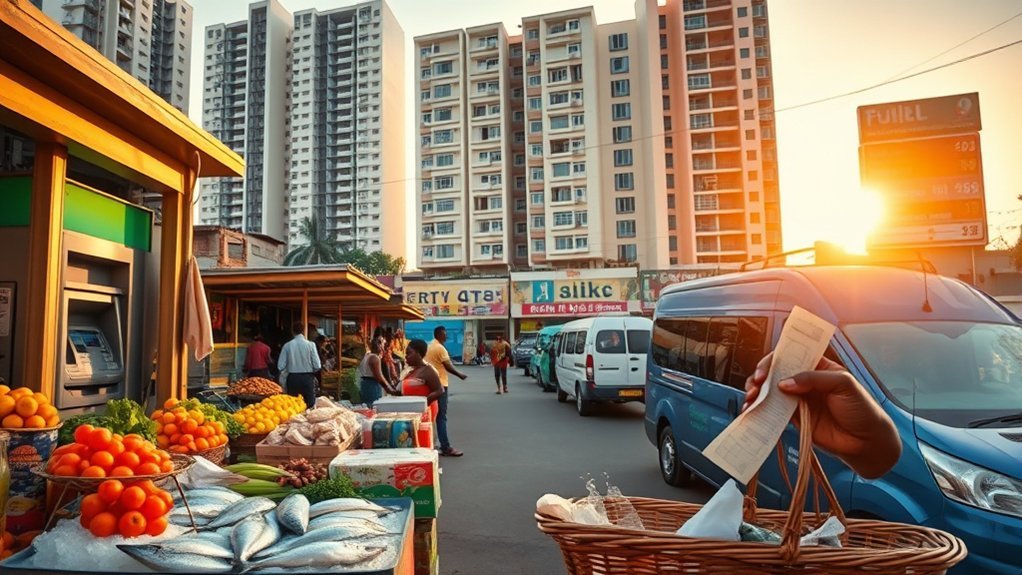
You’ll typically need $700–$1,500 monthly for a modest single-person budget covering food, utilities, and local transport. An expat family can easily spend $3,500–$10,000+ once you add city-center rent, international school fees, and private healthcare. Staples like bread, rice, and milk stay fairly affordable, but imported goods, high rents in Luanda, generator costs, and schooling drive prices up. Below, you’ll find detailed breakdowns and practical tips to cut costs.
Quick Answer
- A single person needs roughly $700–$1,500/month for basics: food, utilities, and local transport.
- An expat family can spend $3,500–$10,000+ per month once you include city-center rent, school fees, and private healthcare.
- Luanda is among Africa’s most expensive cities, especially for housing and imported goods.
- Staple foods are affordable, but imported items, generator costs, and international schooling push budgets up fast.
- Many expat contracts include housing, school, and transport allowances to help offset high local costs.
Cost Breakdown: Daily Essentials and Groceries
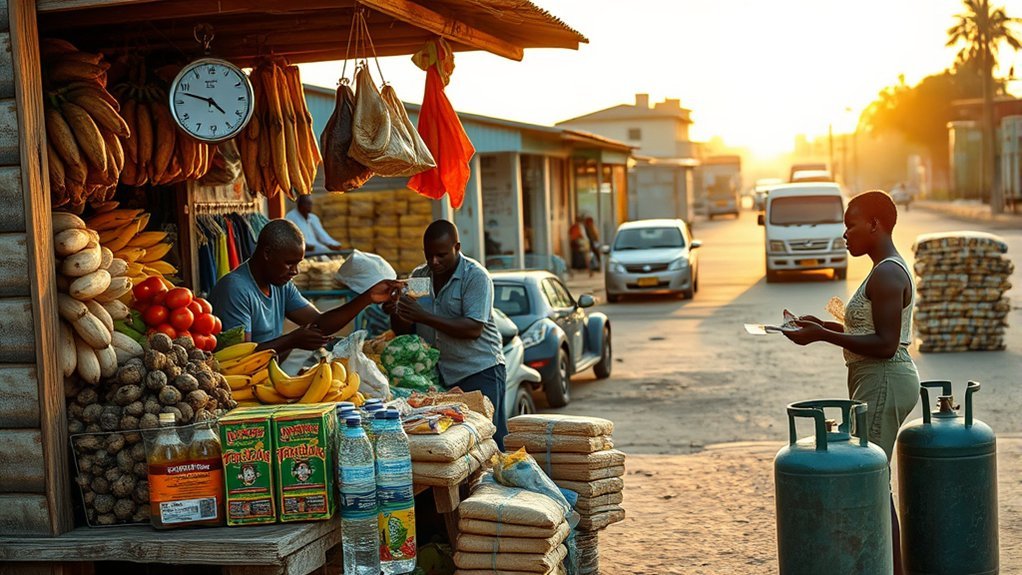
Prices vary by city and market, but daily essentials follow a clear pattern in Angola: staple goods are reasonable, while imported or premium items cost significantly more. A 500g loaf of white bread is about $1.18, 1 L of milk costs $1.41, and 1 kg of rice runs around $0.82. Chicken fillets are near $5.98/kg and beef averages around $9.90/kg, with premium imports reported up to $45/kg.
Imported goods in Angola can be pricey, but staples like bread, milk and rice remain affordable.
You’ll find water (1.5 L) at roughly $0.44 and a 0.5 L domestic beer in a pub near $1.53.
For budgeting, a single person’s monthly food-only expenditure averages about $684.70. A family can spend around $2,000 on groceries per month.
Basic utilities average $46.50 per month per person. Internet at 50–60 Mbps or higher typically costs $78–$133/month.
These figures inform cost of living assessments used by policymakers and employers when setting wages, allowances, and subsidies. Factor in imported item premiums, market volatility, and household size when building any realistic household budget.
Products Worth Considering

Blends with blue materials
Housing and Utility Costs Across Cities
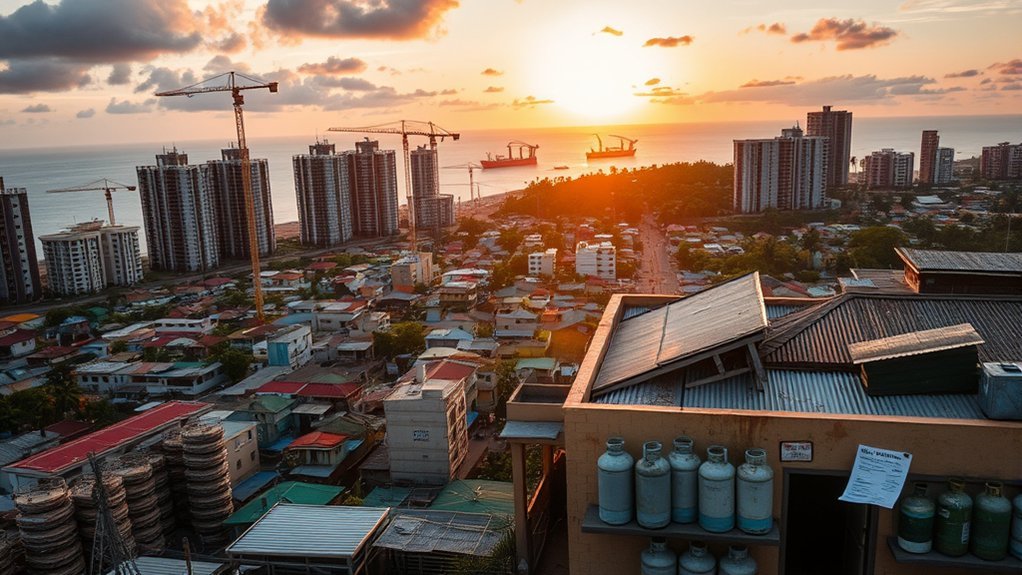
After food and utilities, housing is the single largest and most variable expense across Angolan cities.
A 1-bedroom apartment in a city center averages about $404/month, with cheaper options near $232. Reported city-center averages range from $328 to $1,434, reflecting location and quality.
A 3-bedroom apartment averages $1,352/month, but city-center rentals can reach $1,845–$7,300.
In Luanda and newer suburbs like Talatona, high-end expatriate apartments command $4,000–$15,000+. Family homes may cost $6,000–$30,000 per month.
Typical utilities for an ~85 m2 apartment run roughly $46.50–$96.11 monthly. Unlimited 50–60 Mbps internet commonly costs $78–$133.
Mortgage financing is constrained by very high interest rates (around 24% for 20 years), so renting tends to dominate housing choices.
These spreads point to significant affordability gaps and a need for targeted supply-side interventions and financing reforms to stabilize rents and broaden access to quality housing.
Transportation, Healthcare, and Services
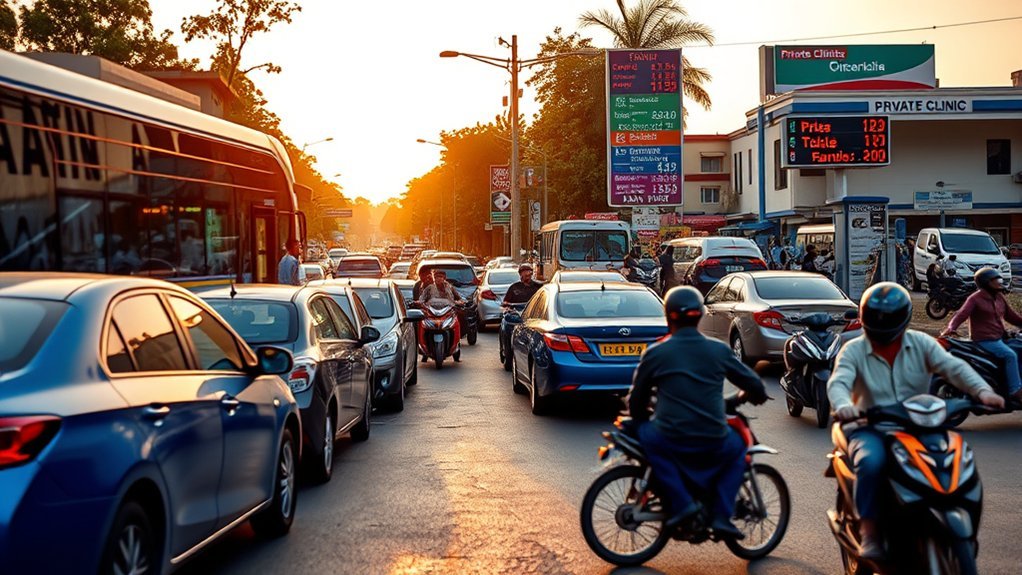
Public transport is extremely cheap. Single tickets run about $0.35–$0.53 and a monthly pass costs near $25.50. An 8 km taxi costs roughly $8.27. Low fuel prices (about $0.30/L for petrol and $0.40/L for diesel) keep private vehicle running costs down.
Basic utilities average $46.50/month for one person, but frequent power outages often force generator use, raising expenses. Internet at 50–60+ Mbps typically costs $78–$133/month.
Expect private healthcare consultations to cost around $38.70. International-standard care and insurance are substantially more expensive and should be factored into any household budget or relocation plan.
Products Worth Considering

Dual-fuel design runs on both gasoline (3600 surge watts, 2900 rated watts) and propane (3500 surge watts, 2600 rated watts)

Dual-fuel design runs on both gasoline (2800 surge watts, 2250 rated watts) and propane (2800 surge watts, 2000 rated watts)

224cc dual-fuel engine runs on both gasoline (4800 surge watts, 4000 rated watts) and propane (4320 surge watts, 4000 rated watts)
Public Transport Costs
Public transport in Angola is inexpensive for short trips. A one-way local ticket runs about $0.35–$0.53, and a monthly transit pass is roughly $25.50, making mass transit far cheaper than taxis or a private car.
Low fares keep urban mobility accessible and support daily commuting without heavy subsidy needs. The trade-off is that low fares can strain operator revenues if subsidies aren’t maintained.
By contrast, an average 8 km taxi ride costs about $8.27, highlighting the cost gap between transport modes. Fuel prices (~$0.30/L petrol, ~$0.40/L diesel) do lower private running costs, but they don’t erase the higher cost of taxis.
Plan on mass transit for routine trips and budget taxis for occasional convenience.
Private Vehicle Expenses
Fuel costs are very low, around $0.30 per litre, which helps keep private vehicle running costs down. But ownership is not necessarily cheap overall. Taxis (~$8.27 for an 8 km trip) and rentals ($90/day for a basic saloon, $200/day for an SUV) show that hire-and-drive options can quickly outstrip fuel savings.
Imported insurance, spare parts, and maintenance often push ownership costs higher. In expensive cities, parts delays and logistics premiums can be pronounced, causing vehicle downtime.
For short stays, compare daily rental costs against repeated taxi fares. For long-term residents, model total cost of ownership including insurance, parts lead times, and potential downtime.
Healthcare & Medical Fees
Basic consultations average around $38.70, but private healthcare in Angola can get expensive quickly. Specialist fees, dental work, and minor procedures often exceed regional norms, especially in Luanda where international-standard care is concentrated.
Public emergency transport is limited. Private ambulance or transfer services are expensive and typically arranged through employers or insurers.
Expat private insurance premiums are substantial but often necessary to cover pricey private care and medical evacuation. Emergency evacuation to regional hubs or abroad can cost thousands to tens of thousands of dollars, so extensive coverage is essential.
| Service | Typical Cost | Notes |
|---|---|---|
| GP visit | $38.70 | Public/private gap |
| Specialist | Variable | Often expensive |
| Evacuation | Thousands+ | Requires insurance |
| Dental/minor | Variable | Above regional norms |
Education and Family Living Expenses
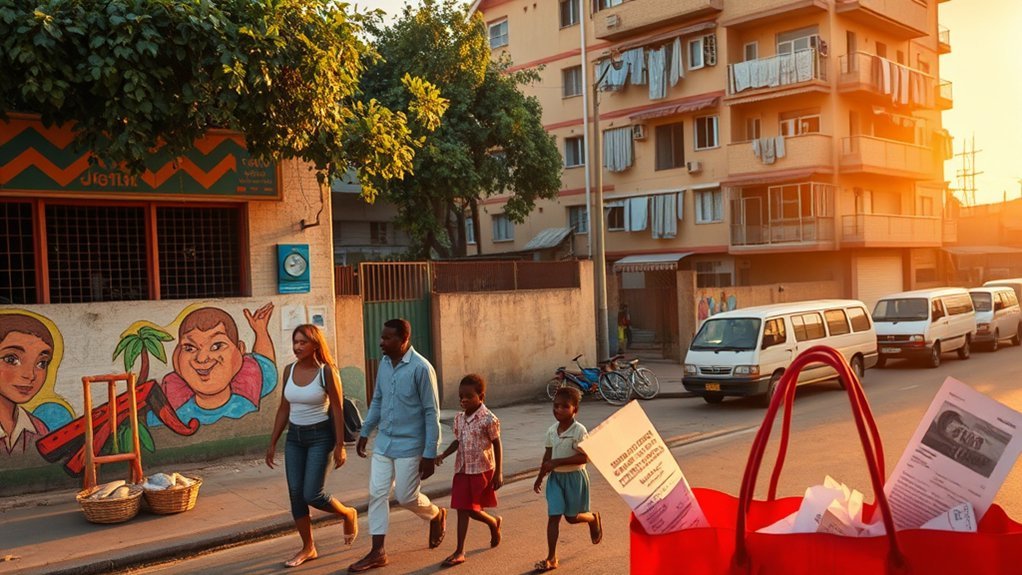
Education is a major budget item for families in Angola. International primary tuition typically runs $14,766–$19,880 per child per year. Private preschool or daycare costs around $695–$823 per month.
Combined with non-rent family-of-four monthly expenses of $2,396–$2,779 and high-end housing rents of $6,000–$30,000 in Luanda suburbs, schooling can push total family spending very high.
Many expatriate contracts include allowances for housing, school fees, and transport to offset local wages that often aren’t sufficient to cover these costs.
School Fees and Tuition
International schooling in Angola carries exceptionally high fees, and education often takes up a large share of an expatriate household budget.
International primary school fees typically run $14,766–$19,880 per year per child, which can equal or exceed several months of local net salary (around $1,504/month).
Employers commonly include education allowances in compensation packages because tuition can rival housing and transport costs. The steep fees reflect limited local alternatives and high operational expenses.
Budget accordingly and verify your package covers them. When planning, compare school fee schedules, check for annual increases, and account for extra charges like registration, uniforms, and exams.
When relocating to Luanda, negotiate clear allowance terms and build in contingency for unexpected fee hikes.
Childcare and Preschool Costs
Childcare and full-day preschool take a sizable bite out of household budgets in Angola. Private monthly preschool fees average roughly $695–$824 per child. International primary tuition jumps to about $14,766–$19,880 per year, so plan for education costs that can rival housing or several months’ local net salary.
Costs vary by location, facility standards, and expatriate demand. When budgeting, include transport and extracurriculars, which push totals higher. Compare local versus international options carefully and factor in exchange-rate risk and fee escalation clauses.
- Local private preschool: ~$695–$824/month per child.
- International primary: ~$14,766–$19,880/year per child.
- Total annual family exposure: can reach tens of thousands after extras.
Education-Related Living Expenses
Education-related costs take up a large slice of household budgets in Angola. International primary school fees alone average $14,766–$19,880 per child per year.
Monthly private preschool or full-day childcare typically runs $695–$824 per child. Combined, education costs contribute significantly to a typical monthly family expenditure (excluding rent) of about $2,396.
Many expatriate contracts include salary adjustments or school-fee allowances, given that international schooling can exceed the local net salary of around $1,503.77/month.
Use a conservative planning scenario that adds transport, uniforms, supplies, and after-school activities. These are commonly charged separately and can add several hundred to thousands of dollars annually.
Why Prices Are High: Structural and Market Factors
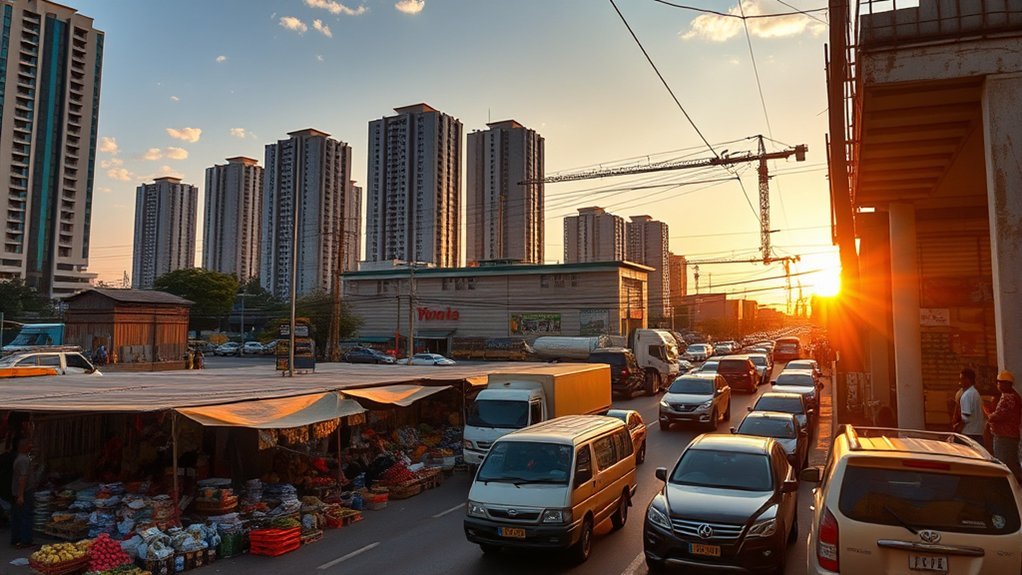
Angola’s high prices go deeper than headline inflation. Several structural factors keep supply tight and costs elevated.
Decades of civil war wiped out much of the country’s local industry and agriculture. Today, roughly 80% of consumable goods are imported, carrying shipping and import fees. Congested ports, slow customs procedures, and steep local taxes add handling delays and extra charges. Unreliable power and weak transport infrastructure force businesses to rely on costly generators and private logistics. A concentrated import sector, combined with strong demand from wealthy households and expatriates, lets sellers maintain premium markups on scarce imported goods.
Beyond headline inflation, Angola’s high prices reflect war-scarred supply chains, costly imports, clogged ports, weak infrastructure, and concentrated markets.
You face repeated cost layers: import costs, infrastructure premiums, and concentrated market pricing. Three concrete examples:
- Port and customs delays: longer dwell times add container demurrage and storage fees.
- Power and logistics: generator fuel and private transport raise unit costs for producers.
- Market concentration: few importers maintain price cushions against competition, amplified by high local taxes.
For broader context on Angola’s economic structure, the World Bank’s Angola country page tracks key indicators including trade dependency and infrastructure investment.
Money-Saving Tips for Expats and Locals
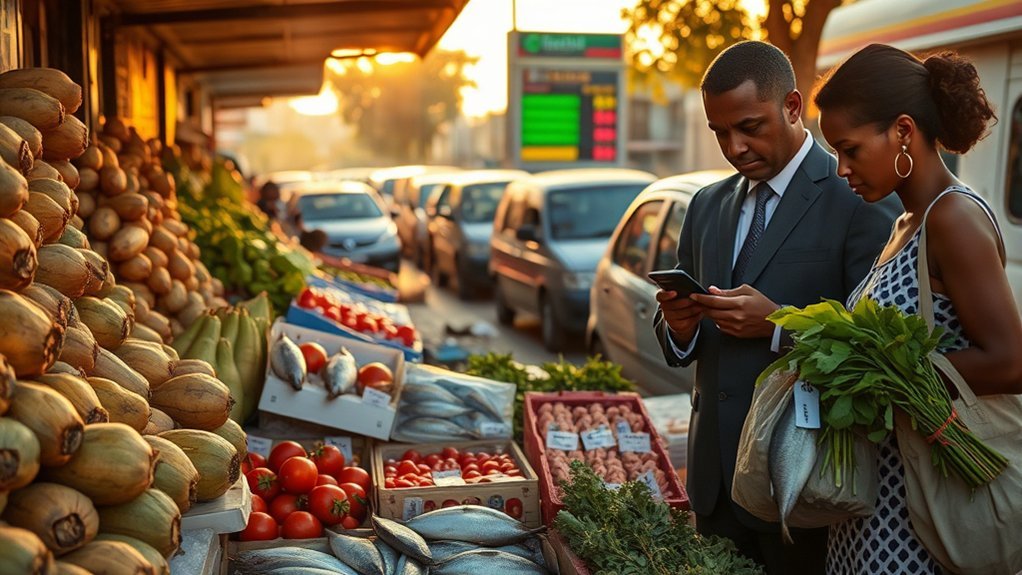
Despite the structural pressures that keep prices high, you can still cut household spending through targeted choices and negotiation.
Compare competing supermarkets and growing Chinese farm markets for better prices. Use a monthly grocery benchmark of about $2,000 for family planning. Cook at home, batch-make staples like cakes and yoghurt, and stock non-perishables before travel. Initial kitchen stocking runs about $800.
Buy local produce from street vendors and haggled markets to avoid costly imported items (tomatoes cited up to $16/kg, beef up to $45/kg). Share housing or move to newer suburbs, where rental competition has pushed two-bedroom rates below the $4,000–$5,000 range. High-end Talatona properties can still reach $15,000.
Use local taxis instead of daily car rentals (saloon ~$90/day, SUV ~$200/day) and apply energy-saving habits while planning for generator fuel costs. Negotiate expatriate packages to cover housing, schooling (international school fees run $14,000–$19,000/year), and transport, as these allowances can materially reduce your living expenses.
Products Worth Considering

TASTES GREAT: Ready Hour Freeze dried fruits and veggies are made for emergencies but tasty enough for everyday use.

TASTES GREAT: Black bean burger mix with bold flavor so good even meat lovers swear by them! Stays fresh with our special quadruple-wrapped pouching system. Made for emergencies, but good enough for everyday use… even camping!

READY-TO-EAT: Each pack includes 9 delicious, 400-calorie emergency food bars (a 3-day supply). They require no cooking, water or heat to eat. Plus, their shortbread flavor is vanilla-sweet — with a kiss of lemon. You won’t believe you’re eating emergency rations!
Frequently Asked Questions
Is Angola Expensive to Live In?
Yes. Angola is expensive, especially in Luanda, where expatriate rents and imported groceries are high. Costs vary significantly by neighborhood, lifestyle, and how much you source locally. Recent market shifts have brought some rents and grocery prices down.
How Much Is a Burger in Angola?
You’ll pay about $3–$7 for a fast-food burger and $4–$8 at a mid-range restaurant, often higher in Luanda due to imports. Street vendors can offer options under $3, though quality varies.
What’s the Average Salary in Angola?
The average salary in Angola is hard to pin down precisely, but figures typically land around $1,504/month net, with GDP per capita near $2,831. Verify with current local statistics, as data discrepancies are common and expatriate packages can differ significantly.
Is Angola a Good Place to Live?
It depends on your situation. Angola offers vibrant culture and investment potential, but expat living in Luanda is costly, local wages are low, infrastructure is uneven, and security requires attention. Plan carefully, budget realistically, and build local networks to make it work.
Conclusion
Prices in Angola move fast, especially for groceries, rent, and import-dependent goods. City choice, school selection, and whether you use private healthcare can shift the math significantly. Plan ahead, budget carefully, and build local networks to limit surprises. Ignore inflation trends and policy shifts, and you’ll feel them. Ultimately, your lifestyle choices will determine whether Angola stays manageable or becomes increasingly costly.
