

You need a California saltwater fishing license if you’re 16 or older; annual resident fees are $62.90 and nonresident annual fees $169.82, with one-day ($20.52), two-day ($31.58) and ten-day (nonresident-priced at $62.90) options. Additional validations — Ocean Enhancement $7.05, second-rod $19.70, crab trap $2.98 — and species report cards may apply. Reduced and free licenses exist for eligible veterans, seniors, and disabled anglers, and further details explain purchase, exemptions, and compliance.
Who Needs a Saltwater Fishing License in California
Although regulations vary by location, California requires anyone 16 or older to carry a valid saltwater fishing license to fish in ocean waters, with specific exceptions and reporting requirements that affect compliance and enforcement.
You need to know the fishing regulations overview: licenses are mandatory for shore and boat anglers unless you’re on a public pier or fishing during one of two annual Free Fishing Days.
Even when a license isn’t required, you must follow bag and size limits and any species-specific reporting; special report cards or validations may still be obligatory.
From a policy perspective, enforcement focuses on age-based compliance, exemption verification, and documentation for targeted species; that data informs resource allocation.
Noncompliance triggers license violation consequences ranging from fines to confiscation and administrative penalties, which can skew compliance statistics and affect management decisions.
You should plan activity around exemptions and guarantee required reporting to reduce legal and conservation risks.
Annual and Short-Term License Options and Costs
Choosing the right saltwater fishing license depends on your residency status, trip length, and targeted area, because costs and mandatory validations differ materially: a 365-day resident license runs $62.90 versus $169.82 for nonresidents, while short-term options include one-day ($20.52), two-day ($31.58), and a ten-day nonresident license ($62.90).
Additionally, anyone fishing in ocean waters south of Point Arguello must add the $7.05 Ocean Enhancement Validation, and eligible disabled veterans or recovering service members can obtain reduced-fee licenses for about $9.79–$10.29 through CDFW or agents, which can substantially affect compliance rates and revenue projections.
Fishing south of Point Arguello requires a $7.05 Ocean Enhancement Validation; qualified veterans may get reduced-fee licenses.
You should evaluate annual license options against short term fishing needs: frequent anglers typically gain value from annual permits, while tourists or occasional fishers reduce upfront costs with one-, two-, or ten-day licenses.
Incorporate the $7.05 validation where applicable and account for discounted veteran pricing in demand and budget forecasts to guarantee accurate policy and fiscal analysis.
Products Worth Considering

Material :High-Quality Metal Aluminum With High Gloss Stamped Metal License Plate.Lightweight, Waterproof,Anti-Rust And Very Durable.

【MATERIAL】: oFloral License plate frame is made from premium quality aluminum, which can provide long-lasting protection from corroding, rusting and aging, durability for long lasting usage.Personalized Car Frame Can Perfect to Put on Your Front of Car or for Decorative Purposes Around the House Like in Your Bedroom, Garage, Basement, Ect.

【MATERIAL】: oFloral License plate frame is made from premium quality aluminum, which can provide long-lasting protection from corroding, rusting and aging, durability for long lasting usage.Personalized Car Frame Can Perfect to Put on Your Front of Car or for Decorative Purposes Around the House Like in Your Bedroom, Garage, Basement, Ect.
Resident Vs Nonresident Fee Breakdown
When you compare resident and nonresident saltwater fishing fees, the difference is stark and has clear policy implications: residents pay $62.90 for an annual Sport Fishing License (age 16+), while nonresidents face $169.82 for the same annual access to California’s ocean and coastal waters, and short-term options compress that gap—one-day licenses are $20.52, two-day $31.58 (both available to residents and nonresidents), and a ten-day nonresident license is $62.90—so fee structure, revenue forecasting, and equity assessments must account for these tiered choices and their likely effects on participation patterns.
| License Type | Cost |
|---|---|
| Annual (Resident) | $62.90 |
| Annual (Nonresident) | $169.82 |
| One-day | $20.52 |
| Two-day / Ten-day (Nonresident ten-day equals resident annual) | $31.58 / $62.90 |
You should use this license cost comparison to evaluate fishing license requirements, model demand shifts, and weigh equity versus revenue objectives in coastal management.
Validations and Species Report Cards Required
If you plan to fish California’s ocean and inland waters, you’ll need to account for mandatory validations and species-specific report cards that directly affect compliance costs and data collection.
You should budget for specific validation requirements: an Ocean Enhancement Validation ($7.05) is required south of Point Arguello; a Second Rod Validation ($19.70) permits two-rod use in inland waters; and a Recreational Crab Trap Validation ($2.98) is required to deploy crab traps.
These fixed fees add to license costs and target management objectives.
For species-level monitoring, report card specifics matter. Salmon anglers in designated North Coast river systems must purchase a North Coast Salmon Report Card ($8.90).
Sturgeon anglers need the Sturgeon Fishing Report Card, which is free if you’re catch-and-release only. You’ll have to maintain accurate catch logs and submit data per regulatory timelines.
From a policy perspective, these minimal fees fund monitoring while creating measurable incentives that align angler behavior with conservation goals.
Reduced‑Fee and Free License Programs
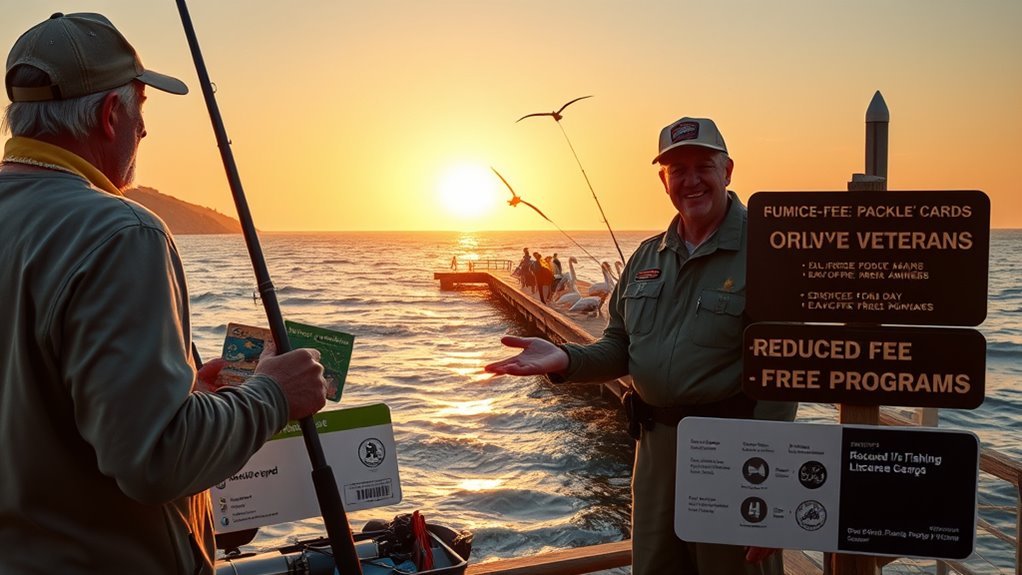
You should know California offers targeted reduced‑fee and no‑cost fishing licenses to address equity for veterans, low‑income seniors, and people with qualifying disabilities.
Data show disabled veterans and recovering service members can get a reduced license for about $10.29. Low‑income seniors may qualify for a $9.79 fee, and certain disabilities (e.g., blindness) can qualify for a free license with documentation. Applications are reviewed and may take up to 15 business days.
Annual free fishing days also waive license requirements for everyone on specified dates, though bag limits and other regulations still apply.
Products Worth Considering

Comes with pre-drilled holes for easy installation

【MATERIAL】: oFloral License plate frame is made from premium quality aluminum, which can provide long-lasting protection from corroding, rusting and aging, durability for long lasting usage.Personalized Car Frame Can Perfect to Put on Your Front of Car or for Decorative Purposes Around the House Like in Your Bedroom, Garage, Basement, Ect.

Veterans and Recovering Service Members
Two categories of fee relief — reduced‑fee and free sport fishing licenses — help veterans and recovering service members access saltwater fishing while funding conservation; qualifying veterans with a 50%+ VA disability rating or recovering service members undergoing treatment can get a license for $10.29 (documentation required), and individuals with certified severe disabilities or blindness may receive a free license. You’ll find this policy supports veteran benefits and integrates beneficiaries into the fishing community while maintaining revenue for habitat management.
| Program | Eligibility |
|---|---|
| Reduced‑Fee | Honorably discharged veterans ≥50% VA rating; recovering service members in treatment |
| Free | Certified severe physical disability or blindness |
You must submit verification forms; processing can take up to 15 business days.
Low‑Income and Disability Programs
Building on veteran-focused relief, the Low‑Income and Disability Programs extend reduced‑fee and free sport fishing licenses to other eligible populations, with price points and documentation requirements set to balance access and revenue.
You’ll see reduced-fee licenses: $10.29 for disabled veterans/recovering service members (requires a VA letter showing ≥50% disability) and $9.79 for low-income applicants (requires proof of low-income status).
Free licenses target mobility-impaired individuals and qualifying low-income Native Americans with required certification.
The documentation verification process accepts online or PDF applications and carries up to a 15-business-day review for eligibility confirmation.
Policy design ties fishing eligibility requirements to verifiable certifications to limit fraud while maximizing equitable access to ocean and coastal fishing.
Where and How to Purchase or Replace Licenses
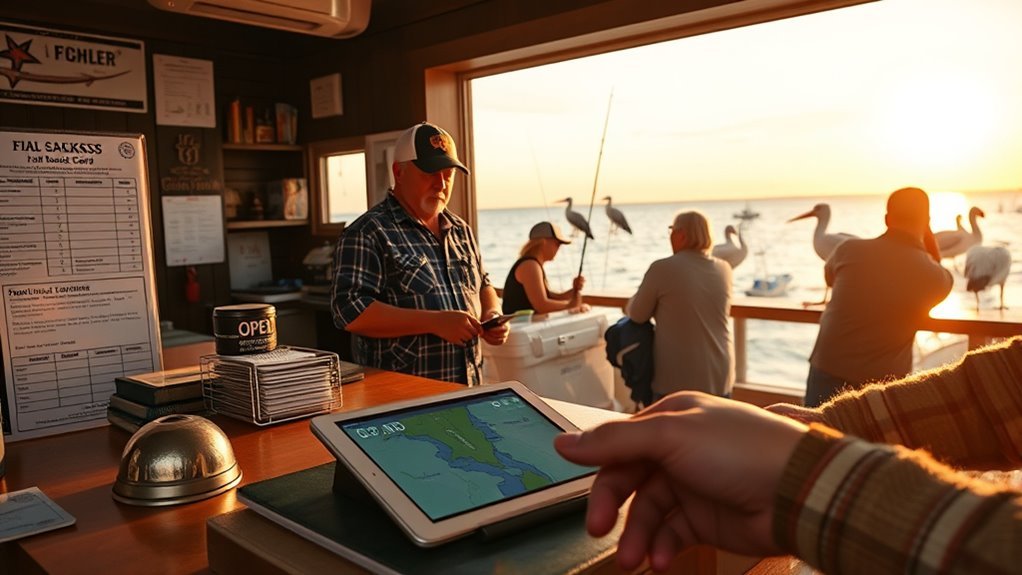
You can buy or renew most saltwater fishing licenses online via the California Department of Fish and Wildlife site, which offers faster processing and digital records you can print.
If you prefer in-person service, licensed agents and CDFW offices sell certificates but note CDFW offices don’t accept cash and some documents (like duplicate Sturgeon report cards) are office-only.
If your license is lost or damaged, you can obtain replacements online or through agents for a small fee, though specific report-card duplicates require a CDFW office visit — keep originals protected to avoid invalidation.
Products Worth Considering

INSTANT FISH IDENTIFICATION. 60 commonly caught Florida saltwater species PLUS 17 shark species shown in true-to-life color photographs not illustrations. Covers inshore, nearshore, and offshore species from both the Gulf and Atlantic coasts. No squinting at phone screens in bright sunlight. Perfect for all skill levels. Great educational tool for classrooms and marine biology enthusiasts too.
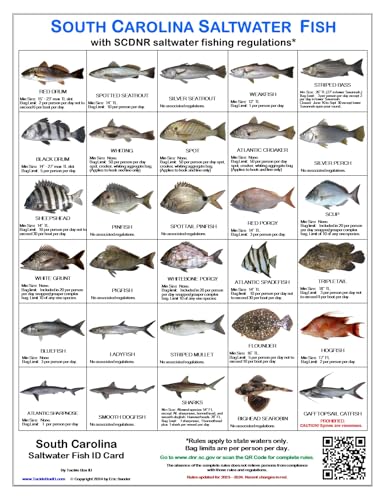
2023-2024 South Carolina DNR saltwater fishing regulations are shown with each fish image.
CALIFORNIA STATE FLAG DESIGN: Features a textured, raised California flag design for an authentic, high-end look and feel.
Online Purchases and Renewals
How and where you buy or replace a California saltwater fishing license affects turnaround time, payment options, and record accuracy.
Using the CDFW website offers online license benefits: immediate transaction confirmation, printable credentials, and electronic records that reduce administrative errors.
The digital renewal process through CDFW’s Online License Service accelerates access to updated licenses and minimizes processing delays compared with mail or office procedures.
You can also obtain replacements online for a small fee, preserving traceability.
Note CDFW sales offices accept purchases but not cash, which affects payment planning and compliance.
For auditability and faster service, prioritize online purchases and renewals; keep transaction receipts and CDFW confirmation numbers to support enforcement queries or future record reconciliations.
In-Person License Agents
While online purchases give faster confirmation and cleaner records, many anglers still buy or replace California saltwater fishing licenses in person at authorized agents—sporting goods stores, bait shops, and some grocery outlets—so plan for varying processing times and payment options at these locations. You’ll find in person agents sell annual and short-term licenses, reduced-fee options, and duplicates for a small fee; verify license availability before you travel. Note CDFW offices don’t accept cash—use check, money order, or Visa/Mastercard. Protect issued cards from damage (no heat lamination). Use the table below to compare common agent attributes so you can choose based on proximity, payment method, and product range.
| Agent Type | Payment Methods | Typical Inventory |
|---|---|---|
| Sporting Goods | Card, check | Full licenses |
| Bait Shop | Card, cash variances | Short-term, duplicates |
| Grocery | Card only | Limited licenses |
Replacing Lost Licenses
Where can you replace a lost saltwater fishing license and what documentation and fees apply?
You can initiate the replacement process via the California Department of Fish and Wildlife (CDFW) website for immediate printing, at authorized license agents, or at CDFW offices; a small duplicate fee applies.
Data show online replacements minimize downtime and meet the regulatory requirement to carry your license while fishing.
Note policy exceptions: Sturgeon Fishing Report Card duplicates are only issued at CDFW offices.
Avoid heat laminating—heat can destroy cards—though discolored cards remain valid if text and signature are legible.
If buying in person, many agents accept non-cash payment.
Track your transaction receipt and carry the printed or issued duplicate to satisfy inspection requests.
Rules for Public Piers and Exemptions
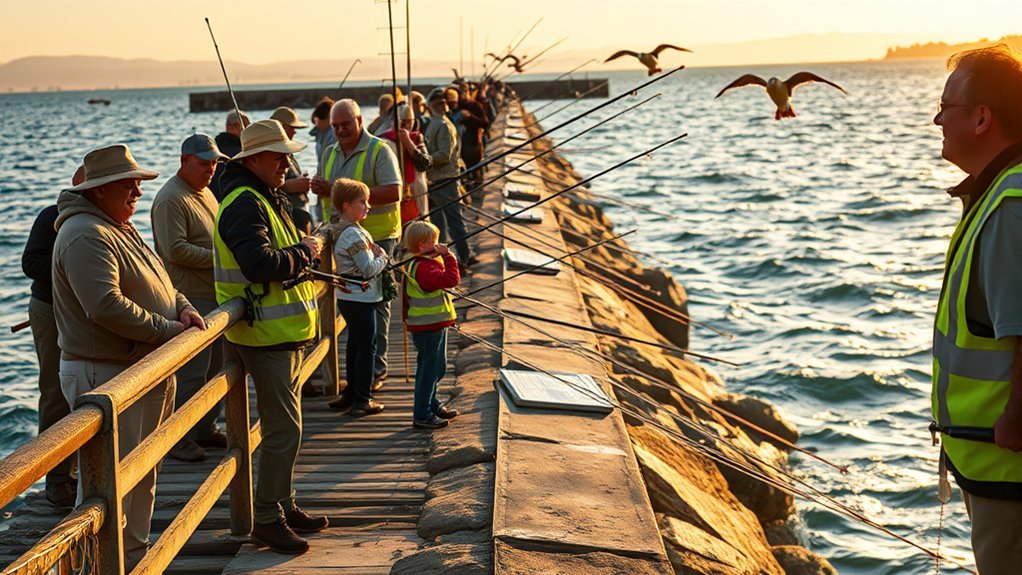
Because public piers provide unrestricted, designated angling access to ocean waters, you won’t need a saltwater fishing license when you fish from them, though regulatory compliance remains mandatory.
Public piers and similar publicly owned structures (jetties, breakwaters) qualify for this exemption only if access is truly unrestricted and the facility is explicitly designated for angling. You should treat the exemption as cost relief, not regulatory relief: fishing regulations such as bag limits, size limits, seasonal closures, and gear restrictions still bind you.
Public piers count only if truly public and designated for fishing—license-free only; regulations like limits and seasons still apply.
Policy implementation hinges on clear signage and jurisdictional designation; municipalities must document pier status to avoid enforcement ambiguity.
For age-based considerations, minors under 16 fishing from qualifying structures are also exempt from licenses, though species-specific report cards may still be required for data collection.
When you plan a pier trip, verify public designation and review current fishing regulations for the area to confirm compliance and avoid penalties.
Reporting Harvests, Renewals, and License Care
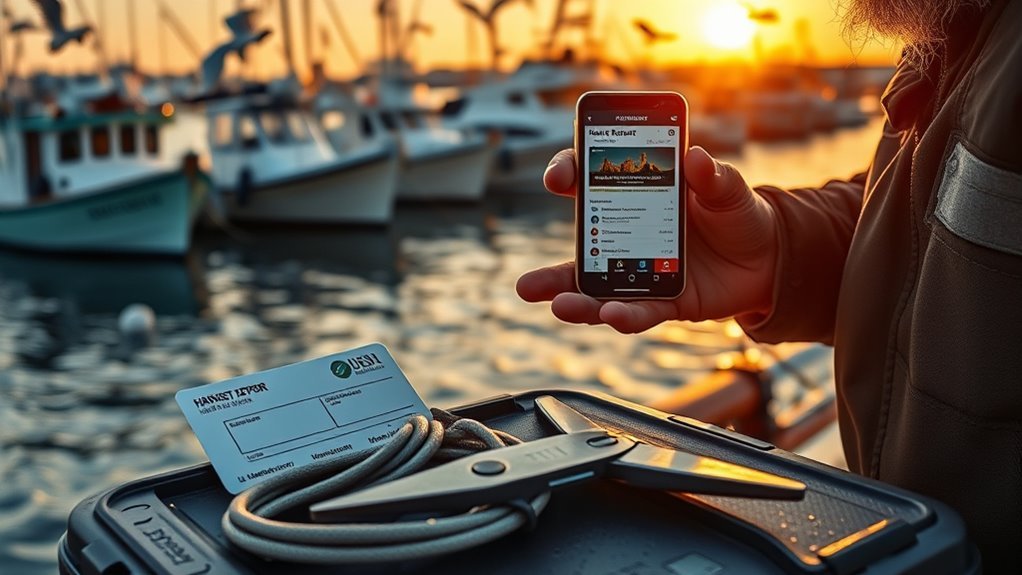
Accurate harvest reporting is a compliance and data-collection requirement: you must submit catches through the California Department of Fish and Wildlife (CDFW) portal by species-specific deadlines so managers can monitor stocks and enforce regulations.
You’ll follow reporting deadlines that vary by species — missing them (for example on the Spiny Lobster Report Card) can trigger late fees and distort catch data used for management models. For license maintenance, renew online or via authorized agents to avoid lapses that complicate enforcement records.
- Verify species, counts, and date before submitting to reduce corrections and improve dataset integrity.
- Note specific reporting deadlines for targeted species and set reminders to avoid penalties.
- Renew licenses timely through CDFW channels to maintain legal status and accurate registries.
- Keep your license readable; avoid heat lamination and replace only if text/signature become illegible.
These practices preserve data quality, minimize administrative penalties, and support evidence-based policy decisions.
Frequently Asked Questions
Do Licenses Cover Fishing From Private Boats in Federal Waters?
Yes—you generally need to follow fishing regulations and meet private boat requirements: state licenses may not apply in federal waters, so you’ll comply with federal permits, bag limits, and vessel documentation depending on species and zone.
Are There Special Fees for Charter or Guided Trips?
Like a toll bridge, yes: you’ll often face separate charter fees and charges for guided trips, varying by state and federal regulations, so you should analyze fee schedules, operator permits, vessel endorsements, and reported compliance data before booking.
Is a License Required for Catch-And-Release Only Fishing?
Generally, you still need a fishing license even for catch-and-release-only trips; check catch and release regulations and fishing license exemptions in your jurisdiction, because policy, data, and specific exemptions vary by state or country.
Do Commercial Saltwater Permits Differ From Recreational Licenses?
Yes—you’ll find permits are distinct: commercial fishing regulations impose quotas, reporting, and vessel permits, while recreational fishing restrictions focus on bag limits, size limits, and license types; policy and compliance requirements consequently differ greatly.
Are Discounts Available for Veterans or Active Military?
Yes — many states and agencies offer veteran discounts and military benefits for saltwater licenses; you’ll usually need ID or discharge papers, eligibility varies by jurisdiction, and fee reductions or exemptions are documented in official policy tables.
Conclusion
You’ll want to keep your saltwater license current: California reports that recreational saltwater anglers generate over $900 million annually in economic activity, so compliance matters for conservation and policy. Choose annual or short-term options based on trip frequency, verify required species report cards and validations, and use reduced-fee programs if eligible. Follow pier and exemption rules, report harvests accurately, and renew or replace licenses promptly to avoid fines and support sustainable fisheries management.
