
Oklahoma residents age 18 or older generally need a fishing license before taking, attempting to take, or possessing fish or other aquatic organisms in state waters. The standard resident annual license costs $31 and lasts 365 days, while a one-day license costs $11. Age, disability, private-pond, and other exemptions may apply, and some locations or species require an additional permit.
Quick Answer
Oklahoma residents age 18 or older generally need a fishing license. The annual resident license costs $31 and lasts 365 days; a one-day license costs $11. Residents age 17 or younger are exempt. Extra permits may be required for Lake Texoma, paddlefish, or certain public-access areas.
Key Takeaways
- A resident annual fishing license costs $31 and is valid for 365 days from the purchase date.
- Oklahoma residents age 17 or younger are exempt from the state fishing-license requirement.
- The $121 multi-year option is a three-year combination fishing and hunting license, not a five-year license.
- A Lake Texoma license, free paddlefish permit, Land Access Permit, or city permit may be required in addition to a standard license.
- Carry your license or written proof of exemption and identification while fishing. Electronic licenses are accepted.
At a Glance
| Resident Annual Fishing | $31; residents age 18 or older; valid 365 days |
| Resident One-Day Fishing | $11; expires at midnight on the selected day |
| Lifetime Fishing | $375; requires at least six months of Oklahoma residency |
| Senior Lifetime Fishing | $30; available during the calendar year the resident turns 65 |
| Three-Year Combination | $121; fishing and hunting; six-month residency requirement |
| Disability Five-Year Combination | $20; qualifying disability benefits and six-month residency required |
| Lake Texoma | $12; covers the Oklahoma and Texas portions of the lake but not below the dam |
Who Needs an Oklahoma Resident Fishing License?
An Oklahoma fishing license is required for residents and nonresidents age 18 or older who take, attempt to take, or possess fish or other aquatic-dwelling organisms by any legal method, unless an exemption applies.
Residents age 17 or younger are exempt from buying a state fishing license. Adults may also qualify for an exemption based on disability, veteran status, private-pond ownership or tenancy, or another condition listed by the Oklahoma Department of Wildlife Conservation.
A license is also generally required when fishing in Oklahoma state parks and most neighborhood or community ponds. Owning property near a pond does not automatically create an exemption.
Note: While fishing, carry your license or written evidence of an exemption along with identification. A license stored in the Go Outdoors Oklahoma mobile app is accepted.
Products Worth Considering

6 x 12 inch embossed aluminum license plate
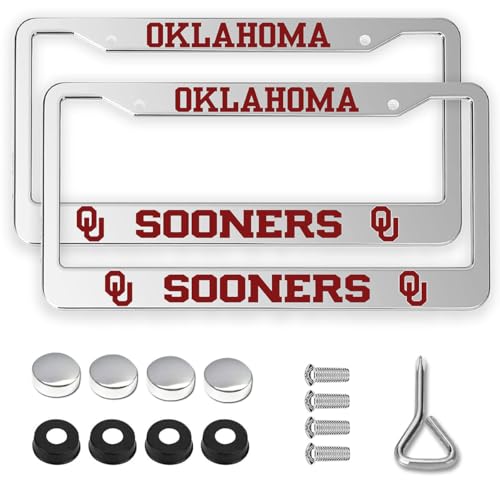
【PREMIUM QUALITY】-The black license plate frame was Crafted with high quality aluminum prevent Corrosion And Rust

【Classic Retro Design】This metal sign features a classic retro design, perfectly replicating the look of vintage sign. It's ideal for consumers who love nostalgic styles and adds a unique touch to any space.
Oklahoma Residency Requirements
A person holding a valid driver’s license is normally treated as a resident of the state that issued it. An Oklahoma driver’s license generally must have been issued at least 60 days earlier before it can serve as the sole proof of residency for a standard resident license.
If you do not hold a driver’s license, ODWC may consider other reliable records, including an Oklahoma income-tax return, voter registration, or vehicle or vessel registration. Utility bills alone are not accepted as proof.
Lifetime, senior lifetime, three-year combination, and disability five-year combination licenses have a six-month Oklahoma residency requirement. Active-duty military members permanently assigned to an Oklahoma installation and qualifying household members may receive resident treatment under separate documentation rules.
Review the complete ODWC residency definitions before applying if you recently moved, maintain homes in more than one state, or have an out-of-state driver’s license.
Oklahoma Resident Fishing License Types and Prices
The best option depends on how often you fish, whether you also hunt, your age, and whether you qualify for a specialty license. The current base prices published in the ODWC license fee schedule are:
| License | Price | Validity and eligibility |
|---|---|---|
| Annual Fishing | $31 | Residents age 18 or older; 365 days |
| One-Day Fishing | $11 | One selected day; expires at midnight |
| Annual Combination Fishing and Hunting | $53 | Residents age 18 or older; 365 days |
| Three-Year Combination Fishing and Hunting | $121 | Three years; six-month residency requirement |
| Lifetime Fishing | $375 | Lifetime; six-month residency requirement |
| Senior Citizen Lifetime Fishing | $30 | Residents who turn 65 or older during the current calendar year |
| Disability Five-Year Combination | $20 | Five years; qualifying benefits and six-month residency required |
| Lake Texoma | $12 | January 1 through December 31; both sides of Lake Texoma |
The prices above do not necessarily include an optional collectible hard card, dealer printing, mailing, or other products selected during checkout.
Products Worth Considering

Black LASER cut tag

Team colored license plate measures a standard 6-inches by 11.5-inches

College Team Pride - Represent your alma mater with this uniquely designed license plate tag from Decorvo
Youth, Senior, and Disability Options
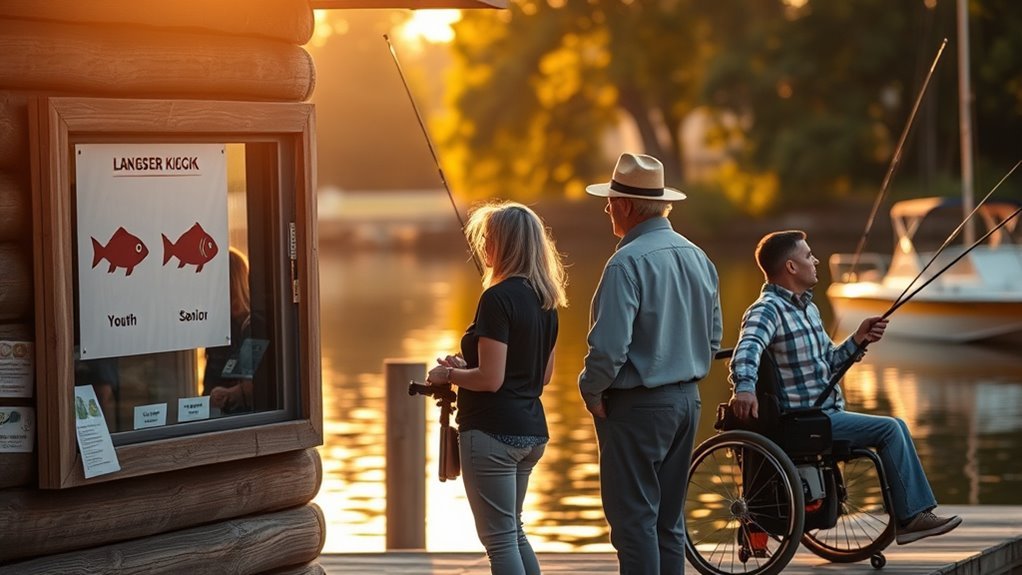
Youth Fishing Exemption
Oklahoma residents and nonresidents age 17 or younger are exempt from buying the standard state fishing license. They must still follow seasons, daily limits, size limits, legal-method rules, and any permit requirement that does not include a youth exemption.
The $26 Youth Annual Super Hunting License is a hunting product. It is not required merely for a youth to fish.
Senior Lifetime Fishing License
An Oklahoma resident who turns 65 or older during the current calendar year may apply for the $30 Senior Citizen Lifetime Fishing License. Applicants must satisfy the six-month residency requirement.
The senior lifetime license replaces the need for an annual fishing license, but it does not automatically remove every location- or species-specific requirement. Check Lake Texoma, paddlefish, and land-access rules before fishing.
Disability and Disabled Veteran Options
The $20 Disability Five-Year Combination Fishing and Hunting License is available to residents who have lived in Oklahoma for at least six months and receive qualifying benefits. These include Social Security disability benefits, Supplemental Security Income, certain Federal Railroad Retirement Act disability benefits, or Multiple Injury Trust Fund benefits.
Permanently disabled non-ambulatory Oklahoma residents are exempt from the fishing-license requirement. Resident disabled veterans with a Department of Veterans Affairs disability rating of 60% or more are also exempt from buying a fishing license. Written proof of the exemption should be carried while fishing.
Disabled veterans may also qualify for discounted lifetime combination licenses. Review the official ODWC specialty-license requirements before applying.
Duration Choices: Daily, Annual, Multi-Year, and Lifetime
Choose a duration based on how often you fish and whether you also need hunting privileges:
- One day: The $11 resident one-day license works for a single planned outing and expires at midnight on the selected date.
- Annual: The $31 resident annual license provides 365 consecutive days of fishing privileges.
- Three years: The $121 three-year combination license includes annual fishing and hunting privileges for three years. It requires six months of residency.
- Five years for qualifying disability: The $20 disability combination license is valid for five years.
- Lifetime: The $375 lifetime fishing license removes the need to renew a standard annual license.
- Senior lifetime: The $30 senior option is usually the best value for an eligible resident turning 65 or older.
Pro Tip: Check the validity dates printed on the license instead of assuming every product runs through the calendar year. Annual fishing and combination licenses generally run for 365 days, while Lake Texoma and several permits follow calendar-year dates.
Products Worth Considering

Team colored license plate measures 6-inches by 11.5-inches
🚗【Standard license plate size】 Our license plate frame size is 12.3 x 6.3 inches. This License Plate Cover will be for most of the standard license plates in the US and Canada.
Additional Permits and Location Rules
A standard resident fishing license does not cover every species or location. Check the following before your trip.
Lake Texoma License
A standard Oklahoma resident fishing license allows you to fish the Oklahoma portion of Lake Texoma. To fish both the Oklahoma and Texas portions, buy the $12 Lake Texoma license or hold the appropriate Texas credential. The Lake Texoma license is not valid below Texoma Dam.
Paddlefish Permit
Anyone who fishes for paddlefish must obtain the free paddlefish permit, regardless of age, residency, or lifetime-license status. The permit expires December 31 and must be carried electronically or as a paper copy.
Land Access Permit
Unless exempt, anglers need a Land Access Permit to fish within Honobia Creek, Three Rivers, or Herron Family Wildlife Management Areas and on Oklahoma Land Access Program properties.
The annual resident Land Access Permit costs $100 and generally applies to residents ages 18 through 63. Residents age 17 or younger and residents age 64 or older are exempt. Lifetime fishing-license holders are not automatically exempt from the Land Access Permit.
City, Park, Red River, and Local Requirements
- A state fishing license is generally required on Oklahoma state-park waters.
- Some cities require a separate municipal fishing permit.
- Persons fishing the Red River must have a valid Oklahoma fishing license unless exempt.
- Fishing on private land requires the owner’s, tenant’s, or occupant’s permission.
- A neighborhood or homeowners-association pond is not automatically covered by the private-landowner exemption.
Warning: A license exemption removes only the license-purchase requirement. It does not remove daily limits, size limits, legal-method rules, access restrictions, boating laws, or location-specific permits.
Where and How to Buy Your License
You can buy most Oklahoma fishing licenses through the official Go Outdoors Oklahoma portal, the mobile app, or an authorized license agent.
Buy Online
- Open Go Outdoors Oklahoma.
- Sign in with your date of birth, last name, and requested identifier. If you previously held an Oklahoma hunting or fishing license, you may already have an account.
- Confirm your residency and identification details.
- Select the license and any required permits.
- Review the validity dates and complete payment.
- Save the license to the app or print a paper copy.
Use the Mobile App
The Go Outdoors Oklahoma app lets you purchase, renew, and store licenses and permits. A license displayed in the app satisfies the personal-possession requirement.
Visit a License Agent
Use the official license-agent locator to find a retailer or agent by city, county, or distance. Bring identification and any documents needed to prove residency or specialty-license eligibility.
| Channel | What to do | Useful detail |
|---|---|---|
| Website | Sign in, choose a license, and pay online | Print a paper copy or save it electronically |
| Mobile app | Download the app and connect your account | Stores accepted electronic licenses and permits |
| Authorized agent | Visit the agent with identification | Useful when you need in-person help or a paper copy |
Pro Tip: Save an offline screenshot or paper copy before fishing in an area with weak cell service. Make sure the copy shows your name, license type, and valid dates.
Carrying, Replacing, and Displaying Licenses
Carrying Your License
Carry your fishing license and identification while fishing. If you qualify for an exemption, carry written evidence that supports it. You may use:
- A printed paper license.
- An electronic license in the Go Outdoors Oklahoma app.
- A valid optional hard card containing the license information.
- Written proof of an exemption, when applicable.
Licenses are nontransferable. They may not be borrowed, altered, or changed, and the holder’s identifying information must match the person using the license.
Replacing a Lost License
You can reprint a lost paper license through your online account at no cost. An authorized license dealer may print a paper replacement for $1.50. You may also download the mobile app and retrieve an electronic copy linked to your account.
A reprint does not create a new license or extend the expiration date. It simply restores proof of the license you already purchased. Optional hard-card replacements may carry a separate card fee.
See the official Go Outdoors Oklahoma replacement instructions for current printing and card options.
How License Revenue Supports Conservation
Oklahoma’s wildlife agency does not receive general state-tax appropriations. ODWC identifies annual hunting and fishing license sales and federal Wildlife and Sport Fish Restoration grants as its main funding sources.
ODWC reports that annual hunting and fishing license sales provide about 42% of agency income, federal restoration grants provide about 44%, and other sources provide the remaining 14%.
Fish and Aquatic Habitat Restoration
Fishing-license revenue supports ODWC fisheries work and helps provide the state share needed to qualify for federal Sport Fish Restoration grants. Federal Sport Fish Restoration money comes from excise taxes and duties associated with fishing equipment, motorboats, and certain motorboat fuel use.
Eligible work includes fisheries research and management, fish-habitat restoration, aquatic education, hatchery activities, boating and fishing access, and related conservation projects. The number of certified fishing-license holders also helps determine each state’s share of federal Sport Fish Restoration funding.
Learn more from the ODWC Sportfish Restoration Program and the U.S. Fish and Wildlife Service apportionment guidance.
Hunter Education Funding
Hunter education is part of ODWC’s broader conservation work, but it should not be described as a direct benefit created solely by a fishing-only license. Hunting-license revenue and the federal Wildlife Restoration Program, commonly associated with the Pittman-Robertson Act, support wildlife-management, hunter-education, and shooting-sports projects.
Fishing-related federal aid operates under the separate Sport Fish Restoration framework. Both systems support the same state wildlife agency, but they have different revenue sources and eligible uses.
Shooting Range Maintenance
ODWC shooting ranges are primarily supported through Wildlife Restoration funding and related state matching funds. The federal revenue comes from excise taxes on firearms, ammunition, and archery equipment rather than fishing equipment.
Anyone using an ODWC shooting range must generally possess a valid Oklahoma hunting license or combination fishing and hunting license unless exempt. A fishing-only license does not satisfy that range requirement.
Range funding may support:
- Berms, backstops, benches, and shooting stations.
- Safety signs and range-rule enforcement.
- Lead management and other maintenance work.
- Parking and accessibility improvements.
- Hunter-education and supervised-practice facilities.
Common Restrictions and Exemptions
The official ODWC exemption list includes the following common situations.
Age Exemption
Residents and nonresidents age 17 or younger are exempt from buying the standard state fishing license. Different age rules may apply to Lake Texoma, federal waterfowl credentials, or other non-fishing permits.
Private-Pond Exemption
A resident owner or tenant may fish without a license in a private pond on land that person owns or leases. The exemption also extends to the resident owner’s or tenant’s:
- Spouse.
- Parents and grandparents.
- Children and their spouses.
- Grandchildren and their spouses.
The exemption does not apply merely because a pond is privately owned. Neighborhood ponds, commercial ponds, and ponds on someone else’s property usually still require a license unless the angler fits the statutory family or tenancy exemption.
Disability Exemptions
Permanently disabled non-ambulatory Oklahoma residents are exempt. Resident disabled veterans with a service-connected disability rating of 60% or more are also exempt from the fishing-license requirement. Carry written proof while fishing.
Land Access Permit Age Exemption
Oklahoma residents age 17 or younger and residents age 64 or older are exempt from the Land Access Permit. This exemption concerns the Land Access Permit and should not be confused with the standard fishing-license age rule.
Free Fishing Days
Oklahoma designates Free Fishing Days when anyone may fish without buying a state fishing license. The current ODWC listing identifies June 5–6, 2027 as the next dates.
A free paddlefish permit is still required when fishing for paddlefish, and certain cities may continue to require local fishing permits. All seasons, methods, bag limits, and size limits remain in effect.
An exemption removes the need to buy a license or permit named in the exemption. It does not give unrestricted access to private property or remove fishing limits and safety rules.
Frequently Asked Questions
Can nonresident family members fish on my license?
No. Oklahoma licenses are nontransferable and may not be shared. Each nonresident age 18 or older must hold the appropriate nonresident fishing license unless that person qualifies for an exemption. Nonresident anglers age 17 or younger are exempt from the standard state fishing license.
Does a standard resident license cover fishing tournaments?
A participant still needs a valid fishing license unless exempt. A black-bass tournament director may also need a Bass Tournament Director’s Exemption Permit when the event uses the size-limit exemption. Participants must carry the event information, their fishing license, and identification as required by the permit.
Do I need a license to fish a private pond on my property?
A resident owner or tenant and specified members of that person’s family may fish without a license in a private pond on land the owner or tenant owns or leases. Other guests normally need a fishing license unless separately exempt, and everyone must have permission to enter the property.
Do I need a special permit to collect minnows or bait?
Not in every case. Oklahoma allows personal collection of common nongame bait with approved gear in waters that are open to the method. Water-specific closures, gear limits, species rules, and transport restrictions still apply. Shad taken from certain listed waters may be used only in the water where they were collected.
What happens to my license if I move out of Oklahoma?
A resident lifetime license remains valid after the holder moves out of state, but the address should be updated with ODWC. A valid three-year combination license may continue to provide nonresident annual fishing or hunting privileges for the remainder of its term. Other residency questions should be resolved with ODWC before buying or renewing a resident product.
Can I fish the Texas side of Lake Texoma with an Oklahoma annual license?
No. A standard Oklahoma license covers the Oklahoma portion. To fish the Texas portion, you need an appropriate Texas license or the $12 Lake Texoma license, which covers both sides of the lake. The Lake Texoma license is not valid below the dam.
Do I need a separate Oklahoma trout permit?
Oklahoma requires the appropriate resident or nonresident fishing license for trout unless the angler is exempt. ODWC does not list a separate statewide trout stamp in its current resident fee schedule, but trout-area regulations, daily limits, and location rules still apply.
Conclusion
Most Oklahoma residents age 18 or older need a fishing license, while residents age 17 or younger are exempt. The main choices are the $11 one-day license, $31 annual license, $121 three-year combination license, $375 lifetime fishing license, and $30 senior lifetime fishing license.
Before fishing, confirm whether you also need a Lake Texoma license, paddlefish permit, Land Access Permit, or city permit. Carry your license or written proof of exemption and identification, follow the rules for the specific water, and check ODWC for fee or regulation changes before each season.
Sources
- Oklahoma Department of Wildlife Conservation: License Requirements — who needs a license, carrying requirements, the Red River rule, and Land Access Permit locations.
- Oklahoma Department of Wildlife Conservation: License Options and Fees — current prices, eligibility, and validity periods.
- Oklahoma Department of Wildlife Conservation: License Exemptions — youth, private-pond, disability, veteran, and age exemptions.
- Oklahoma Department of Wildlife Conservation: Residency Definitions and Specialty Licenses — residency proof and specialty-license qualifications.
- Go Outdoors Oklahoma License Help — paper printing, electronic licenses, and lost-license replacement.
- ODWC Funding Overview and U.S. Fish and Wildlife Service Restoration Funding — license revenue and federal conservation funding.
